India will stop the sale of many internet-connected CCTV cameras from April 1st, 2026, unless they clear a new round of security checks. The rule affects Chinese brands such as Hikvision, Dahua Technology, and others, which have been widely used across homes, shops, and public places. This isn’t a last-minute move as CCTV devices were brought under tighter rules in 2024. If a camera doesn’t have STQC certification, it won’t be sold.
What are the new rules around CCTVs in India?
Every internet-connected camera now has to pass STQC (Standardisation Testing and Quality Certification). The checks look at how securely the device works, not just whether it functions. That includes firmware, encryption, resistance to tampering, and even where the hardware comes from. Since these cameras are treated as IoT devices, they are also checked for how they communicate and whether they can be accessed remotely. Even locally assembled products have to go through the same process. There are no exemptions on that front.
The concerns go back a few years. In 2021, the government said a large number of CCTV cameras in public use were sourced from Chinese vendors. That raised questions about where the data from these cameras could be stored or accessed. As more cameras became connected to the internet, the focus shifted from just installation to how secure these systems actually are. Over time, checks expanded to software, firmware, and system-level vulnerabilities. These rules bring all of those checks into one requirement before a product can be sold.
How does this affect the market in India?
Chinese brands that once held a large share are either stepping back or trying to rework their presence. At the same time, Indian brands like CP Plus, Qubo, Prama, Matrix Comsec, and Sparsh CCTV have expanded quickly and now account for most of the market. At the higher end, Bosch and Honeywell continue to supply enterprise setups. The smart home segment has also seen changes. Brands like Xiaomi and Realme have reduced their presence, largely because meeting these rules adds complexity.
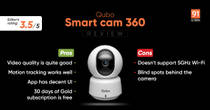
Indian brands have welcomed the move. Nikhil Rajpal, Founder, Qubo, told 91mobiles in a statement, “We welcome the government’s move to tighten the net around non-compliant, internet-connected CCTV systems. Our made-in-India AI-powered security cameras offer end-to-end encryption that ensures all footage caught remains private & accessible only to the user. Furthermore, all this data is housed securely on servers located here in India.” Qubo has already received the required clearance from the Ministry of Electronics and Information Technology.
With fewer suppliers and added compliance costs, prices are expected to rise by about 15 to 20 percent. A basic 4MP camera that sold for around Rs 2,500 may move closer to Rs 3,000. An 8MP model could go from Rs 4,000 to Rs 5,000. Higher-end systems may not change as sharply, but they are unlikely to stay untouched.
If you’re buying a CCTV system now, certification matters. A connected camera is always sending or storing data, so security is part of the purchase, not an extra. For home use, brands like Qubo and CP Plus offer options between Rs 2,500 and Rs 5,000 with app support and smart integrations. Small businesses can look at Matrix or Prama for multi-camera setups. Larger installations usually rely on Bosch or Honeywell, where security features are more advanced. There are also added costs beyond the camera. Installation typically ranges from Rs 500 to Rs 1,000 per unit, and cloud storage can add Rs 100 to Rs 300 per month.