Intel unveils Core Ultra Series 3 at CES 2026, marking its first platform built on Intel 18A


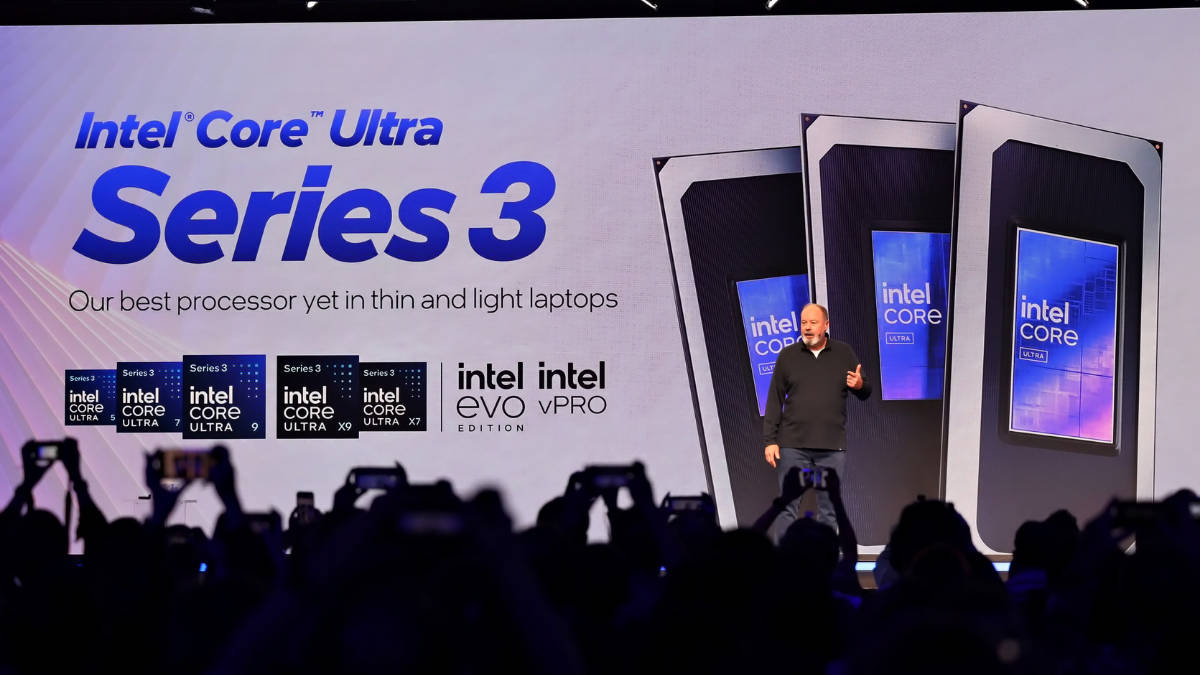
Intel has announced its next-generation Core Ultra Series 3 processors at CES 2026. The launch introduces the company’s first compute platform built on the new Intel 18A manufacturing process. This is also the first time Intel has designed and manufactured a leading-edge consumer processor platform entirely in the United States. It marks a notable shift in both technology and strategy.


Pre-orders for consumer laptops powered by Core Ultra Series 3 will open on January 6, 2026. Devices are expected to ship globally starting January 27. Edge and industrial systems based on the same platform are scheduled to follow in the second quarter of 2026.

With Series 3, Intel is not just launching a new processor generation. It is signalling a broader shift toward energy-efficient computing, deeper AI integration, and a wider definition of what a PC platform can be in the AI era.
According to Intel, the Core Ultra Series 3 will be its most widely adopted AI PC platform to date. It is expected to power more than 200 laptops and system designs from global partners. The new lineup focuses on improving power efficiency. It also boosts CPU and GPU performance. At the same time, it significantly expands on-device AI capabilities, while maintaining broad x86 software compatibility.
Show Full Article

Intel’s new 18A manufacturing process is a 1.8-nanometre class technology. It represents a major step forward in chip design. It enables smaller, denser, and more power-efficient transistors. This allows Intel to pack more CPU, GPU, and AI performance into thinner and lighter devices. At the same time, it helps improve battery life and reduce heat output.
For the PC market, this means faster and more efficient laptops and desktops. It also means stronger on-device AI. And better sustained performance for gaming, creative, and productivity workloads.
At the top of the lineup is a new class of Intel Core Ultra X9 and X7 processors. These chips are aimed at users who handle demanding workloads like gaming, content creation and multitasking on the go. The processors feature up to 16 CPU cores, 12 Xe graphics cores, and up to 50 TOPS of NPU AI performance. This enables faster multitasking, smoother gaming and better responsiveness.

Intel claims up to 60% better multithreaded performance. It also cites up to 77% faster gaming performance. Battery life is rated at up to 27 hours in supported designs. These figures are based on Intel’s internal comparisons against its previous-generation Core Ultra platforms and a mix of competitor reference systems, depending on workload. Real-world results will vary based on laptop design, cooling, and power tuning, but the direction is clear: Series 3 is Intel’s most aggressive generational push for performance-per-watt and on-device AI so far.
Alongside the flagship processors, Intel is also introducing more mainstream Core variants built on the same architecture. These chips are designed for thinner, lighter and more affordable laptops. The idea is to bring improved performance and efficiency to a wider range of price segments, not just premium systems.

One of the more notable shifts with Series 3 is its expansion beyond traditional PCs. For the first time, Intel has certified these processors for embedded and industrial edge deployments. This includes use cases in robotics, smart cities, automation and healthcare.
Intel says Series 3 delivers up to 1.9× higher performance for large language model inferencing. It also offers up to 2.3× better performance per watt per dollar for video analytics. For vision-language-action models, Intel claims up to 4.5× higher throughput.
In context, this places Intel directly against AMD’s latest Ryzen AI platforms and Qualcomm’s Snapdragon X Elite push into AI PCs. AMD has been emphasising strong integrated graphics and efficiency on advanced process nodes. Qualcomm, meanwhile, is betting on ARM-based designs with long battery life and AI acceleration.
Intel’s Series 3 strategy differs in that it aims to combine high performance, broad x86 compatibility, and edge-to-PC scalability under one platform. Rather than optimising for a single use case, it is positioning itself as a more general-purpose solution across segments.
In simple terms, Intel is positioning Core Ultra Series 3 as a platform that scales across multiple markets. It is meant to serve everyday laptops, high-end creator machines, and industrial AI systems alike. The goal is to create a unified architecture across consumer, commercial, and embedded devices.
For buyers, this means Series 3 will likely show up across a wide range of laptops in 2026. That includes thin-and-light ultrabooks, as well as gaming and workstation-class machines. If you value x86 compatibility, strong local AI performance, and a balance between power and battery life, these systems could be worth waiting for.
That said, real-world performance, thermals, and battery life will ultimately depend on how OEMs implement the platform. This makes early reviews and specific model comparisons important before upgrading.