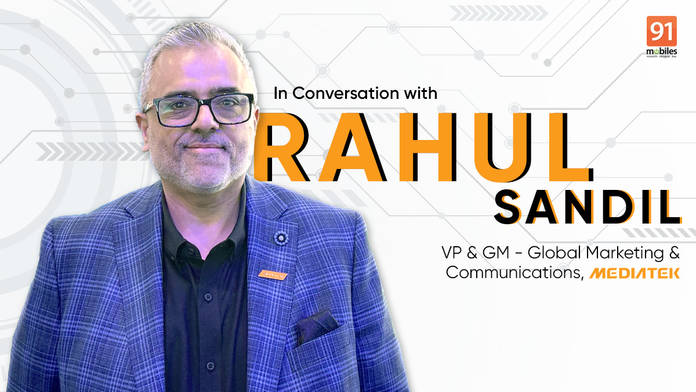
MediaTek aims to enrich lives by making technology more accessible. Rahul Sandil, the newly appointed Vice President and General Manager for Global Marketing and Communications, discusses his journey and the company’s goals. In an exclusive interaction with 91mobiles, he outlines MediaTek’s vision to lead in mobile solutions, smart TVs, data centres, and automotive technology through innovation and collaboration. He also shares insights on the transformative potential of AI in various fields. Read on.
Rahul, what led you to MediaTek? Please tell us about your journey.
I believe in destiny. I am a Delhi boy. I was born and brought up in New Delhi. My dad used to be a marketing guy who started his career after IIM Ahmedabad in DCM Group. After a lot of projects, at some point, he became the head of marketing at DCM Toyota as Toyota was coming into India in the late 80s. So, I grew up in a very exciting time in India. Foreign brands were coming again, So, I grew up in a marketing home, but I think for me, the first real interest came in looking at my dad, talking about branding, market share for automobiles, etc.
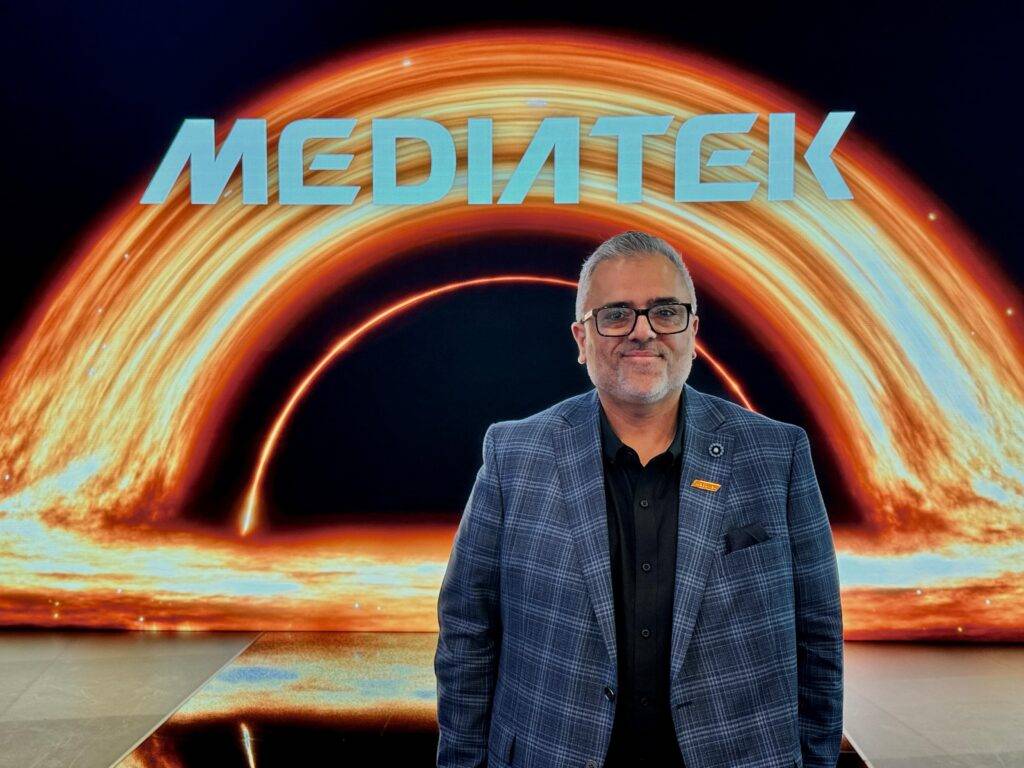
He used to travel to Japan pretty often. And on one of his trips, he got me this solar-powered radio. I love music. I love cricket. The ability to put that in my pocket and listen to a cricket game was like a cool technology. I remember opening it up and seeing inside and looking at a little green PCB board, so somewhere in my destiny, this was there.
For most of my career, after my MBA from MDI Gurgaon, I wanted to work at the intersection of entertainment media and technology, or media tech, which is the second part of my destiny.
I started my career in the RPG group. After my MBA, I wanted to work in HMV, but RPG said you have to work in a different group company as part of your induction, and then you can go work in HMV. So my first project is at RPG cellular. It’s another destiny milestone. I learned about switches and mobile phones in 1997. India was just becoming a cellular market, and I had a Philips handset. If I tell people today that Philips used to make handsets, nobody would believe me.
Learning about a switch, how GSM technology works, and being one of the first people in my peer group to have a cell phone because back then cell phones were still kind of either for corporates or executives, I could not see a world where they’d be so mass-adopted. Then, I went into HMV and worked in the music industry.
In 2000, the industry was transitioning very quickly from analogue to digital, going from tape to CD and then CD to MP3. That CD phase was relatively short. HMV decided to put me in the international business, and send me overseas. We had to rethink the entire way the industry would work, whether it was distribution, whether it was partnerships, managing a regular channel, and also looking at digital. And I came to the US, I went all over the world, finally came to the US, started building a lot of back-end deals with iTunes and the Recording Industry Association.
At some point, my other passion was games, especially video games. So then I joined a gaming startup, and I learned about that industry and saw that industry go through a transition from box-based retail games to online games to digital distribution to mobile.
Worked at an Intel Capital startup. Found my way into Microsoft. Worked on the Xbox One launch. Then, I got into another industry, which is ARXR, very early in the day. Worked on the HoloLens team.
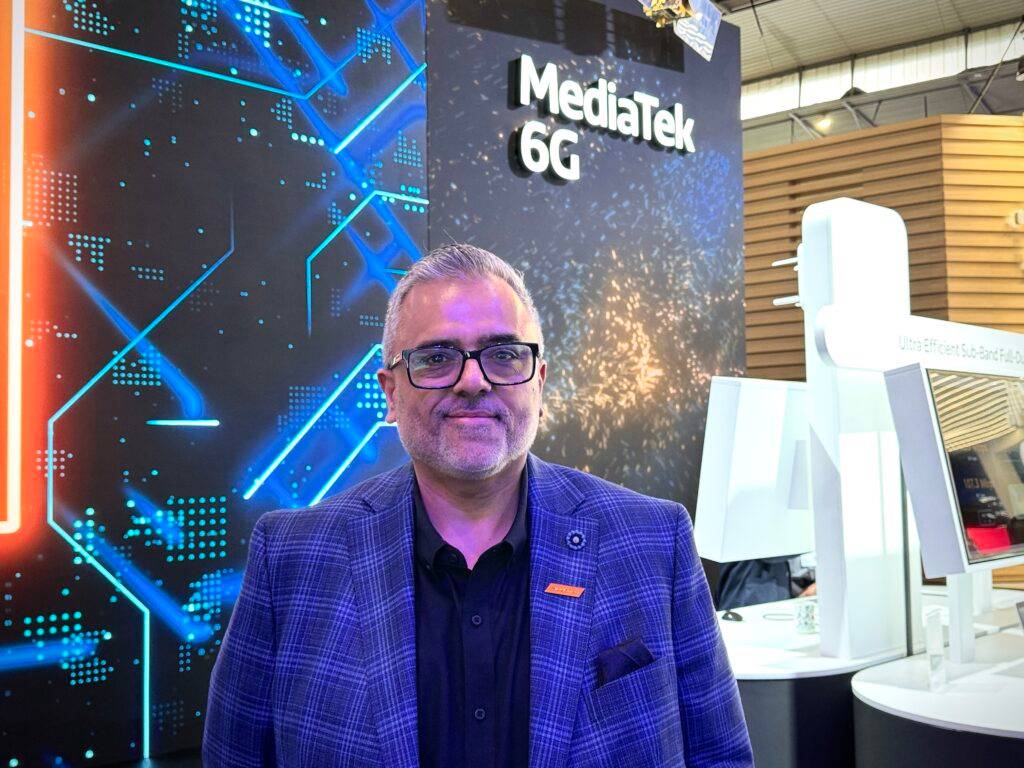
Then, I moved to HTC’s VR business. I worked for Cher Wang, who was the chairman and CEO of HTC and helped set a narrative around VR AR and what that future would be from a marketing perspective. At some point, a company called Micron gave me a call. They said they are very interested in you coming to work for Micron. And I remember my first question was, “What does Micron do?”. Here I am, somebody who grew up in India, loves music, entertainment and technology, and media didn’t know semiconductors that well, and some recruiter said, “Oh, it’s for the division for Crucial.” And I said I know Crucial very well because I like to build gaming systems.
I was the CMO running all the marketing and communications for Crucial. At some point, I got promoted, and then I led all of Micron’s branding.
I have been in the US since 2000, and that’s when I first learned about MediaTek because MediaTek is a good collaborator and partner with Micron. Micron made memory and storage for phones, and at MWC, we would partner with MediaTek for co-marketing efforts.
David and Rick from MediaTek set this vision for me, which is about where the company has been, where the company has come from, the culture of the company, and where the company is headed. That vision was really exciting for me!
At the core of it, I go back to my first time owning a cell phone and you know technology when it’s in the hands of a few is exciting but the true power of what technology can do is when it’s in the hands of everyone and that to me is what I find exciting about MediaTek!
If I look back at the growth and evolution of India, you know the economic expansion in the ’90s and the advent of smartphones in the early 2000s. But then to give a smartphone to hundreds of millions of people and then they can use that smartphone for commerce. A fruit vendor can receive payments. I think it breaks generations of vicious cycles and turns them into virtuous cycles.
I think that is where I find the MediaTek vision of enriching and enhancing life for everyone. Like, I really, you know, it’s not just a buzzword for me. It matters to me as a person who’s going to lead the brand for media tech and lead communications and marketing and to be able to be part of that journey to democratise it as much as we can and give it to everyone.
Part of that vision was the expansion of MediaTek’s impact. Obviously, we are number one in mobile with number one share. We are also number one in smart TVs.
Why shouldn’t everybody on this planet have access to news, information and entertainment in their home? It doesn’t necessarily have to be in the hands of a few. No matter what your economic status is, you’re not dependent on someone to get access to information; you could have it.
As technology becomes more accessible, it becomes more affordable; more people can have it, and more people can learn. And that I still find that DNA exciting. And I think the future for MediaTek is super exciting. We’re going to be still the world’s best and most compelling mobile solutions company. We are still going to be the best and most compelling smart TV company, and then we’re going to expand, and then we’re going to be the best in class when it comes to data centre solutions. We’re going to be the best in class when it comes to automotive solutions. We’re going to take that DNA of innovation and give access to technology to enrich and enhance life for everyone and find every segment we can to make that technology accessible.
At our MWC booth, there’s one of the most compelling demos. Of course, there are all the great mobile demos you can see and how the phones we power are really smart, and our cameras are great. But the demo which really stands out to me is the 5G NTN demo. That goes back into the ethos of who MediaTek is.
Taking a non-terrestrial network beaming in a signal which can download at speeds up to 10 megabits a second. Think of megabytes a second in the remotest parts of the world which don’t have access to a terrestrial antenna. And now, can you imagine what that technology could do?
You could be a remote farmer anywhere in the world, in a part of Africa where you know a part of India in the remotest part, and you want access to the latest pricing information for produce in the big city. You’re not going to be dependent on multiple channels to tell you what the right price is. You will have access. Nobody can tell you break my smartphone will talk. So I think that stuff to me is compelling. So we want to build that ecosystem with our partners.
The other thing I love about MediaTek is the collaborative mentality that we have. You know, we are a relatively very low ego company. We want to partner with everyone. We want to work with the best companies out there. And in the ecosystem, we’ve built a lot of partnerships, and we want to leverage them. There are so many reasons why I’m here.
Consumer awareness and brand resonance are something that needs building up in order to take the brand to the end user. What would be your strategy towards that?
Our priority will always be to be the company which powers brands consumers love. We want to create our brand relationship with the end consumer, especially in a case where end consumers might have a choice and they might prefer one over the other. I think in that world, we’ve done really well.
When I joined MediaTek, I put a little post on LinkedIn, and so many of my B-school friends called me and said, “Oh my god, you’re joining a great company”. That’s a great company.
I think the teams have done a great job, and I’m going to keep enabling my teams to build further scale. But at the core of it, I think we must always be focused on how we are making our partners’ brands stronger. And it’s not just going to be about smart, smarter taglines and more flashy advertising. It has to go down to its roots of how are we enabling their products to reach bigger audiences? What technologies are we enabling? Can we enable those technologies at the best price point so they can reach a bigger audience? Those, to me, are far more critical. Those are more long-term aspects when it comes to brand building.
Taglines and flashy videos- I love them. I love my teams and making them, but I think they’re very ephemeral to me. They are very transient, and we need to focus on the ethos. But as we expand, it’s also important to build a strong preference with an enterprise audience as well. So, we have to manage that. I think that’s going to be a big opportunity for us in the future.
As we build solutions for data centres, as we build solutions for AI PCs, we may not be talking all the time to end consumers. So we have to balance an end consumer focus with an enterprise focus as well, and those will be the opportunities for us to scale our brand.
Can we expect Windows laptops powered by MediaTek? And what are you doing in the auto tech space?
From an intent level, yes, we want to partner with as many people as we can because we have to go back to our vision to enrich and enhance life for everyone. Today, we are already number one in laptops in Chromebooks, the partner of choice for Google.
We are already in the auto tech space; we have a great partnership with NVIDIA. We actually have a great demo outside; there’s a 42-inch wide high-definition cockpit in a car, and we are using our solutions for collision detection now. So that’s going to be a really important segment for us.
That connectivity between your vehicle and your phone is going to be extremely important. As someone who’s been driving an EV in the US for the last 10+years, I’ve seen the evolution at a personal level as well.
In my personal opinion, if it’s not EV or some kind of sustainable energy, but beyond that autonomy, what seems like science fiction today is going to be reality very soon. I was recently in San Jose, and there were EVs running all over the place, driverless.
One of our partners, Google, is behind that technology, so we are going to be a very meaningful player in that space.
If you imagine the supply chain infrastructure which will get greatly enhanced again giving access to all strata and the economic status to give access to transportation to logistics. I can’t even imagine what that world would be. The fact is that we have a strong ecosystem of partners in all parts of the world whether it’s in the west or the east or in Asia. We have a history of powering some of the most compelling brands in Taiwan, China, India and the US. So, we definitely are well positioned in that space.
We already have a strong presence in Southeast Asia and are the number one brand when it comes to at least phones and devices. We are innately curious about these things, and we want to partner.
One of my friends said, “you’re joining MediaTek, such a cheerful company.” And you’ll see that in our people… you’ll always see them with smiles on their faces and wanting to partner. It’s an infectious energy which comes from our culture, and I think it comes from the fact that we want to solve some of the toughest problems with people. So I think automobiles are going to be a massive thing for us. Data centres are going to be a new frontier for us.
We’ve already talked a bit about our custom basic chips that we are building for data centre solutions. I would encourage you to follow us at NVIDIA’s conference. We’ll be showing some cool demos. There is one really cool demo here showing our data centre ASIC chip. We actually make the world’s largest chip package. It’s a custom packaging solution where we take our chipset, and then we take our partners’ chips and add more memory.
What makes you excited about all of these changes? What do you think will be the next big thing?
I’ve been using AI personally for the last two-ish years and pay the $200 a month for the OpenAI ChatGPT thing, which means I get access to all the feature sets, and it’s a superpower.
If I wanted to do deep research now on all publicly available data for a certain problem, I use ChatGPT’s Deep Research and get a pretty compelling answer in 10-15 minutes. I’m not going to trust all the data it gives me, but it gives me a good place to start, and then I can drill down.
This would normally be a project with people working on it and would involve going to five vendors. But it offers me a good starting point. This access to information is access to intelligence, and I think that’s going to be the killer app. The killer app is not going to be what it does, but how it makes it happen across large audiences.
When Deepseek came out, everybody said, “Oh my god, everybody can have access to it,” and I think that is the killer transition, and obviously now OpenAI is going to do something better, and that’s where innovation works. But again, I think what we are seeing right now is less than 1% of what’s possible.
The future killer applications are going to be smart agriculture and smart medicine, AI-enabled medicine.
It took around 30 or 40 years from the time humanity was ravaged by Polio for someone to develop a polio vaccine, and it took a year for when humanity was ravished by Covid to develop a vaccine.
Now, I’m already reading that they are using AI-based inference and training, and they could be at a very early stage, so it’s very speculative, but I’ve already read the article like somebody in the UK thinks that they could have a path forward for pancreatic cancer, right? What if you could treat it like you treated Polio and prevent it from happening in so many different forms? And so, to me, those are going to be so then what does that truly mean? It means humanity can have longer, healthier, more productive lives, but that would then mean changes to the way any global economy is set up, right?
If people can live longer, be healthier and be more productive, then we’ll have to have new social constructs. And these things which we don’t normally imagine and think of because humans can be linear. We think of incremental improvement. For example, 50 years ago, the average lifespan was 55; now, it is 75. People used to retire at 58 then, and now they retire at 65. What happens in a world where you don’t need to retire? Those, to me, are going to be the things which I’m curious about.