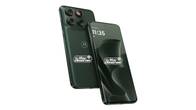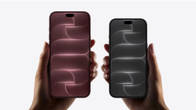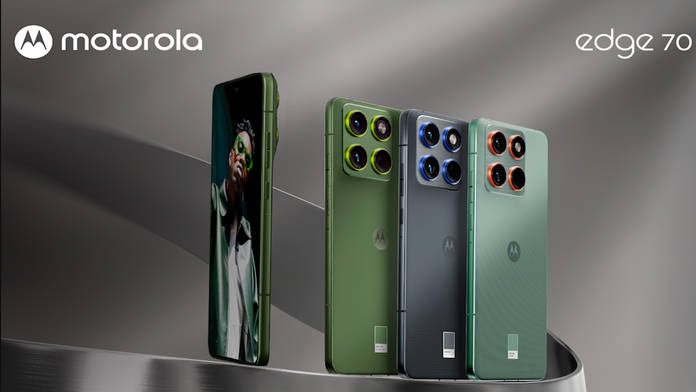
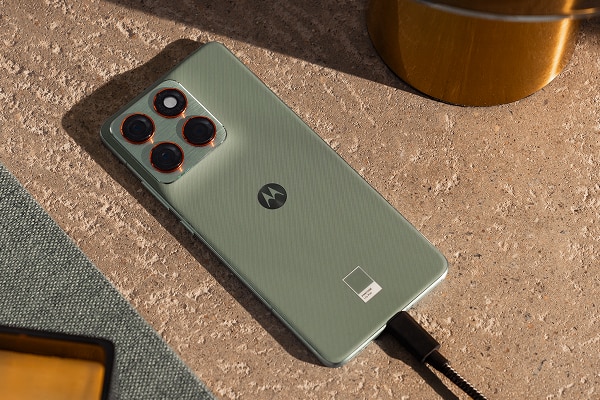
Motorola has unveiled the Motorola Edge 70, joining the league of ultra-slim phones like the premium Samsung Galaxy S25 Edge and Apple iPhone Air, and even the budget-friendly Tecno POVA Slim in the global markets. The Motorola Edge 70, which was launched as the Motorola X70 Air in China last month, has a slim profile measuring 5.99mm in thickness and weighing just 159 grams to position itself as lightweight compared to its rivals. It comes in three Pantone-validated finishes, namely Lily Pad, Gadget Grey, and Bronze Green.
The Edge 70 features a 6.67-inch 1.5K pOLED display with a refresh rate of 120Hz and peak brightness of 4,500 nits for comfortable outdoor visibility. Internally, it’s powered by the Qualcomm Snapdragon 7 Gen 4 processor, along with 8GB and 12GB RAM and 256GB and 512GB storage options. This is good enough for general everyday usage and casual gaming, but not comparable to the high-end Snapdragon 8 Elite in Samsung’s Galaxy S25 Edge or Apple’s A19 Pro chip in the iPhone Air.
What sets the Edge 70 apart, however, is its battery performance and build quality. It packs a 4,800mAh silicon-carbon battery, larger than those in similarly svelte devices like the iPhone Air and Galaxy S25 Edge, at 3,149mAh and 3,900mAh, respectively. Motorola claims as many as 38 hours of mixed use on a single charge, with support for 68W wired and 15W wireless charging. This solves one of the biggest criticisms of thin phones – that they sacrifice endurance in the name of slimness.

The Motorola Edge 70 comes with a metal frame with Gorilla Glass 7i and a nylon-textured back, with both IP68 and IP69 water and dust resistance ratings and MIL-STD-810H military-grade toughness. While the Edge 70 is thicker at 5.99mm than the iPhone Air (5.64mm) and Galaxy S25 Edge (5.8mm), but given the overall lighter weight and solid build construction, it should be quite comfortable and durable for everyday handling. The military grade certification and IP rating both should give the user confidence about the build of the device, which is a concern with ultra-slim phones.
Another distinctive feature the Edge 70 has is Motorola’s proprietary Moto ai2 chatbot, designed to assist users with on-screen content and complex queries that align with the growing industry trend toward AI-powered smartphones.
Camera capabilities include dual 50MP main and ultra-wide sensors on the back, along with a 50MP front shooter. The main camera supports 4K video recording. While the Galaxy S25 Edge boasts a more advanced 200MP primary sensor and the iPhone Air excels with its computational photography albeit modest dual cameras, Motorola’s setup should provide strong overall camera performance suitable for most users.
Software-wise, the Edge 70 runs Android 16 with Motorola’s Hello UI and promises three major Android updates and security patches until 2031. This is less than the minimum seven-year software support provided by both Apple and Samsung for its ultra-slim phones, but the Edge 70, in its defence, does not fall in the same price segment.
Speaking of pricing, that’s where Motorola gains another competitive advantage. The Motorola Edge 70 starting price is EUR 799 (around Rs 81,000), which is modest compared to the Galaxy S25 Edge and iPhone Air, both of which are priced way above EUR 1000. Motorola seems to capture users in need of premium design and durability sans flagship prices, using mid-range chipset efficiency and segment-leading battery as its USPs. In contrast, the Tecno Pova Slim serves a different niche and focuses on more budget-friendly options with improved but not stellar, battery strength, without a premium feel and display quality that the other slim phones bring.
Motorola Edge 70 seems to achieve that sweet spot between ultra-slim form, reliable construction, a decently big battery, and affordable price. Though not positioned in the high-performance bracket of the Galaxy S25 Edge or iPhone Air, the offering should appeal to those who need a fashionably styled yet practical smartphone with good battery life and dependable features. This is in continuation of Motorola’s strategy to make space for itself within the premium mid-segment category, addressing user requirements for longevity and everyday usability.