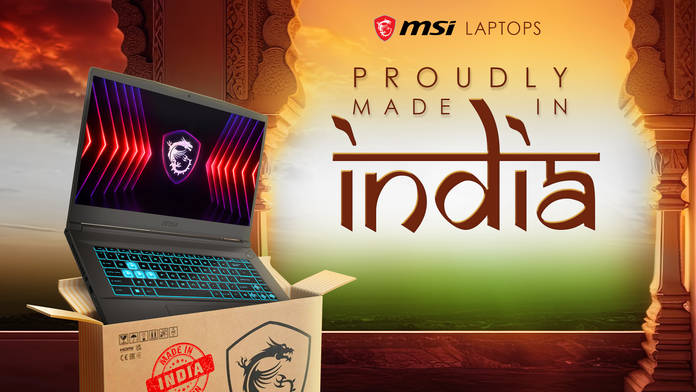
If you’ve been watching the Indian gaming laptop scene closely, you’ll know one thing for sure: local manufacturing is slowly but surely changing the way these machines are priced and sold here. And today, MSI just doubled down on that shift. The company has announced that its Katana and Crosshair series, packing the brand-new NVIDIA RTX 50 Series graphics, will be manufactured right here in India at its Chennai facility, in partnership with Syrma SGS.
Now, this may sound like just another corporate milestone, but this is actually a pretty big moment. These aren’t entry-level laptops we’re talking about; the Katana and Crosshair are MSI’s best-selling mid-to-high tier gaming machines, and seeing them roll off Indian assembly lines is a clear sign of where the market is heading.
Table of Contents
Why This Matters for Indian Buyers
First up, pricing. The MSI Katana Series is coming in at a starting price of ₹95,990, while the Crosshair Series lands at a much higher ₹1,89,990. On paper, these don’t look dramatically cheaper than what MSI usually asks. But here’s the catch: local manufacturing opens the door for reduced import duties and, in the long run, better price stability. We’re optimistic that over the next few quarters, we could see Indian-made gaming laptops becoming more competitively priced than imports. For now, though, MSI hasn’t made any official promises about price drops, so it’s a “wait and be hopeful” kind of situation.
The Katana Series: Everyday Warrior
Let’s talk hardware. The Katana is positioned as the all-rounder: slim, relatively lightweight, but still carrying the firepower of RTX 50 Series GPUs. What does that mean in real-world terms? Basically, you’re getting ray tracing and AI-powered graphics that make games like Cyberpunk 2077 and Alan Wake 2 look stunning, without needing to dial down settings. Add a 144Hz+ display, and you’re looking at buttery-smooth motion for fast-paced shooters like Apex Legends or Deadlock.
At under ₹1 lakh, this is MSI’s shot at gamers who want a laptop that works for both day jobs and night grinds. It’s portable enough to carry around, and thanks to Cooler Boost thermals, you don’t have to worry about it roasting your lap during extended sessions. Of course, the market does offer competition in the form of ASUS TUF Gaming or Lenovo LOQ, both are in the same sub-₹1 lakh territory. The Katana looks a touch more refined, especially with RTX 50 under the hood, though ASUS usually has the battery advantage.
The Crosshair Series: Esports Weapon
Then there’s the Crosshair lineup, which is unapologetically for the hardcore gamer. With RTX 50-series graphics and Intel Core processors, MSI is promising the kind of horsepower needed for competitive esports. The highlight here is high refresh rate displays paired with lightning-fast response times, giving you that crucial split-second edge in games like Counter-Strike 2 or Valorant.
At ₹1,89,990, though, this is where things get tricky. In India, that price range is already home to heavy hitters like the ASUS ROG Strix Scar series and Lenovo Legion Pro line-up. MSI will really have to lean on two selling points: the fact that it’s Made in India and the brand-new RTX 50 cards, which rival laptops may not be shipping at this scale just yet.
The Bigger Picture
The broader story here is MSI’s confidence in India. The company calls India one of its fastest-growing markets, and honestly, that checks out. Walk into any college campus, esports arena, or even a co-working space these days, and you’ll see a growing appetite for high-performance laptops. That too, not just for gaming, but also for content creation and productivity.
As such, by shifting Katana and Crosshair production here, MSI is not only banking on India’s manufacturing muscle, but also signalling that it wants to be part of India’s long-term tech story. And let’s not forget: local production also means faster availability of newer models. If you’ve ever felt frustrated about Indian launches trailing months behind US or EU rollouts, this move could shorten that gap. There’s also the better availability of spare parts, which in turn improves the customer service that MSI will be able to deliver.
Should You Be Excited?
In short, yes. The Katana looks like a solid pick for gamers and creators on a budget who still want next-gen features, while the Crosshair is clearly targeting competitive players who need every ounce of power squeezed out of their rigs. Of course, whether these machines actually justify their price tags will depend on how MSI tunes them for the Indian market. Local manufacturing is a great headline, but the real win for buyers will be if it translates into better pricing, stronger after-sales support, and wider availability. And while we’re hopeful that Indian manufacturing will eventually deliver those perks, MSI has stayed mum on official commitments for now.