OPPO ColorOS 16 announced globally: what’s new, features and supported devices


OPPO has launched ColorOS 16, its latest Android operating system, alongside the international launch of the flagship Find X9 lineup. Based on Android 16, the update prioritises improved performance, enhanced cross-device harmony, and greater use of AI. The rollout starts in November 2025 continuing into early 2026, reaching premium, mid-tier, and then eventually the budget segment.
ColorOS 16 comes weeks after Vivo launched OriginOS 6 and OnePlus optimised OxygenOS 16 for its global devices. Though the three are all based on Android 16, their focus areas are different. Vivo’s OriginOS 6’s design is focussed on minimalism with realistic animations while OnePlus’ OxygenOS 16 emphasises smooth performance with a clean interface similar to stock Android. In contrast, OPPO’s ColorOS 16 combines clean design elements with AI features and seamless connectivity across multiple devices.
Show Full Article
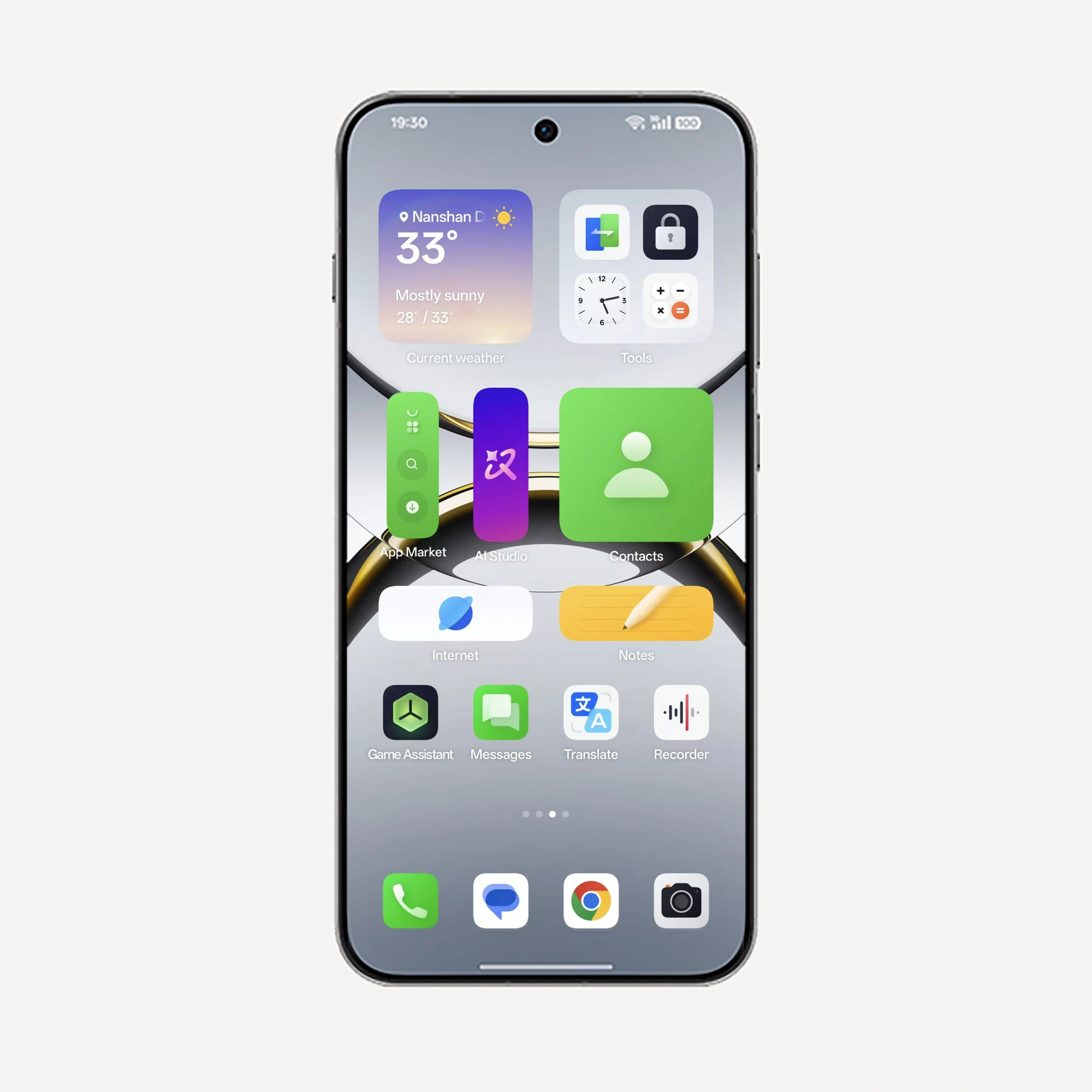

ColorOS 16 brings forth OPPO’s ‘Luminous Rendering Engine’ and ‘Trinity Engine’ to drive transitions. These frameworks cut down on visual latency, enhance responsiveness, and refine motion flow between apps. OPPO says animation smoothness has seen double-digit improvements, but the company hasn’t put out frame-rate-specific metrics yet.
The design is said to take inspiration from nature’s light and shadow. Soft-motion wallpapers and always-on screens emulate environmental signals like sunrise hues or cloud movements. This natural visual scheme strongly resonates with OriginOS 6’s Fluid Design System but varies in psychology of colours. ColorOS 16 seems to remain slightly richer in saturation and contrast, rendering icons and widgets more vivid.


For users, the most noticeable benefit will likely be the improved speed in daily navigation. App launch times and scroll transitions should feel faster, while heavy multitasking is said to consume less battery due to better resource allocation.
The interface also gives precedence to personalisation and AI support. The new ‘AI Mind Space’ is a single dashboard for notes, reminders, and contextual recommendations, similar to Gemini or Microsoft Copilot’s features. OPPO’s AI integration is capable of performing offline as well as cloud-based operations, like summarising text or suggesting photo editing within the gallery itself. AI Portrait Glow, AI Eraser, and Master Cut tools provide one-tap visual enhancements, focussing on day-to-day creative simplicity over professional-grade editing.
Then there is ‘O+ Connect’, a cross-device platform that enables one-touch interaction across OPPO’s phones, tablets, and even third-party PCs and smart accessories. The capability to mirror apps, answer calls, or transfer files across devices indicates OPPO’s desire to directly compete with Apple’s ecosystem coherence and Samsung’s One UI continuity features.
The timing of ColorOS 16 fits into a larger pattern of AI-based interfaces superseding human-driven task flows in Android skins. OnePlus, Vivo, and Realme have also emphasised on on-device intelligence this year and OPPO is following suit. Another new area of focus is decentralising privacy. OPPO’s new “Private Computing Cloud” guarantees sensitive processes, such as facial recognition or health data analysis, occur locally in an encrypted manner before syncing to cloud storage. That follows security efforts by rivals like Samsung Knox Matrix and Google’s Privacy Sandbox, highlighting how local data handling has become a base requirement instead of a premium feature.
ColorOS 16 is set to initially roll out to the Find X9 and Find X9 Pro, followed by the Reno 13 series and some F-series models in early 2026. If you already have a Find or Reno device from the last two years, the update should boost longevity due to enhanced efficiency and newer AI workflows. Older models might experience less performance boost, since the new rendering engines take advantage of hardware found primarily in chipsets from 2023 and later.