
The Redmi Note 15 Pro+ is the latest mid-range smartphone in town, and the top-end model from the popular Note lineup. It aims to offer a well-balanced package with feature-rich cameras, a vibrant display, a large battery, and long software support. The Redmi Note 15 Pro+ is more of a value-for-money smartphone without compromising on the hardware. The Note 15 Pro+ also sits close to the Realme 16 Pro+ in the same premium midrange space and targets users who want near-flagship features without flagship pricing.
While both phones focus on big displays, large batteries, and high-resolution cameras, their priorities differ in key areas such as performance tuning, camera versatility, and long-term software support. Here’s a detailed comparison between the Redmi Note 15 Pro+ and the Realme 16 Pro+ to get a better idea of which phone might be the better pick and why.
Table of Contents
Price
The Redmi Note 15 Pro+ starts at Rs 37,999 for the 8GB+256GB variant, which is not only more affordable than the Realme 16 Pro+ but also offers more storage. It comes in two more variants, going up to Rs 43,999. The Realme 16 Pro+ is also available in three variants starting at Rs 39,999 and as expensive as Rs 44,999.
| Variant | Redmi Note 15 Pro+ price | Realme 16 Pro+ price |
| 8GB+128GB | NA | Rs 39,999 |
| 8GB+256GB | Rs 37,999 | Rs 41,999 |
| 12GB+256GB | Rs 39,999 | Rs 44,999 |
| 12GB+512GB | Rs 43,999 | NA |
The Redmi Note 15 Pro+ is more affordable here with not just a lower price tag but more storage as well.
Display, design
Both the Redmi Note 15 Pro+ and the Realme 16 Pro+ aim to deliver a premium look and strong display performance, but they take slightly different approaches.
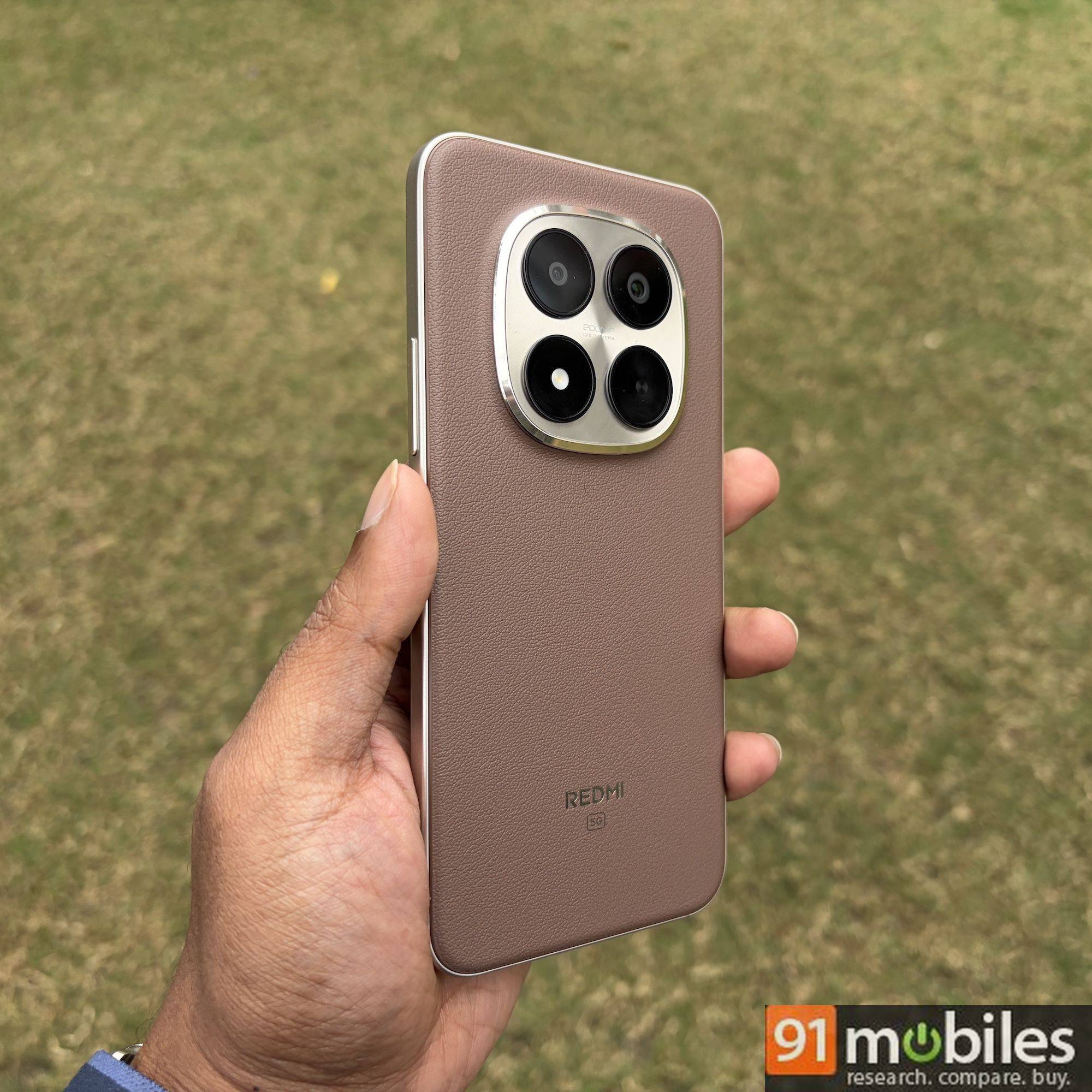
The Redmi Note 15 Pro+ features a 6.83-inch 1.5K CrystalRes AMOLED display with up to 120Hz refresh rate and 3,200 nits peak brightness. It has curved glass on the front and back, with colour options including Coffee Mocha, Mirage Blue, and Carbon Black, plus an optional Mocha Brown leather finish. It also gets Gorilla Glass Victus 2 protection and carries IP66, IP68, IP69, and IP69K ratings for durability.
The Realme 16 Pro+ is positioned as the more premium model in its lineup and sports a 6.8-inch AMOLED HyperGlow 4D Curve+ display (1280 × 2800 pixels) and a claimed peak brightness of 6,500 nits. It comes in Master Gold, Master Gray, and an India-exclusive Camellia Pink, and stands out with a unique camera design, flat frame, and a more flagship-like appearance. It matches the Redmi Note 15 Pro+ with the same high-level IP ratings.

In comparison, the Realme 16 Pro+ has the advantage in peak brightness and visual impact, making it better for HDR content and outdoor use. The Redmi Note 15 Pro+ offers tougher glass protection and more material choices, which may appeal to users who value durability and a refined in-hand feel.
Performance
The Redmi Note 15 Pro+ is powered by the Snapdragon 7s Gen 4 chipset, which is an upgrade over its predecessor and should deliver better overall performance and efficiency. While it looks promising on paper, its real-world and sustained performance is yet to be fully evaluated.
The Realme 16 Pro+ uses the Snapdragon 7 Gen 4, paired with a large AirFlow vapour chamber cooling system. Although it may lag behind some rivals in peak benchmark scores, it focuses on stability under load. In testing, it maintained performance better during heavy tasks and handled everyday use smoothly, including streaming, browsing, and gaming.
In comparison, the Redmi Note 15 Pro+ has the newer chip advantage, so it could offer better performance levels over the Realme 16 Pro+, but the differences will most likely be minimal, either way.
Cameras
The Redmi Note 15 Pro+ is built around a 200MP Samsung ISOCELL HP3 main sensor, designed to capture ultra-detailed photos with 2x and 4x “optical-level” zoom options. This approach is meant to offset the absence of a dedicated telephoto lens. The rear setup also includes an 8MP ultra-wide camera, while the front houses a 32MP selfie sensor. How well the high-resolution sensor compensates for the missing telephoto will become clearer after a full review.

The Realme 16 Pro+ takes a more versatile route with a 200MP Samsung HP5 main camera paired with a 50MP telephoto lens offering 3.5x optical zoom and up to 120x digital zoom. The presence of a true telephoto camera makes it better suited for long-range photography. It also features a 50MP front camera, giving it an edge over the Redmi Note 15 Pro+ that uses a 32MP sensor.
In comparison, the Redmi Note 15 Pro+ relies on its high-resolution main sensor for zoom, while the Realme 16 Pro+ offers a more complete camera setup with a dedicated telephoto lens and a higher-resolution selfie camera, making it the stronger choice for photography versatility.
Battery
The Redmi Note 15 Pro+ is equipped with a 6,500mAh battery, one of the largest capacities ever seen in a Redmi Note smartphone. Despite the big battery, it should still charge quickly thanks to 100W HyperCharge support, with the charger included in the box.
The Realme 16 Pro+ goes a step further with an even larger 7,000mAh battery, paired with 80W fast charging. While its charging speed is lower than the Redmi’s on paper, the higher capacity should help deliver longer usage times and reduce battery anxiety during heavy use.

Software
On the software front, the Redmi Note 15 Pro+ ships with HyperOS 2.0 based on Android 15. Xiaomi has already confirmed that HyperOS 3.0 will arrive soon and has promised four years of major Android updates along with six years of security patches, giving the phone strong long-term support. While it launches one Android version behind its rival, the extended update policy helps balance things out over time.
The Realme 16 Pro+ runs Realme UI 7.0 based on Android 16 out of the box and introduces the new Flux Engine, which focuses on smoother system animations and more natural motion effects. Realme has committed to three years of Android updates and four years of security updates, which is slightly shorter than Redmi’s promise.
Both phones offer plenty of customisation options, AI-powered features, and fluid animations in daily use. Although the Realme 16 Pro+ starts ahead with Android 16, the Redmi Note 15 Pro+ evens the playing field with longer software support, making the overall software experience competitive on both sides, depending on which UI feels more appealing and intuitive.
Summing up
The Redmi Note 15 Pro+ and the Realme 16 Pro+ each play to different strengths. The Note 15 Pro+ offers faster charging, a sharper display, and a newer chipset, but misses out on a dedicated telephoto camera. The 16 Pro+ focuses on camera versatility, higher brightness, and the latest software experience, though with slower charging and a shorter update promise. Which one makes more sense comes down to whether you value versatile cameras and a bigger battery or a well-packaged smartphone at a lower price.