Redmi Note 17 Pro vs OnePlus Nord CE 6 comparison: which phone offers more under Rs 40,000?


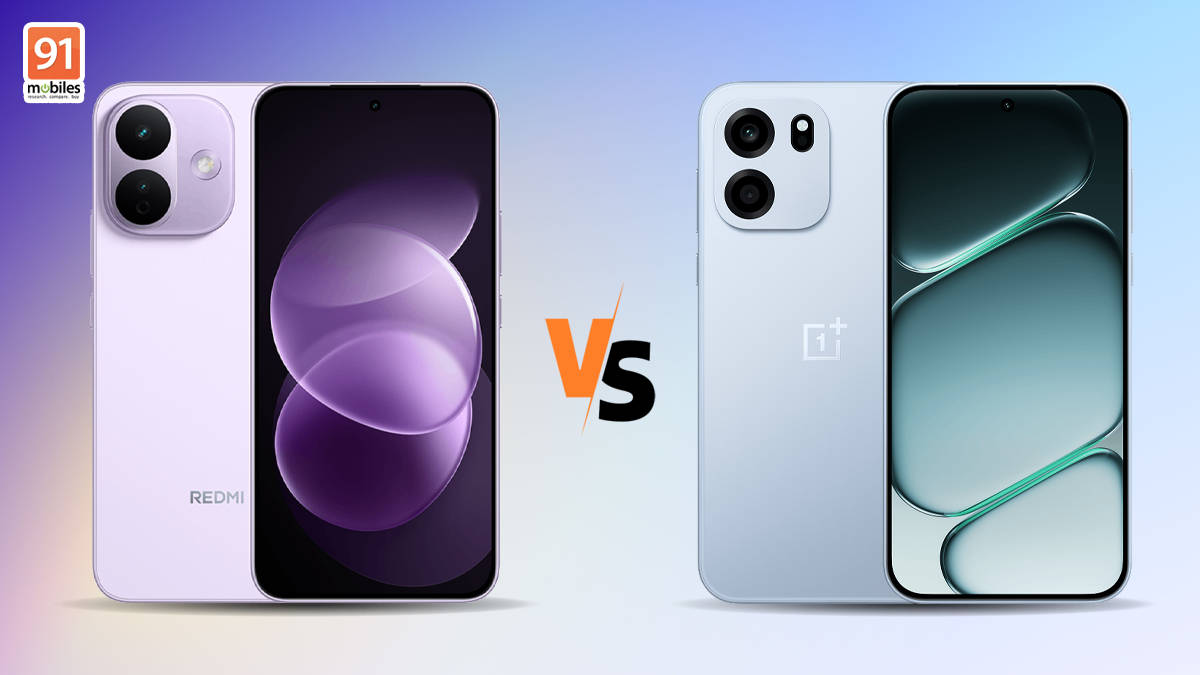
The Redmi Note 17 Pro and OnePlus Nord CE 6 are two mid-range 5G smartphones that put a strong emphasis on battery life, durability and large AMOLED displays. The Redmi Note 17 Pro comes with a 9,000mAh silicon-carbon battery, while the OnePlus Nord CE 6 has an 8,000mAh battery. Both also offer 1.5K AMOLED panels and IP66, IP68, IP69 and IP69K protection. However, the OnePlus has a more powerful Snapdragon 7s Gen 4 chip and a faster 144Hz display, while the Redmi counters with a larger battery and a more versatile rear camera setup. Here’s how the two phones compare if you’re planning to purchase a phone under Rs 40,000.
| Specs | Redmi Note 17 Pro | OnePlus Nord CE 6 |
| Display | 6.83-inch 1.5K AMOLED, 120Hz | 6.78-inch 1.5K AMOLED, 144Hz |
| Processor | Snapdragon 6s Gen 4 | Snapdragon 7s Gen 4 |
| RAM/storage | 8GB, 128GB/256GB | 8GB, 128GB/256GB |
| Rear cameras | 50MP + 8MP ultrawide | 50MP + 2MP depth |
| Front camera | 16MP | 32MP autofocus |
| Battery | 9,000mAh, 67W | 8,000mAh, 80W |
| Software | Android 16-based HyperOS 3 4 + 6 years | Android 16-based OxygenOS 16 2 + 4 years |
| Durability | IP66/IP68/IP69/IP69K, Gorilla Glass Victus 2 | IP66/IP68/IP69/IP69K, MIL-STD-810H |
Table of Contents
Redmi Note 17 Pro vs OnePlus Nord CE 6: price in India
The OnePlus Nord CE 6 launched in India at Rs 29,999 for the 8GB + 128GB variant and Rs 32,999 for the 8GB + 256GB model. Its current prices are Rs 37,999 and Rs 41,999, respectively. The Redmi Note 17 Pro starts at Rs 36,999 for 8GB + 128GB, while the 8GB + 256GB variant costs Rs 39,999.
| Variant | Redmi Note 17 Pro | OnePlus Nord CE 6 |
| 8GB + 128GB | Rs 36,999 | Rs 37,999 |
| 8GB + 256GB | Rs 39,999 | Rs 41,999 |
At their current prices, the Redmi Note 17 Pro is Rs 1,000 cheaper in the base configuration and Rs 2,000 cheaper for 256GB storage.
Redmi Note 17 Pro vs OnePlus Nord CE 6: design, display
The Redmi Note 17 Pro and OnePlus Nord CE 6 follow the current mid-range trend of using flat frames and relatively clean rear panels, but their camera designs give them distinct looks. The Redmi uses a rounded rectangular camera island with two vertically stacked lenses and a flash positioned alongside them. The phone comes in Cloud Blue, Purple Vibe and Stealth Black colour options in India.


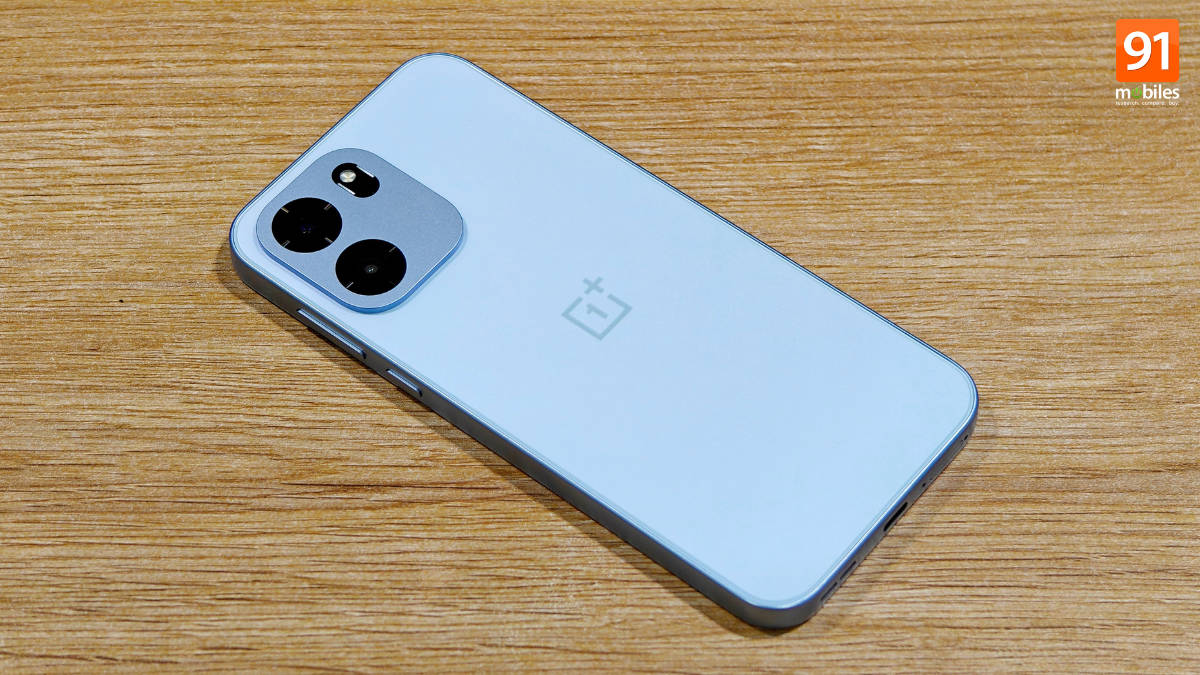
The OnePlus Nord CE 6 takes a more minimal approach. Its rear camera housing is a rectangular module with two large circular lenses arranged vertically, while the flash sits alongside the upper lens. The light-blue version shown here has a relatively understated rear panel, with the OnePlus logo placed towards the lower half. The colours are Fresh Blue, Lunar Pearl and Pitch Black.
The Redmi Note 17 Pro is slightly larger and heavier at 226 gms, while the OnePlus Nord CE 6 weighs 215 gms, making it 11 gms lighter. So although both phones have large displays and similar flat-sided designs, the Nord CE 6 should feel a little easier to carry, while the Redmi’s larger footprint accommodates its bigger display and battery.
On the display front, both phones use 1.5K AMOLED panels, but OnePlus pushes the refresh rate higher. Its 6.78-inch Sunburst AMOLED display supports up to 144Hz adaptive refresh, compared to 120Hz on the 6.83-inch Redmi panel. The Nord CE 6 also supports up to 3,200Hz instantaneous touch response through its Touch Reflex chip, which is particularly relevant for gaming.


The Redmi Note 17 Pro has a slightly larger 6.83-inch CrystalRes AMOLED display with a 2772 x 1280 resolution and Gorilla Glass Victus 2 protection. Its claimed peak brightness goes up to 3,500 nits. Both phones also have IP66, IP68, IP69 and IP69K ratings. The Nord CE 6 additionally carries MIL-STD-810H certification, while the Redmi uses Gorilla Glass Victus 2 for front protection.
Redmi has gone for a softer, more decorative rear-camera treatment and a wider choice of finishes, while OnePlus keeps the rear cleaner and more restrained. On the display side, the Nord CE 6 has the higher refresh rate and gaming-focused touch response, while the Redmi offers a slightly larger panel and Victus 2 protection.
Redmi Note 17 Pro vs OnePlus Nord CE 6: processor
The Redmi Note 17 Pro is powered by the Snapdragon 6s Gen 4, paired with 8GB of LPDDR4X RAM. In India, it is available with 128GB or 256GB storage. The 128GB version uses UFS 2.2 storage, while the 256GB variant gets faster UFS 3.1 storage. The OnePlus Nord CE 6 uses the Snapdragon 7s Gen 4, along with 8GB LPDDR5 RAM and 128GB or 256GB UFS 3.1 storage.
The Snapdragon 7s Gen 4 is above the Snapdragon 6s Gen 4, giving the Nord CE 6 the stronger hardware configuration for performance. The faster LPDDR5 RAM also gives OnePlus an advantage over the Redmi’s LPDDR4X memory. However, both phones should cover everyday tasks such as social media, streaming, browsing and regular multitasking. The difference becomes relevant for buyers who intend to play demanding games or want more performance headroom over several years.
The storage configuration also gives the Nord CE 6 an advantage at the 128GB level, since its UFS 3.1 storage is faster than the UFS 2.2 storage on the 128GB Redmi variant. The Redmi’s 256GB version, however, also uses UFS 3.1.
Redmi Note 17 Pro vs OnePlus Nord CE 6: cameras
The camera setups are one of the bigger differences between the two phones. The Redmi Note 17 Pro has a 50MP primary camera with OIS and an 8MP ultrawide camera. At the front is a 16MP selfie camera.
The OnePlus Nord CE 6 also gets a 50MP primary camera with OIS, but its secondary rear camera is a 2MP depth sensor. On the front, it has a 32MP autofocus camera.

The Redmi therefore offers more flexibility for rear photography, particularly for landscapes, architecture and group shots where an ultra-wide camera can be useful. The OnePlus, on the other hand, has a higher-resolution front camera with autofocus, which could be more useful for selfies and video calls. Both phones use OIS on their 50MP primary cameras, so the main-camera comparison will depend more on sensor performance and image processing than the headline resolution alone.
Redmi Note 17 Pro vs OnePlus Nord CE 6: battery, charging
The Redmi Note 17 Pro packs a 9,000mAh silicon-carbon battery and supports 67W charging and 22.5W wired reverse charging. The OnePlus Nord CE 6 has an 8,000mAh battery but supports faster 80W SUPERVOOC charging and 27W wired reverse charging.
The Redmi therefore has a 1,000mAh advantage in battery capacity, while the OnePlus counters with faster charging. Both capacities are considerably larger than those found on many mid-range smartphones, so battery life is likely to be a major strength for either phone.
OnePlus also includes All-Scenario Bypass Charging, which can supply power directly from the wall during gaming rather than relying entirely on the battery. The feature is designed to reduce heat and battery wear during long gaming sessions.
Redmi Note 17 Pro vs OnePlus Nord CE 6: software and features
The Redmi Note 17 Pro runs HyperOS 3 based on Android 16, while the OnePlus Nord CE 6 runs OxygenOS 16 based on Android 16. Both therefore offer the same underlying Android generation, although the two interfaces differ in their design and feature sets. Redmi offers the longer software support with four years of OS updates and six years of security, compared to the Nord CE 6’s 2+4 years policy.
The Redmi also has a broad connectivity and feature list, including 5G, NFC, eSIM, Wi-Fi, Bluetooth, an IR blaster and an in-display fingerprint sensor. The Nord CE 6 also has dual-SIM 5G connectivity, an IR blaster and an in-display fingerprint sensor. Other hardware features include stereo speakers, an X-axis haptic motor and a six-axis gyroscope.
The choice between the two software experiences will largely come down to preference. However, Redmi has an advantage for users who specifically need features such as eSIM and NFC, based on the listed specifications.
Who is the Redmi Note 17 Pro for?
The Redmi Note 17 Pro is aimed at users who want a large battery, a versatile rear camera setup and extensive durability protection. Its 9,000mAh battery is larger than the Nord CE 6’s 8,000mAh unit, while the 8MP ultrawide camera is more useful for general photography than a 2MP depth sensor. The 8GB + 128GB variant starts at Rs 36,999, while the 8GB + 256GB model costs Rs 39,999. The latter also upgrades the storage from UFS 2.2 to UFS 3.1 and the company offers longer software support. The compromises are the Snapdragon 6s Gen 4 processor, 120Hz refresh rate and slower 67W charging.


Who is the OnePlus Nord CE 6 for?
The OnePlus Nord CE 6 is made for users who put greater emphasis on performance, display smoothness and charging speed. Its Snapdragon 7s Gen 4, LPDDR5 RAM, 144Hz AMOLED display and 80W charging give it clear hardware differences over the Redmi Note 17 Pro. It also has a 32MP autofocus front camera and gaming-focused features such as 3,200Hz instantaneous touch response and bypass charging.
The Redmi Note 17 Pro offers a larger battery and a more useful secondary rear camera, but the Nord CE 6 provides the stronger performance-focused configuration. At its current Rs 37,999 starting price, the difference is only Rs 1,000, making the choice largely dependent on whether battery capacity and camera versatility or performance and charging are the higher priority.