Smartphones launching next week: Vivo V70 series, Pixel 10a, Infinix Note Edge, and more


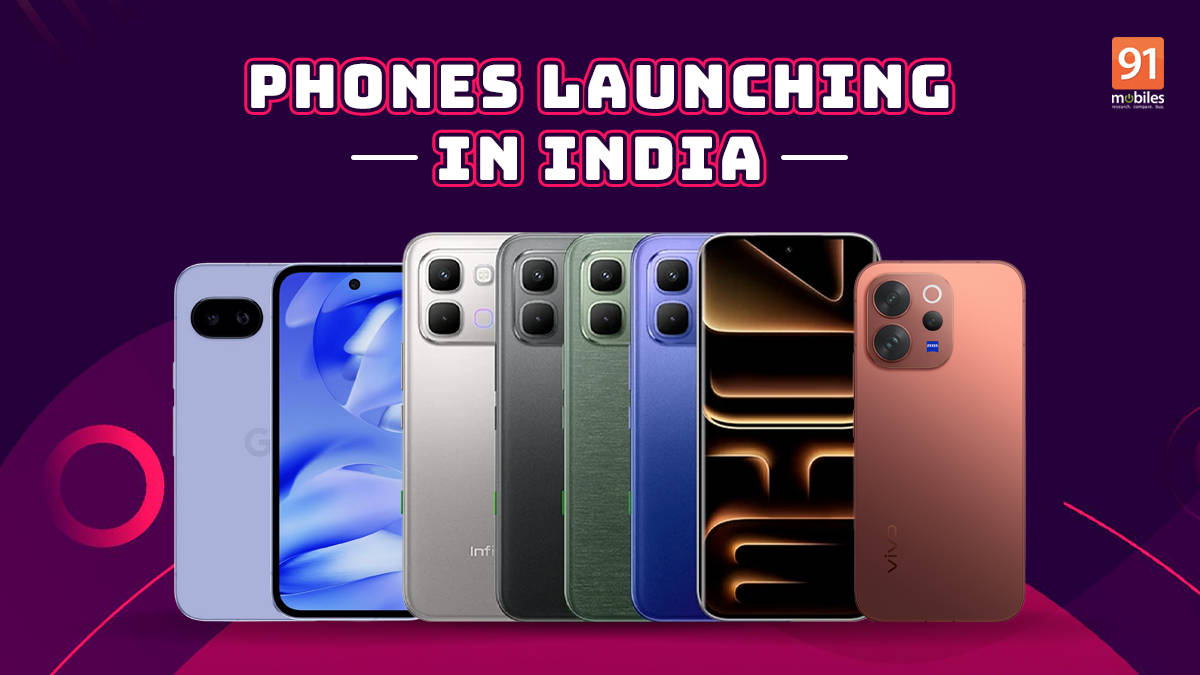
The third week of February has some exciting smartphone launches lined up in India. These aren’t ultra-premium flagships grabbing headlines, but mid-range devices aimed squarely at the segment that appeals to most buyers. The list includes the next-gen V-series smartphones, Google and Apple’s mid-range offerings, and an all-new series in the Infinix portfolio. Here’s a list of smartphones launching in the country, along with their launch dates, expected specifications, pricing details, and more.
Phones launching in India next week (February 16th-20th)
- Google Pixel 10a
- Infinix Note Edge
- Vivo V70 and Vivo V70 Elite
- iPhone 17e
Table of Contents
Google Pixel 10a
Google is all set to launch its next-gen mid-range smartphone, Pixel 10a, in India on February 18th. Similar to its predecessor, the handset will be Flipkart exclusive in the country. The company has teased the design of the smartphone, which appears identical to the Pixel 9a, with flat edges and a pill-shaped camera module, which sits flush to the phone’s body.
The Pixel 10a specifications remain under wraps, but leaks and rumours suggest that it could arguably be the same as the Pixel 9a. The handset is tipped to rock the same Tensor G4 chipset under the hood, a 6.2-inch FHD+ AMOLED display with 120Hz refresh rate, 48MP + 13MP dual rear cameras, 13MP front-facing camera, and a 5,100mAh battery aided by 23W fast charging speeds.


The phone is only expected to be different from the Pixel 9a in software, with Android 16 running out of the box. The 9a, however, has received this OS update via OTA. The Indian pricing of the Pixel 10a might not have been revealed yet, but in Europe, the phone could cost €500 (approximately Rs 52,000) for the base 128GB variant, while the 256GB model could retail for €600 (roughly Rs 63,000). The handset was recently leaked in four colour options: Obsidian, Fog, Berry, and Lavender.
If the phone is expected to launch with the same specifications, it won’t be an appealing buy to Pixel 9a users. The Pixel 10a might make sense to users coming from the Pixel 7a and older devices, with its latest software, advanced AI capabilities, and promising camera setup.
Infinix Note Edge
The Infinix Note Edge India launch is also set for February 18th at 12:00 pm (IST). It will also be a Flipkart special device. The handset has already been launched globally, so the only thing here to see is the Infinix Note Edge pricing. Looking at the specifications, it could be a sub-Rs 25,000 smartphone.
The Infinix Note Edge sports a 6.78-inch curved AMOLED display with a 1.5K resolution, a 120Hz refresh rate, 2,800Hz touch sampling rate, and a peak brightness of up to 4,500 nits. It will be a punch-hole display with 1.87mm razor-thin bezels and Corning Gorilla Glass 7i protection. The handset also features dual JBL-tuned stereo speakers. Under the hood, the phone ships with a MediaTek Dimensity 7100 chip, paired with up to 8GB of RAM.


For photography, the Edge will rely on a 50MP sensor in the dual setup at the back. The handset is likely to come with a 6,500mAh battery, backed by 45W fast charging. Software-wise, the device will run XOS 16 based on Android 16. We recently had hands-on with the latest custom Android skin XOS 16, do check it out.
Having said that, the major attraction of the Infinix Note Edge is its design. The handset will debut with curved edges and an iPhone 17 Pro-like camera module. The IP65 rating adds durability to the device against minor splashes of water and dust. Moreover, the device is likely to come in different colour options: Lunar Titanium, Silk Green, Stellar Blue, and Shadow Black.
If you have been eyeing a good-looking mid-range smartphone, the Infinix Note Edge is worth eyeing.
Vivo V70 series
The Vivo V70 series will break covers in India on February 19th. This time, the series will include two models: Vivo V70 and Vivo V70 Elite. The prices of both models have been leaked, and it seems the Vivo V70 will retail starting at Rs 45,999, while the V70 Elite could serve the upper mid-range segment with its Rs 51,999 starting price. You can read all about the Vivo V70 Elite explained article, where we talked about its relevance, who should buy it and more.
In short, the Vivo V70 and V70 Elite will offer a near-identical design and specifications. The handsets will feature flat edges and a square camera deco, which, while familiar, is a departure from the V-series’ usual curved display aesthetic. The design will be IP68 and IP69 water and dust resistance certified. Moreover, the V70 series will boast a 6.59-inch 1.5K OLED display with a 120Hz refresh rate and up to 5,000 nits of peak brightness, and Vivo claims the thinnest bezels in its segment.


Powering the devices is going to be a sizeable 6,500mAh battery, supported by 90W fast charging. The handsets will boot OriginOS 6 out of the box and are promised to receive at least six years of software support. The V70 series will also come with a 3D ultrasonic in-display fingerprint scanner, an X-axis linear motor for improved haptic feedback, Origin Island, and more.
The only major difference between the Vivo V70 and the V70 Elite is going to be the chipset. The vanilla model will be powered by Snapdragon 7 Gen 4 SoC – the same as its predecessor, Vivo V60, while the Vivo V70 Elite will rock Snapdragon 8s Gen 3 SoC under the hood. That’s a sub-flagship chipset from last year. While it won’t be as powerful as the latest Qualcomm 8-series chipset, the SoC is expected to deliver performance gains for the V70 Elite to justify its premium pricing.
Both variants will share the Passion Red colour option, but the V70 Elite will also be available in Sand Beige and Authentic Black shades. The Vivo V70, on the other hand, will also be available in Lemon Yellow. The handsets should be a good buy in the mid-range segment with their versatile camera setup and impressive design.
iPhone 17e
While it is not confirmed, rumours have it that the iPhone 17e will be launched on February 19th. The latest low-cost model from Apple is expected to come with the dynamic island, similar to the pricier iPhone lineup. The display could reportedly be a 6.1-inch OLED, but with a 60Hz refresh rate instead of 120Hz. Moreover, the iPhone 17e could still ship with a single rear-facing camera, most likely with a 48MP resolution, which will be backed by Apple’s telephoto fusion technology to offer 24MP portrait shots with improved subject separation and a pleasing, natural-looking bokeh effect.


The iPhone 17e is expected to rock the A19 chipset to manage the load. It’s the same chipset that powers the iPhone 17 smartphone, which means the 17e will be no slouch in performance. Apart from this, the handset is also expected to support MagSafe charging, another new addition to the lineup, and will reportedly launch in a new Lavender colour option, along with the usual Black and White.
Other details of the smartphone remain under wraps, but one can expect the latest iOS 26 running out of the box, offering liquid glass design, dynamic lock screen, visual intelligence, and more. The phone may also boast the new C1X cellular modem chip, N1 chip for Bluetooth, Wi-Fi, and Thread connectivity.
Coming to the iPhone 17e price, it could allegedly be the same as the iPhone 16e (review), starting at $599 (~54,300). In India, the 16e was introduced at Rs 59,900 for the base 128GB storage variant, while the 256GB and 512GB variants were priced at Rs 69,900 and Rs 89,900, respectively. If you are looking to buy the iPhone with the latest chipset at a relatively more affordable price, the iPhone 17e is worth considering.