Best phones under Rs 30,000: expert picks for cameras, battery, performance, and more


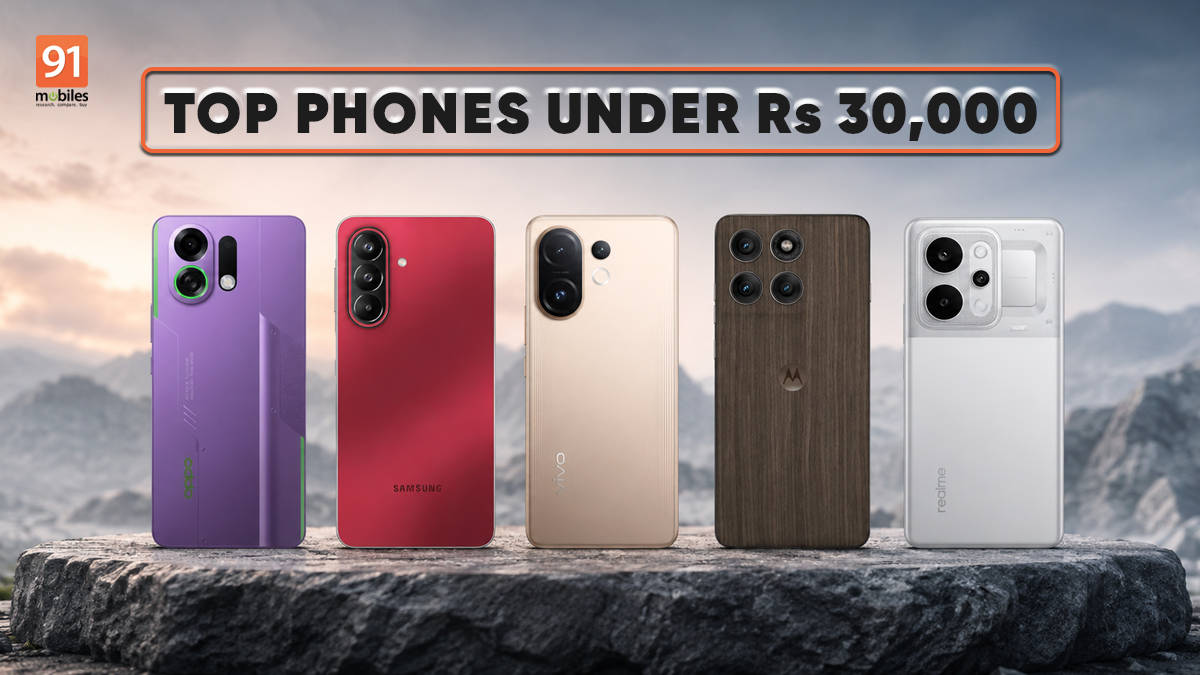
With smartphone prices having climbed steadily in India over the past few months, finding a good option under Rs 30,000 takes a lot more effort than it used to. This list pulls together a few phones that still make a good case for themselves, whether you care most about overall balance, cameras, performance, battery life or software.
We’ve included quite a few older devices that launched last year and now offer a lot more value for their current prices. Each option stands out for doing one thing especially well, so you can match your budget to the priority that matters most to you. Check it out below:
| Phone | Best for | Price |
| Motorola Edge 60 Pro | Best overall value with a balanced all-round package | Rs 29,999 |
| OPPO K13 Turbo Pro | Best performance with flagship-level gaming output | Rs 31,999 |
| Vivo T4 Pro | Most versatile cameras with a 3x telephoto lens | Rs 29,999 |
| Realme P4 Power | Biggest battery and exceptionally long run-time | Rs 28,999 |
| Samsung Galaxy M47 | Clean, useful OneUI with the longest software support | Rs 23,999 |
This list should help make the buying process much easier if you’re looking to purchase a new phone under Rs 30,000. Each phone here has a clear strength, so you can choose based on your priorities.
If you want a balanced phone, the Motorola Edge 60 Pro is the best all‑rounder; if performance matters most, the OPPO K13 Turbo Pro is the one to go for. Camera‑focused buyers should look at the Vivo T4 Pro, while anyone who wants the longest battery life will find the Realme P4 Power hard to beat. And if software support is your main concern, the Samsung Galaxy M47 is easily the best option at this price point. So the “best” phone really depends on what you care about most.
Table of Contents
Motorola Edge 60 Pro — Best overall
Current price: Starting at Rs 29,999 (8GB + 256GB variant)
Why we chose it
The Motorola Edge 60 Pro (long-term review) is now a year old, but that actually works in its favour at the current price of Rs 29,999. It still sits at its initial launch price and offers excellent value for money.


Its core strengths have aged quite well, too: the Dimensity 8350 still delivers smooth day-to-day performance, the battery life remains one of its best traits, and the display is bright and immersive. It is also very durable, especially against water, and the clean software with useful AI features adds to the appeal.
Key specifications
| SPECS | DETAILS |
|---|---|
| Display | 6.7‑inch 1.5K P‑OLED, 120Hz, quad‑curved, HDR10+ |
| Processor | MediaTek Dimensity 8350 Extreme |
| Cameras | Rear: 50MP main (OIS) + 50MP ultra‑wide + 10MP telephoto; Front: 50MP |
| Battery | 6,000mAh, 90W wired charging, 15W wireless charging |
| Software | Hello UI based on Android 15, 3 OS updates + 4 years security |
OPPO K13 Turbo Pro — Best performance
Current price: Starting at Rs 31,999 (8GB + 256GB variant)
Why we chose it
The OPPO K13 Turbo Pro (review) is the best performance pick in this list because it brings near-flagship power at a price that still sits just around the Rs 30,000 mark after bank offers. Its Snapdragon 8s Gen 4, fast LPDDR5X RAM and UFS 4.0 storage give it the sort of hardware you’d usually see around Rs 45,000 currently. The active cooling fan and large vapour chamber also help it stay steady under heavy gaming loads.
AnTuTu score


OPPO K13 Turbo Pro
Qualcomm Snapdragon 8s Gen 4
2,029,394

Motorola Edge 60 Pro
MediaTek Dimensity 8350 Extreme Edition
1,440,382

realme P4 Power
MediaTek Dimensity 7400 Ultra
1,047,842

vivo T4 Pro
Qualcomm Snapdragon 7 Gen 4
1,010,472
AnTuTu assesses a smartphone's CPU, GPU, memory, and overall user experience (higher is better)
What makes it special is not just the raw specs, but how well it holds performance when pushed. If you want a phone that outclasses anything at this price in terms of performance, this is the one to pick.
If the phone is not deliverable to your location or you want to stay strictly under Rs 30,000, the OPPO K13 Turbo is also another great option at this price point, which is a great performer as well.
Key specifications
| SPECS | DETAILS |
|---|---|
| Display | 6.8‑inch 1.5K flat AMOLED, 120Hz |
| Processor | Qualcomm Snapdragon 8s Gen 4 |
| Cameras | Rear: 50MP main (OIS) + 2MP secondary; Front: 16MP |
| Battery | 7,000mAh, 80W SUPERVOOC fast charging |
| Software | ColorOS 15 based on Android 15 |
Vivo T4 Pro — Best camera
Current price: Starting at Rs 29,999 (8GB + 256GB variant)
Why we chose it
The Vivo T4 Pro (camera review) is easily the best camera phone at its price because it delivers a versatile setup with a useful 3x telephoto lens. It gives you punchy, vibrant photos with good detail and solid day-to-day reliability, which makes it easy to recommend for casual photographers.
The telephoto camera is the real draw here, since it lets you zoom in without the usual loss in clarity. Given the current memory shortages, no new smartphone currently brings a telephoto lens under Rs 30,000, and the Vivo T4 Pro bridges that gap, which makes it the most flexible camera phone at its price.
Key specifications
| SPECS | DETAILS |
|---|---|
| Display | 6.77‑inch AMOLED, FHD+ (1080×2392), 120Hz, curved |
| Processor | Snapdragon 7 Gen 4, octa‑core 2.8GHz |
| Cameras | Rear: 50MP main (OIS) + 50MP 3x telephoto (OIS) + 2MP depth; Front: 32MP |
| Battery | 6,500mAh, 90W fast charging |
| Software | OriginOS based on Android 15 |
Realme P4 Power — Best battery
Current price: Starting at Rs 28,999 (8GB + 128GB variant)
Why we chose it
The Realme P4 Power (review) earns the battery crown because it simply outlasts the rest. Its huge 10,001mAh cell gives it a clear advantage in endurance, and the testing backs that up across PCMark, streaming and longer gaming sessions. It is also faster to charge than a battery of this size might suggest, which helps reduce the pain of carrying such a bulky device.
PCMark Battery score (in hours)
realme P4 Power
10001 mAh
21.1
vivo T4 Pro
6500 mAh
15.4
OPPO K13 Turbo Pro
7000 mAh
13.7
Motorola Edge 60 Pro
6000 mAh
8.5
PCMark battery test measures phone battery life from 100% to 20% (higher is better)
Which brings me to its obvious trade-off: it is a thick, heavy phone, so you feel the bulk in daily use. But if battery life is your main priority and you want the phone that lasts the longest in the list, the Realme P4 Power is the easiest recommendation.
Key specifications
| SPECS | DETAILS |
|---|---|
| Display | 6.78‑inch 1.5K AMOLED, 144Hz, quad‑curve, up to 6,500 nits |
| Processor | MediaTek Dimensity 7400 / 7400 Ultra |
| Cameras | Rear: 50MP Sony IMX882 main (OIS) + 8MP ultra‑wide; Front: 16MP |
| Battery | 10,001mAh silicon‑carbon, 80W wired charging, 27W reverse charging |
| Software | Realme UI 7.0 based on Android 16, 3 OS updates + 4 years security |
Samsung Galaxy M47 — Best software
Current price: Starting at Rs 28,999 (6GB + 128GB variant)
Why we chose it
The Samsung Galaxy M47 gets this spot because Samsung is doing something most mid-range phones still do not. It runs Android 16 with One UI 8.5 and comes with a rare 6-year OS and security update cycle, which makes it one of the safest long-term buys on this list. If you are someone who keeps a phone for years, support matters just as much as the hardware.
One UI has its usual polish, and Samsung’s Galaxy AI features add more value to the overall experience. At its price, the Galaxy M47 offers software support usually reserved for much more expensive phones, and that alone makes it worthy of this list.
Key specifications
| SPECS | DETAILS |
|---|---|
| Display | 6.7‑inch FHD+ Super AMOLED, 120Hz, Gorilla Glass Victus+ |
| Processor | Qualcomm Snapdragon 6 Gen 3 |
| Cameras | Rear: 50MP main (OIS) + 8MP ultra‑wide + 2MP macro; Front: 12MP |
| Battery | 6,000mAh, 45W fast charging, bypass charging support |
| Software | Android 16 with One UI 8.5, 6 OS updates + 6 years security patches |
FAQs
Is it wise to buy a 2025 phone under Rs 30,000 in 2026?
Yes, as long as the price reflects its age and the core hardware is still good enough. With prices rising, last year’s phones that have dropped into the sub‑30k range often offer better value than many fresh launches at similar prices.
Should I prioritise specs or software updates under Rs 30,000?
If you upgrade every two years, you can think more along the lines of specs and features. If you plan to keep the phone for four to five years, long‑term software support, security patches and a clean UI matter just as much as the chipset and camera.
How long can I realistically use these phones?
All the phones in this list should realistically net you at least 3 to 5 years of updates and have batteries and storage that will age well. That way, you are not forced into an upgrade just because the software or hardware feels outdated too soon.
Are sale offers and bank discounts worth waiting for in this market?
Yes, but there’s a catch. Predictable price drops are largely gone, especially in the mid‑range segment. If you already need a phone, it is better to buy when you find a good deal, bank or exchange offer rather than wait months hoping for a big cut that may never come.