Tecno CAMON 50 Ultra vs Nothing Phone (4a) camera comparison: which is the better shooter under Rs 40,000?


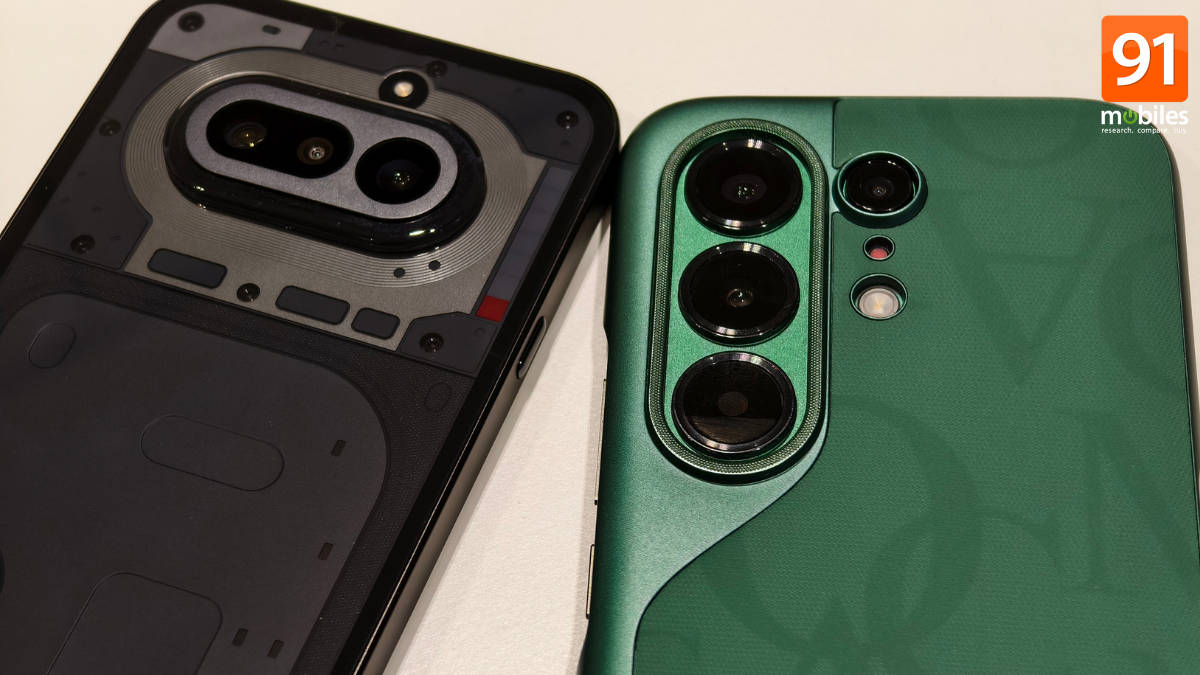
In the sub‑Rs 40,000 bracket, telephoto cameras are almost non‑existent. Most brands give you a big main sensor, a decent ultrawide, and then another auxiliary lens just to check the boxes. The Tecno Camon 50 Ultra (review) and the Nothing Phone (4a) (review) refuse to play that game. They’re the only phones under Rs 40,000 currently that actually pack a proper telephoto lens into their camera setup, and that alone makes them rare finds in this price segment.
Given how uncommon that setup is, it makes sense to compare the two against each other. And that’s exactly what we’re doing here: running these two through the same photography tests and seeing which one delivers the better camera experience when it counts. We’ll be shooting the same subjects in different scenarios, then comparing colour accuracy, detail retention, dynamic range, and portrait separation across both phones.
By the end of this story, you’ll have a clear idea of the strengths and weaknesses of both phones’ camera systems and which one suits your needs better. Let’s get started!
Table of Contents
Tecno Camon 50 Ultra vs Nothing Phone (4a): camera specs
| Camera | Tecno Camon 50 Ultra | Nothing Phone (4a) |
| Primary | 50MP sensor, OIS, 1/1.56-inch, f/1.8 | 50MP sensor, OIS, 1/1.57-inch, f/1.9 |
| Wide-angle | 8MP sensor, f/2.2, FOV 120-degrees | 8MP sensor, f/2.2, FOV 120-degrees |
| Telephoto | 50MP sensor, 3x optical zoom, f/2.4 | 50MP sensor, 3.5x optical zoom, OIS, f/2.9 |
| Selfie | 50MP sensor with AF | 32MP sensor |
Tecno Camon 50 Ultra vs Nothing Phone (4a): key scenarios
Daylight
In daylight scenes, the Camon 50 Ultra’s shots look a little washed out with a low contrast level. The Phone (4a), meanwhile, does a much better job in delivering a cohesive image with more appealing colours. In terms of detail level, Phone (4a) is a step behind its peer, Tecno, which offers a sharper, more detailed picture. I personally prefer the Nothing Phone (4a)’s shot in daylight scenarios.
Tecno Camon 50 Ultra
Nothing Phone (4a)
Ultrawide
Turning to the ultra-wide shot, both phones undergo a major colour shift. The Phone (4a) is the one that struggles with contrast level and washed-out colours, while the Tecno’s image is more vibrant and contrast-heavy. The Camon 50 Ultra maintains its superiority in terms of detail level, and its final output matches its daylight counterpart more closely, so it wins the current round.
Tecno Camon 50 Ultra
Nothing Phone (4a)
Portrait
Both phones perform quite decently in portrait modes at their individual optical lengths. The Camon 50 Ultra’s optical limit is 70mm, while the Phone (4a) has a higher limit of 85mm. The Camon 50 Ultra’s shot is more detailed in terms of facial features and textures while keeping the colours more in line with the actual scene. The Phone (4a)’s image is slightly warmer in comparison, while the edge detection is on par for both. My final vote goes to the Camon 50 Ultra in this round since it delivers a more cohesive image.
Tecno Camon 50 Ultra
Nothing Phone (4a)
Selfie
The Nothing Phone (4a)’s selfie shows true-to-life colours, be it skin tone, the background environment or the subject’s clothes. On the other hand, the Camon 50 Ultra’s image is significantly more detailed and sharper, although its colour accuracy isn’t as good as its rival. This round is a tie since both phones do different things really well, and it comes down to personal preferences.
Tecno Camon 50 Ultra
Nothing Phone (4a)
3x Zoom
The zoom performance on both phones is largely consistent with their daylight performance. The Nothing Phone (4a)’s image delivers better contrast and colours, but its details aren’t as rich as its rival’s. The Camon 50 Ultra lags a little behind in terms of visual impact, but zoom in closer, and you’ll note that its image is highly detailed and quite a bit sharper than its rival. While my vote goes to the Camon 50 Ultra since I can adjust colours in post-processing, details are hard to recapture via tools.
Tecno Camon 50 Ultra
Nothing Phone (4a)
Low light (nightmode)
With the dedicated night mode enabled on both phones, the actual scene looks closer to the Camon 50 Ultra’s image in terms of colour accuracy. The Nothing Phone (4a)’s image definitely has a good visual impact, but when you zoom a little, the details in the frame start to fall apart. The detail level and sharpness are much better on the Camon’s image, keeping it in the lead for night shots.
Tecno Camon 50 Ultra
Nothing Phone (4a)
Conclusion
| Round | Winner |
| Daylight | Nothing Phone (4a) |
| Ultrawide | Tecno Camon 50 Ultra |
| Portrait | Tecno Camon 50 Ultra |
| Selfie | Tie |
| 3x zoom | Tecno Camon 50 Ultra |
| Low-light (night mode) | Tecno Camon 50 Ultra |
After running these two through multiple scenarios, the Tecno Camon 50 Ultra (review) comes out as the clear winner, with four rounds won, with the selfie round ending in a tie. If we talk about its rival, Nothing’s colour science is clearly the stronger of the two. The Nothing Phone (4a)‘s (review) daylight and 3x images have better contrast, more natural tones and a more pleasing overall look. But when you factor in detail level, sharpness and consistency across the board, the Camon 50 Ultra is technically superior, especially in ultrawide, portrait, zoom and night mode.
In day‑to‑day shooting, both phones feel roughly similar in terms of responsiveness, with comparable shutter speeds. I found Tecno’s camera UI slightly more intuitive, while the Nothing Phone (4a) held up a bit better under direct sunlight. In my experience, the Camon 50 Ultra started to lag sooner than its rival when shooting for extended periods in an high-heat environment.
Which phone you pick in the end still depends on your use case. If you prioritise ready‑to‑share photos with pleasing colours and don’t zoom in much, the Nothing Phone (4a) will feel more satisfying. If you care more about resolution, texture, details and the ability to crop or edit later, the Tecno Camon 50 Ultra is the better choice. Both these phones are currently selling in India, starting at Rs 39,999.
Meanwhile, Nothing has announced a Rs 3,000 price hike for the Phone (4a), which will come into effect on August 1st.