Review Summary
Expert Rating
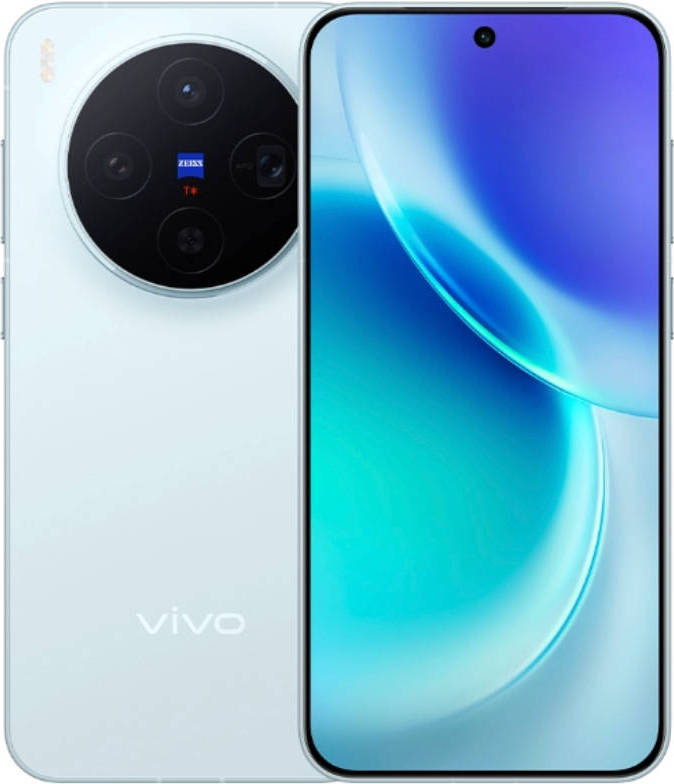
This year has turned out to be a delightful time for users who prefer compact smartphones. Just earlier this year, the Vivo X200 FE was the brand’s first compact device with the iconic ZEISS camera system of the renowned X series and some robust features across the board. And with the launch of the new Vivo X300 series, we now have a full-fledged compact flagship in the form of the Vivo X300. Compared to its predecessor, the phone has been upgraded in virtually every aspect, while keeping the form factor in check.
The latest MediaTek Dimensity 9500 powers the X300; the primary camera has been upgraded to a massive 200MP sensor, the battery has been slightly amped up, and the selfie camera is now top-notch. The phone even comes with the new OriginOS 6 on board, so even the software has been largely revamped. With so many upgrades on offer and a smaller size to boot, this might be one of the best flagships currently available in this price bracket. I have been using the device for roughly two weeks now and will share all its quirks, and if it’s truly worth your investment. Let’s get started!
Table of Contents
Pocket-friendly design with a robust foundation
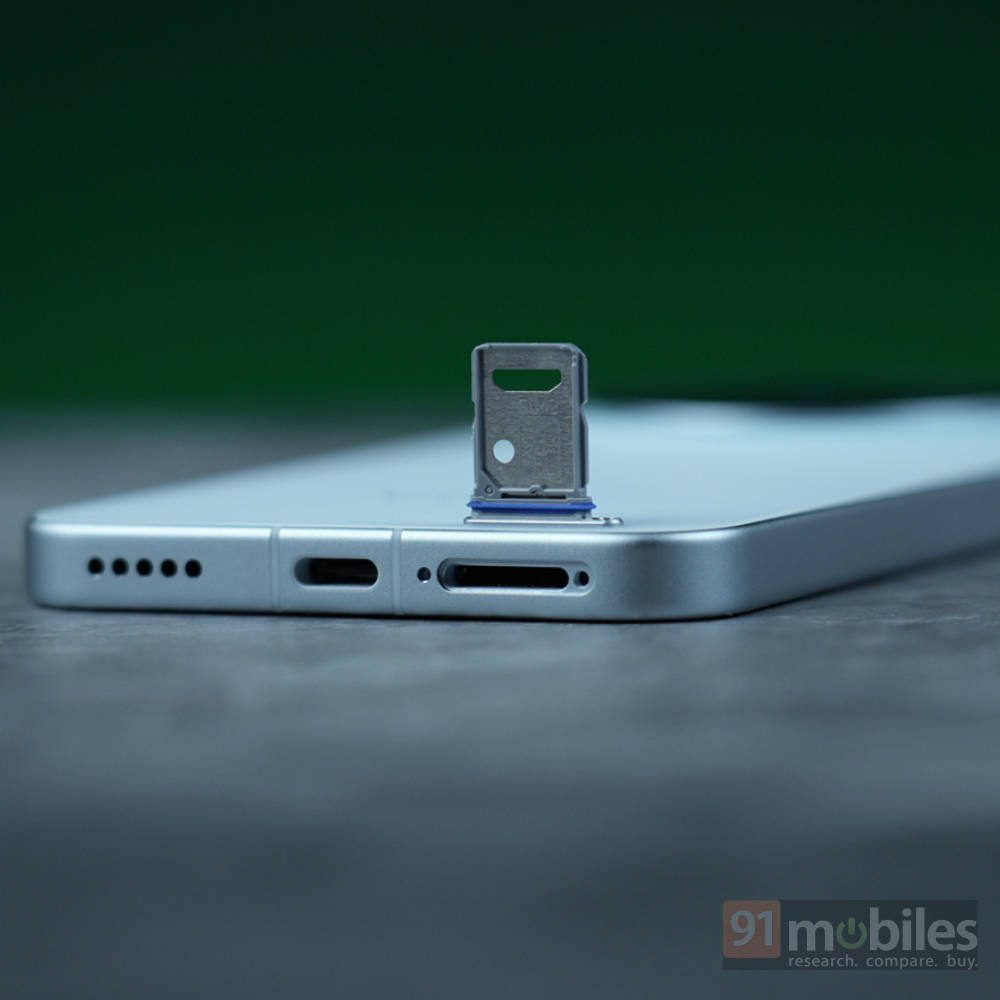
The new Vivo X300 is just 6 inches in length and has a very slim profile at roughly 8mm. The rear panel is a glass back that almost feels rubbery or velvety and is extremely soft to the touch. This is thanks to what Vivo calls the Coral Velvet Glass technique, and it definitely makes the device feel quite premium. The finish is fingerprint and smudge-resistant, too, but it is also rather slippery, so using it without a case can be a hassle at times.
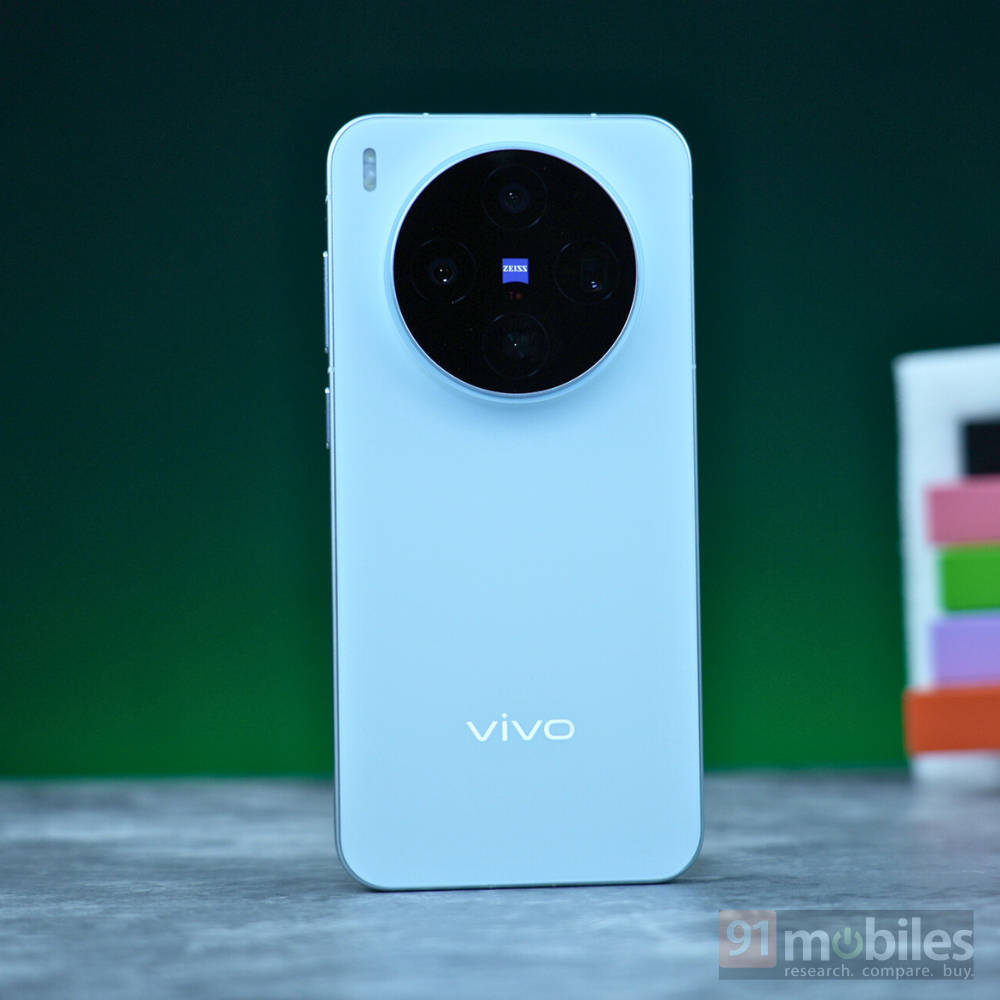
Well, Vivo solves that problem by providing you with a colour matched TPU case, so no complaints there, although it does make the device a bit heftier overall. The rear panel is largely laid bare except for the large, circular camera island, which sits flush within the frame. It has a relatively gentle curve along the edges and doesn’t protrude much, so it definitely gets points for that. For durability, the device comes with IP68 and IP69 dual protection, which makes it highly resistant to both water and dust, so you can rest assured you won’t be caught unprepared.
| Smartphone | Thickness | Weight | IP Rating |
| vivo X300 | 7.95 mm | 190 grams | IP68 +IP69 |
| OnePlus 15 | 8.1 mm | 211 grams | IP68 +IP66 +IP69K +IP69 |
| realme GT 8 Pro | 8.2 mm | 214 grams | IP68 |
| OPPO Find X9 | 8.0 mm | 203 grams | IP68 |
Exceptional cameras across lighting conditions
Cameras are no doubt one of the core pillars of this device, and compared to the Vivo X200, Vivo has certainly amped them up. At the helm is the 200MP OIS HP5 primary camera with a large 1/1.4‑inch sensor, a 50MP OIS Sony LYT‑602 periscope lens, and a 50MP JN1 wide‑angle lens. The selfie camera is also better than before, using the same 50MP JN1 wide‑angle sensor with Auto Focus support. The entire system is backed by ZEISS and forms a strong foundation for some great imaging capabilities.
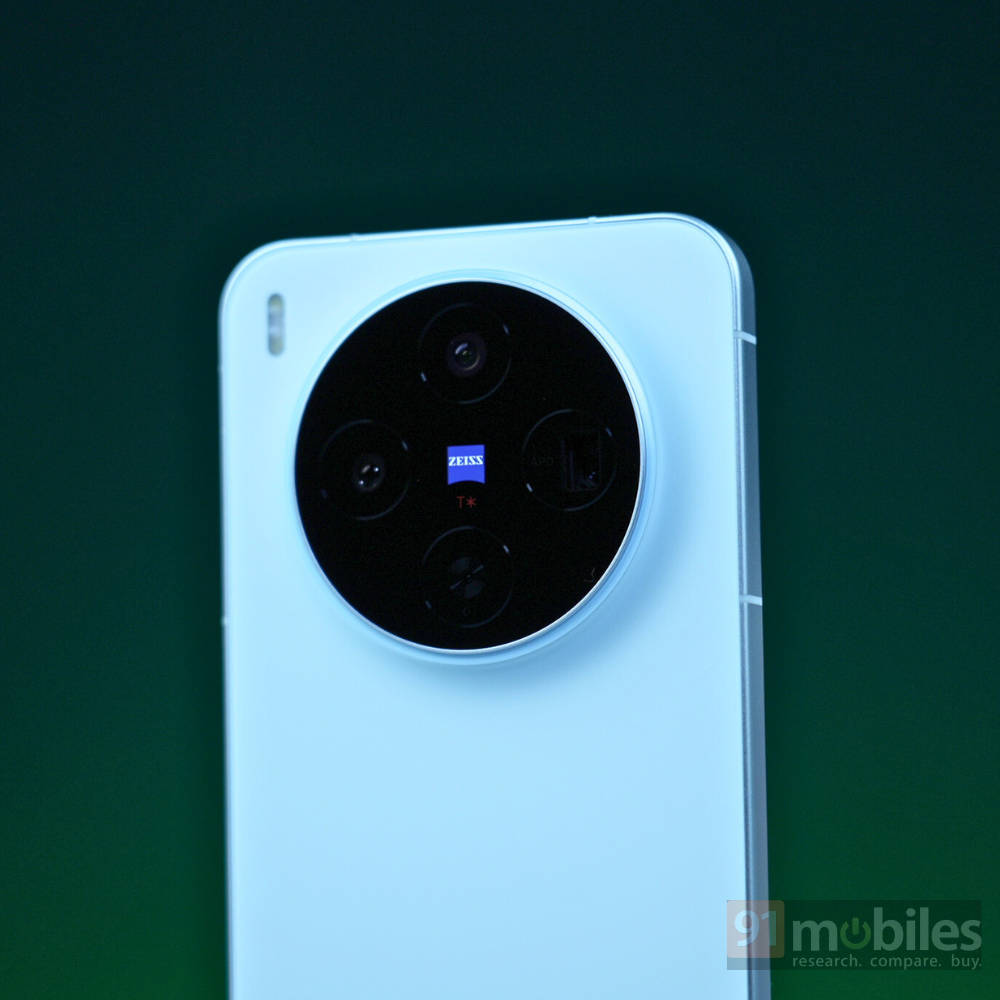
The 50MP telephoto lens is another major highlight. It takes great human and portrait shots in good lighting conditions. Facial details are well preserved, though skin tones appear slightly bright for my liking. It captures the essence of the scene beautifully with its vibrant tones and contrast, which is definitely a plus. However, some low‑light portrait shots can be hit or miss, with facial details softened quite a bit. Overall, the low‑light experience has been somewhat inconsistent in my use.






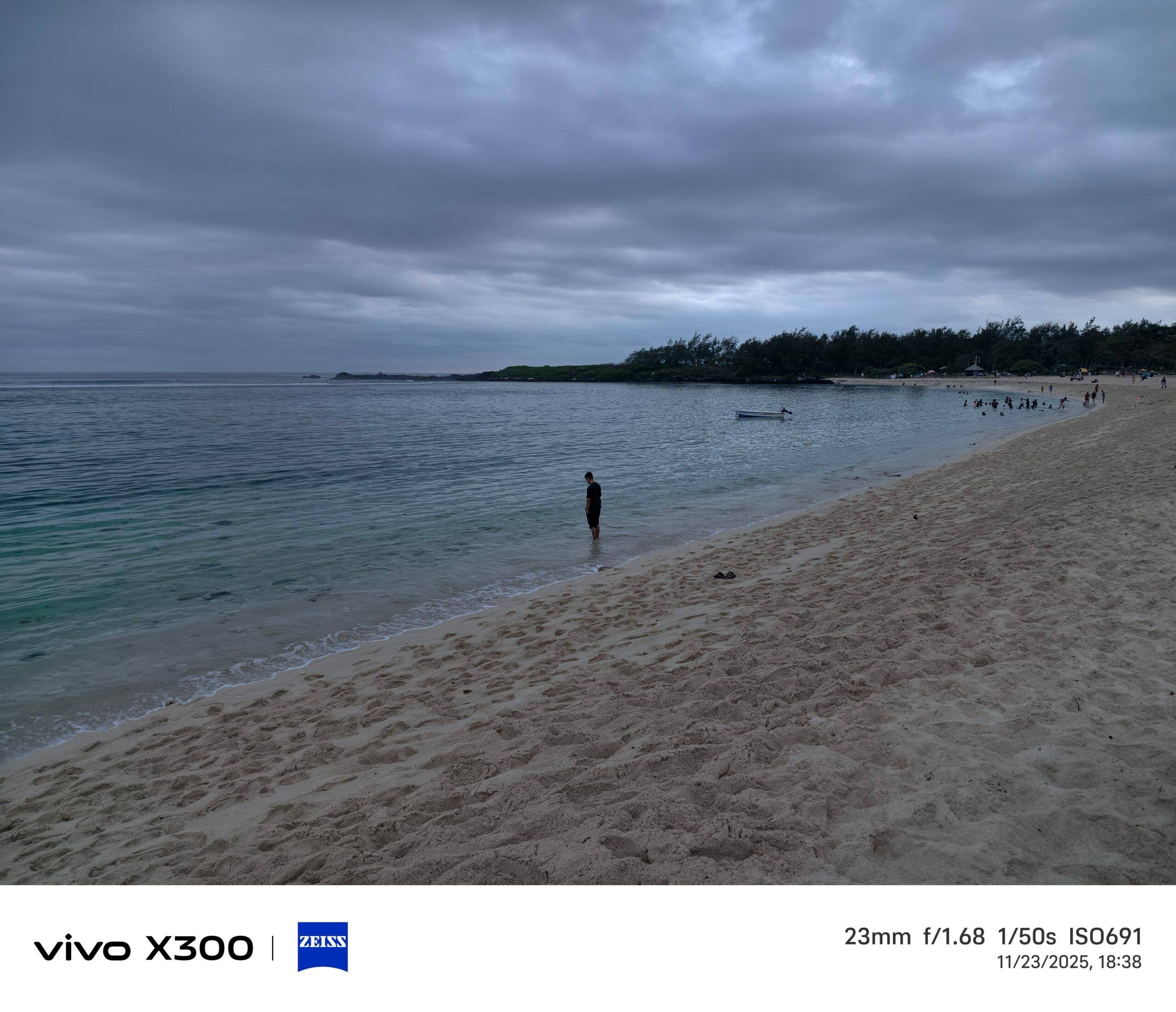






The selfie camera is another treat, and thanks to Auto Focus, it is now a great shooter in both daylight and low‑light scenarios. There is not much to complain about here, as it offers impressive detail, good colours, and natural‑looking skin tones. The ultrawide camera, however, is the weakest of the bunch. It shows noticeable colour shifts when switching from the primary lens, and detail levels are not great even in optimal lighting.
For more context, I compared the Vivo X300’s cameras with the Realme GT 8 Pro (review) to assess how they perform. Check it out below:
Daylight
In daylight, both phones produce crisp, detailed shots, but with distinct colour tuning. The Vivo X300 goes for a slightly richer, more contrasty look, pulling more details in the building facade and foliage while keeping noise very well in check. The Realme GT 8 Pro has a brighter overall exposure and marginally wider dynamic range, lifting shadows and retaining more information in darker areas of the frame. If you prefer punchier detail and depth, the Vivo X300 is better, but if you want a brighter, more balanced scene, the Realme does it better.


Ultrawide
In the ultrawide shots, the Realme GT 8 Pro has a small advantage over its competitor. It keeps the building and pillars straighter near the edges and exposes the scene a bit brighter, so shadows on the road and greenery hold more detail. The Vivo X300 looks a little wider and puts more focus on the foreground, but the corners show slightly more distortion and softness. If you want more consistent, ready-to-use ultrawide photos, the Realme is the safer bet.


Portrait
In these zoomed-in portraits, the Vivo X300 delivers the more polished result. Its 3.5x shot offers cleaner separation from the background with a more focused bokeh, while still keeping good detail on the face and jacket. Skin tone, however, is a bit enhanced to look lighter than natural. The Realme GT 8 Pro’s 3x portrait is slightly flatter and softer, with a busier background that does not blur out as smoothly. Overall, the Vivo’s telephoto portrait rendering feels more premium here.


Selfie
In selfies, the two phones take different approaches. The Vivo X300 keeps skin tones more neutral and true to life, with a slightly cooler cast that matches the background light better and avoids overdoing saturation. The Realme GT 8 Pro, on the other hand, adds a clear red tint to the face, which can make skin look warmer but also less natural, especially around the cheeks and nose. Detail and dynamic range are very similar, so if you care about colour accuracy, the Vivo’s selfie output is the more reliable choice here.


Lowlight (night mode)
In this night mode scene, both phones capture a bright, detailed image, but they prioritise different strengths. The Realme GT 8 Pro pushes exposure a bit higher, lifting shadows and making the foreground and building entrance look brighter, though this also introduces slightly more visible noise in darker areas. The Vivo X300 keeps the scene a touch darker but rewards you with cleaner textures and sharper detail in the windows, foliage, and pavement. Light flares and colour control are handled slightly better on the Vivo, making it the better low-light option overall.


Striking AMOLED display, underwhelming speakers
The X300’s 6.3-inch AMOLED display offers a delightful visual experience for both content consumption and gaming. It is an LTPO panel, so it is quite energy-efficient and has a high 2,000 nits HBM mode, which keeps the display visible even in harsh lighting. You can also customise the brightness to your own preferences through the dedicated “Custom Brightness” feature. The bezels are super slim too, so the immersiveness is on point here. With HDR10+ support, you can comfortably enjoy HDR playback on OTT apps like Netflix, Amazon Prime and more.
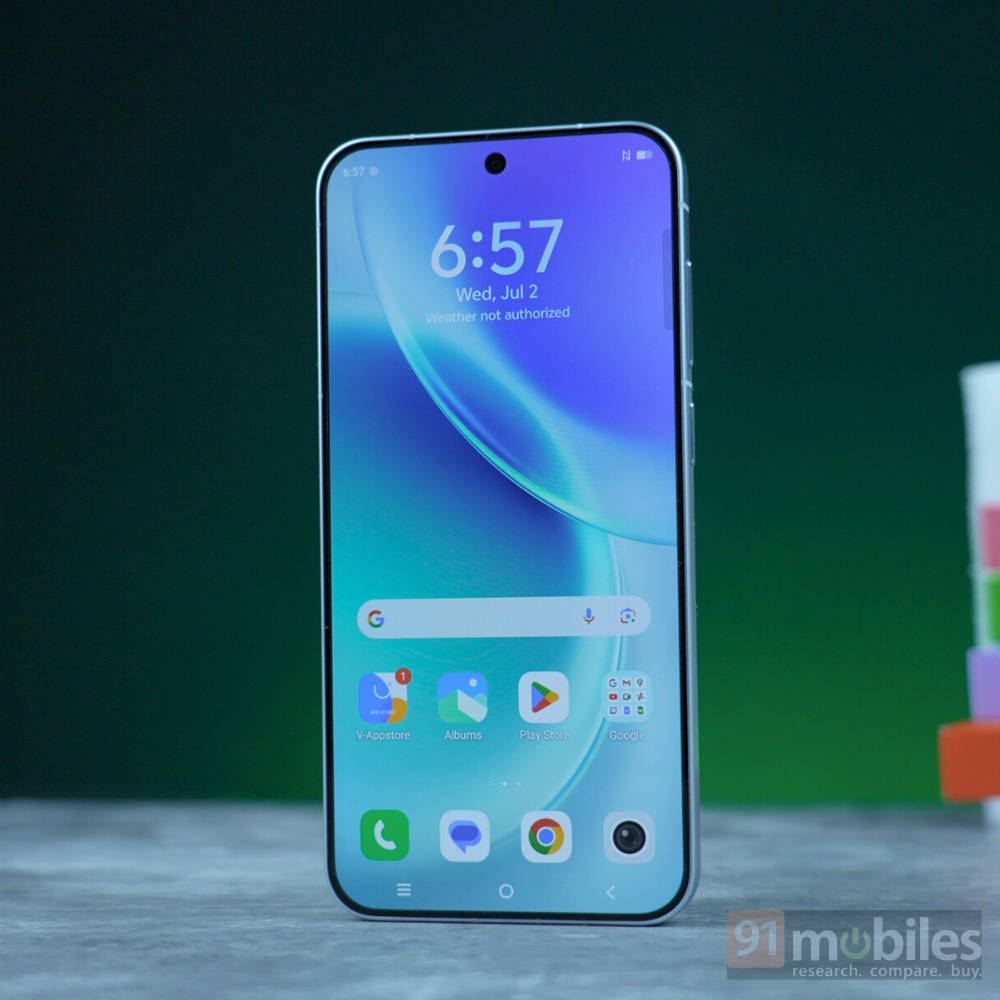
The colours are vibrant, and the viewing angles are pretty decent as well. All in all, there is nothing really to complain about with the display itself. Where I find myself stumped is with the audio output of this phone. The stereo speaker setup is fairly loud and can fill a small room easily, but the audio quality itself is not something I am very pleased with.
| Smartphone | Display | Peak Brightness |
| vivo X300 | 6.31 inches - AMOLED | 4500 nits |
| OnePlus 15 | 6.78 inches - LTPO AMOLED | 3600 nits |
| realme GT 8 Pro | 6.79 inches - AMOLED | 7000 nits |
| OPPO Find X9 | 6.59 inches - Flexible AMOLED | 3600 nits |
The low end and bass output are alright but could be better; the mids and vocals are good, but the highs are quite underwhelming. The resulting sound is muffled and lacks fullness. I may be someone who pays particular attention to speakers, but they did let me down, given the phone’s premium pricing.
All-day battery and good charging speed
The Vivo X300 comes with a 6040mAh silicone-anode cell paired with 90W wired charging (charger included) and 40W wireless charging. With the recent wave of 7,000mAh flagships around this price point, the battery on the Vivo X300 may seem a bit underwhelming at first, but there is a lot to like about its endurance. The device easily lasts a full day and often beyond, even for heavy users.




In PCMark’s battery test, it delivered around 15 and a half hours, placing it just slightly behind segment leaders like the OnePlus 15 (review) and OPPO Find X9. Its gaming endurance, admittedly, is somewhat lower compared to its peers at 6 percent average drop for 30 minutes of gaming. This can be attributed to higher temperature buildup caused by its compact form factor.
To give a realistic picture of day-to-day performance, I never had to recharge it on the same day. It always reached the next morning with around 15–20 percent capacity left. The phone consistently offered around 8 hours of screen-on time with full 5G usage, and can deliver over 10 hours of screen-on time on a single charge. I’ll attach an image below as proof.
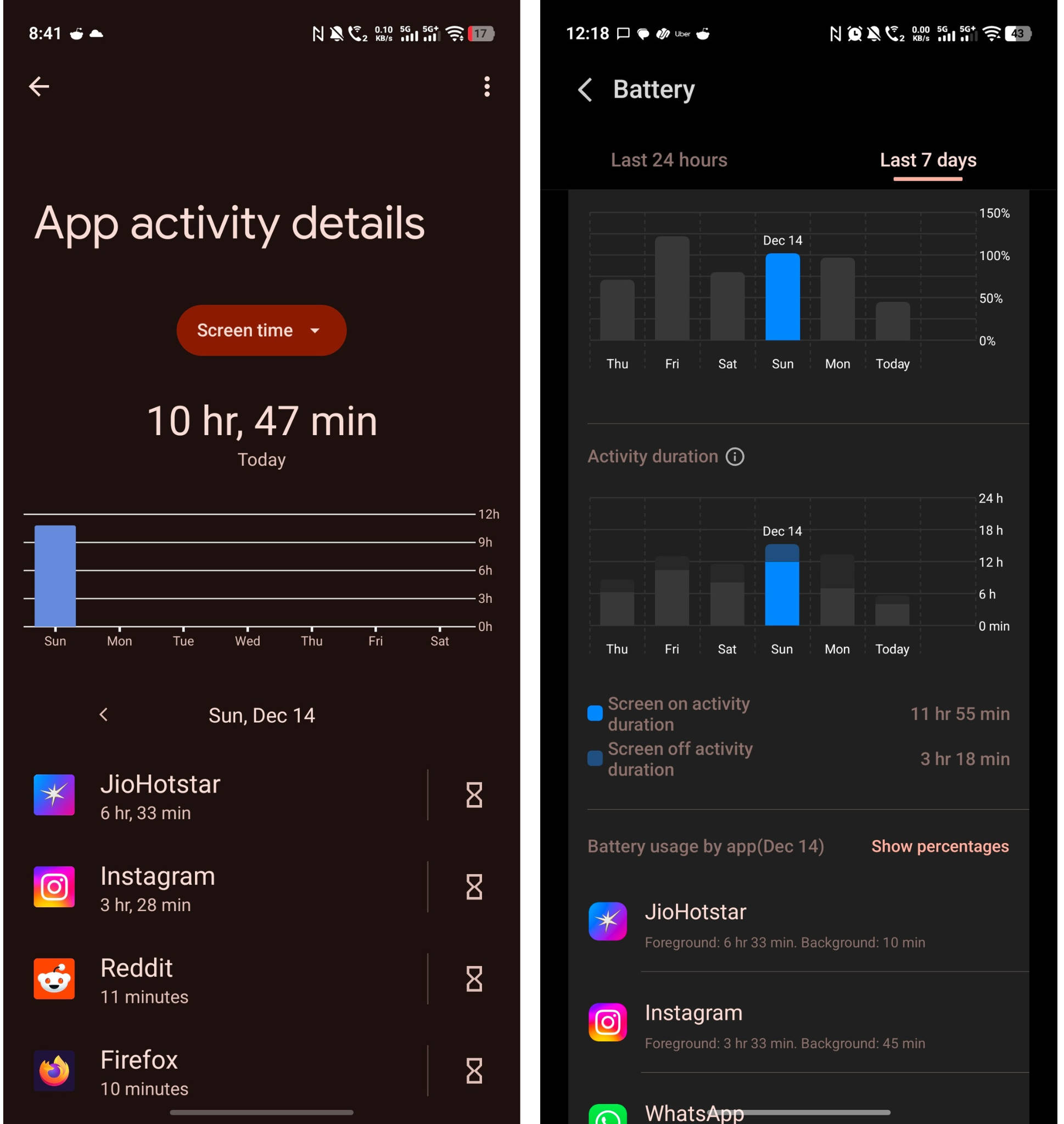
While I wouldn’t classify it as a two-day battery phone, it comfortably lasts beyond a day, which is impressive given its battery size. As for charging, the included charger tops it up from 20 to 100 percent in just about 47 minutes, which is a satisfactory result. Overall, battery life and charging performance are aspects that the Vivo X300 thoroughly gets right.
Smooth flagship-grade performance
The MediaTek Dimensity 9500 lies at the heart of the Vivo X300 and comes paired with up to 16GB of LPDDR5X RAM and 512GB of UFS 4.1 storage. Given the benchmark results we’ve seen from other Dimensity 9500-powered devices, I expected the Vivo X300 to deliver similar numbers.
However, in a few benchmarks like AnTuTu and Burnout, the device posted slightly lower scores than what it’s capable of. One explanation could be that the chipset has been undervolted to keep it running cooler and more efficiently at the cost of a small performance trade-off.
That’s a perfectly reasonable approach in my view since there’s nothing the phone struggles to handle. It runs flawlessly in day-to-day use, handles demanding games with ease, is fully capable of heavy photo and video editing, and manages multitasking effortlessly.
There isn’t much to complain about in terms of performance unless you’re a hardcore gamer. The device isn’t built with that audience in mind anyway, and it performs exactly as intended. I also didn’t notice much heating during regular use, which is another plus for a compact phone with a powerful chipset.
Origin OS 6 is a breath of fresh air
Another major highlight is that the Vivo X300 series is the first lineup to debut officially with OriginOS 6 in India. Vivo is also offering 5 years of Android updates and 7 years of security patches, which is a step above the competition and definitely welcome news. We’ve published a detailed OriginOS article covering its quirks and improvements, but here are a few handy enhancements I’ve noticed in day-to-day use.
| Smartphone | Pre-Installed Apps | Software Support |
| vivo X300 | 51 | 5 Years OS Updates + 7 Years Security Updates |
| OnePlus 15 | 53 | 4 Year OS Updates + 6 Year Security Updates |
| realme GT 8 Pro | 59 | 4 Year OS Updates + 5 Year Security Updates |
| OPPO Find X9 | 60 | 5 Year OS Updates + 6 Year Security Updates |
When plugged into a compatible charger, the screen shows a prompt to choose between Normal and High-speed charging. This appears even if rapid charging is enabled. It’s a smart addition since I can easily switch to normal charging when I’m not in a hurry.
Customisation options for the lock screen, wallpapers, animations, and the iOS-inspired glass-like design add much more character compared to the old interface. Vivo still keeps the app drawer tied to the widget drawer, which, much to my annoyance, hasn’t changed.
Origin Island is also quite useful, especially Live Alerts, since I order food online frequently. The drag-and-drop feature with Origin Island that suggests apps based on the file you’re holding still feels basic, showing the same suggestions for images or text regardless of the context. That’s something Vivo could refine.
There’s a lot to like here, and with OriginOS 6, Vivo has finally addressed one of its biggest drawbacks: a dated OS.
How does it compare against the competiton
The Vivo X300 sits at the top of this year’s Android flagship pile under Rs 80,000, both in pricing and camera credibility (based on 91mobiles camera rating). It goes up against the OnePlus 15 (review), Realme GT 8 Pro (review) and OPPO Find X9, but is the only one that consistently delivers class‑leading camera quality in testing, giving it a clear advantage for camera‑first buyers. Its compact design is another differentiator, with only the Find X9 coming close in terms of in‑hand feel. It is also the only flagship phone in this price bracket with a 2.35x Teleconverter kit support, which makes it a more versatile shooter for enthusiasts.
Where it concedes ground is raw performance and endurance. The OnePlus 15 and Realme GT 8 Pro both offer higher sustained performance, making them more appealing if gaming or heavy multitasking is the priority. Realme also brings a unique switchable camera design, but its image quality and especially battery life lag behind the X300. Until the OPPO Find X9 is fully reviewed, the Vivo X300 stands out as the most balanced flagship in this cluster, with reliable power with arguably the best and most versatile camera system of the lot.
Final Verdict
Starting at Rs 75,999 for the 12GB + 256GB variant, the Vivo X300 is roughly Rs 6,000 more expensive than its predecessor. You can also buy a compatible Teleconverter Kit for an additional Rs 18,999 to enhance your imaging capabilities even further. While part of the phone’s price increase comes from the improved hardware, the bigger factor is rising component costs, which have pushed all major OEMs to raise prices similarly. For the price it demands, the Vivo X300’s overall package still feels quite appealing.
The Vivo X300 stands proud as a full-fledged compact flagship with virtually no major compromises. You get an excellent set of cameras, a capable battery, a high-quality display, premium build quality, and long-term software support. Together, these make the phone a joyful experience for anyone who values smooth performance and top-tier imaging. There are a few minor drawbacks, mainly the subpar speakers and inconsistent low-light portraits, but beyond that, there isn’t much to complain about.
If you’re looking for an exceptional camera phone that doesn’t compromise and fits easily into your jeans, the Vivo X300 is something I would recommend.
Editor’s Rating: 8.3/10
Reasons to buy:
- Despite its compact design, the Vivo X300 is pretty durable with an IP68 and IP69 rating.
- Great camera system that performs well in almost all lighting conditions
- Consistent, smooth performance that will satisfy even power users, helped by the new OriginOS 6 refinements
- The battery easily lasts an entire day and more, and the phone charges quite quickly
Reasons not to buy:
- The telephoto lens can deliver inconsistent results in low light
- The speakers are not as good as the competition