Samsung Galaxy S26 Ultra: Flagship Gaming and Camera Prowess


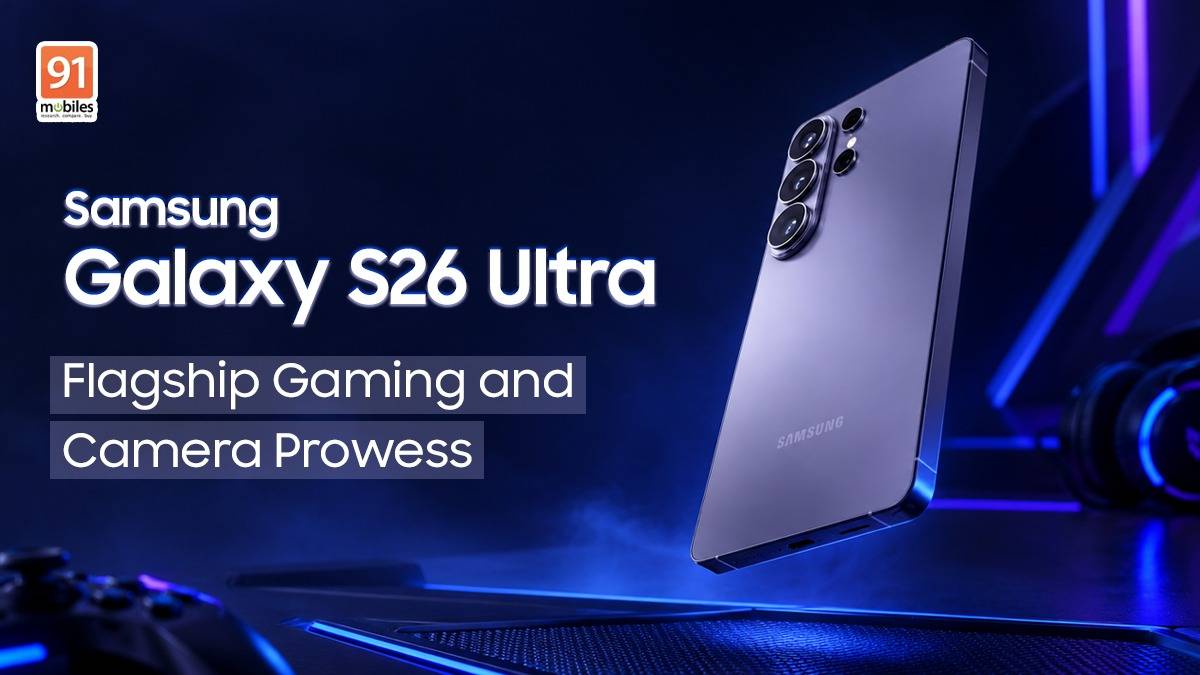
For most people shopping for a new smartphone today, two things sit near the top of the list: a camera they can rely on and performance that keeps up with their games. These are also the two areas where weaknesses show up fastest. A game that runs smoothly for ten minutes and then starts to stutter as the phone heats up, a night photo that turns into a grainy blur, or a zoomed shot of a concert stage that looks more like a painting than a photo are exactly the kind of frustrations that make buyers regret their choice.
Buying the Galaxy S26 Ultra will help you get rid of these exact frustrations. Its Snapdragon 8 Elite Gen 5 for Galaxy chip works alongside Samsung’s largest vapour chamber yet to keep games running smoothly for longer, while a quad camera system led by a 200MP main sensor, two telephoto cameras, and 100x Space Zoom covers everything from candlelit dinners to distant stages. Here is a closer look at how the Galaxy S26 Ultra handles gaming and photography, and why it gets the rest of the basics right too.
Table of Contents
Galaxy S26 Ultra Gaming and Camera Specifications
Specification | Galaxy S26 Ultra |
Processor | Snapdragon 8 Elite Gen 5 for Galaxy (3nm) |
Cooling | Samsung’s largest vapour chamber, with 21 per cent better thermal performance than the S25 Ultra |
Display | 6.9-inch QHD+ Dynamic AMOLED 2X, 1Hz to 120Hz, 2,600 nits peak |
RAM and storage | 12GB with 256GB or 512GB, 16GB with 1TB |
Rear cameras | 200MP wide (f/1.4), 50MP ultra-wide (f/1.9), 50MP 5x telephoto (f/2.9), and 10MP 3x telephoto (f/2.4) |
Zoom | 3x and 5x optical, 2x and 10x optical-quality, up to 100x Space Zoom |
Front camera | 12MP (f/2.2) |
Video | Up to 8K at 30fps and 4K at 120fps, APV codec |
Battery and charging | 5,000mAh, 60W wired, 25W wireless, Wireless PowerShare |
Galaxy S26 Ultra Gaming Performance: Powered by Snapdragon 8 Elite Gen 5 for Galaxy
At the heart of the Galaxy S26 Ultra is the Snapdragon 8 Elite Gen 5 for Galaxy, a 3nm chip customised for Samsung’s top flagship. Compared with the Galaxy S25 Ultra, Samsung says it delivers up to 19 per cent better CPU performance, 24 per cent better graphics performance, and 39 per cent faster AI performance. For gamers, the edge in graphics can clearly be seen on the screen along with smoother animations, steadier high frame rates, and more detailed visuals. The Galaxy S26 series also supports ray tracing, which brings more realistic lighting, shadows, and reflections to compatible games. It is mind-boggling to think that while some gaming consoles are still struggling to offer proper ray tracing support, here we have a device that can fit in your pocket and deliver jaw-dropping visuals.


The extra CPU headroom matters when the phone is juggling several jobs at once. Playing a ranked match while chatting with your squad on voice and recording the screen to share the best moments later is exactly the kind of load that makes weaker phones stumble. However, the Galaxy S26 Ultra’s chip is built to run games, voice chat, and screen recording together without interruptions.
Long Gaming Sessions Without the Usual Slowdown
Anyone who plays competitive shooters or long open-world sessions on a phone knows the pattern. The first few matches feel great, then the phone warms up, frame rates dip, and the back of the device starts to feel hot in the hand. This drop-off, often called thermal throttling, is one of the most common complaints about gaming on smartphones.


Samsung has tackled it head-on. The Galaxy S26 Ultra gets Samsung’s largest vapour chamber ever, redesigned with thermal interface material placed along the sides of the processor, and Samsung says it delivers 21 per cent better thermal performance than the Galaxy S25 Ultra. By spreading heat across a larger surface, the system helps the phone avoid the performance drops that usually creep in during intense gaming or heavy multitasking. In practice, that helps the tenth match of the evening feel a lot more like the first.
A 6.9-inch QHD+ Display Built for Play
A game is only as good as the screen it is played on, and the Galaxy S26 Ultra’s 6.9-inch QHD+ Dynamic AMOLED 2X display gives every title plenty of room. Its LTPO panel adapts its refresh rate from 1Hz to 120Hz, so fast-moving scenes look fluid while static menus and pause screens use less power. Samsung’s ProScaler can enhance image quality up to QHD+, sharpening images and textures, and its mDNIe engine now processes colour depth with four times the precision for more accurate colours.


Playing outdoors is no longer a struggle either. Glare from a sunny balcony or a bright train window usually washes out the action on a phone screen, but the S26 Ultra’s 2,600-nit peak brightness, Vision Booster, and anti-reflective Corning Gorilla Armor 2 glass keep the display easy to read in harsh light.
Memory, Storage, Battery, and Controllers: The Gaming Essentials
Modern mobile games are big downloads, and many players keep several installed at once. The Galaxy S26 Ultra comes with 12GB of RAM in its 256GB and 512GB versions, and 16GB of RAM with 1TB of storage. That leaves plenty of space for large game files, and enough memory for a game to stay ready in the background while you reply to a message or check a strategy guide.


The 5,000mAh battery is rated for up to 31 hours of video playback, and when it needs a top-up between sessions, 60W wired charging takes it to 75 per cent in around 30 minutes with a 60W adapter. Wireless PowerShare can charge a pair of earbuds from the back of the phone, which is handy when gaming on a long journey. For players who prefer physical buttons, the S26 series works with Bluetooth controllers, including Xbox and PlayStation DualSense pads, and with Wi-Fi 7 and 5G built in, it is ready for low-latency cloud gaming too.
Galaxy S26 Ultra Camera: A 200MP Main Sensor That Shines After Dark
Most phone cameras look good in bright daylight. The real test comes at a candlelit dinner, a dimly lit concert hall, or a street market after sunset, when photos from many phones turn grainy or blurry. The Galaxy S26 Ultra’s main camera is built for exactly these moments. Its 200MP sensor sits behind a wider f/1.4 aperture, which Samsung says improves brightness by 47 per cent compared with the Galaxy S25 Ultra, while optical image stabilisation helps keep handheld night shots steady.


The high resolution pays off in daylight too. A 200MP photo holds so much detail that you can crop into a landscape or pick out a single face from a group shot later while keeping plenty of detail. The Adaptive Pixel sensor also delivers optical-quality 2x zoom straight from the main camera, a natural focal length for portraits and food photos. At the other end of the range, the 50MP ultra-wide camera, with an f/1.9 aperture, takes in more of the scene for sweeping landscapes, tall buildings, and group photos in tight spaces, such as a crowded restaurant table.
Zoom That Brings the Action Closer
Zoom has long been the Ultra’s signature, and the Galaxy S26 Ultra builds on it. Alongside the main camera sit two telephoto cameras, a 10MP 3x and a 50MP 5x, and the 5x camera now opens up to f/2.9, which Samsung says improves brightness by 37 per cent over the S25 Ultra. Together, they deliver optical zoom at 3x and 5x, optical-quality zoom at 10x, and 100x Space Zoom with Super Resolution technology.


That range covers real situations rather than spec-sheet bragging rights. The 3x camera is ideal for flattering portraits at a family function, the 5x and 10x settings bring a batter at the crease or a singer on a distant stage into a close, clean frame, and Space Zoom can pick out details that are simply out of reach otherwise, such as a signboard across a valley or the moon above a city skyline.
Pro-Grade Video for Creators and Everyday Moments
Video gets the same flagship treatment. The Galaxy S26 Ultra records at up to 8K at 30fps and 4K at 120fps, and it is the first Galaxy phone to support APV, a professional-grade video codec that preserves more detail for editing, with the option to shoot in HDR or Log. For creators who colour grade their work, Samsung’s Cine LUT can turn that Log footage into a finished cinematic look.
Everyday filming benefits just as much. Picture a birthday party after the lights go down, or a family wedding in a dimly lit hall. Enhanced Nightography Video keeps footage clearer and more vibrant in scenes like these, and Super Steady with Horizontal Lock keeps the horizon level even if you rotate the phone a full 360 degrees, which helps when filming a bike ride or a theme park ride. Slow motion at up to 240fps in Full HD, meanwhile, turns a cover drive in the park or a jump into the pool into a dramatic replay.
Selfies and AI Editing That Finish the Job
A great shot is not always perfect straight out of the camera. A stranger may wander into the background of a holiday photo, or a group selfie may need a little tidying before it goes to the family group.


Samsung has extended its improved AI image processing to the 12MP selfie camera for more natural skin tones, and Photo Assist lets you edit a picture by simply describing the change in your own words, in any of 41 languages. Creative Studio, meanwhile, turns your favourite photos into sticker sets for your chats.
What Matters Most for Heavy Travel Photography and Video Recording?
Five things matter most when a phone is the main camera on a trip: a camera system that covers every distance, dependable low-light performance, steady video, enough battery and storage to keep going, and a body that copes with heat and weather. A single day of travel can move from a sunrise viewpoint to a crowded bazaar, a museum, and a night-time street food stall, and the phone has to handle all of it without a change of kit.
Range: The Galaxy S26 Ultra’s four rear cameras cover the ultra-wide view of a fort, 3x portraits of fellow travellers, 5x and 10x frames of a temple spire, and Space Zoom up to 100x for details that are otherwise out of reach. With two telephoto cameras, there is a dedicated lens for both portraits and distant subjects.
Low light: Evenings are when travel photos often fall apart. Samsung says the 200MP main camera’s wider f/1.4 aperture improves brightness by 47 per cent over the Galaxy S25 Ultra, Nightography keeps night videos clear and detailed, and Auto FPS adjusts the frame rate to record brighter video in dim light.
Stability: Walking tours, boat rides, and auto-rickshaw journeys all shake the camera. Optical image stabilisation on the main camera and Super Steady with Horizontal Lock, which keeps the horizon level even if the phone rotates a full 360 degrees, keep that footage smooth and watchable.
Battery and storage: A long day of shooting drains the battery and fills storage quickly, especially in 4K or 8K. The 5,000mAh battery is rated for up to 31 hours of video playback, a 60W adapter takes it to 75 per cent in around 30 minutes, and the 1TB version leaves plenty of room for 8K clips and high-quality APV footage.
Heat and weather: Long recordings in summer heat test any phone, and the S26 Ultra’s larger vapour chamber is built to handle them. IP68 dust and water resistance, Gorilla Armor 2 on the front, and a 2,600-nit display that stays readable in bright sun take care of the rest.
How Can You Reduce Heat During Long Travel Video Recording?
The simplest answer is to keep the phone out of direct sun, record long clips at 4K rather than 8K, avoid charging while filming, and give the phone short breaks between long takes. Recording video for a long stretch is one of the most demanding jobs a phone does, and a hot afternoon at a fort or on a beach adds to the load. The Galaxy S26 Ultra starts with an advantage: its redesigned vapour chamber, Samsung’s largest, spreads heat faster, and Samsung says it delivers 21 per cent better thermal performance than the Galaxy S25 Ultra. A few simple habits help it stay cool for even longer.
Start with the camera and display settings. Higher resolutions and frame rates ask more of the processor, so 4K at 30fps is a sensible default for long clips, with 8K and 4K at 120fps saved for the moments that need them. Lowering the screen brightness also helps, and the anti-reflective Gorilla Armor 2 glass makes it easier to frame a shot outdoors without pushing brightness to the maximum. Closing apps that are not in use, such as a game or a navigation app left running, and switching off Wi-Fi, Bluetooth, and GPS when they are not needed reduce the load further.
Then think about the surroundings. Samsung notes that a phone keeps heating up while it sits in sunlight, so it helps to keep it in the shade between shots and to avoid filming from a car cradle on a sunny windscreen, which Samsung says makes a phone hotter than usual. A weak mobile signal also makes a phone work harder, so on a remote highway or mountain trail, airplane mode can help during long takes when calls and data are not needed. Taking the phone out of a thick case lets heat escape more easily, too.
Finally, plan charging around the shoot. Samsung points out that charging always raises a phone’s temperature, so it is better to top up during breaks than while recording. With a 60W adapter taking the S26 Ultra to 75 per cent in around 30 minutes, a short coffee stop is usually enough. Splitting a long sequence into several clips, with a minute or two of rest in between, also gives the phone time to cool before the next take.
Flagship Camera Phone Comparison: Galaxy S26 Ultra vs iPhone 18 Pro Max vs Pixel 11 Pro XL
The Galaxy S26 Ultra’s closest rivals as camera phones are Apple’s iPhone 18 Pro Max and Google’s Pixel 11 Pro XL. All three are capable cameras in good light, so the real differences show up in zoom, low light, and video. Here is how their camera hardware compares, based on each brand’s own specifications.
Camera | Galaxy S26 Ultra | iPhone 18 Pro Max | Pixel 11 Pro XL |
Main camera | 200MP, f/1.4 | 48MP, f/1.48 to f/4.0 variable aperture | 50MP, f/1.68 |
Ultra-wide camera | 50MP, f/1.9 | 48MP, f/2.2 | 48MP, f/1.7 |
Telephoto cameras | Two: 10MP 3x (f/2.4) and 50MP 5x (f/2.9) | One: 48MP 4x (f/2.8) | One: 48MP 5x (f/2.8) |
Zoom | 3x and 5x optical, 2x and 10x optical-quality, up to 100x Space Zoom | 4x optical, 2x and 8x optical-quality, up to 40x digital | 5x optical, Pro Zoom up to 120x |
Top video modes | 8K at 30fps, 4K at 120fps | 4K at 120fps (Dolby Vision) | 8K at 30fps with Video Boost, 4K at 60fps |
Weight | 214g | 249g | 226g |
The Galaxy S26 Ultra is the only one of the three with two dedicated telephoto cameras, which gives it optical zoom at both 3x and 5x and optical-quality zoom at 10x, so portraits, stage shots, and distant landmarks each get a focal length suited to them. Its 200MP main camera has both the highest resolution and the widest aperture here, at f/1.4, which helps with cropping in daylight and with brighter shots at night. For video, it records 8K at 30fps on the phone itself and 4K at 120fps, and its APV codec and Log option give creators footage that holds up well in editing.
The iPhone 18 Pro Max answers with a main camera that can change its aperture, plus ProRes and Apple Log 2 for video, while the Pixel 11 Pro XL leans on Google’s software, with 8K recording through Video Boost and Pro Zoom up to 120x. Both are strong camera phones, but neither matches the S26 Ultra’s spread of dedicated zoom lenses. At 214g, the S26 Ultra is also the lightest of the three, which counts on a long day of sightseeing.
Beyond Gaming and Cameras: A Complete Flagship in Every Department
Great gaming and cameras would mean little if the rest of the phone let you down, and this is where the Galaxy S26 Ultra rounds off the package. Its display includes what Samsung calls the world’s first built-in Privacy Display for mobile phones, which limits side viewing so a banking app or a work email stays private on a crowded metro. The built-in S Pen is always ready for signing a PDF or jotting down a note, and Galaxy AI adds helpful tools such as Now Nudge, Circle to Search with Google, and a choice of AI agents, including Gemini and Perplexity.
The design is just as well judged. At 7.9mm and 214g, the S26 Ultra pairs an aluminium frame with Corning Gorilla Armor 2 on the front and Gorilla Glass Victus 2 on the back, and it is rated IP68 for dust and water resistance. Quick Share now works with AirDrop for easy sharing with iPhone users, Samsung DeX turns the phone into a desktop-style workspace on a monitor, and Samsung promises seven generations of OS upgrades and seven years of security updates, so the phone stays supported well into the 2030s.
Should You Buy the Galaxy S26 Ultra for Gaming and Photography?
If gaming and photography matter most to you, the Galaxy S26 Ultra answers the two biggest frustrations buyers face. Its Snapdragon 8 Elite Gen 5 for Galaxy and Samsung’s largest vapour chamber keep games running smoothly for longer, the 6.9-inch QHD+ display makes them look their best, and the 200MP quad camera, with two telephoto lenses and 100x Space Zoom, captures moments that are out of reach for many phones. Add pro-grade video, a built-in S Pen, Privacy Display, and seven years of updates, and the S26 Ultra is more than a great gaming phone or a great camera phone. It is one of the most complete flagships you can buy.
The Galaxy S26 Ultra is priced at ₹1,54,999 for the 12GB and 256GB model. During the festive offers, however, the Galaxy S26 Ultra’s effective price has dropped down to ₹79,999, after applying ₹15,000 instant cashback and the exchange value of your old flagship device. Samsung is also offering 40 months of No Cost EMI on the S26 Ultra, which makes it an even more appealing deal.
FAQs
Is the Galaxy S26 Ultra good for gaming?
Yes. It runs on the Snapdragon 8 Elite Gen 5 for Galaxy, which offers 24 per cent better graphics performance than the S25 Ultra, supports ray tracing in compatible games, and uses Samsung’s largest vapour chamber yet to help sustain performance during long sessions.
Does the Galaxy S26 Ultra get hot while gaming?
Samsung has redesigned its vapour chamber, now its largest ever, and says it delivers 21 per cent better thermal performance than the S25 Ultra, which helps manage heat during long gaming sessions.
How good is the Galaxy S26 Ultra’s zoom?
It offers optical zoom at 3x and 5x, optical-quality zoom at 2x and 10x, and Space Zoom up to 100x.
Can the Galaxy S26 Ultra record 8K video?
Yes. It records 8K video at 30fps and 4K video at 120fps, and it supports the professional-grade APV codec.
Does the Galaxy S26 Ultra support game controllers?
Yes. The Galaxy S26 series works with Bluetooth controllers, including Xbox and PlayStation DualSense pads, and its Wi-Fi 7 and 5G support suits low-latency cloud gaming.
How fast does the Galaxy S26 Ultra charge?
With a 60W adapter, it charges up to 75 per cent in around 30 minutes. It also supports 25W wireless charging and Wireless PowerShare.