What Is LG QNED MiniLED, Really? We Decode Every Layer and Every Model


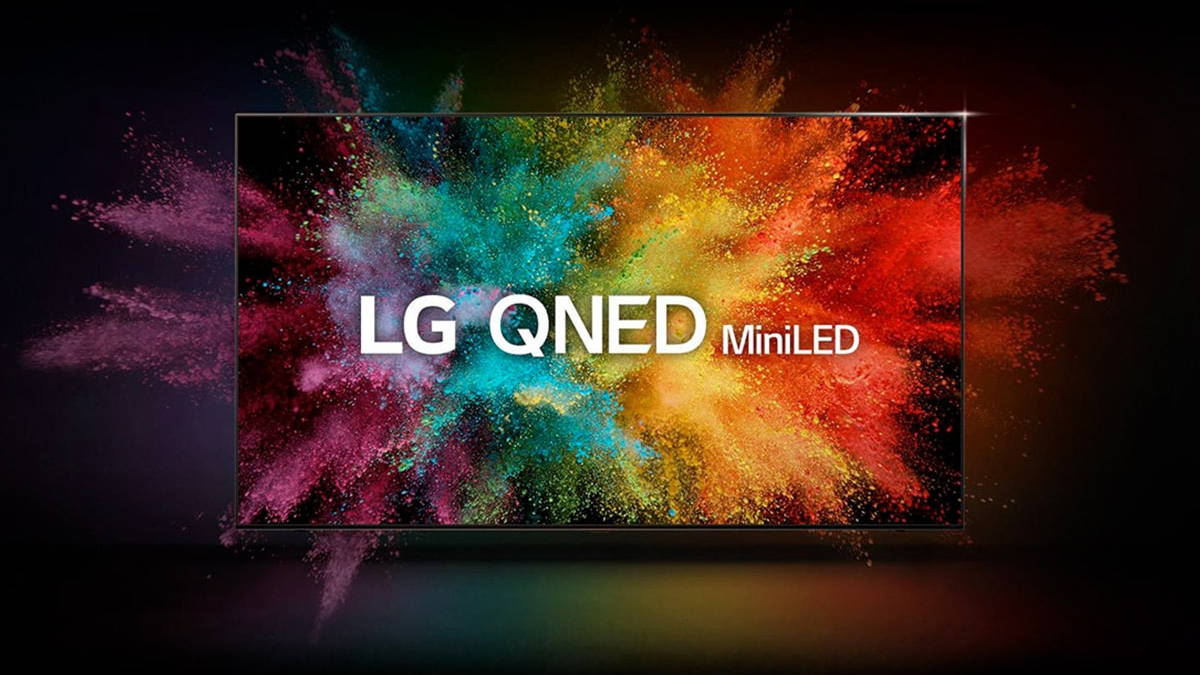
Walk into any electronics store and ask a salesperson to explain QNED MiniLED. What you will get, 9 times out of 10, is a recitation of the spec sheet back at you. MiniLED, Precision Dimming – these words land without meaning, and you leave knowing the name of every feature and the purpose of none of them. That is the problem this article is here to fix. The LG QNED MiniLED 2026 is a serious piece of technology that rewards being understood, and the five models in the range differ from one another in ways that are specific enough to change which one you should buy. Here is what all of it actually means.
The technology at the centre of it: Why Mini LED and QNED are doing different jobs
Think of the television as two separate systems that happen to share the same frame. One controls the light. The other controls the colour. Getting both right at the same time is harder than it sounds, and most televisions make compromises on one or the other. The LG QNED MiniLED does not, which is why it helps to understand each layer on its own terms before looking at what they do together.


The light side of the equation is Mini LED. Every LCD television needs a backlight sitting behind the panel to make the image visible, and conventional LED backlights do this crudely, pushing light across the entire screen in large, uncontrolled patches. The result is that bright and dark areas of the same image interfere with each other. A bright logo on a dark screen creates a visible glow around it because the backlight cannot separate the two. Mini LED fixes this by replacing those large LEDs with thousands of much smaller ones packed into the same space, giving the television precise control over which parts of the screen are bright and which parts are dark at any given moment. That is why shadows look like actual shadows on a QNED MiniLED, rather than a slightly darker shade of grey.

The colour side is QNED. Once the backlight supplies the light, the panel has to turn it into accurate reds, greens, and blues, and standard LCD panels are not especially good at this. It then intercepts that backlight output and converts it into colours that are significantly purer and more saturated than a standard panel can produce on its own. The combined result is colour that is certified at 100% of the DCI-P3 standard by Intertek, which is the colour benchmark the film industry uses for cinema mastering. That certification holds across the panel’s full range of brightness, not just at the comfortable middle where most televisions perform well.


What ties both systems together is the Alpha 8 AI Processor Gen3. It sits on top of the Mini LED backlight and the QNED colour layer and reads every frame of content coming into the television, making real-time decisions about how the backlight should respond and how the colour should be rendered. Without it, the hardware would be impressive but inert. With it, the display adapts to what is actually on screen rather than applying the same fixed settings to everything.
Reading the lineup: 5 models, one technology, important differences
The LG QNED90 at 55 to 115 inches is where the range is at its most complete. It carries the Alpha 8 Gen3 processor and Precision Dimming Pro across most sizes, with the 115-inch model stepping up to Precision Dimming Ultra because a panel that size requires finer zone control to maintain consistent performance across it. The QNED90 is also the only series in the lineup built on full-array backlighting, meaning the Mini LED zones are distributed across the entire panel surface rather than concentrated in specific areas. That distinction matters in large rooms with varied lighting conditions, where the uniformity of a full-array panel holds up more consistently. The LG QNED86 at 100 inches carries the same Alpha 8 Gen3 and Precision Dimming Pro specification and sits just below the QNED90 on size.


The LG QNED85 and LG QNED82 at 55 to 86 inches are where most buyers will land, and both perform strongly within what the technology offers. Both run the Alpha 8 Gen3, both carry Precision Dimming Pro, and both support 288Hz Motion Booster for competitive gaming at Full HD alongside native 4K at 144Hz with VRR. The QNED85 adds AI HDR Remastering, which takes standard dynamic range content and remaps it toward HDR quality frame by frame, and FILMMAKER Ambient MODE, which pairs Dolby Vision with the ambient light sensor to keep the picture calibrated as room lighting changes. The step down from the QNED90 is the full-array backlight, which these models do not carry.
The LG QNED70 at 43 to 75 inches is the entry point into the Mini LED range, and it is worth being clear about what that means. It runs the Alpha 7 AI Processor Gen9 rather than the Alpha 8 Gen3 found across the rest of the lineup, which affects upscaling quality and AI Sound processing depth. It uses standard Precision Dimming rather than the Pro or Ultra tier, and it does not carry the full-array backlight of the QNED90. The colour and contrast foundations that define QNED are present, but the processing headroom, dimming precision, and backlight architecture are each a step below the models above it. For a secondary room or a buyer stepping up from a conventional LED set who wants to understand what Mini LED delivers before committing further up the range, the QNED70 is the right starting point.
What the picture actually looks like
For cricket and live sport, the Mini LED precision and Sports Mode together produce something immediately noticeable against a conventional set. The glow that appears around a white-kitted player on a standard LED television happens because the backlight cannot separate the bright player from the dark background beside them. Mini LED’s zone control eliminates that, so players stay sharply defined against whatever is behind them. Cricket Mode tunes both picture and audio to the specific conditions of subcontinental broadcast, and Sports Alert notifies you when followed teams go live regardless of what is currently playing.
For cinema, Dolby Vision on the LG QNED85 and above works by reading instructions that arrive with the film itself, scene by scene, so the television adjusts how it renders each moment rather than applying one fixed interpretation to the entire runtime. FILMMAKER Ambient MODE handles the room as well, compensating for how ambient light affects what you perceive, so the picture holds up whether the lights are on or off.

For gaming, the LG QNED85 and 86 support 288Hz Motion Booster for competitive play at Full HD, native 4K at 144Hz with VRR and AMD FreeSync Premium for console and PC gaming, and Auto Low Latency Mode handles the switch to the lowest-latency configuration automatically the moment a console is detected. NVIDIA GeForce NOW runs natively through webOS, covering cloud gaming without a connected PC.
The software layer and the honest summary
Every LG QNED MiniLED model in the 2026 lineup is part of the webOS Re: New Programme, which means LG commits to annual software upgrades for four years from the version the television ships with. A LG QNED85 bought in 2026 on webOS 26 will receive updates through webOS 30, each one bringing new features, security updates, and compatibility with services that do not exist yet. LG Shield handles the security architecture underneath, with seven protection layers covering everything from encrypted storage to firmware verification. The webOS platform has held the AVForums best smart TV system award for eight consecutive years, and Multi AI Search with Google Gemini and Microsoft Copilot through the AI Magic Remote is the most significant expansion of its capability in recent years.


The LG QNED MiniLED 2026 is the most capable LCD-based television LG makes. It is not OLED, and saying so honestly is not a criticism. A Mini LED backlight, however precisely controlled, produces a different black level from a pixel that generates its own light and switches off completely. What QNED has over OLED is brightness, screen size availability, and price. Mini LED panels push higher peak brightness than current OLED, which matters in rooms that get real daylight. The 115-inch LG QNED90 exists in a size category OLED does not reach. And across comparable sizes, QNED delivers serious picture quality at a price that makes OLED genuinely optional rather than essential. The model you choose depends on the room, the use case, and how large a screen the space will take. The technology underneath does not change.