Lava Agni 4 to launch in India on November 20th with a redesigned camera module and a MediaTek chipset


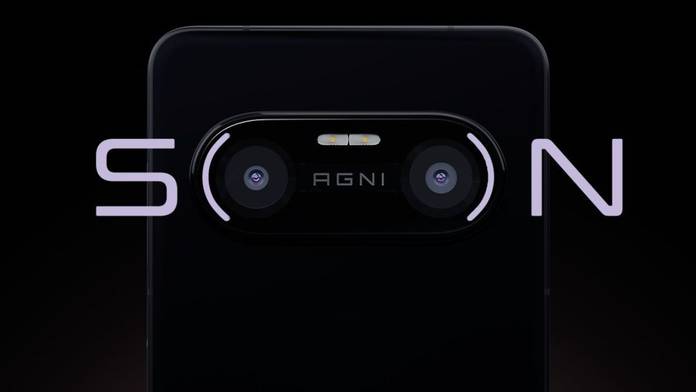
Lava’s Agni series is its most premium offering yet. Last year in October, it launched the Lava Agni 3 with a secondary screen at the back. Its successor, the Lava Agni 4, is now teased to launch in India on November 24th. This time, there’s no secondary screen but a more minimalist and sleeker pill-shaped camera design at the back. It’s not clear why Lava decided not to continue with the secondary screen on the Agni 4, but it could be to cut costs, or maybe the feature doesn’t make sense anymore. The new pill-shaped camera deco seems familiar and might even remind one of the old LG smartphones, as we had mentioned earlier this year, in June, when we revealed its design and key specs.
It’s a dual-camera setup at the back with the LED flash sitting in the middle of the two sensors. The overall design is pill-shaped, similar to the Pixel 9 as well, but this one appears to be thinner. Lava has so far revealed only the camera design and teased that the Agni 4 will feature a MediaTek chipset. No other detail has been revealed yet, but we had already tipped the phone’s specifications.
The Lava Agni 4 is tipped to feature a 6.7-inch FHD+ display with a 120Hz refresh rate. In comparison, the Agni 3 has the same display, but there could be upgrades in peak brightness level and other features like HDR support. The MediaTek chipset could be the Dimensity 8350, which would be an upgrade over the Agni 3’s Dimensity 7300X processor. The Lava Agni 3 is a reliable performer for your regular tasks and games like BGMI. While it performs seamlessly without any issues, it’s not the best performer in the segment, so the Agni 4 is expected to deliver some improvements in this area.
The dual-camera setup on the Lava Agni 4 could be 50MP sensors. In comparison to the Agni 3, this could be a downgrade in terms of versatility as the handset has a 50MP primary camera, an 8MP telephoto, and an 8MP ultra-wide. With only two sensors, there could be a compromise here. We should still wait for the official specs and see how the setup would appeal to consumers.
Engineered for precision🔥🔥🔥🔥
— Lava Mobiles (@LavaMobile) November 3, 2025
Launching on 20.11.25 #Agni4 #ComingSoon #LavaMobiles pic.twitter.com/vpEJ84fTVO
Based on everything we know so far, the Lava Agni 4 will feature a toned-down design but with notable upgrades under the hood. It looks like Lava is focusing more on the hardware than design this time, which could result in a better experience than the Agni 3. We’ll have to wait and see how the upgrades change things for the Agni 4, and how it would compare against rivals in the same segment. The Lava Agni 3 launched in India at a starting price of Rs 20,999, so the Agni 4 might be priced around the same.
The Lava Agni 4 does seem promising, and its pill-shaped camera design might seem refreshing as well. Lava is also known to offer a clean UI, so that’s one more reason to consider waiting for the Agni 4 in addition to its battery life and performance. Its predecessor, the Agni 3, offered a decent all-round experience, but there were better alternatives for cameras and performance. Other phones like the Realme P2 Pro, Motorola Edge 50 Fusion, and Nothing Phone (2a) were better alternatives to the Agni 3. If Lava improves on these areas, then the Agni 4 could be a definite upgrade over the Agni 3.