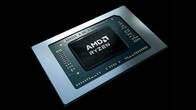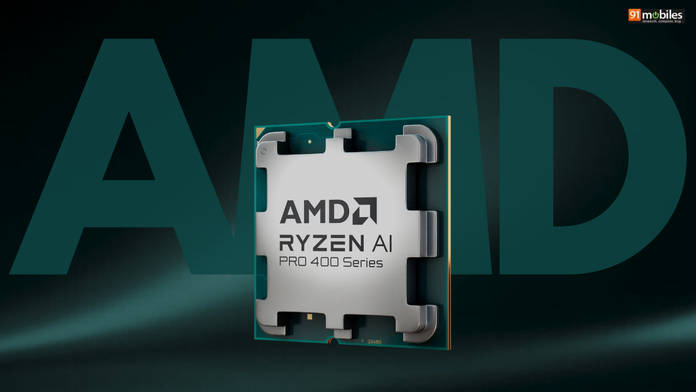
At MWC 2026 in Barcelona, AMD expanded its Ryzen AI portfolio. AMD launched the new Ryzen AI 400 Series and Ryzen AI PRO 400 Series desktop processors. With the launch, Brand aims to introduce on-device AI acceleration for desktops. It should help strengthen its role in the growing Copilot+ PC ecosystem.
The new Ryzen AI 400 Series desktop processors are the first designed to support Microsoft Copilot+ PC experiences on desktop systems. Each chip includes a dedicated NPU that provides up to 50 TOPS of AI computing power. This setup allows users to run AI assistants and large language models locally. Keeping sensitive data on the device while cutting down on latency and boosting responsiveness.
Table of Contents
Ryzen AI 400 Series: AI-powered desktop computing
| Model | Cores / Threads | Boost/ Base Frequency | TDP | Total Cache | Graphics Model | NPU TOPS |
| AMD Ryzen AI 7 450G | 8 / 16 | Up to 5.1 GHz / 2.0 GHz | 65W | 24MB | AMD Radeon 860M graphics | Up to 50 |
| AMD Ryzen AI 5 440G | 6 / 12 | Up to 4.8 GHz / 2.0 GHz | 65W | 22MB | AMD Radeon 840M graphics | Up to 50 |
| AMD Ryzen AI 5 435G | 6 / 12 | Up to 4.5 GHz / 2.0 GHz | 65W | 14MB | AMD Radeon 840M graphics | Up to 50 |
| AMD Ryzen AI 7 450GE | 8 / 16 | Up to 5.1 GHz / 2.0 GHz | 35W | 24MB | AMD Radeon 860M graphics | Up to 50 |
| AMD Ryzen AI 5 440GE | 6 / 12 | Up to 4.8 GHz / 2.0 GHz | 35W | 22MB | AMD Radeon 840M graphics | Up to 50 |
| AMD Ryzen AI 5 435GE | 6 / 12 | Up to 4.5 GHz / 2.0 GHz | 35W | 14MB | AMD Radeon 840M graphics | Up to 50 |
| AMD Ryzen AI 7 PRO 450G | 8 / 16 | Up to 5.1 GHz / 2.0 GHz | 65W | 24MB | AMD Radeon 860M graphics | Up to 50 |
| AMD Ryzen AI 5 PRO 440G | 6 / 12 | Up to 4.8 GHz / 2.0 GHz | 65W | 22MB | AMD Radeon 840M graphics | Up to 50 |
| AMD Ryzen AI 5 PRO 435G | 6 / 12 | Up to 4.5 GHz / 2.0 GHz | 65W | 14MB | AMD Radeon 840M graphics | Up to 50 |
| AMD Ryzen AI 7 PRO 450GE | 8 / 16 | Up to 5.1 GHz / 2.0 GHz | 35W | 24MB | AMD Radeon 860M graphics | Up to 50 |
| AMD Ryzen AI 5 PRO 440GE | 6 / 12 | Up to 4.8 GHz / 2.0 GHz | 35W | 22MB | AMD Radeon 840M graphics | Up to 50 |
| AMD Ryzen AI 5 PRO 435GE | 6 / 12 | Up to 4.5 GHz / 2.0 GHz | 35W | 14MB | AMD Radeon 840M graphics | Up to 50 |
The desktop lineup combines Zen 5 CPU cores, RDNA 3.5 integrated graphics, and AMD’s XDNA 2 NPU architecture. AMD states this configuration can handle multitasking, software development, data analysis, AI-assisted workflows, and professional productivity tasks.
AMD announced multiple SKUs with standard 65W and low-power 35W options. Systems using Ryzen AI 400 Series processors are expected to launch in Q2 2026 from OEM partners like HP and Lenovo.
Expanding into enterprise and workstations
AMD also enhanced its enterprise portfolio with Ryzen AI PRO 400 Series processors for desktops and mobile platforms. These processors target commercial notebooks and next-generation mobile workstations.
The flagship Ryzen AI 9 HX PRO 470 reportedly provides up to 30% faster multithreaded performance compared to Intel’s Core Ultra X7 3581, while maintaining solid power efficiency for all-day battery life. The mobile PRO series features NPUs that deliver up to 60 TOPS of AI computing power, bringing Copilot+ experiences to enterprise notebooks and professional workstations.
Mobile workstations powered by Ryzen AI PRO 400 Series processors are expected in Q2 2026 from Dell, HP, and Lenovo.
AMD continues to position the PRO platform as a secure and manageable choice for enterprises. The AMD PRO stack includes hardware-level security features, remote management tools, and compatibility with major commercial security solutions. The company claims this approach simplifies IT fleet management, especially as businesses deploy AI-enabled PCs on a large scale.
AMD seems to no longer be treating AI as just a niche feature. It is embedding AI acceleration throughout its mainstream and enterprise offerings. This indicates that on-device AI is quickly becoming a standard expectation.
When compared with Intel’s latest Panther Lake-based 300 Series processors, the picture is still developing. Intel’s newest Core Ultra chips, recently reviewed in a premium laptop, impressed us with robust AI acceleration, low-latency Copilot+ experiences, and excellent performance thanks to closely integrated CPU, GPU, and NPU resources.
AMD’s Ryzen AI 400 Series takes a different approach by including a dedicated XDNA NPU with up to 50 TOPS of AI computing alongside RDNA 3.5 graphics on desktop. This suggests AMD’s platform may excel in raw AI throughput and local inferencing. Meanwhile, Intel’s Panther Lake chips shine in balanced performance and power efficiency across everyday productivity and creative tasks.
For buyers, this means the AI PC market is becoming more competitive. Users should expect options prioritising power efficiency and compatibility (Intel) versus options focusing on on-device AI performance and graphics capabilities (AMD). Of course, these are initial impressions. The true performance differences and real-world experience will become clear once both platforms undergo in-depth testing and direct comparisons.