ASUS has launched the new ProArt P16 and ProArt P14 laptops in India, powered by NVIDIA RTX Spark N1X and aimed at creators, AI developers and creative professionals. The new laptops focus on running demanding AI workloads locally while offering high-resolution OLED displays and portable designs. Let’s take a closer look at these products below.
Table of Contents
ASUS ProArt P16 and P14: price in India
The ASUS ProArt P16 and P14 come in the following configurations:
| Model | Configuration | Price |
| ProArt P14 | 24GB RAM/1TB SSD | Rs 3,29,990 |
| ProArt P16 | 64GB RAM/1TB SSD | Rs 4,99,990 |
| ProArt P16 | 128GB RAM/1TB SSD | Rs 6,29,990 |
| ProArt P16 | 48GB RAM/1TB SSD | Coming Soon |
ASUS will sell both laptops through its exclusive stores, Croma, Reliance Digital, Flipkart, Amazon and its official online store.
ASUS ProArt P16 and P14: features and specifications
The ASUS ProArt P16 and P14 use NVIDIA RTX Spark N1X processors, combining Grace CPUs with Blackwell RTX graphics and unified memory. The P16 features a 20-core CPU and up to a 6,144-core GPU, while the more compact P14 uses an 18-core CPU and a 5,120-core GPU. The P16 supports up to 128GB of unified memory, while the P14 comes with 24GB.
This setup allows creators and developers to run demanding AI models and applications directly on their laptops rather than relying entirely on cloud services. ASUS says the machines support over 1,000 AI-accelerated applications, including Adobe’s creative tools, Blender and ComfyUI. This could be useful for developers working with local AI models, as well as creators who handle demanding video editing and 3D rendering workloads.
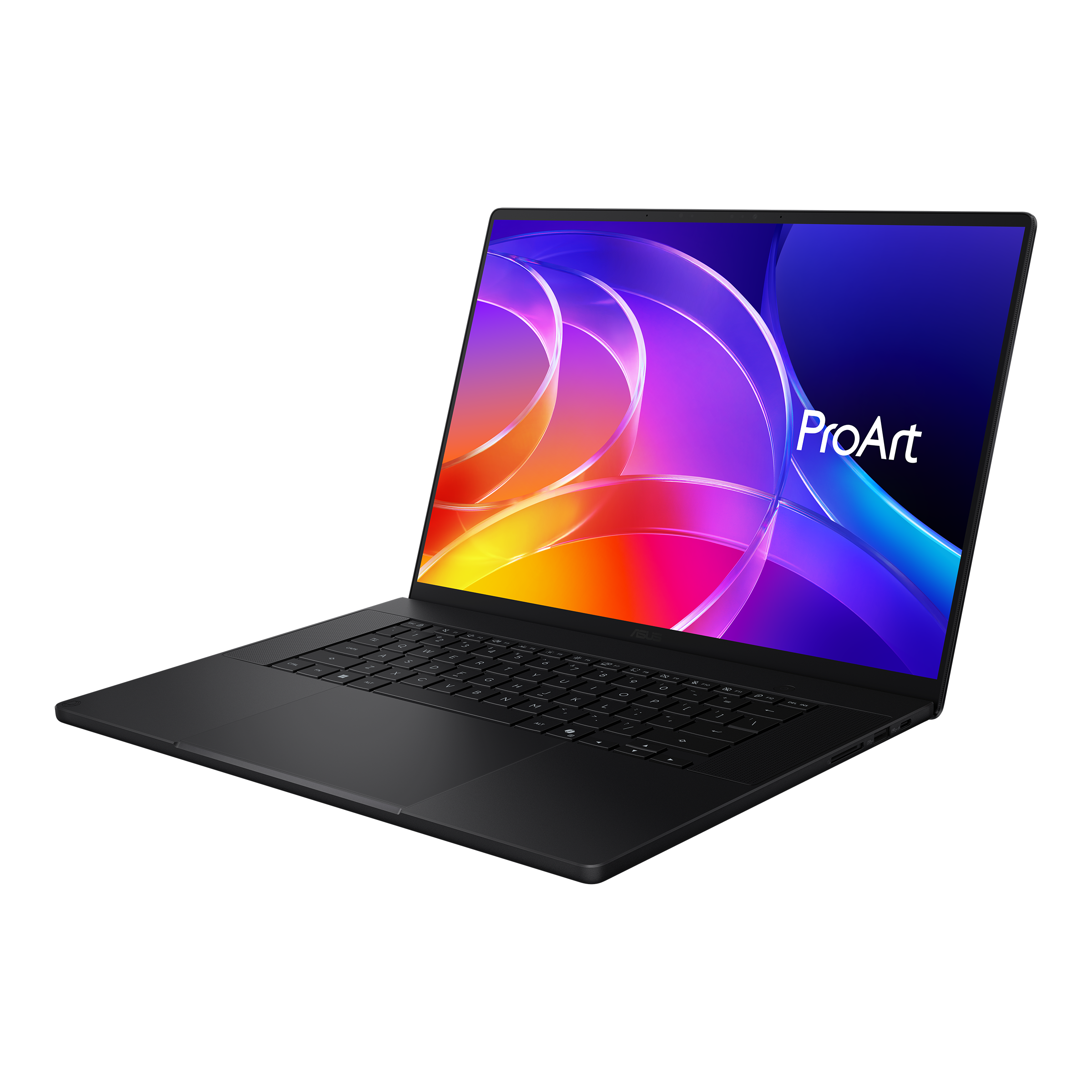
The P16 features a 16-inch 4K ASUS Lumina Pro OLED touchscreen, while the P14 gets a smaller 14-inch 3K OLED touchscreen. Both displays support a 120Hz refresh rate and come with Pantone validation for colour accuracy. The P16 weighs approximately 1.77kg and measures 1.29cm thin, while the P14 weighs around 1.48kg and measures 1.39cm. They also pack large batteries, with capacities of 99.9Wh and 90Wh, respectively.
Both laptops include an ASUS HapticPad for precise input and ProArt Creator Hub software to help users manage and customise their creative workflows.
Should you buy the new ASUS ProArt series?
The latest ProArt laptops are best suited to developers, AI engineers and creators who regularly run demanding AI workloads. Running AI models locally could help them reduce cloud usage and save on token costs, while NVIDIA’s CUDA tools and RTX graphics can support AI development, video editing and 3D rendering. Gaming is also an added benefit for users who want one machine for both productivity and entertainment.
The main alternatives include Apple’s 14-inch MacBook Pro with M5 Pro, starting at Rs 2,49,900. For users who need higher memory configurations, the MacBook Pro with M5 Max and 128GB unified memory costs around Rs 6,19,900. This puts it quite close to the 128GB ProArt P16, making it a direct comparison for buyers at this price point.
The ProArt RTX Spark models are worth considering for buyers who need local AI development, powerful graphics and a Windows-based system. Their biggest advantage is access to NVIDIA’s CUDA and RTX software ecosystem, which supports a wide range of AI and creative applications. They also offer a more established PC gaming experience, something MacBook users may find limited by the smaller library of supported games.
The ProArt series makes sense for users who specifically need these capabilities, while Apple’s MacBook Pro remains a great alternative for those who prioritise CPU performance and macOS development ecosystem.