Moto G Max vs Redmi Note 17 comparison: identical price, different priorities


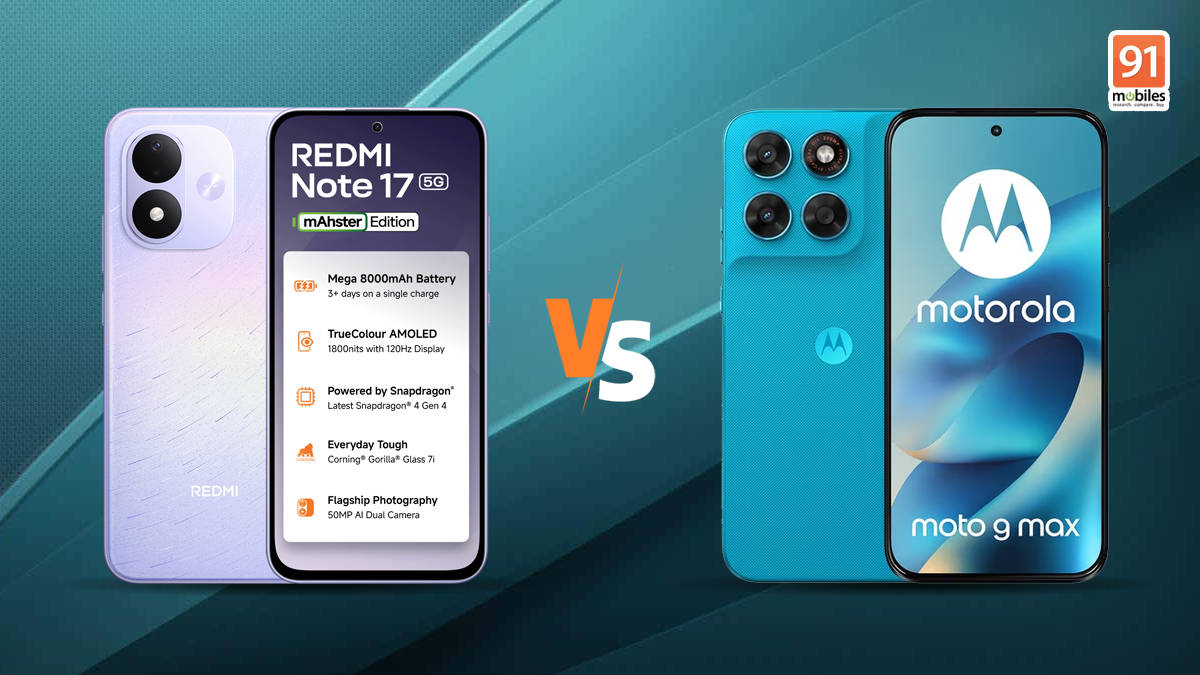
The Moto G Max 5G is the company’s latest mid-range offering and an all-new addition to the G-series lineup. While the handset may appear similar to the Moto G57 Power, it sets itself apart with a superior 32MP selfie camera, earning it the top spot in the lineup. The smartphone is priced in India for under Rs 30,000, positioning it close to another latest entrant in the segment, the Redmi Note 17 5G (review), which boasts an AMOLED display and 8,000mAh battery.
Which one should you consider buying? Here’s a quick specs-based comparison between the Moto G Max and Redmi Note 17 to help you decide.
| Aspects | Moto G Max | Redmi Note 17 |
| Display | 6.72-inch FHD+ LCD, 120Hz | 6.9-inch FHD+ AMOLED, 120Hz |
| Chipset | Snapdragon 6s Gen 4 | Snapdragon 4 Gen 4 |
| Rear cameras | 50MP + 8MP | 50MP + 2MP |
| Front camera | 32MP | 8MP |
| Battery & charging | 7,000mAh, 30W | 8,000mAh, 45W |
| Dimensions & weight | 166.2 x 76.5 x 8.6mm, 213 grams | 169.7 x 79.1 x 8.4mm, 225 grams |
Table of Contents
Moto G Max vs Redmi Note 17 price in India
Both Moto G Max and Redmi Note 17 are priced in India at Rs 27,999 for the 6GB RAM and 128GB storage option. While the Motorola smartphone is limited to that, the Redmi Note 17 is also available in an 8GB RAM + 128GB storage configuration, priced at Rs 29,999.
The Redmi Note 17 can be purchased via Amazon.in right now, the Moto G Max will go on sale from August 20th onwards through Flipkart across the country. Both smartphones come in three colourways. The Redmi Note 17 is available in Arctic Blue, Dark Night, and Starlight Purple, whereas the Moto G Max features Pantone-certified Stargazer, Alaskan Blue, and Malaga shades.
| Variant | Moto G Max | Redmi Note 17 |
| 6GB + 128GB | Rs 27,999 | Rs 27,999 |
| 8GB + 128GB | NA | Rs 29,999 |
Design and display
The Moto G Max might appear slightly more appealing, thanks to its satin-inspired finish and design, which resembles the more premium Edge-series lineup. The handset features a slightly protruding camera module, but it blends neatly into the back panel, with the edges gently sloping around it for a smoother finish. Motorola has also done a good job of highlighting the edges of the dual camera rings in a shade that complements the smartphone’s overall colour scheme.


The Moto G Max also takes durability into account, with Corning Gorilla 7i protection for the display, an IP64 rating against minor splashes of water and dust, and MIL-STD-810H military-grade durability to protect it from drops and falls. The smartphone measures 8.6mm in thickness and weighs 213 grams, which is understandable given its beefy battery. The handset may also lack a premium in-hand feel due to its plastic frame.


This similarity extends to its counterpart, Redmi Note 17, which boasts a slightly understated look. The smartphone features a standard back panel, with a squircle camera module. Similar to the Moto smartphone, the Note 17 also sports Corning Gorilla Glass 7i protection. While it may not be military-grade certified, the smartphone offers a superior IP65 rating.
However, the Redmi Note 17 should feel heavier to hold, with 225 grams of weight, owing to a bigger battery than the Moto G Max.


As for the display, the Redmi Note 17 should offer a better experience with its large 6.9-inch AMOLED panel that bears FHD+ resolution and a 120Hz refresh rate. The display can go up to 1,800 nits bright for a comfortable viewing experience outdoors under direct sunlight. The display is also near bezel-less, with a punch-hole setup for the selfie camera, for an uninterrupted viewing experience.
| Smartphone | Display | Peak Brightness |
| Moto g max 5G | 6.72 inches - LCD | 1050 nits |
| Xiaomi Redmi Note 17 5G | 6.99 inches - OLED | 1800 nits |
On the contrary, the Moto G Max packs a 6.72-inch FHD+ display of LCD variety and a 120Hz refresh rate. While the smartphone is capable of offering sharp visuals, it may not be as punchy and crisp as the Redmi Note 17. Moreover, the smartphone only offers a peak brightness of 1050 nits and isn’t as bezel-less as its counterpart.
On the bright side, however, the Moto G Max packs dual speakers with Dolby Atmos and Hi-Res audio. There is also a 3.5mm headphone jack for users preferring wired listening instead of wireless. The Redmi Note 17 sports a mono bottom-firing speaker.
Performance and software
The Redmi Note 17 runs HyperOS layered atop Android 16 out of the box, with four major OS upgrades and six years of security updates promised. The handset is powered by a 5G-capable Snapdragon 4 Gen 4 SoC under the hood, aided by up to 8GB LPDDR4X RAM and 128GB UFS 2.2 storage. The hardware looks capable for basic usage; however, its memory and data transfer speeds seem underwhelming.
| Smartphone | Software Support |
| Moto g max 5G | 2 Year OS Updates + 3 Year Security Updates |
| Xiaomi Redmi Note 17 5G | 4 Year OS Updates + 6 Year Security Updates |
The Moto G Max, on the other hand, rocks a 5G-capable Snapdragon 6s Gen 4 chipset under the hood, paired with relatively faster LPDDR5X RAM and UFS 3.1 storage. We will actually be testing the performance in the real world in the full review, but benchmark results of the chipset show it is superior to the Snapdragon 4 Gen 4.
Software-wise, the Moto G Max boots Android 16-based Hello UI; however, its support falls behind the Redmi Note 17 by a margin. The handset will only be relevant until 2029, with two major OS upgrades and three years of security updates.
Cameras


In optics, both smartphones sport a dual camera setup with a 50MP main sensor. The secondary camera on the Moto G Max is an 8MP snapper, which can capture wide perspective as well as macro shots. The Redmi Note 17’s auxiliary sensor, on the other hand, is a pretty basic 2MP depth sensor.
The Moto smartphone’s front-facing camera is also superior, with a 32MP sensor as opposed to 8MP on the Redmi Note 17. On paper, the Moto G Max seems a more capable smartphone for photography.
Battery and charging
On paper, the Redmi Note 17 outperforms the Moto G Max. The Redmi smartphone packs an 8,000mAh battery, with 45W fast charging, whereas the Moto G Max ships with a 7,000mAh battery and charging speeds capped at 30W. Both smartphones ship with a compatible charger and support reverse wired charging.


While both smartphones should take near-identical time for a full charge, the Redmi Note 17 could actually outrun Moto G Max in real-world endurance. The AMOLED panel is generally more battery efficient than the LCD panel. It will be interesting to see how well Moto G Max is optimised for actual usage.
Verdict
The Moto G Max has the edge in performance, cameras, audio, and a more distinctive design, while the Redmi Note 17 offers a superior AMOLED display, a larger battery, faster charging, and longer software support. Overall, the Redmi Note 17 appears to be the more complete package. As for the Moto G Max, it is worth considering if performance and cameras are higher on your priority list.