Nothing Phone (4b) launched in India with Snapdragon 6 Gen 4, 6,000mAh battery, Glyph Bar: price, specifications


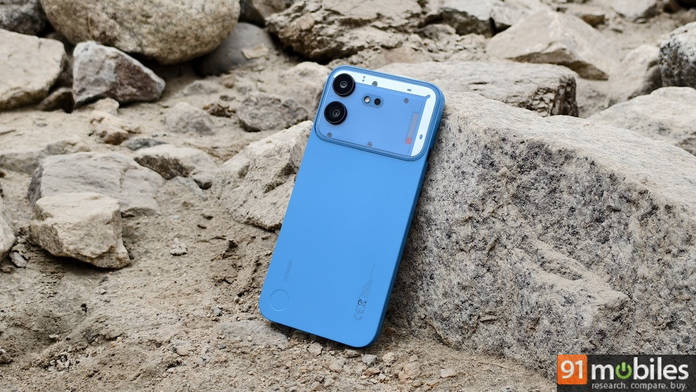
Nothing Phone (4b) has launched in India as the first device in the company’s new (b) series, slotting in below the Phone (4a) lineup as the brand’s new entry point into the ecosystem. It arrives at a moment when Nothing’s own pricing has moved upward owing to an industry-wide memory chip crisis. The Phone (4a) now starts at Rs 39,999 and the Phone (4a) Pro at Rs 49,999, leaving a gap in the Rs 35,000 bracket that the Phone (4b) is designed to fill.
Table of Contents
Nothing Phone (4b) price in India, availability
The Nothing Phone (4b) is priced at Rs 34,999 for the 8GB+128GB variant and Rs 38,699 for the 8GB+256GB option. With instant bank discount and exchange bonus, the phone’s effective price comes to Rs 29,999 and Rs 33,699, respectively.
| Variant | Official Price | Effective price |
| 8GB+128GB | Rs 34,999 | Rs 29,999 |
| 8GB+256GB | Rs 38,999 | Rs 33,699 |
For context, the Phone (4a) now starts at Rs 39,999 following a recent price hike, and the Phone (4a) Pro sits at Rs 49,999. That’s left a noticeable void in the mid-range, one that Nothing hasn’t had a phone to address until now. The Phone (4b) effectively resets Nothing’s entry price by roughly Rs 10,000 if you’re able to take advantage of all the offers.
Show Full Article
The Phone (4b) will be available in Black, White, and Blue colours from 14 July 2026 via Flipkart and leading retail partners, including Croma, Reliance Digital, and Vijay Sales.
Nothing Phone (4b) specifications, features
The Phone (4b) borrows its unibody design from the Phone (4a) Pro and pairs it with the Glyph Bar first seen on the Phone (4a), now housed inside a clear camera module that shows off some of the mechanics underneath. Nothing says the polycarbonate unibody is 20 percent more bend-resistant than the Phone (3a) Lite, and the phone carries an IP64 rating along with testing for extreme temperatures and short submersion in up to 25cm of water.


Up front is a 6.77-inch Super AMOLED display with a 120Hz adaptive refresh rate, 2000 nits peak brightness, and an in-display optical fingerprint sensor. Powering it is Qualcomm’s Snapdragon 6 Gen 4, paired with a 20,829mm² cooling system that Nothing claims reduces peak CPU temperature by up to 18.8 degrees Celsius during sustained gaming. The chipset supports up to 120fps in lighter titles like Subway Surfers and BGMI at up to 90fps, with a 1,000Hz instant touch sampling rate for responsiveness.
Battery capacity is 5,200mAh globally, with a larger 6,000mAh cell for the Indian market, making it Nothing’s largest battery on a phone yet. It supports 33W wired charging, going from zero to 50 percent in 27 minutes and a full charge in about 80 minutes, Nothing claims.
On optics, the Phone (4b) gets a 50MP Samsung main sensor with OIS and EIS, an 8MP ultrawide with a 119.5-degree field of view, and a 16MP Samsung front camera. The TrueLens Engine 4 handles processing, and the phone supports Ultra XDR photo capture, co-developed with Google, along with 4K video recording at 30fps and dual video capture from both cameras simultaneously.
The phone runs on Nothing OS 4.1, based on Android 16, with three years of OS updates and six years of security patches promised. It carries over Essential AI tools like Essential Space and Essential Voice, along with the Glyph Bar’s Live Updates support for apps including Uber, Google Maps, and Zomato.
Nothing Phone (4b) specs at a glance
| Specifications | Nothing Phone (4b) |
| Display | 6.77-inch Super AMOLED, 120Hz, 2000 nits peak brightness |
| Processor | Snapdragon 6 Gen 4 |
| RAM/Storage | 8GB+128GB, 8GB+256GB |
| Rear cameras | 50MP Samsung (OIS+EIS), 8MP ultrawide |
| Front camera | 16MP |
| Battery | 5,200mAh (Global), 6,000mAh (in India) |
| Charging | 33W wired |
| Software | Nothing OS 4.1 based on Android 16 |
| Software support | 3 years OS, 6 years security |
| IP rating | IP64 |
| Weight | 210 grams |
| Colours | Black, White, and Blue |
Our take
The Phone (4b) is Nothing’s answer to its own price creep due to the global memory supply crunch. With the Phone (4a) and Phone (4a) Pro moving further upmarket, the brand needed something to hold the line around Rs 30,000, and this is it. On paper, it carries over enough from the Phone (4a) Pro, the unibody, the OIS main camera, and the Snapdragon chipset that it doesn’t feel like a stripped-down afterthought. Whether it holds up as a genuine alternative to the crowded Rs 30,000 to Rs 35,000 segment, where competition on cameras and performance is intense, will come down to real-world testing. We will have more to say in our in-depth review in the days to come.