5 upcoming flagship smartphones worth waiting for in India


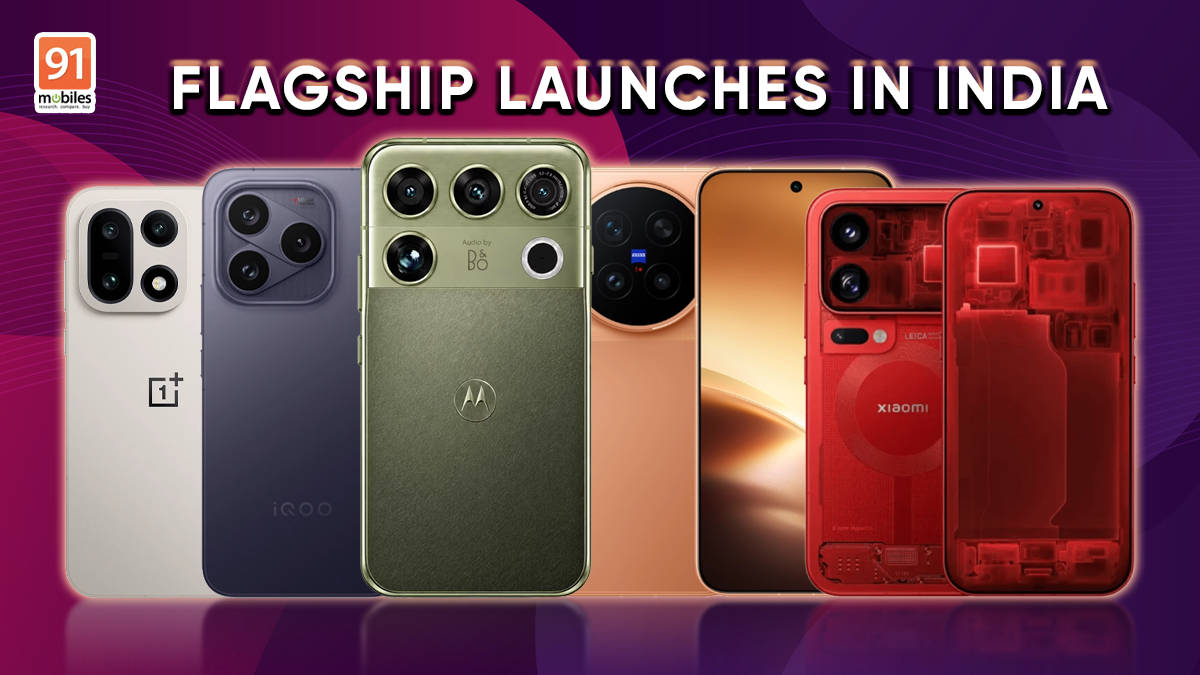
2026 may be nearing its end, but there’s still plenty brewing in the smartphone market. In fact, for Android fans, this could be one of the most exciting times of the year. Several new flagship smartphones are expected to arrive in India over the coming months. So, if the existing flagship options don’t excite you, it’s worth keeping an eye on what’s coming next.
Some of these smartphones have already been confirmed for the Indian market, while others are expected to make their way here based on recent reports and leaks. The list includes the Motorola Signature 27, iQOO 16, Xiaomi 18 Pro, Vivo X500 series and OnePlus 16.
These flagship Android phones aren’t just incremental upgrades. Instead, they promise substantial upgrades in performance, cameras, displays and battery capacity. From a 165Hz display and an 8,400mAh battery to dual 200MP rear cameras and next-generation flagship chipsets, there is plenty to look forward to. Here’s a quick look at their specifications:
Table of Contents
Motorola Signature 27
Potentially, the first phone with the Qualcomm Snapdragon 8 Elite Extreme Gen 6 SoC in India. The Motorola Signature 27 has already been launched globally, telling us everything there is to know on the hardware front.


The handset retains a sleek form factor but adopts a different design from its predecessor. It features a dual-tone finish and a large, rectangular camera module that houses the sensors in an L-shaped arrangement, replacing the squarish layout of the previous model. The phone sports a quad-camera setup, comprising the world’s first 50MP Sony Lytia 910 primary sensor, a 200MP periscope telephoto lens, a 50MP ultra-wide camera and a dedicated action sensor.
The Motorola Signature 27 features a near-identical 6.8-inch 1.5K Extreme AMOLED Duo LTPO display with a new tandem panel with two emissive layers and impressive 12,000 nits peak brightness, but with a reduced 120Hz refresh rate. Furthermore, the Snapdragon 8 Elite Extreme Gen 6 SoC at the phone’s core is paired with Motorola’s ArcticMesh cooling system for improved thermal management during demanding tasks.

The front camera is a 50MP sensor in the punch-hole setup. The phone also packs a 7,000mAh battery with support for 90W wired, 50W wireless, 5W reverse wireless and 4.5W reverse wired charging. On the software front, it runs Android 17 out of the box and promises seven years of OS and security updates. Apart from this, the phone supports GrapheneOS for advanced privacy protection, Google’s Gemini integration, AI-powered video enhancements, and Audio by B&O.
The Motorola Signature 27 is priced starting at $1,599, which in Indian currency (~Rs 1,51,000) is three times more than its predecessor. I hope Motorola prices the Signature 27 more competitively in India to appeal to the masses.
iQOO 16
If the Motorola Signature 27 will be lifestyle-focused, the iQOO 16 will prioritise a complete all-around experience with loaded specifications. The handset has been introduced in China and is confirmed to launch in India, possibly by mid-December. Much like the Motorola Signature 27, the iQOO 16 will also be powered by Qualcomm’s Snapdragon 8 Elite Extreme Gen 6 chipset. This should translate into substantial performance capabilities for gaming, multitasking and other demanding workloads.

Another major highlight is its 2K AMOLED display with a 165Hz refresh rate. This should make the device particularly interesting for mobile gamers and users who prefer a smoother scrolling experience. The smartphone also packs an 8,400mAh battery, which is considerably larger than what most conventional flagship smartphones offer. This could make a meaningful difference for users who spend considerable time gaming, streaming videos or using their devices throughout the day.
On the camera front, the iQOO 16 is expected to feature a triple rear camera setup with 50MP sensors. While the camera hardware looks capable, its real-world performance will be worth evaluating against camera-focused flagships from Vivo and Xiaomi.


With its combination of a powerful processor, high-refresh-rate display and large battery, the iQOO 16 could be a particularly interesting option for performance enthusiasts.
Xiaomi 18 Pro
Xiaomi has also confirmed that the Xiaomi 18 Pro will launch in India, although there is no word on the launch date yet. Introduced in China, the smartphone stands out for its camera hardware and relatively compact form factor. The Xiaomi 18 Pro features a 6.4-inch OLED display, making it an interesting alternative for buyers who want flagship specifications without opting for a particularly large smartphone.

At the phone’s core lies Qualcomm’s Snapdragon 8 Elite Gen 6 chipset. While it isn’t the Extreme variant powering the Motorola Signature 27 and iQOO 16, it should still offer flagship-grade performance. That said, the cameras could be the biggest reason to consider this smartphone. Xiaomi has equipped it with dual 200MP rear cameras, comprising a primary sensor and a periscope telephoto camera with 3.2x optical zoom. The Leica partnership should also bring its signature colour science and photography features to the device.
Another interesting addition is the secondary display on the rear, which can be used for notifications, widgets and other functions, similar to its predecessor, the Xiaomi 17 Pro. The smartphone also packs a 7,000mAh battery in its Chinese variant, alongside 100W wired and 50W wireless charging support.

If Xiaomi manages to bring most of these features to India without a significant price increase, the Xiaomi 18 Pro could be an interesting option for buyers looking for a premium camera-focused smartphone. The handset is retailing in China at CNY 5,999 (Rs 85,800 approx.) for the base 12GB RAM variant.
Vivo X500 series
The Vivo X500 series is another upcoming flagship lineup worth keeping an eye on. While Vivo hasn’t officially announced its India launch date yet, the series is confirmed to arrive in the country, with reports suggesting a November 25th launch. The lineup comprises three smartphones: Vivo X500, Vivo X500 Pro and Vivo X500 Pro Max. This is particularly interesting because the company is introducing a Pro Max variant to its flagship X series for the first time.

All three phones are already official in China, and as expected from Vivo’s premium lineup, cameras are their biggest highlights. All three Vivo X500 series smartphones feature Zeiss-branded camera systems, with the top-end X500 Pro Max getting a 200MP periscope telephoto camera. The Vivo X500 Pro Max also features a 6.85-inch 2K LTPO OLED display with a 144Hz refresh rate and is powered by MediaTek’s Dimensity 9600 Pro chipset. Furthermore, the handset packs an 8,000mAh battery.
As for the standard X500 and X500 Pro, they offer slightly different hardware configurations, catering to buyers with different requirements and budgets. The Vivo X500 Pro, in particular, could be an interesting option for those who prefer a relatively compact flagship without compromising too much on camera capabilities.

With its emphasis on photography, premium displays and large batteries, the Vivo X500 series could give Xiaomi and other camera-focused flagships some serious competition in India.
OnePlus 16
Rumours suggest that the OnePlus 16 could make its way to India soon. The handset has already debuted in China, bringing several noteworthy upgrades. For starters, the OnePlus 16 gets an 185Hz refresh rate display, up from the 165Hz panel on its predecessor, catering particularly to gaming enthusiasts. It is powered by Qualcomm’s latest Snapdragon 8 Elite Extreme Gen 6 SoC and packs a massive 9,000mAh battery with support for 100W wired and wireless charging.

The smartphone also gets an upgraded camera setup, headlined by a 200MP primary sensor. This is accompanied by a 50MP telephoto camera with 3x optical zoom and a 50MP ultrawide sensor. Other specifications include a 6.78-inch LTPO OLED display, LPDDR5X Ultra RAM, UFS 4.1 storage, ColorOS 17, a 50MP front camera, Wi-Fi 7, and an IP69 rating, among other features.
While the smartphone retains a design that is largely identical to the OnePlus 15, the Tomorrow’s Starlight colour variant adds an interesting touch to the rear panel with an LED light feature called the Interstellar Lighting Effect. The lights can stay illuminated or blink for notifications. Those who prefer a more understated look can opt for the Dark Forest or Martian Masterpiece colour options.

The OnePlus 16 is priced in China starting at CNY 5,999 (around Rs 86,000). However, its India pricing is likely to be much higher, possibly crossing the Rs 1 lakh barrier, which will be a first for OnePlus.
Should you wait for these flagships?
If powerful smartphones packed with all the bells and whistles are what you’re after, the aforementioned Android flagships are worth waiting for. However, don’t expect them to come cheap. Even relatively affordable flagship options, such as the iQOO 16 and OnePlus 16, are expected to cost upwards of Rs 1 lakh due to rising component prices.
That said, there appear to be some genuine upgrades across the board, at least on paper. Whether these upgrades justify the asking price is something we can only determine after putting the devices through their paces in our full reviews. So, stay tuned to 91mobiles for our verdict.