Google launched the Pixel 10 at the exact same price as the Pixel 9 did last year, but with some genuine upgrades across the board. Some are subtle, such as improved durability and a brighter display, while others mark significant leaps forward, such as the new Tensor G5 chip and the added telephoto lens. In this article, we’ll take a closer look at these upgrades. Read on to discover what makes the Pixel 10 a worthy step up from the Pixel 9 (review).
Table of Contents
Cameras are now more versatile
Google has finally added a telephoto camera to its base flagship model – the Pixel 10. The handset sports a 10.8MP sensor, which is lower in resolution than the 48MP sensor on Pixel 10 Pro models and other flagship Android phones. Still, it manages to offer up to 5x optical zoom, which is impressive, at least on paper, as the Samsung Galaxy S25, Vivo X200, and OPPO Find X8 max out at 3x optical zoom.
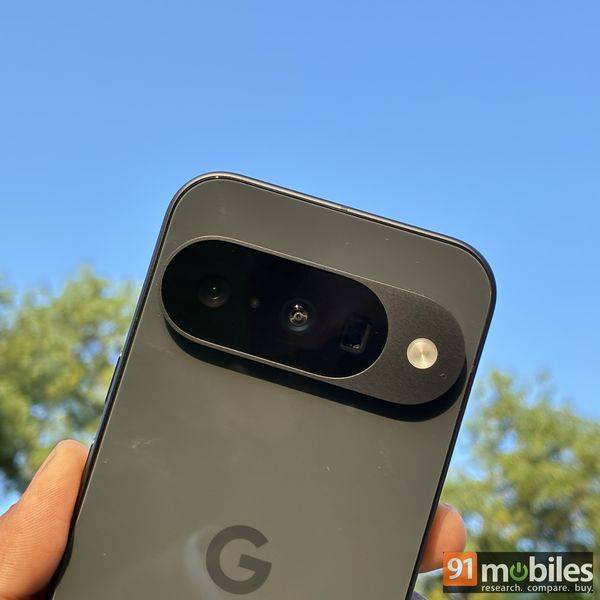
What’s interesting is that, unlike its competitors, the Pixel 10’s telephoto lens isn’t used for portraits. It’s dedicated solely to capturing distant subjects. Personally, I would have liked to see it support portraits as well, given how effectively telephoto lenses isolate subjects and produce a pleasing, natural-looking bokeh. This could have helped the Pixel 10 reclaim its edge in portrait photography, an area where its predecessor notably fell short.
In our review of the Pixel 9, we found that its 50MP primary camera often struggled with edge detection, resulting in portraits with noticeable warping around the subject’s outline. Now, the Pixel 10 steps in with a slightly lower-resolution 48MP main camera, but the real question is whether Google’s advanced computational photography can address this shortcoming. We’ll be putting it to the test, along with other camera features, in our full review.
Google’s fastest chipset to date
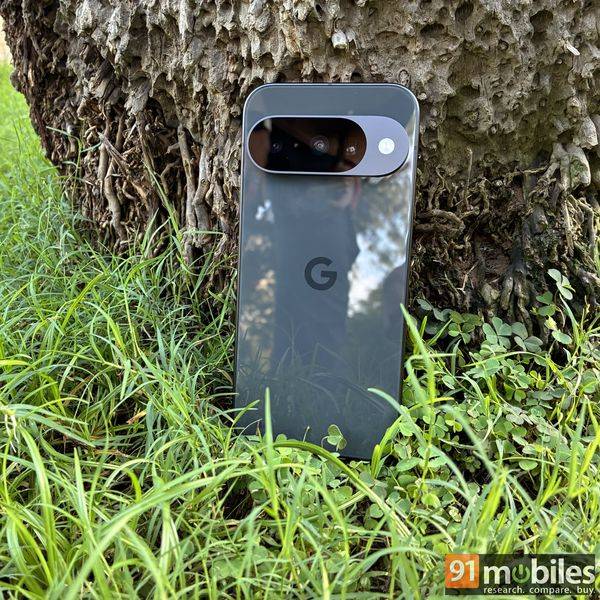
Another key highlight of the Pixel 10 is its custom Tensor G5 chip, which also powers the rest of Google’s latest Pixel lineup, including the Fold. Built on 3nm TSMC’s process instead of Samsung for the first time, the Tensor G5 is claimed to deliver a 60 percent boost in on-device AI performance compared to last year’s Tensor G4. The SoC also promises faster CPU speeds along with better thermal management and improved power efficiency.
We were able to perform synthetic benchmark tests on the Pixel 10 at the time of writing this article. The smartphone scored over 14.5 lakhs on AnTuTu, which is roughly 11 percent higher than the Pixel 9. However, it still lacks the raw processing power of the Snapdragon 8 Elite chipset, which has consistently scored over 20 lakhs on the benchmarking app on phones like Samsung Galaxy Z Fold7, Motorola Edge 60 Ultra, OnePlus 13, and more.
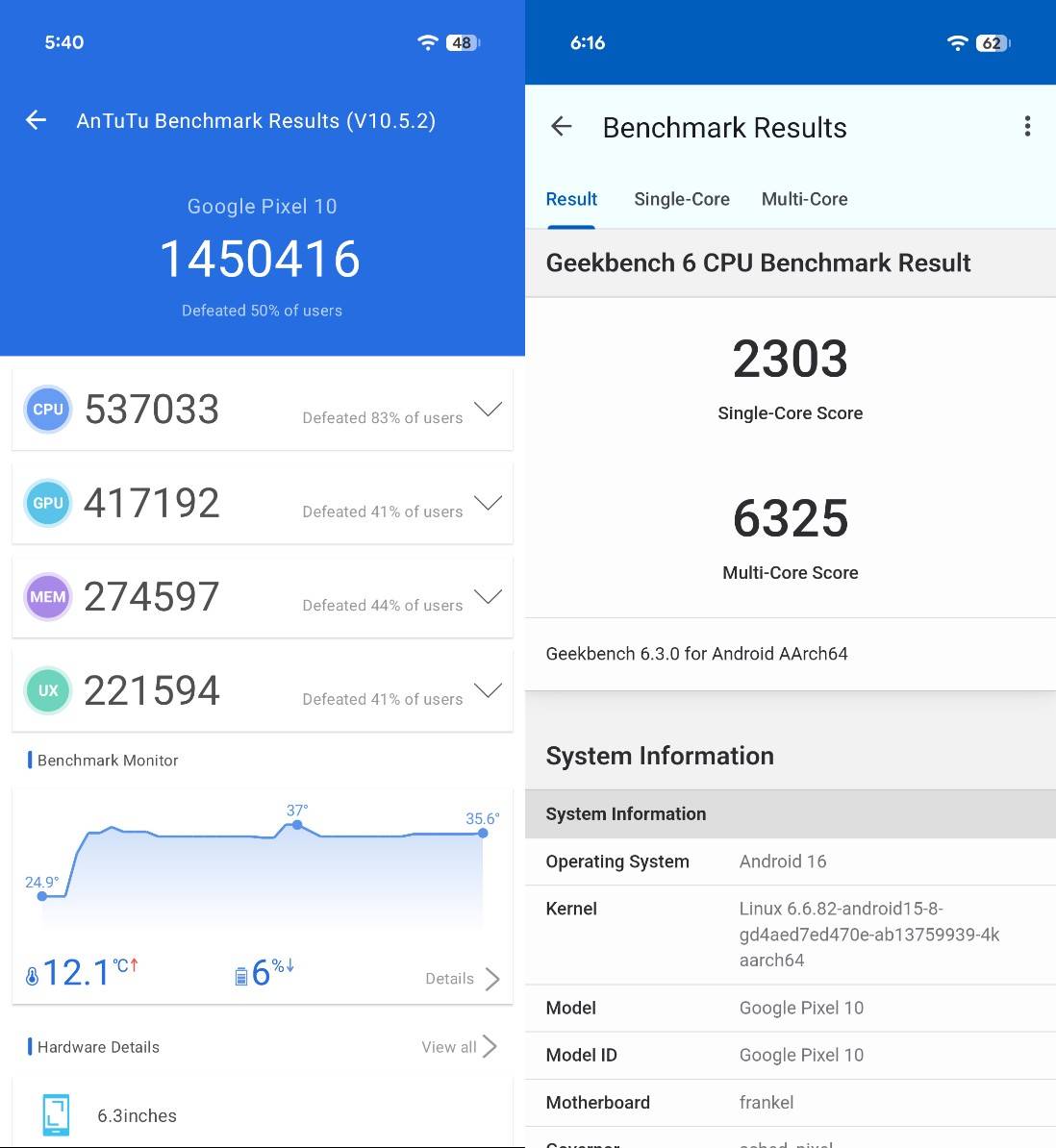
The Pixel 10 has also seemingly improved its processing capabilities, per the Geekbench’s single-core and multi-core test results, but it still trails behind the competition. That said, Pixels have never been about raw performance. Their real strength lies in effortless productivity and AI-driven features. It will be interesting to see how thermally and efficiently the Tensor G5 chipset can manage that, especially in hot climates in India. This is particularly important given how frequently the Pixel 9 overheated and throttled during even routine use in our review last year.
Larger battery, quicker charging speeds
Google is also addressing its battery concerns with a larger cell and faster charging speeds. The Pixel 10 now packs a 5,000mAh battery, up from 4,700mAh on its predecessor. It’s paired with 30W wired charging and 15W Qi2 wireless charging support. While these figures aren’t class-leading, the combination of a bigger battery and a more power-efficient chipset could significantly extend real-world endurance. If Google’s optimisation claims hold true, users should see fewer instances of battery anxiety, even with a full day of demanding use.
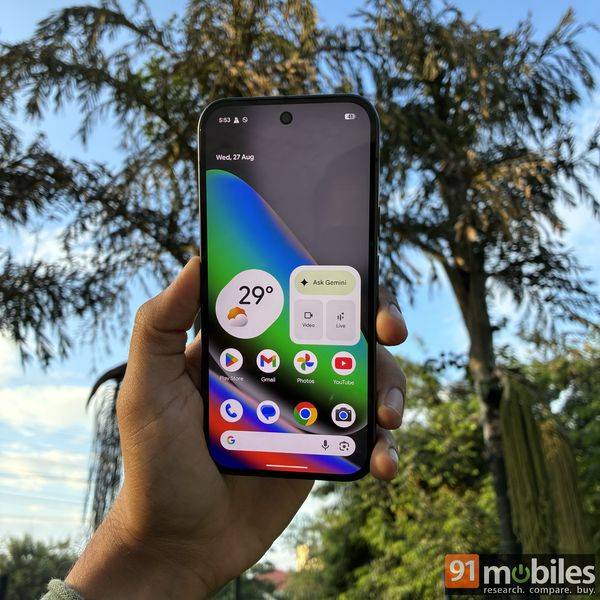
Unfortunately, we weren’t able to run our standard PCMark battery endurance test on the Pixel 10. For now, this leaves us with only initial impressions, and we’ll need more extended usage before we can share concrete real-world insights in our full review.
The addition of Qi2 makes it easier to top up the Pixel 10 wirelessly. It is the first smartphone in India to feature the new Qi2 standard, which uses magnetic alignment similar to Apple’s MagSafe, ensuring a more secure and efficient charging experience.
PixelSnap and MagSafe compatible
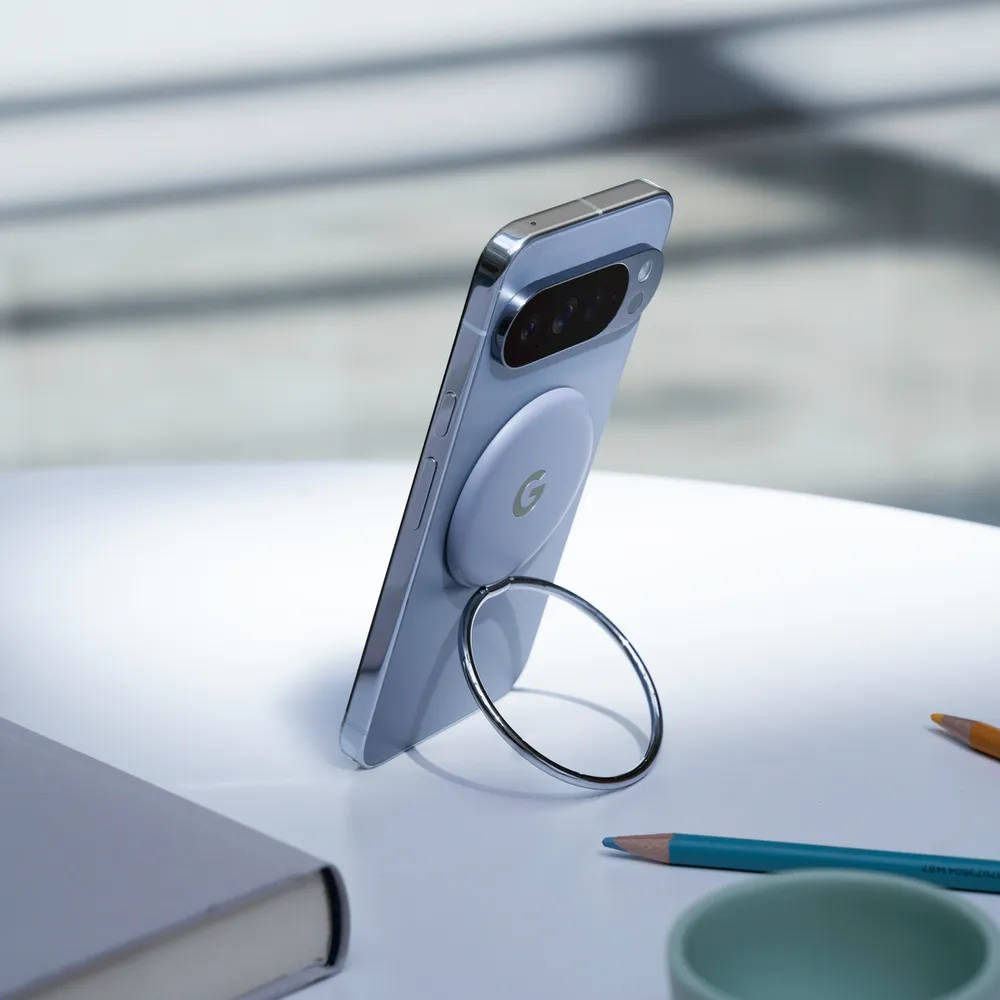
Speaking of the magnetic alignment, Google is calling it PixelSnap. Beyond wireless charging, it also supports snap-on accessories such as cases, wallets, phone stands and power banks. Since Google has made the feature fully compatible with Apple’s MagSafe, these accessories are already widely available in the market. This means Pixel 10 owners can instantly tap into an established ecosystem of chargers and add-ons. Best of all, they attach securely without the awkward ring-style magnet workarounds, making the experience cleaner, faster, and more reliable.
AI features galore
Last but not least, software features and artificial intelligence (AI). Unlike its predecessor Pixel 9, which ran a generation-old Android 14 out of the box, the latest iteration comes pre-loaded with the latest Android 16 OS. This brings not only fresh features, like the more expressive Material 3 design language, but also a promise of longevity. With seven years of software support, the Pixel 10 will stay current all the way through to the Android version that releases in 2031 (Android 23), while the Pixel 9’s updates will be relevant to the version that releases in 2029 (Android 21).

Google has made several enhancements to its AI features on the Pixel 10. This includes making its AI voice assistant Google Gemini more ‘human’ (if I can say so). The assistant can provide more conversational-like interaction by reading what’s on your screen and pointing the camera at an object in your surroundings. The phone also features an advanced Voice Translate feature, which mimics your voice in another language, be it Japanese, Spanish, or Hindi, in real-time during calls.
The Pixel 10 also debuts a new feature called Magic Cue, which can surface relevant information based on what’s on your screen. It can pull up the address and flight tickets without you having to switch apps or dig through emails to send the location of a hotel you’ve booked while chatting with a friend and share details while talking to an airline’s helpline number, respectively. This sounds to be a really useful feature, and what I would really like AI to do. Google claims that the feature works on-device and keeps your data secure.
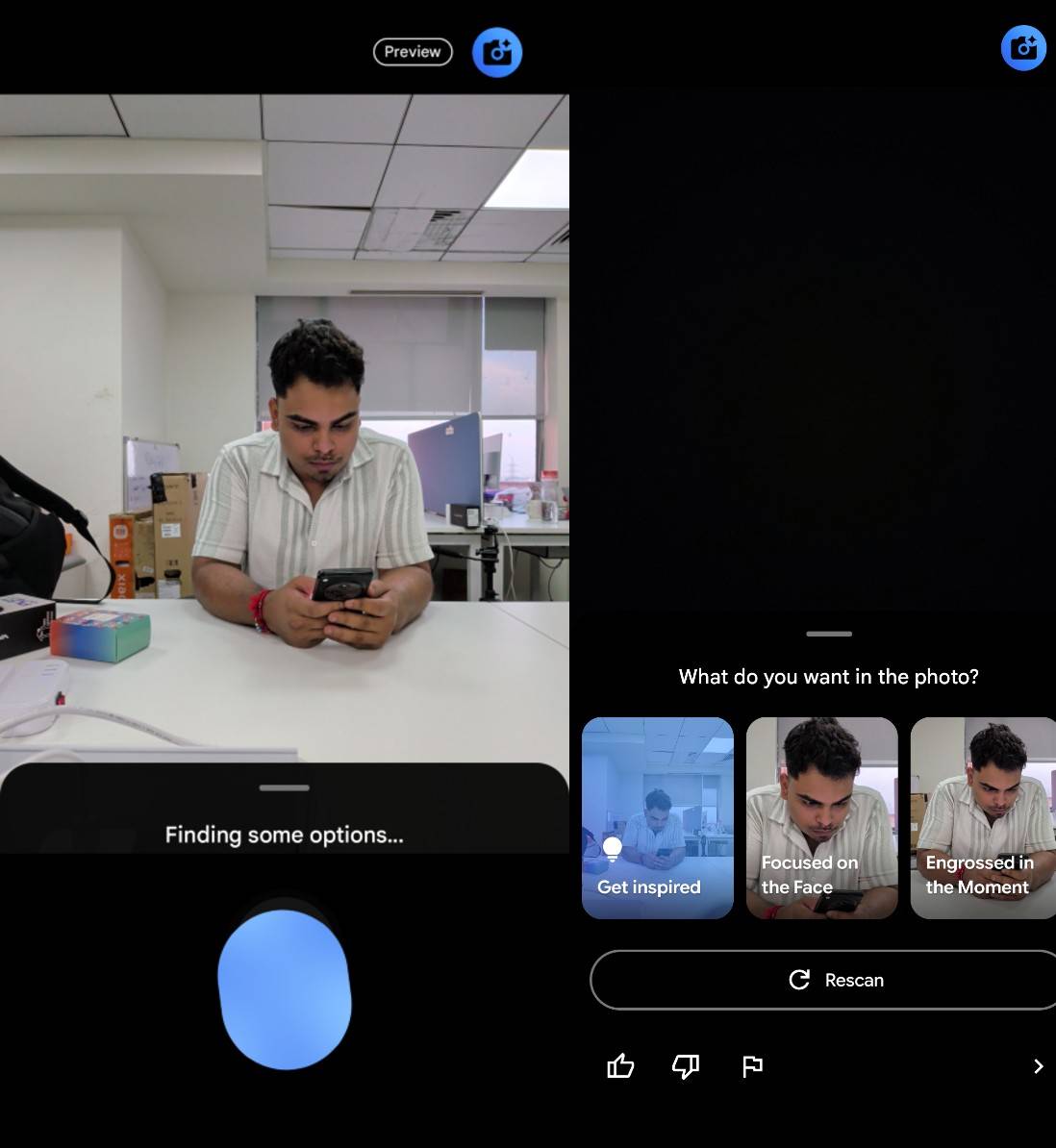
This time, AI isn’t just working behind the scenes with algorithms and image processing; it’s built right into the camera app. The Pixel 10 introduces Camera Coach, an on-device guide that analyses your scene and suggests the best possible ways to capture it. The feature is disabled by default and takes a few seconds to generate insights, after which it offers three to four tailored suggestions. You can pick the one that matches your style, and the camera will walk you through the adjustments until the shot is ready to capture.
The feature works as advertised, removing much of the guesswork and post-editing hassle that less experienced photographers often face. However, during our limited time with the device, we couldn’t get Auto Best Take to work as intended. The feature is an improvement over the initial Best Take feature, as it is designed to automatically correct facial expressions in group photos, ensuring everyone looks their best.
We’ll revisit Auto Best Take and hope it works, among other features that the Pixel 10 has to offer, when we get the chance to use the device extensively.
In conclusion…
The Pixel 10 is a compelling step up from the Pixel 9, bringing meaningful refinements in nearly every area. Whether it remains a worthy buy is a judgement I’ll reserve until my review. On paper, though, this is the best entry-level Pixel flagship in years. The addition of a long-overdue telephoto lens finally elevates it to the same league as Pro-grade smartphones in terms of camera versatility, while the use of the same Tensor G5 chipset as the more expensive Pixel smartphones ensures no performance compromises.
Additionally, with the large battery, Qi2 wireless charging with PixelSnap accessories, and Google’s expanding suite of AI tools, one can expect both endurance and everyday convenience from the smartphone.
In short, the Pixel 10 firmly holds its ground in the flagship space; it’s no longer just the ‘regular’ Pixel overshadowed by the Pro. The gap between the base and Pro models is narrowing, which seems like a win for Pixel fans.