OnePlus 15 long-term review: a year, a couple of price hikes and a ColorOS 17 update later, is it still worth buying?


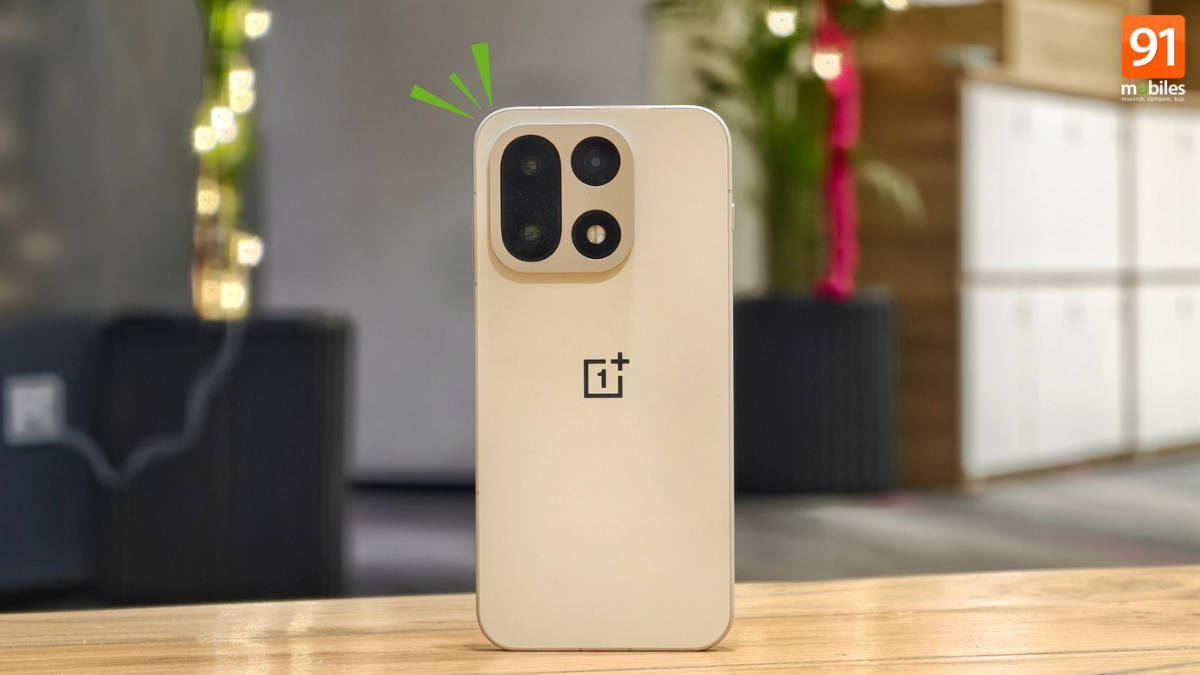
With recent conflicting reports surrounding the OnePlus 16‘s India launch, the OnePlus 15 remains OnePlus’ flagship offering in the country for the time being. Launched over a year ago at Rs 72,999, the smartphone has since seen a couple of price increases and now sells for Rs 85,999 as of November 18th. Since then, it has also ditched OxygenOS after receiving the ColorOS 17 update. After such major changes, does the OnePlus 15 still make sense at the end of 2026? Find out in this long-term review, where I used the device as my daily driver for over two months.
Table of Contents
Design: understated and durable
During its launch, the OnePlus 15’s design drew widespread attention for its significant shift from the OnePlus 13. This included a squarer camera module, the removal of the quad-curved display and Alert Slider, and a hardened mid-frame with Micro-Arc Oxidation (MAO) to enhance the aluminium’s durability on the Sand Storm colour variant.


Having watched multiple shows and movies over the last few weeks on the OnePlus 15, holding it for hours on end is quite manageable, even one-handed. This could also be attributed to its 8.1mm thickness, especially for someone coming from the bulky, broad OnePlus 12, which measures 9.2mm. While I do miss the Alert Slider from my OnePlus 12 at times, I have made peace with the Snap Key (formerly Plus Key on OxygenOS 16) by setting it to capture screenshots.

Display: poppy visuals, buttery smooth scrolling
Many people out there are of the thought that there’s negligible difference between a 1.5K and 2K display. While that holds true to some extent when you’re not pixel-peeping, even when they’re saying it out of experience, the slight reduction in resolution of the OnePlus 15’s display over the OnePlus 12 and 13’s 2K panel was kind of noticeable to me. But for casual users, the display offers sufficient detail and sharpness.

With stereo speakers, watching videos or playing games is a joyful experience. I mostly used TWS earphones during my time with the OnePlus 15. Then comes the haptics experience. With ColorOS 17 integrating haptic elements throughout the UI, every tap, swipe, or flick leaves a satisfying impression.
Performance: runs everything and anything with ease
Performance is where the OnePlus 15 took a massive leap, not just hardware-wise but metaphorically as well. The smartphone marks OnePlus’ shift from well-rounded flagships to performance-first high-end devices, and the OnePlus 15 completely excelled in that role during my use. First, getting what’s inside out of the way, the OnePlus 15 packs the Qualcomm Snapdragon 8 Elite Gen 5 processor, LPDDR5X Ultra RAM, UFS 4.1 storage, a steel 3D vapour chamber, a 3,200Hz touch response chip, and the G2 WiFi chip for network stability.
AnTuTu score
 OPPO Find X10 Pro Max
MediaTek Dimensity 9600 Pro
4,214,275
 OnePlus 15
Qualcomm Snapdragon 8 Elite Gen 5
3,615,565
AnTuTu assesses a smartphone's CPU, GPU, memory, and overall user experience (higher is better)
All of this hardware comes together to deliver uninterrupted, reliable performance, whether you’re loading the phone with dozens of apps and multitasking between them or playing the most intensive games at maxed-out settings. As for the 165Hz refresh rate, the OnePlus 15 was able to run Clash Royale and Brawl Stars, both lightweight games, at peak refresh rates irrespective of the duration I played. Other titles that support 165Hz include Subway Surfers, Hill Climb Racing, Clash of Clans, Call of Duty: Mobile, and more.

Moving on to heavier games, I started playing Devil May Cry: Peak of Combat and Zenless Zone Zero on the device, and the OnePlus 15 showed no signs of struggle. In Devil May Cry, the device barely dipped below 118 FPS at maxed graphics at 120 FPS settings, despite internal temperatures reaching 47 degrees Celsius, while Zenless Zone Zero offered a consistent 60 FPS with temperatures peaking at 43 degrees Celsius. These results were achieved after playing each game for 30 minutes. For those unfamiliar, these are among the heaviest non-AAA titles on Android, coming in at around 35GB due to their massive environments, detailed graphics, and natural in-game mechanics.
With smartphones powered by the Snapdragon 8 Elite Gen 6 series on the horizon, such as the iQOO 16, Motorola Signature 27, and Xiaomi 18 Pro, the OnePlus 15, rocking last year’s Snapdragon 8 Elite Gen 5, still remains a capable choice for running any game out there with ease.
Software: ditched OxygenOS for ColorOS to excel
OnePlus has bid adieu to OxygenOS and has now settled on ColorOS 17, which it has already pushed out to the OnePlus 15. Based on Android 17, the update brings several underlying changes that take full advantage of the OnePlus 15’s hardware to deliver an extremely fluid and polished experience.
Compared to OxygenOS 16, ColorOS 17’s single biggest highlight is the Living Flow Design and Fluid Motion, which revamps interactive elements, such as buttons, search bars, and navigation tabs, to feature elasticity, luminous effects, and seamless transitions when tapped. For customisation, a couple of new clock styles and dynamic weather themes debut on the lock screen, while on the AI front, ColorOS 17 adds AI Mind Pilot and the OSee app. Since we’ve covered and explored the newest ColorOS update on the OnePlus 15 in a detailed hands-on story, feel free to check it out.
With the Android 17 (aka ColorOS 17) update now seeded to the OnePlus 15, the phone will receive three OS updates and five years of security patches going forward. As for how the device has fared on security updates, I received the November patch a couple of weeks ago, shortly after the ColorOS 17 update in October. Furthermore, it appears the OnePlus 15 has bagged at least one security/bug fixes update every month since launch, per the update release blog posts on OnePlus Community.
Battery: amazing endurance for a flagship
While the OnePlus 15’s 7,300mAh battery may not seem like much compared to other contemporary flagships such as the OPPO Find X10, its endurance fares exceptionally well. As my daily driver, the device once delivered over 9.5 hours of screen-on time during a 1.8-day battery cycle. Tasks included using X and Instagram, watching videos/shows on YouTube and Prime Video, chatting on WhatsApp, and even playing games for a few minutes.
Similarly, in another charge cycle, the OnePlus 15 achieved 11 hours of screen-on time with 15 percent battery still left in the tank over a period of 1.5 days. Even with Bluetooth, mobile data, and location enabled most of the time, the OnePlus 15 still impressed me with its battery life a year later. For charging, while the OnePlus 15 comes bundled with a 120W SUPERVOOC power adapter, I used the OnePlus 12’s 100W charger to top up the battery in under an hour.
Camera: remains dependable
Taking a performance-centric route, OnePlus dropped the Hasselblad collaboration with the release of the OnePlus 15. As a replacement, it developed its own imaging pipeline called ‘DetailMax Engine’, which also appeared on the OnePlus 15R (long-term review). So, do the camera hardware and software still deliver a year later?

Similarly, the 50MP 1/1.76-inch telephoto lens can capture great-looking, vibrant shots, but indoor detail may not match camera-centric flagships from 2025 and 2026. Also, if you’re wondering, compared to Hasselblad-based OPPO and OnePlus phones, the OnePlus 15 tries to boost exposure by default to produce brighter images. While manually lowering the exposure slider helped, I found it to be a bit of a hassle. At 7x digital zoom, the captures are detailed enough, and the post-processing does a great job of giving the images a contrasty look.
Here are multiple shots captured on the OnePlus 15’s main, telephoto, and ultrawide lenses:
Is the OnePlus 15 still worth buying?
If the pricing of the OPPO Find X10 series is anything to go by (upwards of Rs 1,39,999), the next generation of flagship smartphones in India, such as the iQOO 16, Motorola Signature 27, Xiaomi 18 Pro, and Vivo X500 series, could be priced on the premium side, exceeding Rs 1.2 lakh. With that in mind, the OnePlus 15, currently priced at Rs 85,999 (often selling close to Rs 80,000 during sales), seems like a viable pick.

On the other hand, if you’re serious about getting the best possible photography experience for your money, paying extra for other options is the way to go. These include the OPPO Find X10, which you can currently get for around Rs 1 lakh with all offers combined, or the upcoming Vivo X500.