Redmi 17C first impressions: a big display and a familiar formula


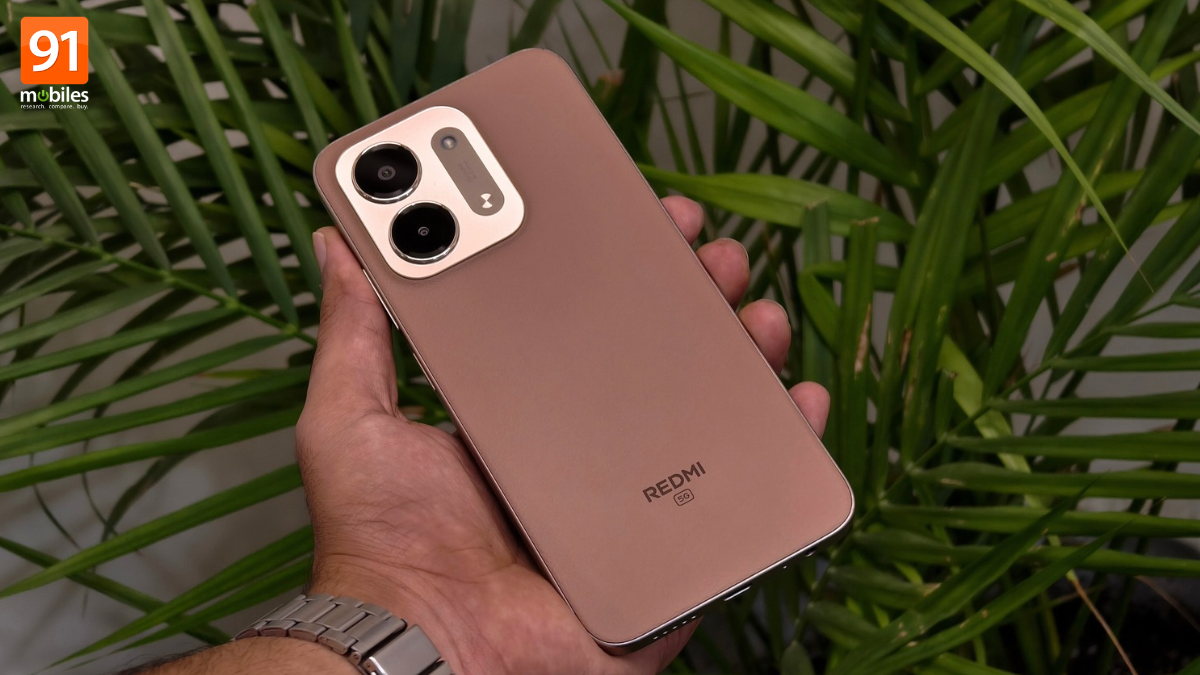
When the memory and storage demand initially ballooned in early 2026, the smartphone industry as a whole didn’t really feel the after-effects. It wasn’t until May and June that we saw multiple price hikes, with the mid-range segment between Rs 15,000 and Rs 25,000 largely disappearing into the higher price brackets. That same segment still doesn’t boast the level of popularity it enjoyed back in 2025, but brands have steadily started filling the void.
The Redmi 17C 5G is the latest one to do so and, like most 2026 launches, comes with a rather tame set of hardware. I just got my hands on the device and have used it for around half a day now. Here’s what I think about it so far.
Table of Contents
Design: there’s a vegan leather option now
Unlike its predecessor, the Redmi 17C does give you a vegan leather colourway, named Coffee Brew. It is a rather apt name since my first impression of this device reminded me of the Mocha brew I had the other day, so nicely done there, Redmi. The phone is mostly flat, with slightly rounded corners to make it more comfortable to hold. The sides and the camera island are in a metallic bronze shade that complements the faux leather rather well.


The phone has a tall presence, which is only natural since it has a 6.9-inch display, along with some very visible bezels and a slight bottom chin. But, as is tradition, you get these bezels on a budget phone, so I’m not too bothered by them. The selfie camera is also notched, which feels dated.
On the bright side, the phone is very well balanced, and you don’t really feel the heft despite its 211-gram weight. All in all, the device does feel rather good in hand, particularly so if you prefer taller displays.
To top it all off, there’s an IP64 rating, which makes it resistant to dust and occasional water splashes. That’s good enough for me at this price.
Display: plenty of screen for anyone
A 6.9-inch display is still unusual to me, but for anyone who uses their phone as their primary content machine, it is undoubtedly a boon. The display isn’t as sharp since it’s only an HD+ panel, and could noticeable if you are coming from FHD+ panel. You do get a 120Hz refresh rate, however, and that helps smooth things out, quite literally.
I set the custom refresh rate to 120Hz, and it makes a massive difference. Motion across the device and its UI is immediately more fluid and makes it pleasing to the eye. The colours on this panel are quite good too in the default Vibrant colour preset.

The Redmi 17C feels convenient to watch content for hours without any fatigue, which could be due to TUV Rheinland low-light, Flicker free, and Sarcadian eye-protection protocols in place, which surprisingly enough can be missing in phones at this price.
My only real qualm so far is the mono speaker, since I’m so used to stereo output, and not having that takes some time getting used to. If you’re coming from a stereo phone, you will notice the difference at once.
A short overview of the rest of the features
The Redmi 17C doesn’t really try to go all-in on one particular feature or aspect. That is largely what I’ve derived from the specification sheet and my experience so far. The phone has just enough muscle to get through your day with a Dimensity 6300 and about 6GB of RAM and just enough space so that you don’t run out of space soon at 128GB internal storage. If you do use up the space, don’t fret just yet, the storage is expandable up to 1TB with a microSD card.


You get a 50MP rear shooter and an 8MP selfie camera, which is mostly there to help you click everyday moments with clarity and reliability. You don’t get extensive camera hardware to move beyond that, since even video capture is limited to 1080p @30fps. Given the volatile smartphone market and the phone’s current price, that is in line with the segment. A true test of the phone’s camera capabilities will only be in the full review.
The battery is about 6,000mAh and comes with a 33W bundled charger. It isn’t the biggest capacity in this segment, and it doesn’t need to be. One should easily expect roughly a full day of use out of it for moderate users. With the 33W charging support, you can expect a reasonable top-up time of around 1 hour for a full charge, although we’ll know the exact time during our tests.
Finally, talking about software, you get HyperOS 3 out of the box. While the brand hasn’t specified the software update policy just yet, the Redmi 15C (review) was promised 2 OS upgrades and 4 years of security patches, so we can expect the same level of commitment here. The OS itself is rather feature-rich with multiple AI productivity features, customisation options and more.
Initial thoughts
The Redmi 17C starts at Rs 20,999 for the 4GB + 128GB variant and Rs 22,999 for the 6GB + 128GB variant. The phone’s specification sheet, on its own, is nothing noteworthy, but think of it like building blocks. The device is trying to set a reliable foundation for everyday use, with a processor that should handle most basic tasks, a decent point-and-shoot camera system, a good amount of storage and a large, smooth display.
The phone is targeting users who want a phone they can use day after day without asking too much of it. With the current smartphone market and the surrounding turbulence caused by ever-increasing costs, major upgrades across generations have largely vanished. For users who tend to hold onto their phones for longer, the Redmi 17C could offer a fairly straightforward option without trying to do anything too ambitious.
A full comprehensive review of the smartphone will tell us how it actually performs in everyday use. For now, though, the Redmi 17C has made a reasonable first impression.