Vivo X300 series buying guide: which Vivo flagship should you buy in 2026?


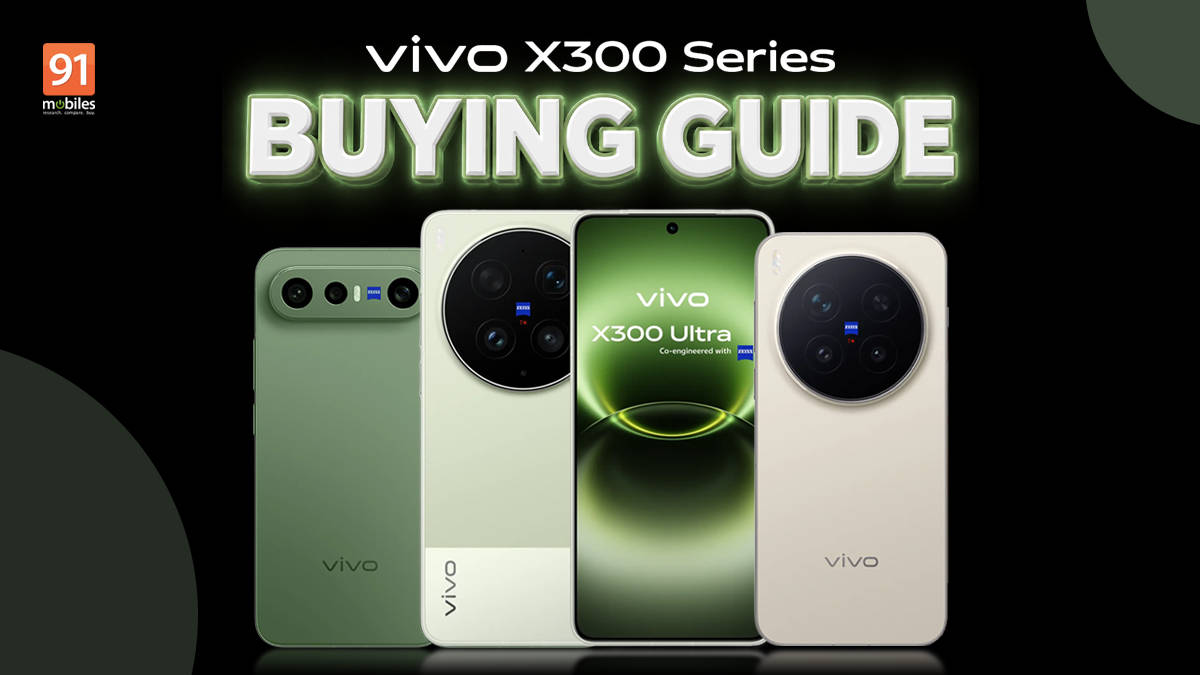
Gone are the days when smartphone lineups looked simpler. As market needs continue to evolve, brands are trying to cater to a wider range of users, and Vivo is no exception. Its flagship X series has expanded from just two models to four in less than a couple of years. While that reflects the brand’s growing ambitions, it can also make things confusing for buyers looking for the best value for money.
To help you decide, we’ve put together a buying guide for Vivo’s latest X300 series. The line-up was recently refreshed with the Vivo X300 FE and X300 Ultra, joining the Vivo X300 and X300 Pro that debuted in December 2025. After reviewing all four models, here’s what we think of each smartphone and the kind of user it best suits. But before that, let’s take a quick look at the pricing of the Vivo X300 series.
Table of Contents
Vivo X300 series price in India
| Smartphones | Price (starting) |
| Vivo X300 | Rs 75,999 |
| Vivo X300 FE | Rs 79,999 |
| Vivo X300 Pro | Rs 1,09,999 |
| Vivo X300 Ultra | Rs 1,59,999 |
The USP of all these smartphones is largely the same: to cater to content creators with a camera-centric experience, in different forms, sizes, and accessories. The entire Vivo X300 lineup also supports the optional telephoto extender kit, which can be purchased separately. Additionally, Vivo is focusing on longevity by offering up to seven years of software support across the series.
Which Vivo X300-series smartphone should you buy?
Vivo X300
The smartphone offers flagship-grade hardware in a compact form factor. In our full review, the Vivo X300 (review) proved itself to be a true compact flagship with virtually no meaningful compromises.


Specs at a glance
- 6.31-inch FHD+ LTPO AMOLED display, 120Hz refresh rate
- MediaTek Dimensity 9500 SoC
- 12GB/ 16GB LPDDR5X Ultra RAM and 256GB/ 512GB UFS 4.1 storage
- 200MP main + 50MP ultrawide + 50MP telephoto cameras
- 50MP front camera
- 6,040mAh battery, 90W fast charging, 40W wireless charging
- Android 16-based OriginOS 6
The Vivo X300’s biggest strength lies in how well it balances flagship-grade hardware with a compact 6.31-inch form factor that remains comfortable for one-handed use. Apart from that, its ZEISS-backed cameras stand out for portraits, zoom photography, and detailed daylight shots, while the AMOLED display delivers sharp visuals, vibrant colours, and ample outdoor brightness.
Performance remains consistently smooth in everyday use, aided by the MediaTek Dimensity 9500 chipset and OriginOS 6 optimisations. However, battery life, while still sufficient to last a full day, is slightly behind that of its siblings. The device also shows some inconsistency in low-light portrait shots, while the stereo speakers lack the depth and richness offered by rivals. In addition, benchmark scores trail a few Snapdragon-powered competitors, likely due to more conservative thermal tuning.
| Who should buy | Who should skip |
| Users who want a compact Android flagship without major compromises | Those who prioritise gaming performance above everything else. |
| Mobile photography enthusiasts | Those who want a long-lasting battery life |
| Looking for a sharp, vibrant AMOLED display |
Vivo X300 FE
While its design differs slightly, the Vivo X300 FE (review) matches the Vivo X300 in overall form factor. It also addresses the earlier battery concerns, comfortably delivering up to a day and a half of endurance under typical usage. However, there are still a few areas where the Vivo X300 FE’s hardware may feel inferior.


Specs at a glance
- 6.31-inch FHD+ LTPO AMOLED display, 120Hz refresh rate
- MediaTek Dimensity 9500s SoC
- 12GB LPDDR5X Ultra RAM and 256GB/ 512GB UFS 4.1 storage
- 50MP main + 8MP ultrawide + 50MP telephoto cameras
- 50MP front camera
- 6,500mAh battery, 90W fast charging, 40W wireless charging
- Android 16-based OriginOS 6
The Vivo X300 FE also ensures one-handed usability while offering a balanced experience with its sub-flagship chipset. The handset’s cameras are also Zeiss-backed and deliver promising portraits and daylight shots with ample details and vibrant colours that are instantly shareworthy.
However, the X300 FE’s ultrawide lens feels underwhelming, and its video recording can be inconsistent due to a lack of 4K recordings across the setup. On top of that, the handset is pricier than the more capable Vivo X300 smartphone. The company has announced a few launch offers that bring the effective price of the X300 FE down to Rs 66,999.
| Who should buy | Who should skip |
| Users who want a compact flagship without compromising on battery life | Those who want best-in-class cameras |
| Looking for a camera-focused device, especially for portraits and everyday photography | Someone who doesn’t want to compromise on flagship hardware |
Vivo X300 Pro
The Vivo X300 Pro (review) may not be a compact offering, but it brings best-in-class performance and equally capable battery life. The handset also excels with cameras, with a superior 200MP telephoto lens.


Specs at a glance
- 6.78-inch AMOLED FHD+ display, 120Hz refresh rate
- MediaTek Dimensity 9500 SoC
- 16GB LPDDR5X Ultra RAM and 512GB UFS 4.1 storage
- 50MP main + 50MP ultrawide + 200MP telephoto cameras
- 50MP front camera
- 6,510mAh battery, 90W fast charging, 40W wireless charging
- Android 16-based OriginOS 6
The Vivo X300 Pro is the elder sibling of the Vivo X300 smartphone, offering identical performance and viewing experience. The handset also features a relatively larger display, which is better suited for streaming videos and gaming compared to more compact devices. While it uses a different primary camera setup compared to the vanilla X300, the Vivo X300 Pro still stands out for its strong photography capabilities. It consistently delivers detailed, natural-looking shots in daylight, along with strong long-range zoom performance.
One might expect a larger battery capacity on the smartphone, but it is well optimised to last more than a day on a single charge. While there are a few drawbacks, including a relatively heavier build, underwhelming stereo speakers, inconsistent low-light and mid-zoom shots, and thermal inefficiency under sustained loads, the Vivo X300 Pro remains a fairly positive smartphone that delivers well-rounded performance.
| Who should buy | Who should skip |
| Users who want one of the best smartphone camera systems, especially for portraits and zoom photography | Gamers who want consistently cooler thermals |
| Power users who want a premium flagship with strong battery life and fast charging | Buyers looking for a lighter, more compact phone for one-handed comfort |
| Content creators who rely heavily on photo quality over gaming performance |
Vivo X300 Ultra
The Vivo X300 Ultra represents the pinnacle of the lineup. It addresses areas where the Vivo X300 Pro fell short, including swapping the flagship MediaTek Dimensity 9500 SoC with a more powerful Snapdragon 8 Elite Gen 5 SoC. The handset also offers a 200MP primary sensor, compared with the 50MP sensor on the Pro model.


Specs at a glance
- 6.82-inch QHD+ AMOLED display, 120Hz refresh rate
- Snapdragon 8 Elite Gen 5 SoC
- 16GB LPDDR5X RAM and 512GB UFS 4.1 storage
- 200MP main + 50MP ultrawide + 200MP telephoto cameras
- 50MP front camera
- 6,600mAh battery, 100W fast charging, 40W wireless charging
- Android 16-based OriginOS 6
The Vivo X300 Ultra is positioned as a no-compromises ultra-flagship focused almost entirely on photography, and it pushes Vivo’s camera-first philosophy further than ever before. The standout feature is its versatile triple-camera system, which delivers extremely consistent results across focal lengths and is arguably among the best smartphone camera setups available right now. The Zeiss tuning and colour science are the cherry on top for natural, detailed, and highly reliable images in daylight, portrait, and long-range-zoom scenarios.
Performance is top-tier, offering flagship-grade speed and smooth handling of demanding tasks, while the 2K AMOLED display is bright, sharp, and excellent for media consumption. Battery life is also dependable, but not class-leading. Moreover, at Rs 1,59,999, the handset commands a premium price that may not appeal to everyone, especially considering its heavier build and a few rough edges in the software experience.
| Who should buy | Who should skip |
| Professional wildlife photographers or video creators who can ditch the DSLR for the convenience of a teleconverter kit | Users who want a light, comfortable flagship |
| Users who want a top-tier display and performance | Gamers or users who prioritise efficiency |