Xiaomi 17 Ultra battery performance: why it’s as impressive as its camera


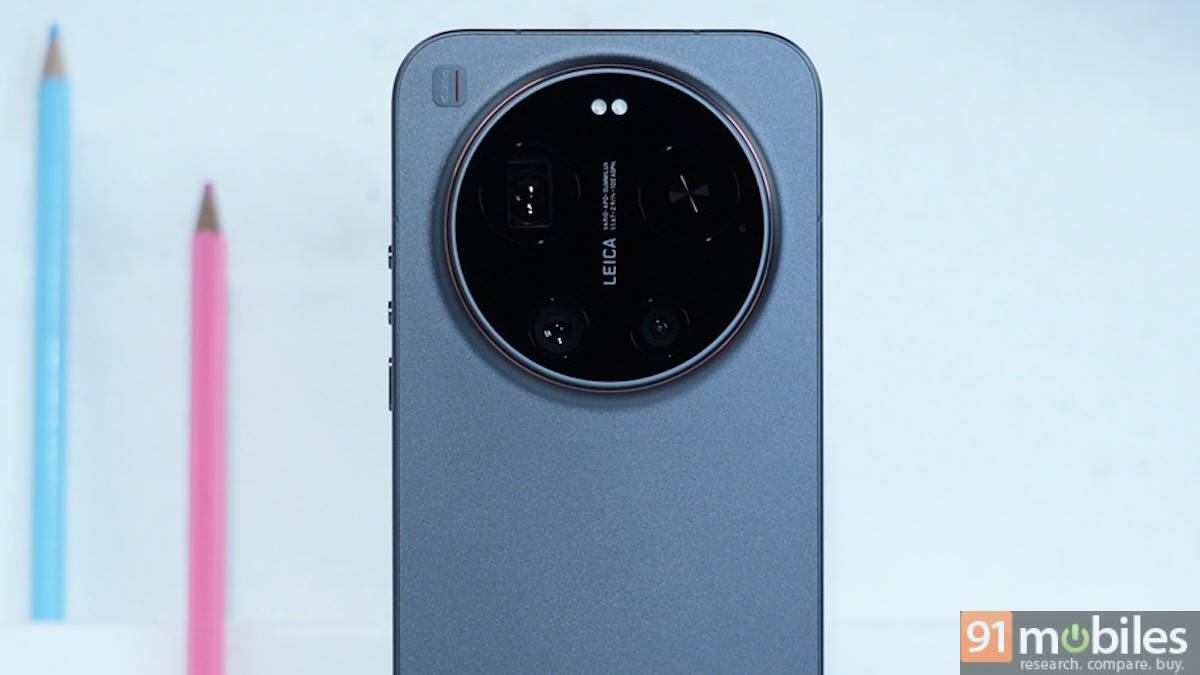
The Xiaomi 17 Ultra is a camera phone. Xiaomi will tell you that, the Leica branding on the back will tell you that, and the large circular camera module that dominates the rear will tell you that before you’ve even turned it on. And after spending considerable time with the phone — including a week in Vietnam shooting over 500 photos — I’ll tell you that too. The cameras are as good as advertised.
But here’s the thing nobody is really talking about. The Xiaomi 17 Ultra has another trick up its sleeve, one that doesn’t come with a Leica badge or a catchy acronym. It has one of the best batteries I’ve used on a flagship phone in recent memory. And in a segment where most phones are more or less equally powerful, equally fast, and equally capable on paper, that kind of real-world endurance matters more than most benchmarks.
Table of Contents
The numbers first
Battery capacity on the Xiaomi 17 Ultra has jumped from 5,410mAh on the Xiaomi 15 Ultra to 6,000mAh on the Indian unit. On the PCMark battery test, which runs the device from 100 to 20 percent simulating real-world tasks, the 17 Ultra lasted 15 hours and 31 minutes, which is almost 3.5 hours more than what the 15 Ultra delivered. The Samsung Galaxy S26 Ultra is its closest competitor here price-wise, but it doesn’t match the 17 Ultra’s endurance numbers in this test. Meanwhile, the Vivo X300 Pro and OPPO Find X9 Pro carry bigger batteries and are ahead by about 30 minutes.
PCMark Battery score (in hours)


vivo X300 Pro
6510 mAh
16.0

OPPO Find X9 Pro
7500 mAh
16.0

Xiaomi 17 Ultra
6000 mAh
15.5

Samsung Galaxy S26 Ultra
5000 mAh
14.4
PCMark battery test measures phone battery life from 100% to 20% (higher is better)
That’s the benchmark. Here’s what it actually means day to day.
A full day of camera use, and still standing
During my recent trip to Phu Quoc, Vietnam, I had the camera app open almost every ten minutes throughout the day to capture as many moments as possible. Stills, videos, switching between the 23mm main sensor, the ultrawide, and the 200mm telephoto — the camera is one of the most power-hungry aspects of any phone, and I was putting it through its paces in harsh outdoor heat for hours at a stretch. By the end of a full shooting day, I was left with around 50 percent battery. Fifty percent, after a full day of heavy camera use in the sun. And this wasn’t a one-off case; it was pretty much every day.
To put that in perspective: most flagships I’ve tested would have been hunting for a charger by late evening under the same conditions. The 17 Ultra wasn’t even close to that point.


Average battery size, impressive battery life
What makes this more impressive is how Xiaomi pulled it off. Fitting a 6,000mAh battery into a phone thinner and lighter than its predecessor is a pretty impressive engineering feat. The 17 Ultra is 8.29mm thick and weighs 218 grams, compared to the 15 Ultra’s 9.35mm and 226 grams. A bigger battery usually means a thicker, heavier phone. Xiaomi managed to go the other way entirely, and the result is a phone that feels substantial without feeling like a brick.


It’s not just the Xiaomi 17; other Android flagships have larger batteries than the Xiaomi 17 Ultra, such as the Vivo X300 Pro with a 6,510mAh unit and the OPPO Find X9 Pro with a 7,500mAh pack. And both these rivals offer impressive endurance as well. Despite that, the Xiaomi 17 Ultra with a smaller battery manages to stand toe-to-toe with them. The Snapdragon 8 Elite Gen 5 chipset is clearly being managed efficiently, and the result is a phone that punches well above its battery capacity. It’s one thing to last long when you have the biggest battery in the room. It’s another thing entirely to last just as long, or longer, when you don’t.
Charging that matches the battery
A large battery is only half the story. The other half is how fast you can top it up when you do need to. The 17 Ultra supports 90W fast charging, and Xiaomi includes a 100W HyperCharge brick in the box, which is really nice to see considering most rivals at this price have stopped shipping chargers completely. In testing, the Ultra went from 20 to 100 percent in less than 40 minutes. That’s fast enough that a short charging window before a meeting or during lunch genuinely makes a meaningful dent.


Why this matters more at this price
At Rs 1,39,999, the Xiaomi 17 Ultra is competing against the Galaxy S26 Ultra and the iPhone 17 Pro. Both are exceptional phones. Both have strong cameras, fast processors, and polished software. In a head-to-head on any single spec, the gaps are often marginal. Battery life is where the 17 Ultra creates genuine separation.
The Galaxy S26 Ultra is no slouch in battery life, but the 17 Ultra’s 15.5-hour PCMark score and 9+ hours of SoT in real-world usage are a real advantage. The iPhone 17 Pro, for all its strengths, has historically not been the leader in raw battery endurance. If you’re spending Rs 1,39,999 on a phone and you want the one that will last the longest between charges, the 17 Ultra is likely the answer.
The camera is still the headline
None of this is to suggest the battery overshadows the cameras. It doesn’t, and it shouldn’t. The 1-inch LOFIC sensor, the continuous zoom telephoto, the Leica colour science, that’s still what makes the Xiaomi 17 Ultra a genuinely exciting phone to use. But the best camera in the world is less useful if you’re always one eye on the battery indicator.
The Xiaomi 17 Ultra gives you both. A camera system that gets out of your way and lets the hardware do the work, and a battery that makes sure you never have to choose between taking one more shot and saving power for the end of the day. That combination, more than any individual spec, is what makes it one of the most well-rounded flagships of 2026.