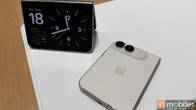
Apple’s first foldable iPhone has arrived with two notable changes that could matter long after the launch-day excitement wears off. The iPhone Duo gets an IP68 rating for dust and water resistance, putting it ahead of Samsung’s latest foldables on dust protection. However, Apple also makes clear that this resistance is not permanent and can diminish with normal wear and tear.
The other major change is less visible but potentially more important for buyers. The iPhone Duo is eSIM-only worldwide, with no physical SIM card slot. Apple says removing the physical SIM helps free up internal space for the battery.
iPhone Duo gets IP68, but it won’t last forever
Apple says the iPhone Duo has been tested under controlled laboratory conditions and carries an IP68 rating under IEC standard 60529, including resistance at a maximum depth of 6 metres for up to 30 minutes. There is an important qualification, however. Apple states that splash, water and dust resistance are not permanent conditions and that resistance may decrease as a result of normal wear.
That caveat is relevant on a foldable because the device has moving parts and a hinge. While water resistance on a conventional smartphone can also deteriorate after damage or wear, a foldable has more components that need to maintain their protection over time. Google has a similar disclaimer for its Pixel 11 Pro Fold, which also carries an IP68 rating. Honor also warns that the protective performance of its Magic V6’s IP68/IP69 rating can decrease with daily wear and tear.
Samsung takes a different position on dust protection. Its latest Galaxy foldables carry an IP48 rating, meaning they have water resistance but don’t offer the same level of protection against dust as the iPhone Duo and Pixel foldables. For buyers, IP68 is still a welcome addition, but it shouldn’t be interpreted as making the Duo waterproof. The rating is based on controlled testing, and Apple specifically warns against treating the protection as permanent.
iPhone Duo is eSIM-only worldwide
The more significant change for some buyers could be the lack of a physical SIM slot. Apple says the iPhone Duo uses an eSIM-only design worldwide, unlike some previous iPhones that retained physical SIM support in certain markets. Apple’s reasoning is that removing the SIM hardware saves internal space, which can instead be used to maximise battery capacity. The company also says eSIM provides greater flexibility and security than a traditional physical SIM.
The Duo supports two active eSIMs at the same time and can store eight or more eSIM profiles. This means users can have two numbers active simultaneously, while additional eSIM profiles can remain stored on the phone and be activated when needed.
For most users who already use eSIM, the change should have little practical impact. It can also be useful for frequent travellers who switch between multiple carrier profiles without physically swapping SIM cards. However, eSIM-only connectivity is worth checking before buying, particularly in markets or situations where physical SIM support remains useful. Buyers should confirm that their carrier supports eSIM and that the specific services they rely on can be activated without a physical SIM.