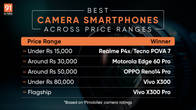
Camera performance has always been one of the most important factors in choosing a smartphone, and in 2026 it is also one of the most competitive. Budget phones now ship with larger sensors and dedicated night modes, mid-range devices are increasingly adding periscope telephoto lenses, and at the flagship level, the differences between the best and the rest have never been smaller.
With prices shifting upward across every bracket this year, we have updated our price ranges to reflect where devices actually sit in the market today. Every phone on this list has been tested and scored across daylight, ultrawide, portrait, selfie, and low light to give you a clear picture of what performs best at every budget.
Selection criteria
Our recommendations are built on extensive, hands-on testing. We don’t just look at spec sheets; we take these phones out and shoot with them, comparing each one directly against its closest rivals in a variety of situations.
Our evaluation focuses on different aspects that we consider make a good image:
- Colour and detail: How accurately are colours reproduced? Are the photos sharp and full of detail, or do they look soft and muddy?
- Portraits and selfies: We look closely at how well the camera handles skin tones and captures fine details like hair and facial texture. We also check how cleanly it separates the subject from the background.
- Low Light: This is the ultimate test for any camera phone. We pay special attention to how well a phone performs in dimly lit environments, looking at its ability to control stray light and lens flares, manage noise, and maintain clarity.
To make our rankings as objective as possible, our review team follows a careful scoring process. For every key scenario like daylight, ultra-wide, portrait, selfie, and low light, each phone is rated on multiple factors. These individual ratings are then averaged to create a final, comprehensive score that gives a clear picture of each phone’s true imaging capabilities based on our parameters.
Table of Contents
Best camera phones around Rs 15,000
Winner: The Motorola G57 Power (review) tops this segment on the back of a reliable main camera that produces natural, detailed images without over-processing. Dynamic range is generally strong, and low-light shots come out with noticeably less noise than the competition here. The ultrawide is a step down in both detail and colour consistency, and shadows can occasionally lose detail, but neither issue is consistent enough to pull it down from the top spot.
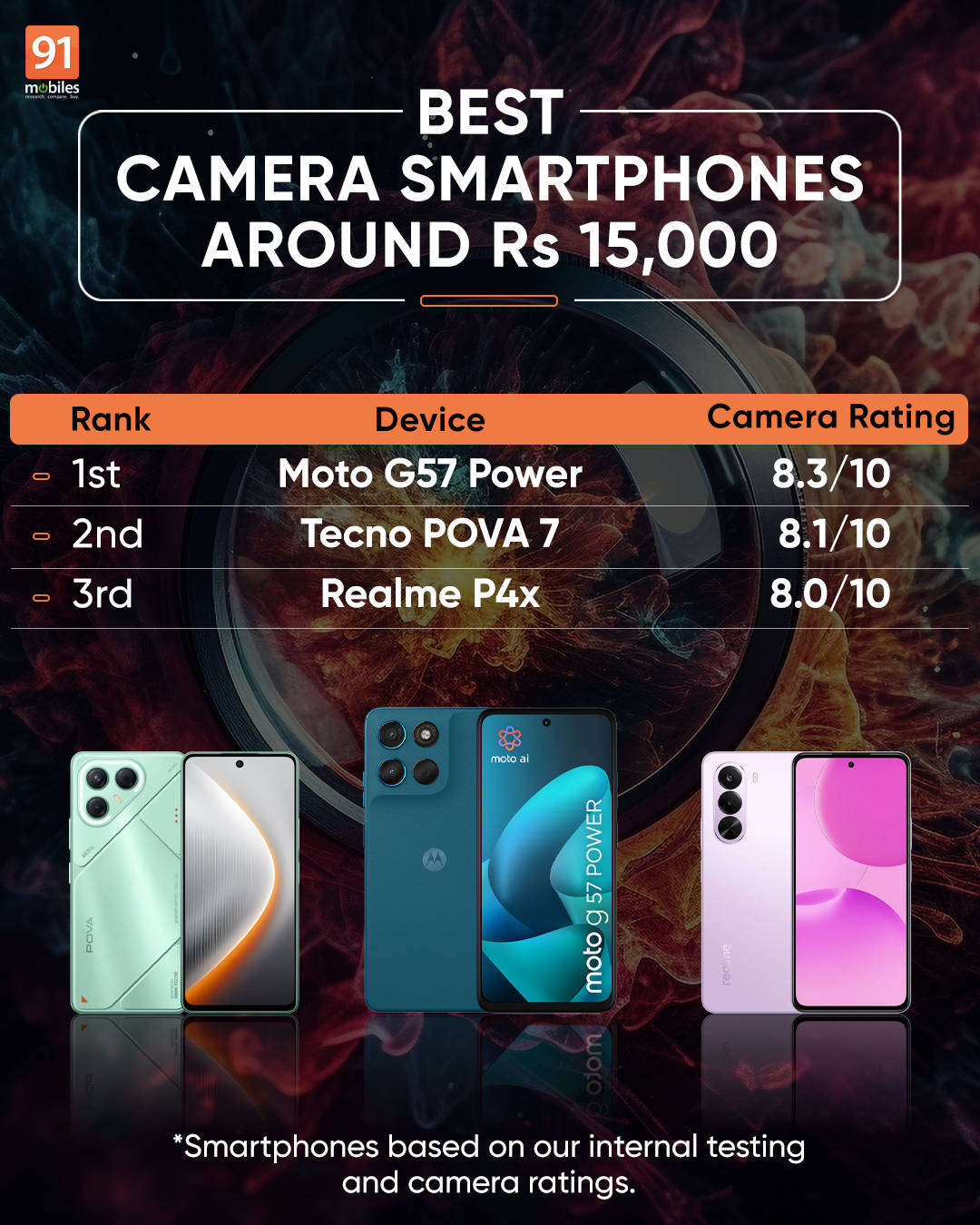
Runners-up: The Tecno POVA 7 (review) captures decent daylight shots, portraits, and selfies, and its low-light images hold up well with good exposure control. The ability to shoot 4K video from both cameras is a good advantage at this price. Where it falls short is colour accuracy, which is not very natural, and exposure can be inconsistent in more demanding conditions.
The Realme P4x (review) produces vibrant daylight shots without overdoing saturation, and skin tones in portraits and selfies are handled reasonably well outdoors. Although detail at 1x could be sharper, 2x zoom shots come out quite soft. The low-light output is also quite soft with visible noise. It holds its own for the price but does not do anything as consistently well as the two phones above it.
Best camera phones around Rs 30,000
Winner: The Nothing Phone (4a) (review) takes the top spot because of its periscope telephoto, which is rare at this price. Portrait shots at 80mm are the clear strength, with accurate colours, natural bokeh, and clean subject separation. The primary camera is true-to-life in daylight, though finer details can look soft and the ultrawide is not very accurate. The telephoto alone justifies the top ranking.
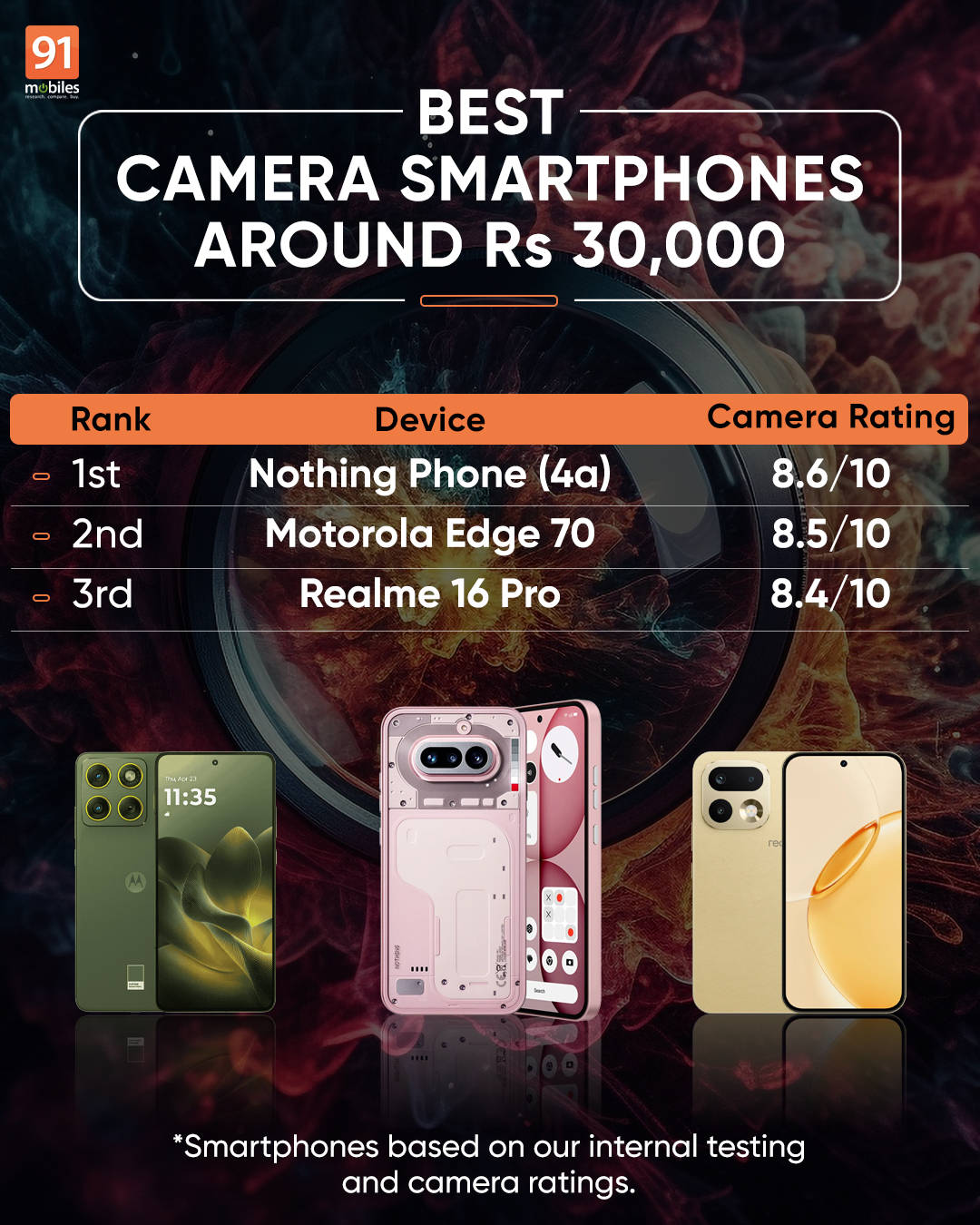
Runners-up: The Motorola Edge 70 (review) delivers well-controlled daylight shots and handles bright light sources confidently in low light. The 50MP selfie camera is a highlight with crisp detail and accurate skin tones. The absence of a telephoto lens is what keeps it behind the Nothing Phone (4a).
The Realme 16 Pro (review) handles exposure and flares well in low light, and daylight shots have good dynamic range. The primary camera looks washed out in standard conditions, the ultrawide loses detail, and the lack of a telephoto hurts portrait quality, which lands it in third spot.
Best camera phones Rs 40,000- Rs 60,000
Winner: The Samsung Galaxy A57 (review) tops this segment with a balanced camera setup that delivers detailed, well-balanced shots with pleasing colours in good lighting, making it a dependable option for everyday photography. The 12MP selfie camera performs excellently, with natural skin tones and impressive detail, and portrait shots come out nicely with decent edge detection even without a dedicated telephoto lens. The overall camera experience is consistent and well-rounded throughout.
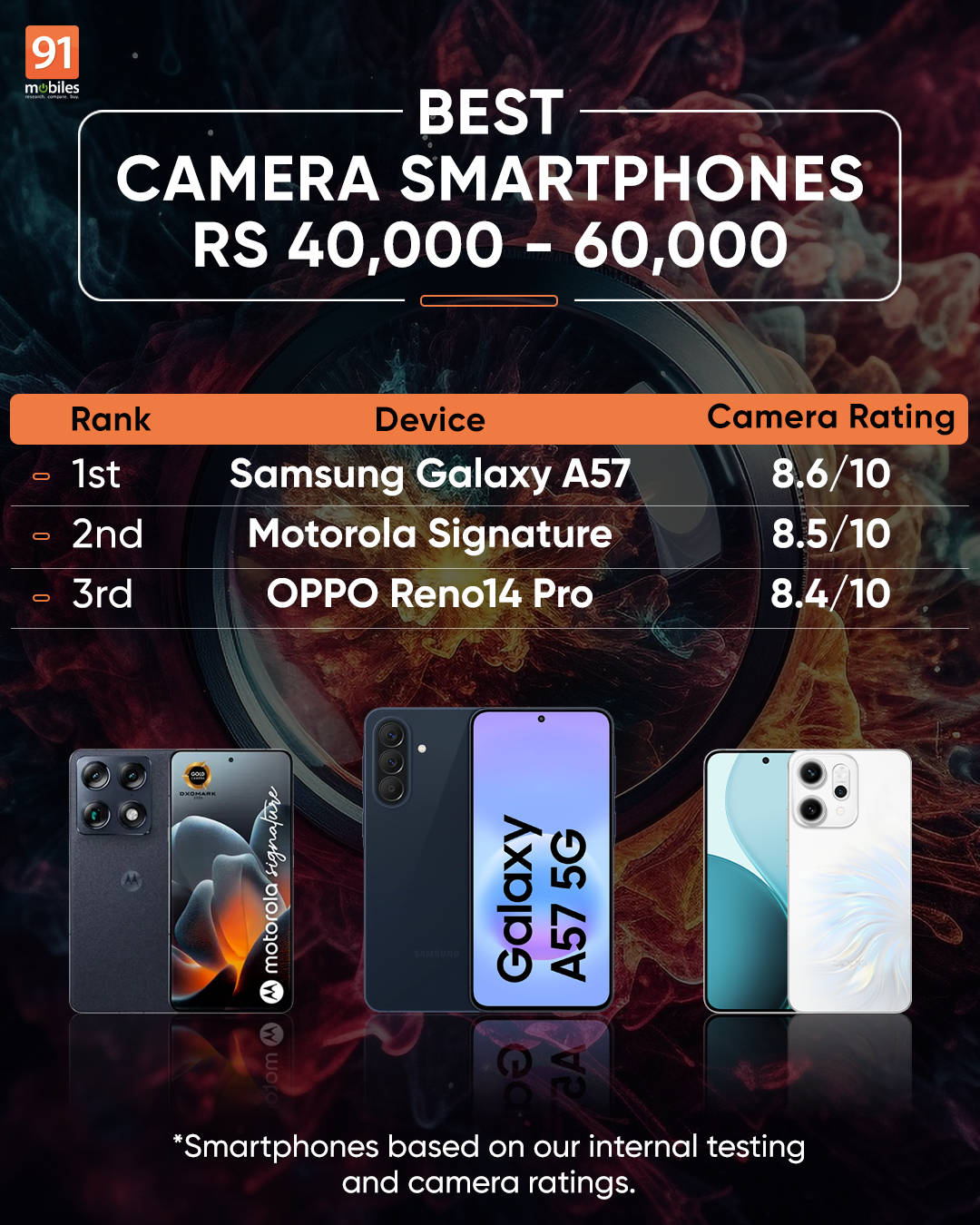
Runners-up: The Motorola Signature (review) ranks second with a versatile triple-camera setup, all three lenses at 50MP, including a periscope telephoto with 3x optical zoom. Daylight shots are detailed and visually pleasing, with colours that look saturated but work well for social media. Low-light output looks clean, and the telephoto and primary cameras hold up well in most conditions. The main drawbacks are a tendency to overexpose in daylight, a colour shift between lenses, and heavy noise reduction that smooths out texture.
The OPPO Reno14 Pro (review)’s main camera captures fine detail with balanced exposure and wide dynamic range, and the ultrawide maintains good colour consistency with the primary sensor, which is rare at this price. The 3.5x telephoto delivers crisp portraits with effective subject separation, though skin tones can occasionally look inaccurate. It does most things well across all three lenses, but colour accuracy issues across cameras keep it in third.
Best flagship camera phones under Rs 1 Lakh
Winner: The Vivo X300 (review) tops this segment with a primary camera that delivers punchy, detailed daylight shots with near-instantaneous shutter speeds. The 50MP telephoto is a highlight for portraits, with vibrant tones and good subject separation, though skin tones lean slightly bright and low-light portraits can be inconsistent. The selfie camera is excellent in both daylight and low light. The ultrawide is the weakest link with colour shifts and underwhelming detail, but the primary and telephoto cameras are strong enough to keep it at the top.
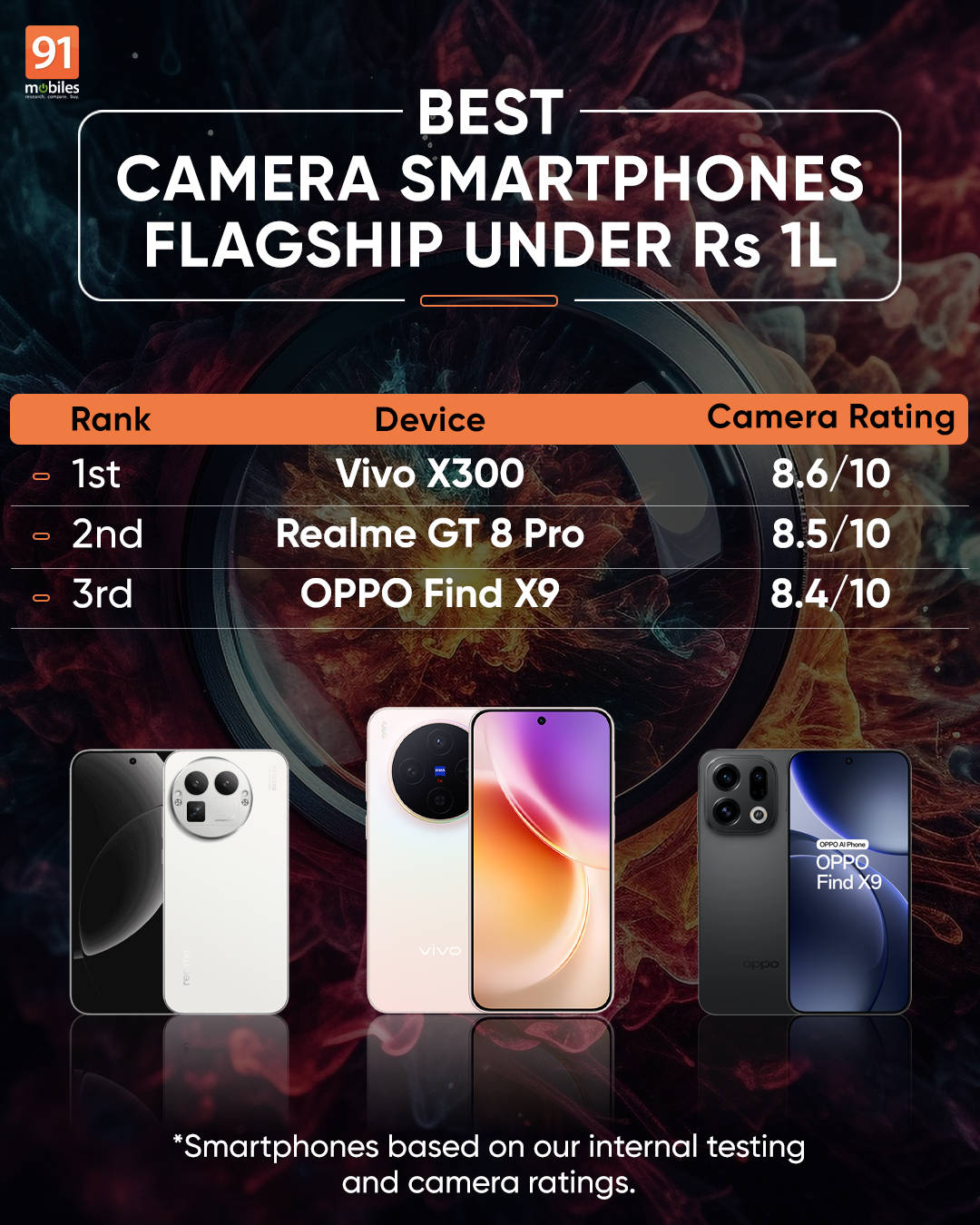
Runners-up: The Realme GT 8 Pro (review) and its 200MP telephoto lens is the standout performer, delivering excellent sharpness and fine detail across most lighting conditions, and the Ricoh-inspired shooting modes add a genuine creative edge. The primary camera can be inconsistent, though, with occasional soft images and hit-or-miss focus in good light, which keeps it behind the Vivo X300.
The OPPO Find X9 (review) is a reliable all-rounder backed by Hasselblad modes, XPan panoramic shooting, and strong AI tools. The ultrawide is a clear strength with better colour accuracy and detail than its rivals. Daylight shots from the primary camera carry a slight bluish tint, and portraits apply heavier smoothing than what would be natural. Night mode brings a clear improvement in detail and noise, though colours can often look unrealistic.
Best flagship camera phones
Winner: The Samsung Galaxy S26 Ultra (review) takes the crown as the best flagship camera phone in our list. The S26 Ultra delivers excellent zoom performance with better long-distance detail than most rivals, good selfies, and reliable results across the board. Being consistently good across every use case makes it the most dependable shooter among its peers, which may have more specific strengths. The new camera-specific features, like the horizon lock stabilisation, are a useful addition for video, and in real-world use, it rarely disappoints.
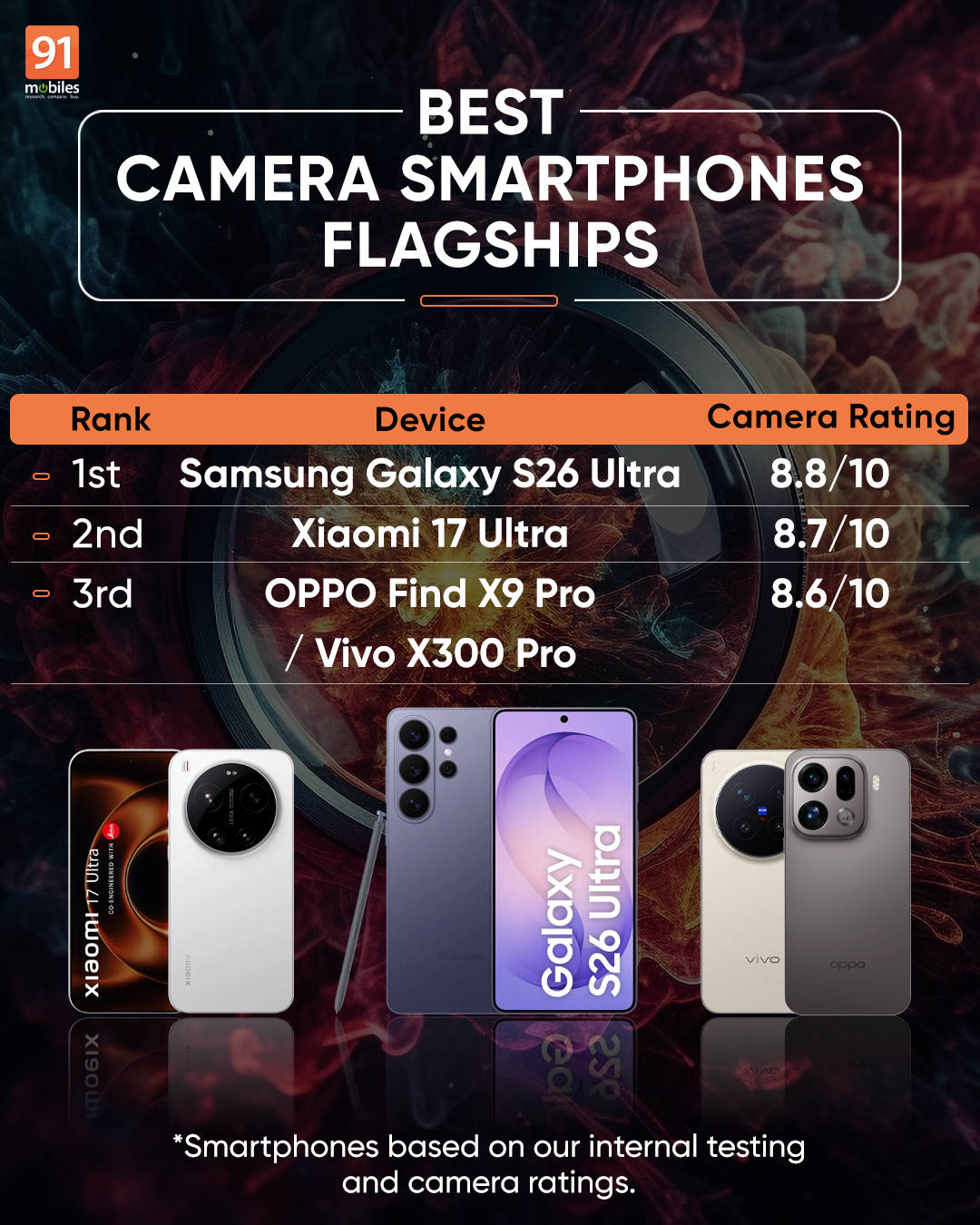
Runners-up: The Xiaomi 17 Ultra (review) comes in second in this segment, with a 1-inch main sensor that delivers exceptional daylight shots with impressive detail and accurate colours. The continuous-zoom telephoto, spanning 75mm to 100mm, is the highlight feature, maintaining consistent colour and sharpness across the entire range without the quality drop you get from dual-telephoto setups. In low light, LOFIC technology captures high-contrast scenes in a single shot, resulting in images that feel natural rather than processed.
The Vivo X300 Pro (review) and the OPPO Find X9 Pro (review) are tied at the third spot. The X300 Pro’s 3.5x telephoto is the real differentiator, with crisp, contrasty shots and convincing subject separation even in low light, backed by rich daylight shots and excellent low-light performance from the main camera. The OPPO Find X9 Pro delivers sharp, punchy images with outstanding portrait subject separation and strong low-light performance with night mode, though the ultrawide can oversaturate and occasional focus hiccups are a drawback.