Best gaming phones in India (2026): top picks for flagship, mainstream, and budget gaming


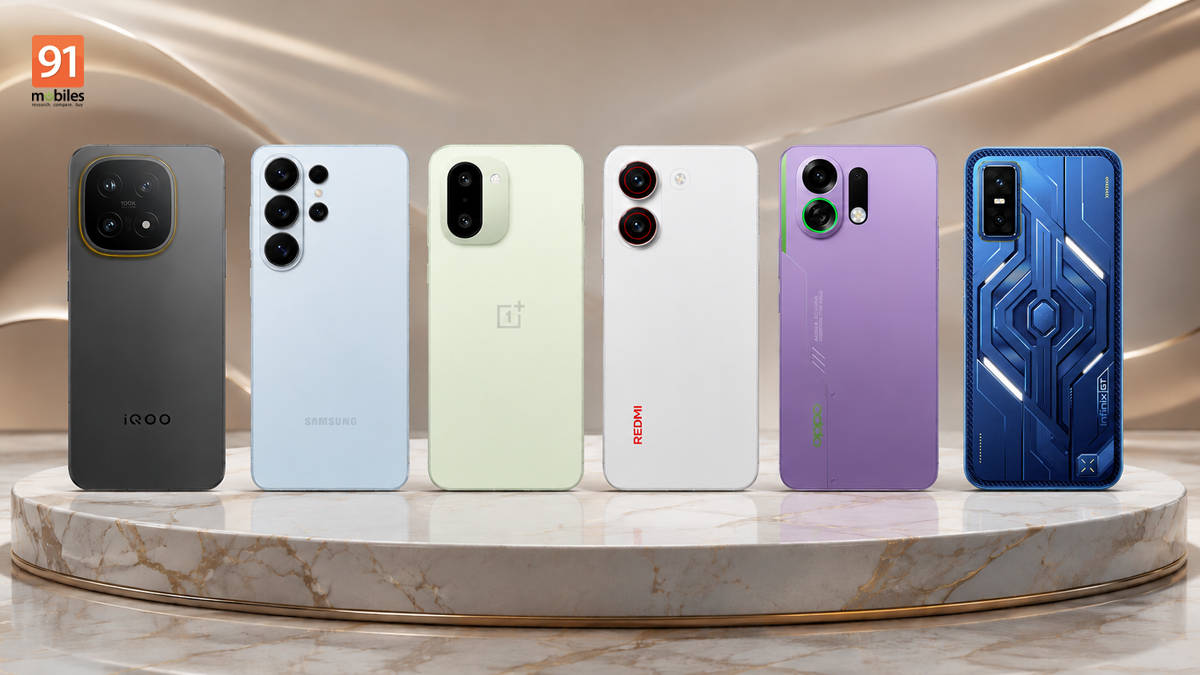
With multiple high-end titles available, mobile gaming has never been more demanding. Therefore, having the right smartphone can make all the difference between a smooth, immersive experience and frustrating frame drops. Whether you’re a competitive gamer looking for flagship-level power or a casual player who wants great performance without breaking the bank, 2026 offers excellent options across every price segment.
From premium beasts to budget-friendly smartphones packing serious gaming hardware, including shoulder triggers and built-in fans, we’ve tested the best gaming phones that deliver not just on benchmarks, but also sustained frame rates, efficient thermal management, and comfortable long-hour gameplay.
As part of our picks, the Samsung Galaxy S26 Ultra offers the absolute best gaming performance, while the iQOO 15 excels at offering a balanced gaming experience in the mainstream flagship segment. For those seeking excellent battery endurance along with smooth high refresh rates, the OnePlus 15R remains our top choice. The OPPO K13 Turbo Pro not only rivals the performance numbers of its flagship counterparts, but is also the only phone to offer a cooling fan, while the Redmi Turbo 5 also impressed us with its thermal capabilities in the sub-Rs 40,000 segment. Lastly, the Infinix GT 30, despite being old, leads the way for delivering the best performance on a budget.
The list was updated in July 2026 with benchmark scores, gaming FPS data, and thermal results from our in-house lab. You can read more about our testing methodology here.
Table of Contents
Winners at a glance
| Smartphone | Gaming title | Current price |
| Samsung Galaxy S26 Ultra | Best ultra-premium flagship | Rs 1,24,999 |
| iQOO 15 | Best premium mainstream | Rs 76,999 |
| OnePlus 15R | Best battery and value | Rs 54,999 |
| OPPO K13 Turbo Pro | Best budget flagship killer | Rs 29,999 |
| Redmi Turbo 5 | Best under Rs 40,000 | Rs 37,999 |
| Infinix GT 30 | Best gaming on a budget | Rs 21,999 |
Best ultra-premium flagship – Samsung Galaxy S26 Ultra
Why we chose it
The Samsung Galaxy S26 Ultra (review), running on the Qualcomm Snapdragon 8 Elite Gen 5 for Galaxy, delivers one of the highest benchmark scores we’ve ever recorded in our lab tests. On paper, with clock speeds of up to 4.74 GHz, up to 16GB RAM, and a 15 percent larger vapour chamber compared to the Galaxy S25 Ultra, the Galaxy S26 Ultra handles everything thrown at it with ease.


In benchmarks like AnTuTu and Geekbench, the Samsung flagship delivered scores of 39,05,605 and 11,407 (multi-core), outpacing its closest rival, the iPhone 17 Pro Max. Moving to ergonomics, since the Galaxy S26 Ultra weighs just 214g and measures 7.9mm in thickness, it’s one of the lightest flagships out there that’s easy on the hands, resulting in burdenless gaming even during long sessions.
Key specifications
- Smartphone name: Samsung Galaxy S26 Ultra
- Processor: Qualcomm Snapdragon 8 Elite Gen 5 for Galaxy
- Fabrication process: 3nm
- RAM: Up to 16GB
- RAM type: LPDDR5X
- Storage: Up to 1TB
- Storage type: UFS 4.0
Best premium mainstream – iQOO 15
Why we chose it
iQOO, as a brand, has always banked on gaming since the start. The iQOO 15 (review) is the brand’s latest flagship iteration, combining series-level performance prowess with reliable all-rounder capabilities for daily use. Rocking the Snapdragon 8 Elite Gen 5, up to 144Hz refresh rate, dedicated chips for game optimisations, and a large vapour chamber, it’s one of the best premium devices one can get under Rs 80,000 for mobile gaming.

Key specifications
- Smartphone name: iQOO 15
- Processor: Qualcomm Snapdragon 8 Elite Gen 5
- Fabrication process: 3nm
- RAM: Up to 16GB
- RAM type: LPDDR5X
- Storage: Up to 512GB
- Storage type: UFS 4.1
Best battery and value – OnePlus 15R
Why we chose it
The strong combination of a 7,400mAh battery, 165Hz display refresh rate, and Qualcomm Snapdragon 8 Gen 5 make the OnePlus 15R (review) a compelling choice for anyone who values superb endurance and excellent gaming capabilities. In our PCMark Battery drain lab tests, the OnePlus 15R clocked a run time of 18 hours and 13 minutes from 100 to 20 percent, which is among the highest we’ve recorded so far in the sub-Rs 60,000 segment.


As part of our tests, the OnePlus 15R delivered average frame rates of 59.6 during a 30-minute gaming session in CODM in the ‘Very high’ + ‘Max’ setting. With 165Hz support in BGMI via frame interpolation, the 15R handled the game with ease, delivering an average frame rate of 156.4 fps over a 30-minute session. In both games, the temperature rose by no more than 12 degrees.
Key specifications
- Smartphone name: OnePlus 15R
- Processor: Qualcomm Snapdragon 8 Gen 5
- Fabrication process: 3nm
- RAM: Up to 16GB
- RAM type: LPDDR5X Ultra
- Storage: Up to 512GB
- Storage type: UFS 4.1
Best budget flagship killer – OPPO K13 Turbo Pro
Why we chose it
The only smartphone on the list to be equipped with dedicated built-in cooling fans and an air vent, the OPPO K13 Turbo Pro (review) continues to make waves even after almost a year of its launch for its advanced cooling capabilities. Paired with the Snapdragon 8s Gen 4, the chipset offers the device enough power to run most high-end games out there.

On benchmarks, the K13 Turbo Pro goes all out with scores of 20,29,394 and 6,779 on AnTuTu and Geekbench’s multi-core tests, respectively. In our lab tests, during a 30-minute BGMI session, the device managed to gain 107 FPS in the 120 FPS frame rate mode, while seeing just a 7-degree rise in temperature. Similarly, the K13 Turbo natively supports 120 FPS in CODM at the ‘Ultra’ frame rate setting, ensuring silky-smooth, responsive gameplay.
With the price of the OPPO K13 Turbo Pro often hovering under Rs 35,000, it’s truly worthy of the title of ‘Best budget flagship killer’ considering the bleeding-edge hardware on offer.
Key specifications
- Smartphone name: OPPO K13 Turbo Pro
- Processor: Qualcomm Snapdragon 8s Gen 4
- Fabrication process: 3nm
- RAM: Up to 12GB
- RAM type: LPDDR5X
- Storage: Up to 256GB
- Storage type: UFS 4.0
Best under Rs 40,000 – Redmi Turbo 5
Why we chose it
One of the more recent launches, the Redmi Turbo 5 (review), packs one of the best performance hardware Xiaomi has to offer in recent years. For starters, the device is equipped with the MediaTek Dimensity 8500 Ultra, the same chipset found on the much more expensive Xiaomi 17T, up to 12GB LPDDR5X Ultra RAM, UFS 4.1 storage onboard, and a large 5,300mm² stainless steel layer with a graphite sheet for 3x better thermal management than a traditional vapour chamber.

In our tests, the Redmi Turbo 5’s AnTuTu and Geekbench multi-core scores stand at 21,35,669 and 6,657, while in games, it performs superbly well. For instance, we were able to play BGMI and Call of Duty: Mobile at 120 FPS using frame interpolation for several minutes on a stretch. Also, during our tests, the Redmi Turbo 5’s surface temperature increased by 14 degrees after 40 minutes of BGMI and COD: Mobile gaming, which is much lower than its close rival with the same chipset, the Moto Edge 70 Pro.
With its fairly handy 6.59-inch 1.5K AMOLED display, the Redmi Turbo 5 is comfortable to hold for users of all hand sizes, delivering an enjoyable gaming experience.
Key specifications
- Smartphone name: Redmi Turbo 5
- Processor: MediaTek Dimensity 8500-Ultra
- Fabrication process: 3nm
- RAM: Up to 12GB
- RAM type: LPDDR5X Ultra
- Storage: Up to 256GB
- Storage type: UFS 4.0
Best gaming on a budget – Infinix GT 30
Why we chose it
Just like most phones released in 2025, the Infinix GT 30 (review) also received a price hike in 2026, but that doesn’t stop it from being one of the best gaming performers under Rs 25,000. Taking cues from its elder sibling, the Infinix GT 30 Pro, the handset not only features gaming aesthetics but also gains shoulder triggers for precise input in fast-paced, intense games.


Powered by the Dimensity 7400 chipset, it scores 9,31,550 on the AnTuTu benchmark, while in Geekbench’s multi-core test, it gained 3,221. As for real-world gaming performance, we played Call of Duty: Mobile at 90 FPS for 30 minutes, and the phone consistently delivered frame rates above 86 FPS across all five matches.
Besides that, the near-symmetrical bezels on the 1.5K display, smooth, AI-rich XOS 16 (hands-on) software, and a strong linear x-axis haptic motor make the Infinix GT 30 an appealing choice for casual users as well as mobile gamers.
Key specifications
- Smartphone name: Infinix GT 30
- Processor: MediaTek Dimensity 7400
- Fabrication process: 4nm
- RAM: Up to 8GB
- RAM type: LPDDR5X
- Storage: Up to 256GB
- Storage type: UFS 2.2
Conclusion
There’s a compelling smartphone for every category that delivers excellent gaming performance. The Samsung Galaxy S26 Ultra stands tall as the ultra-premium choice with its class-leading power, exceptional thermal management, and lightweight design. Gamers seeking a balanced premium experience will find a strong contender in the iQOO 15, while the OnePlus 15R excels for users who want outstanding battery endurance alongside smooth gameplay.
In the more affordable segments, the OPPO K13 Turbo Pro continues to impress as a true flagship killer with its innovative active cooling, the Redmi Turbo 5 offers a well-rounded package with a comfortable display and strong performance under Rs 40,000, and the Infinix GT 30 proves you don’t need to spend big to enjoy capable gaming with thoughtful additions like shoulder triggers.
Here’s a final glimpse of how these smartphones perform on benchmarking apps like AnTuTu and Geekbench.
| Phone | AnTuTu | Geekbench | |
| Single-core | Multi-core | ||
| Samsung Galaxy S26 Ultra | 39,05,605 | 3,733 | 11,407 |
| iQOO 15 | 38,42,735 | 3,621 | 10,579 |
| OnePlus 15R | 29,57,229 | 2,851 | 9,363 |
| OPPO K13 Turbo Pro | 20,29,394 | 2,171 | 6,779 |
| Redmi Turbo 5 | 21,35,669 | 1,725 | 6,657 |
| Infinix GT 30 | 7,27,195 | 1,073 | 3,321 |
FAQs
Which is the best gaming phone overall in 2026?
If you’re aiming for the best gaming phone in 2026, the Samsung Galaxy S26 Ultra comes out on top, particularly for its sustained frame rates, excellent thermal control, and a premium ergonomic design, making it ideal for serious gamers. On the other hand, other Snapdragon 8 Elite Gen 5-powered phones, such as the iQOO 15, OnePlus 15, and OPPO Find X9 Ultra, are also strong options for offering flagship-level gaming performance.
What is the best gaming phone under Rs 80,000?
The iQOO 15 is the strongest performer in the premium mainstream segment under Rs 80,000. It offers excellent gaming hardware, dedicated gaming optimisations, and strong real-world performance in BGMI and COD Mobile.
Which phone has the best battery life for gaming?
The OnePlus 15R, with its massive 7,400mAh battery and efficient cooling system, provides outstanding endurance, ideal for long gaming sessions.
Is there any capable gaming smartphone in the sub-Rs 25,000 segment?
The Infinix GT 30, which currently retails under Rs 25,000, gets many things right for gamers on a strict budget. It delivers reliable 90 FPS gameplay in COD Mobile, comes with shoulder triggers, and offers an attractive design with solid haptics.