Best phones in India (2026): Our top picks for every budget and use case


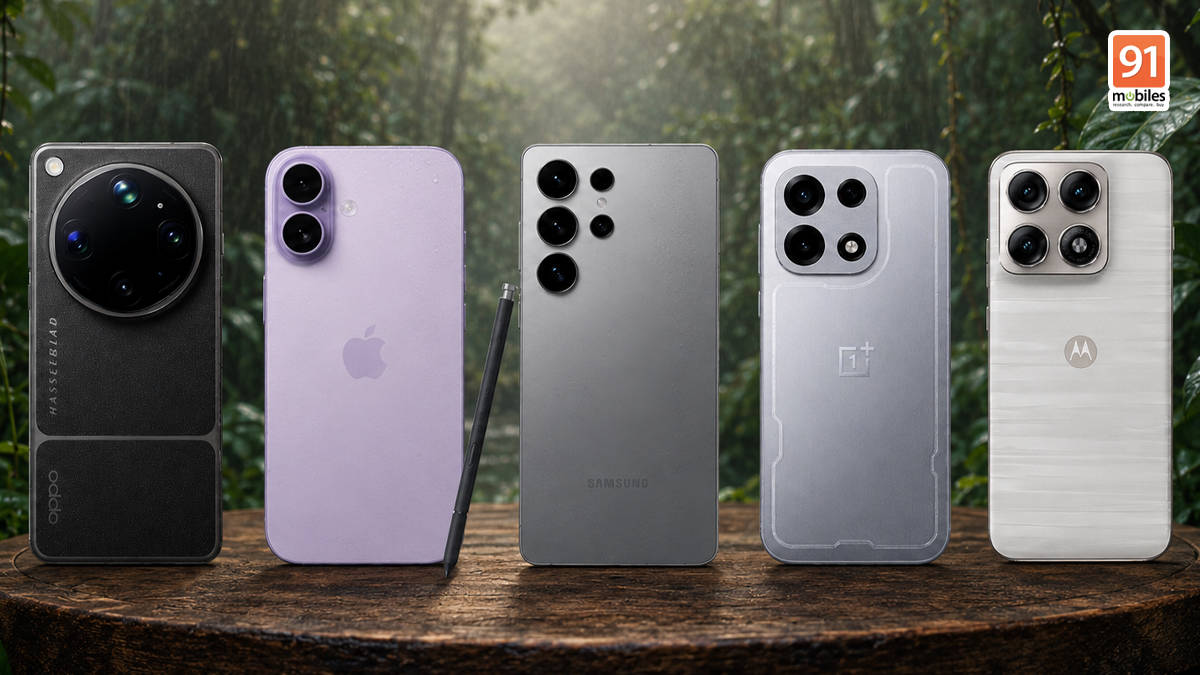
Whether you’re upgrading from a two-year-old device, switching from iOS to Android (or vice versa), buying your first flagship, or hunting for the best value under a fixed budget, this article has a clear recommendation for you. It covers phones across all major price segments, with specific picks for camera quality, battery life, gaming performance, and a clean software experience.
We tested and compared over 50 smartphones across flagship, mid-range, and budget segments this year to identify the best phones currently available in India. Our rankings are based on real-world usage, benchmark performance, camera consistency across lighting conditions, battery endurance, display quality, software experience, and long-term value for money. You can read more about our testing methodology here.
The Samsung Galaxy S26 Ultra is our best overall Android pick for its class-leading camera system, display, and 7-year software support, among other things. The iPhone 17 remains the top choice for iOS users and video creators looking for the best value-for-money iPhone. Samsung’s newest Galaxy Z Fold8 series, including the Fold8 and Fold8 Ultra, is among the best foldables on the market right now. The OnePlus Nord 6 wins on battery life with its massive 9,000mAh cell, the Vivo X300 Ultra and OPPO Find X9 Ultra are tied for the camera-first crown; the Motorola Edge 70 Pro is the strongest value pick under Rs 40,000, while its predecessor, the Motorola Edge 60 Pro, continues to be the perfect all-rounder under Rs 30,000.
Winners at a glance
| Category | Best Pick | Price |
| Best Overall Android | Samsung Galaxy S26 Ultra | Rs 1,24,999 |
| Best iPhone | Apple iPhone 17 | Rs 82,900 |
| Best Camera Phone | Vivo X300 Ultra/OPPO Find X9 Ultra | Rs 1,59,999/Rs 1,69,999 |
| Best Foldable Phone | Samsung Galaxy Z Fold8 series | Rs 1,79,999 |
| Best Battery Life | OnePlus Nord 6 | Rs 44,999 |
| Best Gaming Phone | POCO X8 Pro Max | Rs 45,999 |
| Best Under Rs 40,000 | Motorola Edge 70 Pro | Rs 39,999 |
| Best Under Rs 30,000 | Motorola Edge 60 Pro | Rs 29,999 |
*Winners and prices as of August 14, 2026
Samsung Galaxy S26 Ultra – Best Overall Android Phone in India
The Samsung Galaxy S26 Ultra (review) is the most complete Android smartphone you can buy in India right now. Across every metric we tested – camera versatility, sustained performance, display quality, and software reliability – it consistently led or matched the best in each category rather than excelling at one and compromising on another.
Its quad-camera system, anchored by a 200MP primary sensor, produced sharp, colour-accurate results in daylight, low-light, portrait, and telephoto scenarios across our testing. The Snapdragon 8 Elite chip delivered top-tier benchmark scores and maintained stable thermal performance even during extended gaming sessions. Samsung’s 7-year OS update commitment also makes this a safe long-term purchase in a segment where software longevity matters.


Key Specs:
- Processor: Snapdragon 8 Elite Gen 5
- Display: 6.9-inch Dynamic AMOLED 2X, 120Hz, anti-reflective
- Battery: 5,000mAh
- Charging: 60W wired, 25W wireless
- Camera: 200MP main + 50MP ultrawide + 50MP periscope + 10MP telephoto
- RAM/Storage: 12GB / 256GB, 512GB, 1TB
Test Data:
- AnTuTu score: 3,905,605
- PCMark battery: 14 hours 26 minutes
- Charging test (20-100%): 37 minutes
iPhone 17 – Best iPhone in India
You might wonder why I haven’t mentioned the iPhone 17 Pro Max here. While that is the absolute best iPhone in terms of features, the base iPhone 17 is the best value-for-money iPhone for the masses. On the latest base iPhone, Apple has added a few Pro-level features that make it more appealing than ever, including a 120Hz ProMotion display, upgraded ultrawide and front cameras, a slightly larger battery, and faster charging.

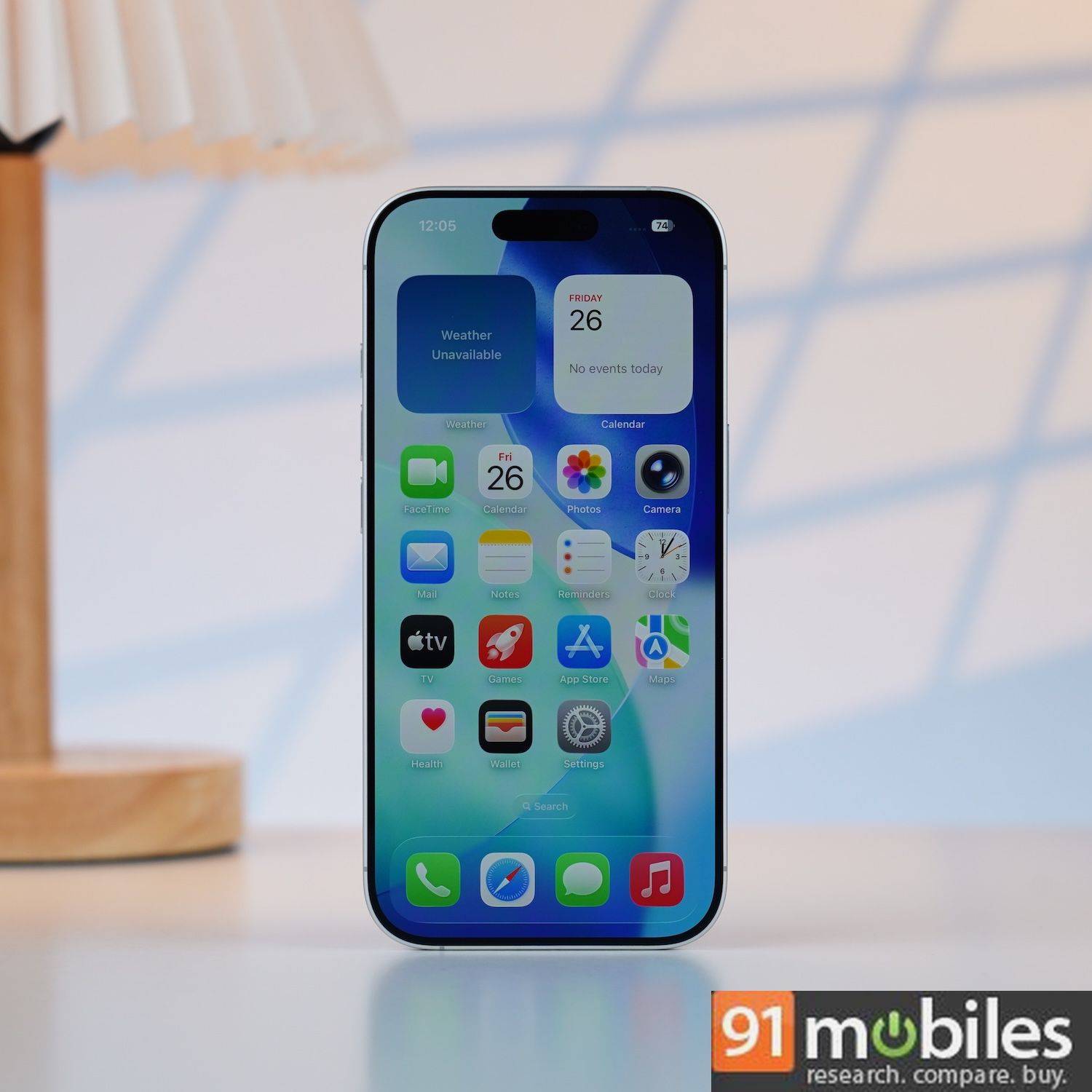
For buyers who prioritise platform stability, seamless device integration, and long-term OS updates over raw spec comparisons, the iPhone 17 represents one of the safest purchases available at this price point in India.
Key Specs
- Processor: A19
- Display: 6.3-inch Super Retina XDR OLED, 120Hz ProMotion
- Battery: 3,692mAh
- Charging: Up to 50 percent in 20 minutes
- Camera: 48MP Fusion primary + 48MP Fusion Ultrawide
- Storage: 256GB, 512GB
Price: Rs 82,900
Vivo X300 Ultra and OPPO Find X9 Ultra – Best Camera Phones in India
Deciding a clear winner between the Vivo X300 Ultra (review) and OPPO Find X9 Ultra (review) is tough. Both flagships are among the best camera phones in India today, but the choice comes down to the kind of colour tuning and professional-grade setup you’re looking for. I reviewed both devices, so trust me when I say that there is no wrong choice here.
Vivo X300 Ultra
The X300 Ultra’s three-lens system delivers class-leading consistency across focal lengths. Vivo’s colour science continues to be top-notch. The processing is naturalistic rather than punchy, avoiding the oversaturated look that some rivals lean on to make photos appear impressive at first glance. For professional photographers, Vivo takes it up a notch by offering a ZEISS Telephoto Extender Kit, which includes a 200mm Gen 2 and a 400mm Gen 2 Ultra, along with a camera grip, lanyard, tripod mounting rings, and swappable camera rings. Together, they cost a whopping Rs 2,10,000, though you can buy the lenses separately if you don’t need both.
Vivo X300 Ultra Key Specs:
- Processor: Snapdragon 8 Elite Gen 5
- Display: 6.82″ LTPO AMOLED, 120Hz
- Battery: 6,000mAh
- Charging: 90W wired
- Camera: 50MP + 200MP Zeiss Periscope + 50MP ultrawide
- RAM/Storage: 16GB/512GB
OPPO Find X9 Ultra
OPPO’s flagship also offers an excellent quad-camera system too, but with one main difference: it doesn’t need an additional telephoto lens kit. OPPO has built the teleconverter directly into the phone. The 10x lens uses a 1/2.75-inch JNL sensor customised alongside Samsung, making it the largest sensor ever used at 10x zoom. The result is that you can shoot at 230mm without carrying a separate lens, without a setup process, and without committing to a specific shooting style in advance.
Overall, the Find X9 Ultra (review) delivers a stellar camera system across a range of lighting conditions. The primary camera delivers attractive colours, wide dynamic range, and impressive detail retention. Hasselblad’s colour science leans towards contrasty and saturated shots, compared to the X300 Ultra’s more true-to-life colour tuning.
OPPO Find X9 Ultra Key Specs:
- Processor: Snapdragon 8 Elite Gen 5
- Display: 6.82-inch LTPO AMOLED, 144Hz
- Battery: 7,005mAh
- Charging: 100W wired
- Camera: 200MP primary, 200MP 3x telephoto, 50MP ultrawide, 50MP 10x telephoto
- RAM/Storage: 12GB/512GB
Samsung Galaxy Z Fold8 series – Best Foldable Phone
We have a handful of foldables in India now with the Motorola Razr Fold, Google Pixel 11 Pro Fold and the Samsung Galaxy Z Fold8 series launching this year. While the Razr Fold is a solid debut foldable from Motorola and the Pixel 11 Pro Fold brings impressive AI features with a stock Android experience, it’s the Galaxy Z Fold8 and Z Fold8 Ultra that take the crown as best foldable, as they excel even in areas where rivals don’t.
The Galaxy Z Fold8 (review) is Samsung’s first (and India’s only) passport-sized foldable, which alone makes it a unique offering. Its compact form factor makes it a terrific choice for those seeking a foldable phone that is pocketable and easy to use with one hand. The 7.6-inch inner display offers a 4:3 aspect ratio, which is well-suited for video viewing, with standard 16:9 content showing only minimal letterboxing and ideal for reading and scrolling through web pages, documents, e-books, etc.
Meanwhile, the Galaxy Z Fold8 Ultra (review), as the name suggests, is as ultra as it can get, with two large displays, improved battery life over its predecessor, the Z Fold7, an upgraded camera system that includes a 200MP primary and a 50MP ultrawide lens, and 7 years of software updates, among other things. Both Samsung foldables are also powered by the Snapdragon 8 Elite Gen 5 chip, ensuring exceptional multitasking performance.
Key Specs:
- Processor: Snapdragon 8 Elite Gen 5
- Display: Fold8 – 5.5-inch (outer), 7.6-inch (inner)/ Fold8 Ultra – 6.5-inch (outer), 8-inch (inner)
- Battery: Fold8 – 4,800mAh / Fold8 Ultra – 5,000mAh
- Camera: Fold8 – 50MP main + 50MP ultrawide / Fold8 Ultra – 200MP main + 50MP ultrawide + 10MP telephoto
OnePlus Nord 6 – Best Battery Life Phone in India
The OnePlus Nord 6 (review) is the answer if battery anxiety is your primary concern. Its 9,000mAh cell is one of the largest shipped in a mainstream smartphone in India, and it delivered over two days of moderate-to-heavy usage in our testing without requiring a top-up, a meaningful differentiator in a market where daily charging is the norm.
The Nord 6 lasted just over 20 hours from 100-20 percent in the PCMark battery test, which simulates real-world usage non-stop. This is the best time yet for a phone under Rs 40,000.
PCMark Battery score (in hours)


OnePlus Nord 6
9000 mAh
20.8

Xiaomi Redmi Note 15 Pro Plus
6500 mAh
14.2

Nothing Phone 4a Pro
5400 mAh
13.8
PCMark battery test measures phone battery life from 100% to 20% (higher is better)
Importantly, OnePlus achieved this capacity without making the phone unwieldy. It weighs around 217 grams and is about 8.5mm thick, which is decent for phone with such a large battery. The Nord 6 also carries an IP69K rating, offering strong protection against dust and high-pressure water exposure. OxygenOS 16 remains one of the cleaner Android implementations available in the mid-range segment.
Key Specs:
- Processor: Snapdragon 8s Gen 3
- Display: 6.78-inch AMOLED, 165Hz
- Battery: 9,000mAh
- Charging: 80W SuperVOOC (charger included)
- Camera: 50MP main + 8MP ultrawide
- RAM/Storage: 8GB/256GB, 12GB/256GB
Test Data:
- AnTuTu score: 2,366,913
- PCMark battery: 20 hours 46 minutes
- Charging test (20-100%): 65 minutes
POCO X8 Pro Max – Best Gaming Phone Around Rs 40,000
The POCO X8 Pro Max offers the closest thing to flagship gaming performance available around Rs 40,000 in India. Running on the MediaTek Dimensity 9500s, it posted an AnTuTu score of over 3 million, comparable to phones priced over Rs 70,000, and sustained those performance levels across extended BGMI and Call of Duty Mobile sessions without significant thermal throttling.
AnTuTu score

POCO X8 Pro Max
MediaTek Dimensity 9500s
3,022,675

OnePlus 15R
Qualcomm Snapdragon 8 Gen 5
2,957,229

Motorola Edge 70 Pro + 5G
MediaTek Dimensity 8500 Extreme
2,217,003
AnTuTu assesses a smartphone's CPU, GPU, memory, and overall user experience (higher is better)
Not only that, but it also features a massive 9,000mAh battery, which performed extremely well in our PCMark test, nearly on par with the Nord 6. For competitive mobile gamers who want stable FPS performance and top-tier processing headroom without flagship pricing, this is the strongest option currently available in this segment.
Key Specs:
- Processor: MediaTek Dimensity 9500s
- Display: 6.83-inch AMOLED, 120Hz
- Battery: 9,000mAh
- Charging: 100W (charger included)
- Camera: 50MP main + 8MP ultrawide
- RAM/Storage: 12GB/256GB, 12GB/512GB
Test Data:
- AnTuTu score: 3,022,675
- PCMark battery: 21 hours 21 minutes
- Charging test (20-100%): 65 minutes
Motorola Edge 70 Pro – Best Phone Under Rs 40,000
Our previous winner in this segment, the Nothing Phone (4a), no longer qualifies, as it now exceeds Rs 40,000 after its most recent price hike. The Motorola Edge 70 Pro (review) is the new winner because it covers the basics well without forcing big compromises. The phone gets an ultra-slim design and a bright, colour-rich AMOLED display that looks good for daily use and media, along with support for up to a 144Hz refresh rate on supported apps and games. The MediaTek Dimensity 8500 Extreme handles almost any task, be it demanding or routine, smoothly, and the 6,500mAh battery lasts a full day even with heavy use. Its 90W fast-charge support is extremely convenient when you need a quick top-up. It also offers comparatively fewer pre-loaded apps out of the box, delivering a near-stock Android experience.
| Smartphone | Pre-Installed Apps | Software Support |
| Motorola Edge 70 Pro 5G | 47 | 3 Year OS Updates + 5 Year Security Updates |
| Xiaomi Redmi Note 15 Pro | 64 | 4 Year OS Updates + 6 Year Security Updates |
| OPPO K13 Turbo Pro | 72 | 2 Years OS Updates + 3 Years Security Updates |
| OnePlus Nord 6 | 53 | 4 Year OS Updates + 6 Year Security Updates |
Low-light photos come out clean and detailed, which helps in common shooting scenarios. It doesn’t include wireless charging or a dedicated telephoto lens, and its software update promise is shorter than that of some rivals, but it still offers the most balanced mix of design, display, battery life, and everyday performance in this price range.
Key Specs:
- Processor: MediaTek Dimensity 8500 Extreme
- Display: 6.8-inch Extreme AMOLED, 144Hz
- Battery: 6,500mAh
- Charging: 90W (charger included)
- Camera: 50MP main + 50MP ultrawide
- RAM/Storage: 8GB/256GB, 12GB/256GB
Test Data:
- AnTuTu score: 2,194,258
- PCMark battery: 14 hours 01 minutes
- Charging test (20-100%): 44 minutes
Motorola Edge 70 Fusion – Best Phone Around Rs 30,000
The Motorola Edge 70 Fusion (review) remains one of the few phones around this price that still offers a well-rounded experience. The Snapdragon 7s Gen4 delivers smooth day-to-day performance, the battery life remains one of its best traits, and the display is bright and immersive. It is also very durable, especially against water, and the clean software with useful AI features adds to the appeal.


Key Specs:
- Processor: Snapdragon 7s Gen 4
- Display: 6.8-inch AMOLED, 144Hz
- Battery: 7,000mAh
- Charging: 68W (charger included)
- Camera: 50MP main + 13MP ultrawide
- RAM/Storage: 8GB/128GB, 8GB/256GB, 12GB/256GB
Test Data:
- AnTuTu score: 1,149,292
- PCMark battery: 17 hours 34 minutes
- Charging test (20-100%): 49 minutes
FAQs
Which is the best phone in India right now?
The Samsung Galaxy S26 Ultra is the best overall Android phone in India in 2026, offering the strongest combination of camera performance, display quality, processing power, and long-term software support. For iOS users, the Apple iPhone 17 is the top recommendation for its Pro-grade features and value-for-money.
Which phone has the best camera in India?
The Vivo X300 Ultra and OPPO Find X9 Ultra are our top picks for camera performance, thanks to their stellar camera systems, which include impressive telephoto lenses for long-distance shots and portraits. The X300 Ultra gives you the option for attaching additional telephoto lenses, while the Find X9 Ultra features a built-in 10x telephoto lens.
Which phone has the best battery life in India?
The OnePlus Nord 6, with its 9,000mAh battery, delivered the longest endurance of any phone we tested in its segment, consistently crossing two days of moderate to heavy usage. It’s the clear pick if battery life is your primary buying criterion.
What is the best phone under Rs 40,000 in India?
The Motorola Edge 70 Pro at Rs 39,999 is our top recommendation under Rs 40,000. It offers a clean, bloatware-free Android experience, impressive performance, a crisp and smooth 144Hz AMOLED display, and dependable battery life with 90W fast charging, making it a solid all-round phone.
What is the best gaming phone around Rs 40,000 in India?
The POCO X8 Pro Max offers the strongest gaming performance around Rs 45,000, powered by the MediaTek Dimensity 9500s with sustained FPS stability in titles like BGMI.
Do phones in India come with chargers in the box?
It depends on the brand. OnePlus, Vivo, and POCO typically include fast chargers in the box. Samsung, Apple, and Google do not. You should budget an additional Rs 2,000–3,000 for a compatible fast charger if you choose one of those brands.