Smartphones are getting more expensive in 2026, and a global memory shortage is the reason why. The shortage has pushed up the cost of key components, and some manufacturers have passed that cost on to buyers. As a result, prices have shifted across every segment, and the options available at each budget have changed too. That makes picking the right phone harder than ever.
To keep up with these changes, we have updated our price ranges so the recommendations reflect what is available in the market today. A great phone should still deliver a sharp display, a fast processor, reliable cameras, and a battery that lasts all day. We have done the hard work for you already, and here are the best phones to buy in every price range.
Selection Criteria
We test every phone on this list thoroughly before ranking it. Our team scores each device across six key areas: design, display, software, camera, performance, and battery life. We run synthetic benchmarks, detailed camera comparisons, and real-world tests that cover everything from gaming to everyday use. We then average these scores to give each phone a final rating. From each price segment, we pick the top three phones — so you always have options that suit your needs and budget.
Table of Contents
Best smartphones under Rs 15,000
Winner: The Tecno POVA 7 5G (review) tops this segment and offers a smooth display, reliable performance, and a large 6,000mAh battery with 45W fast charging. The bold design makes it one of the most unique-looking phones at this price. Camera colours are not the most natural, and software support is limited, but it still delivers the best all-round value here.
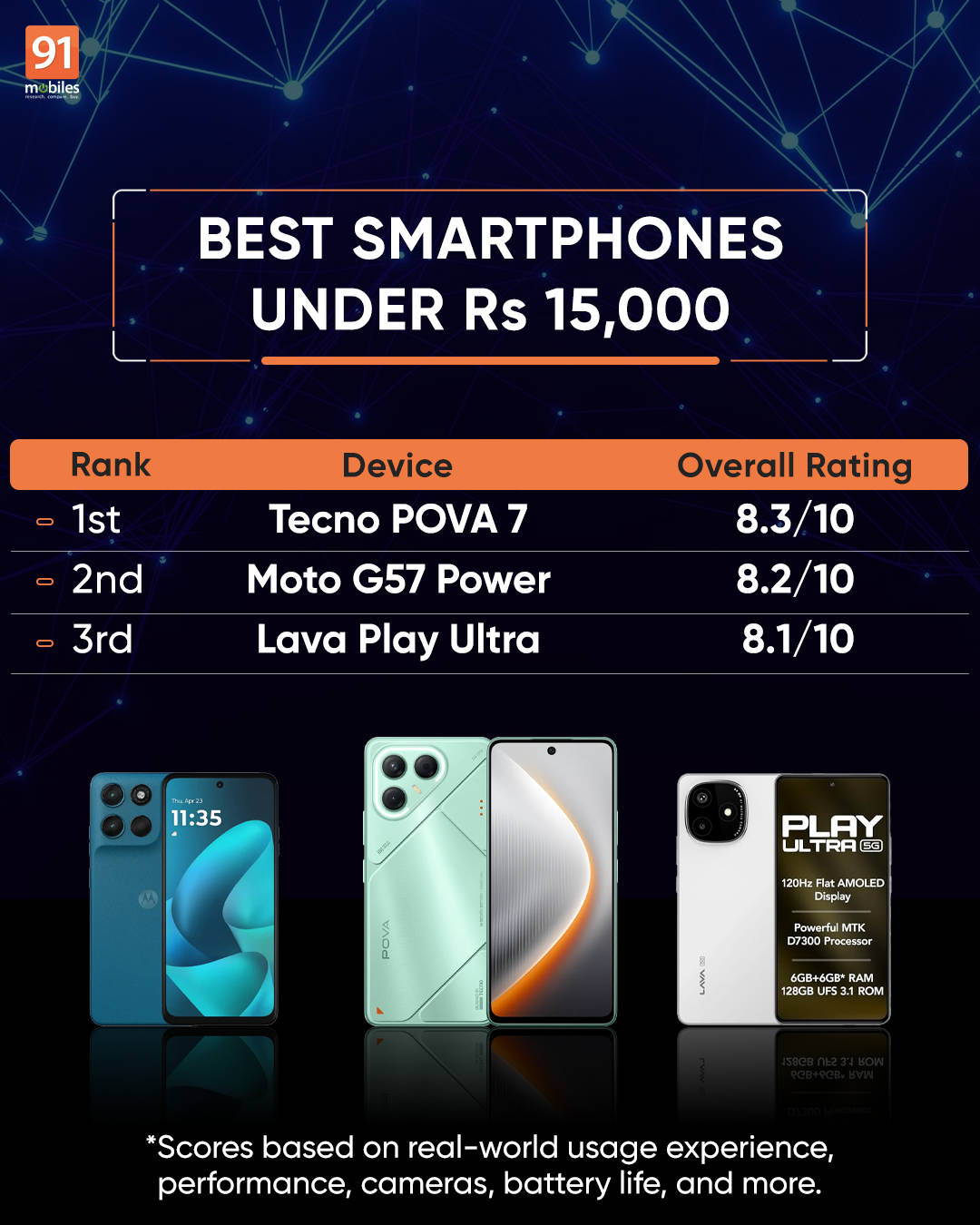
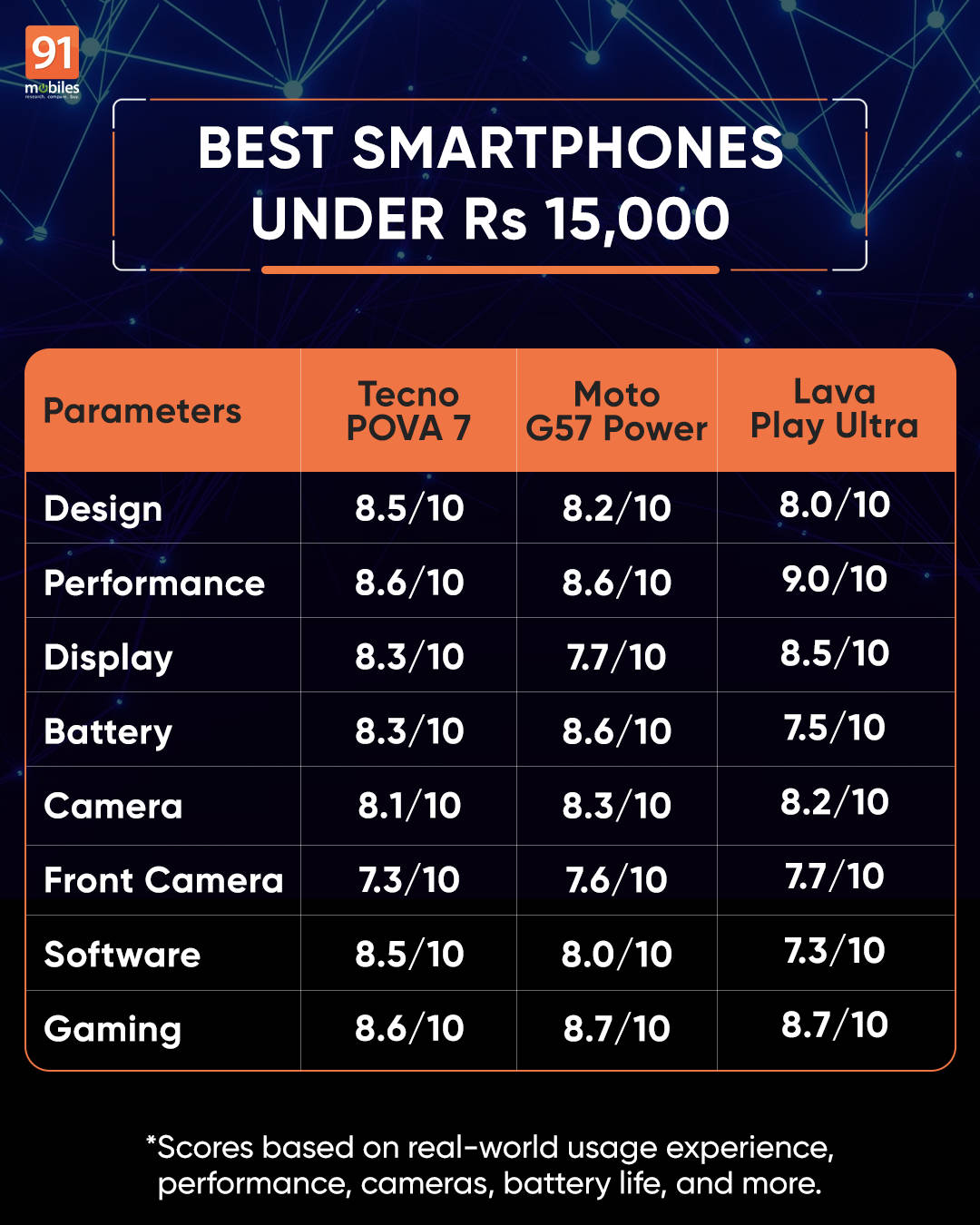
Runners-up: The Moto G57 Power (review) is the best pick for battery life. It also brings a tall vivid display, detailed cameras, and a great vegan-leather design. The only real drawback here is that the software updates are limited.
The Lava Play Ultra (review) is the top gaming option in this segment and has the best display in this segment. It runs cool, has a 120Hz AMOLED display, stereo speakers, and IP64 protection. The main drawbacks of this device are its subpar cameras and slower charging speed.
Best smartphones around Rs 30,000
Winner: The OnePlus Nord 5 (review) is the best phone to buy in this segment. It packs a 144Hz display, a powerful Snapdragon 8s Gen 3 chip, and a large battery that keeps up with heavy use. If gaming performance is what you are after, this phone delivers it better than anything else at this price. The design and cameras are not best-in-class, though, so keep that in mind if those matter to you.
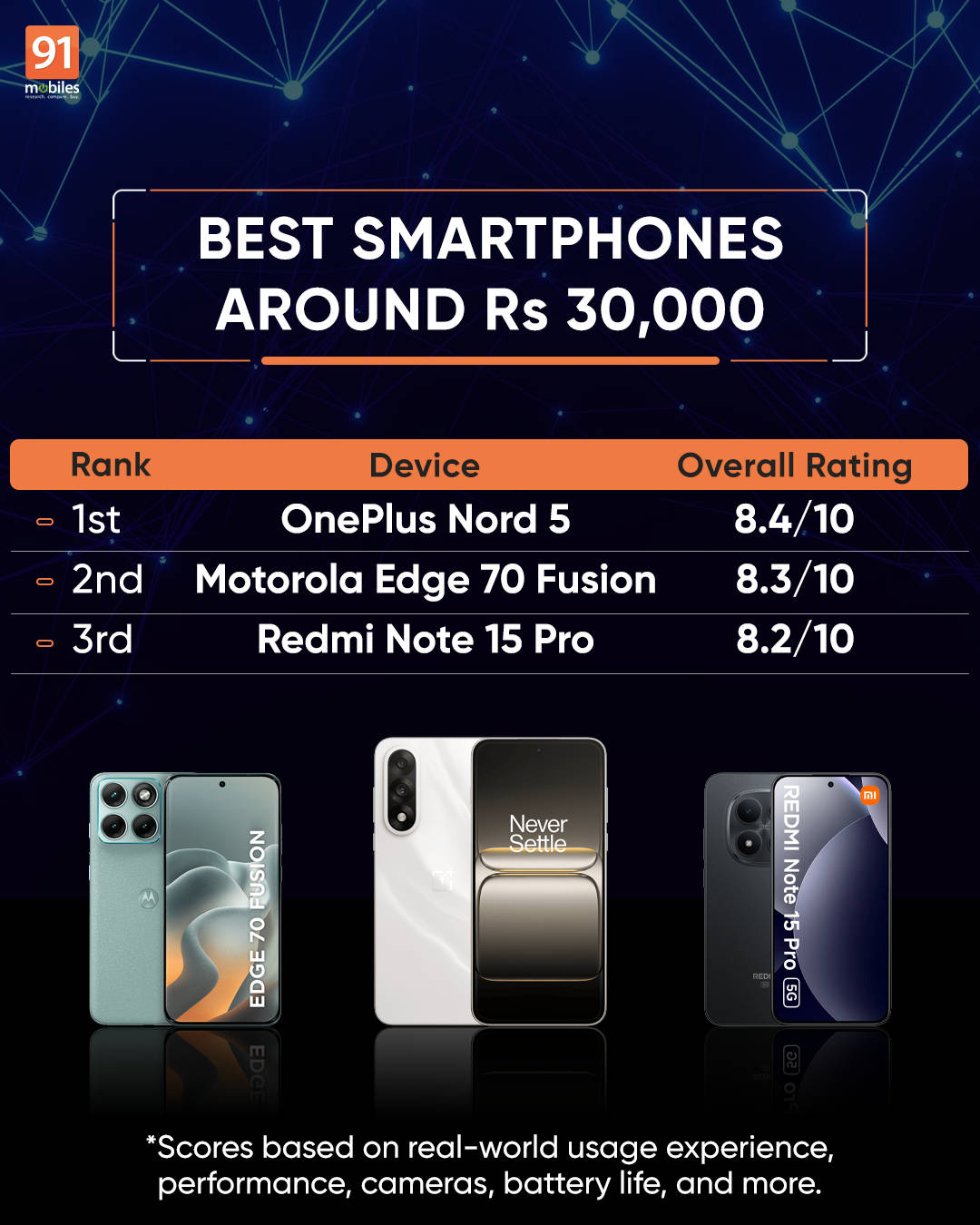
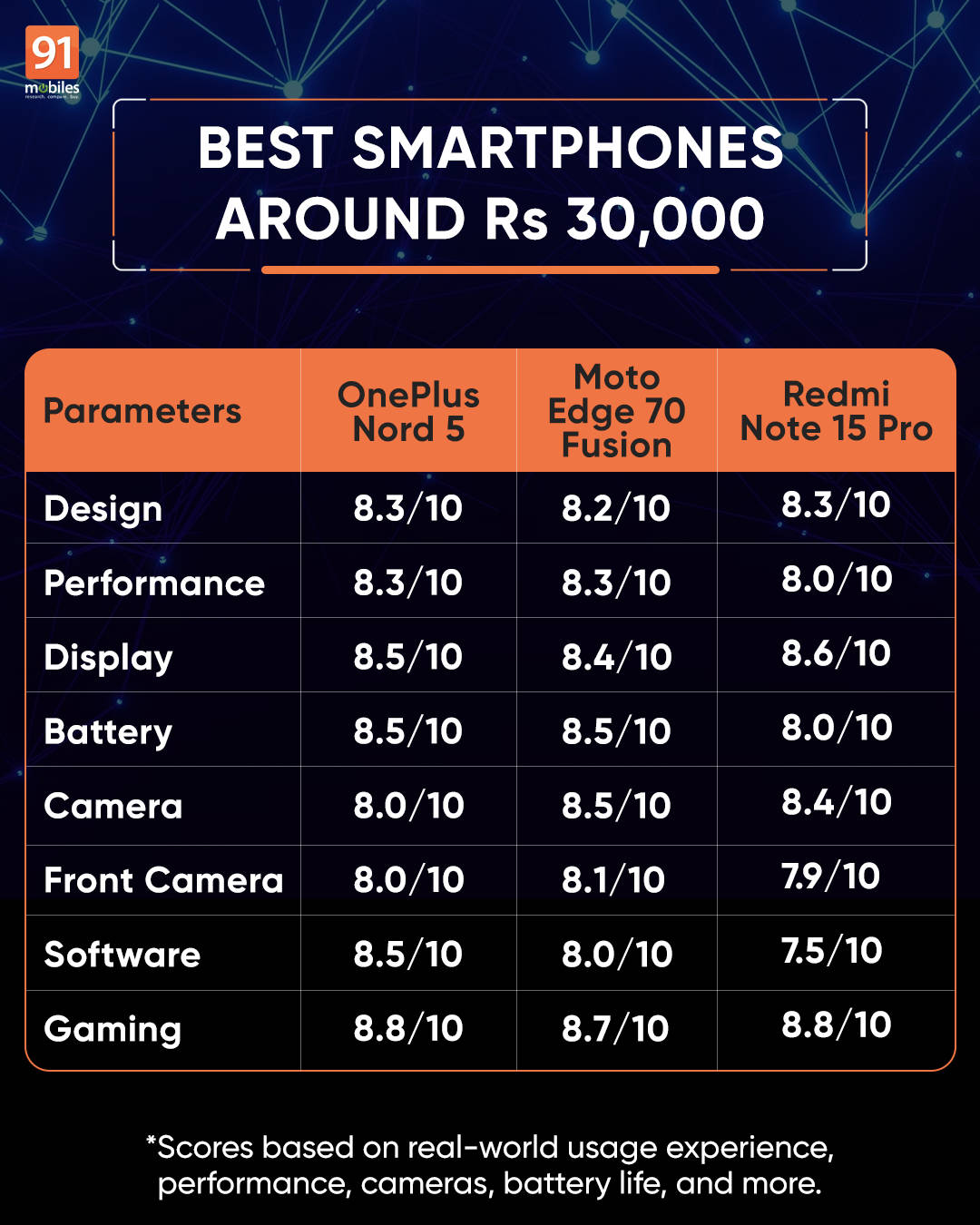
Runners-up: The Motorola Edge 70 Fusion (review) is the best all-rounder in this segment. It offers a slim design, a vibrant display, capable cameras, reliable battery life, and a clean software experience. The main drawback is that it is not built for heavy gaming or intensive tasks.
The Redmi Note 15 Pro (review) is our top pick for day-to-day use in this segment. It has an excellent display, great speakers, a 200MP camera for detailed landscape shots, and a long-lasting battery. It is also durable and comes with long software support. The main drawbacks are underwhelming performance and the absence of Android 16 out of the box.
Best smartphones Rs 40,000 – 60,000
Winner: The iQOO 15R (review) is the best performance and gaming phone in this segment. It pairs raw processing power with a massive battery, making it a great pick for heavy users. Some drawbacks here include the thermals, which could be better under prolonged stress, and the cameras’ output slightly unnatural colours. But if performance and battery life are your top priorities, nothing else in this segment beats it.
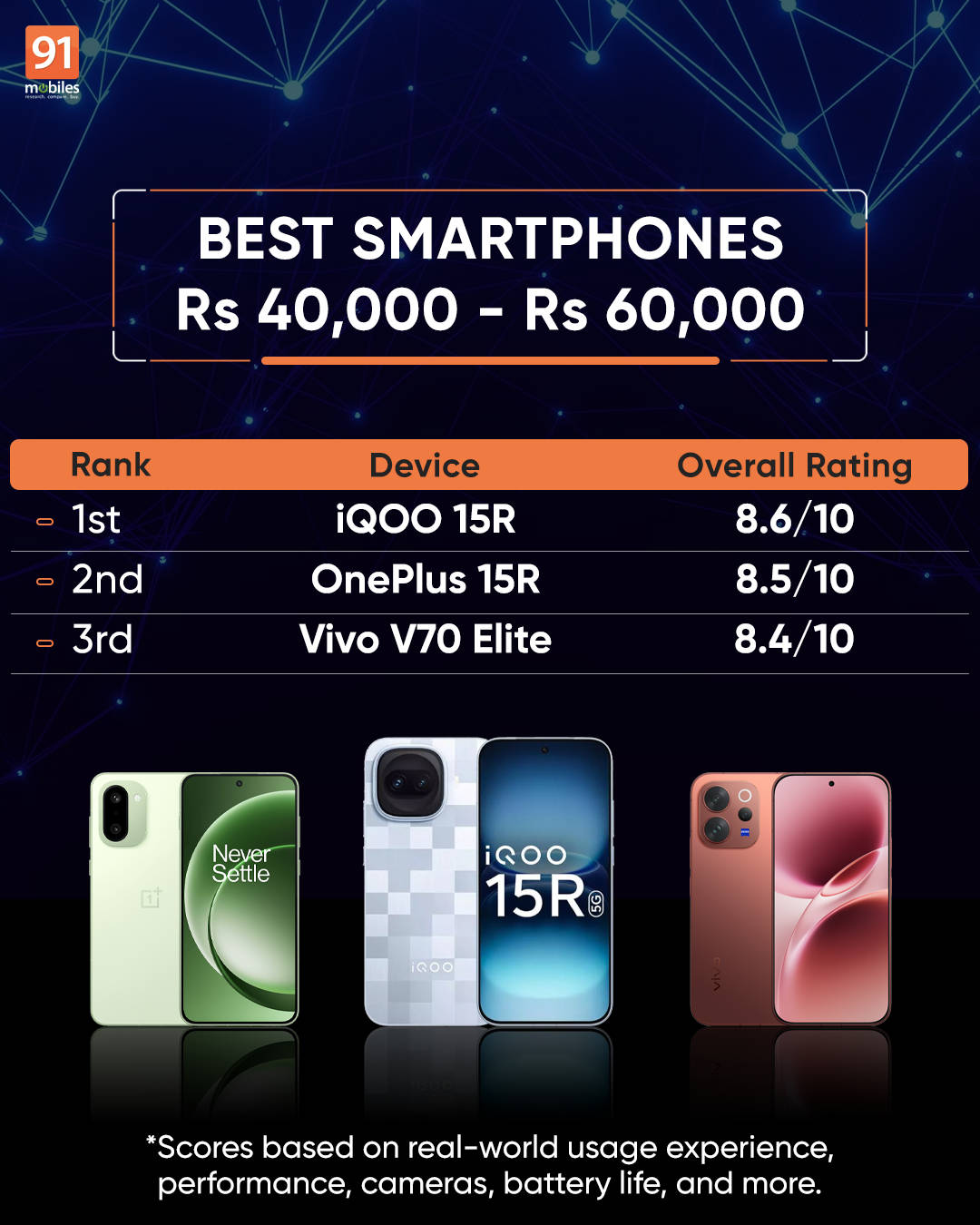
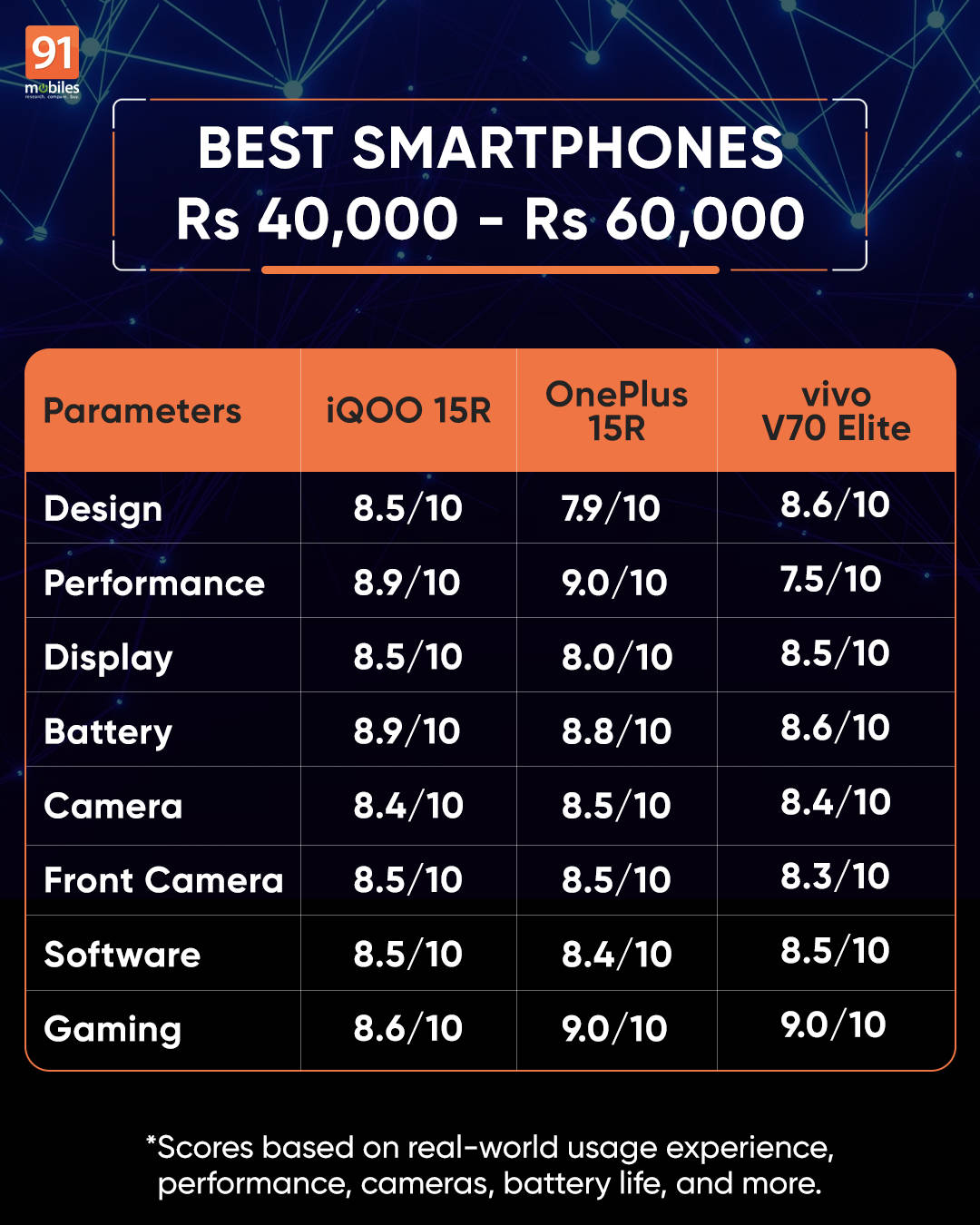
Runners-up: The OnePlus 15R (review) is a no-nonsense performance phone that punches well above its price. It delivers performance, battery life, and display quality that are comparable to the pricier OnePlus 15. The main drawbacks are the lack of wireless charging and no telephoto lens, so it is not the right pick if cameras are a priority.
The Vivo V70 Elite (review) is the best all-rounder in this segment. It offers strong battery life, capable cameras, decent performance, and a design that looks great without being flashy. It does not do anything dramatically new for the V-series, but it refines what already worked.
Best sub-flagship smartphones
Winner: The OnePlus 15 (review) is the top pick in this segment. It delivers blazing-fast performance, 165fps gaming support, stellar battery life, and fast charging, all wrapped in a clean design. The cameras fall behind what OPPO, Xiaomi, and Vivo offer at this price, and the new design may not be for everyone. But as an overall package, it is hard to beat.
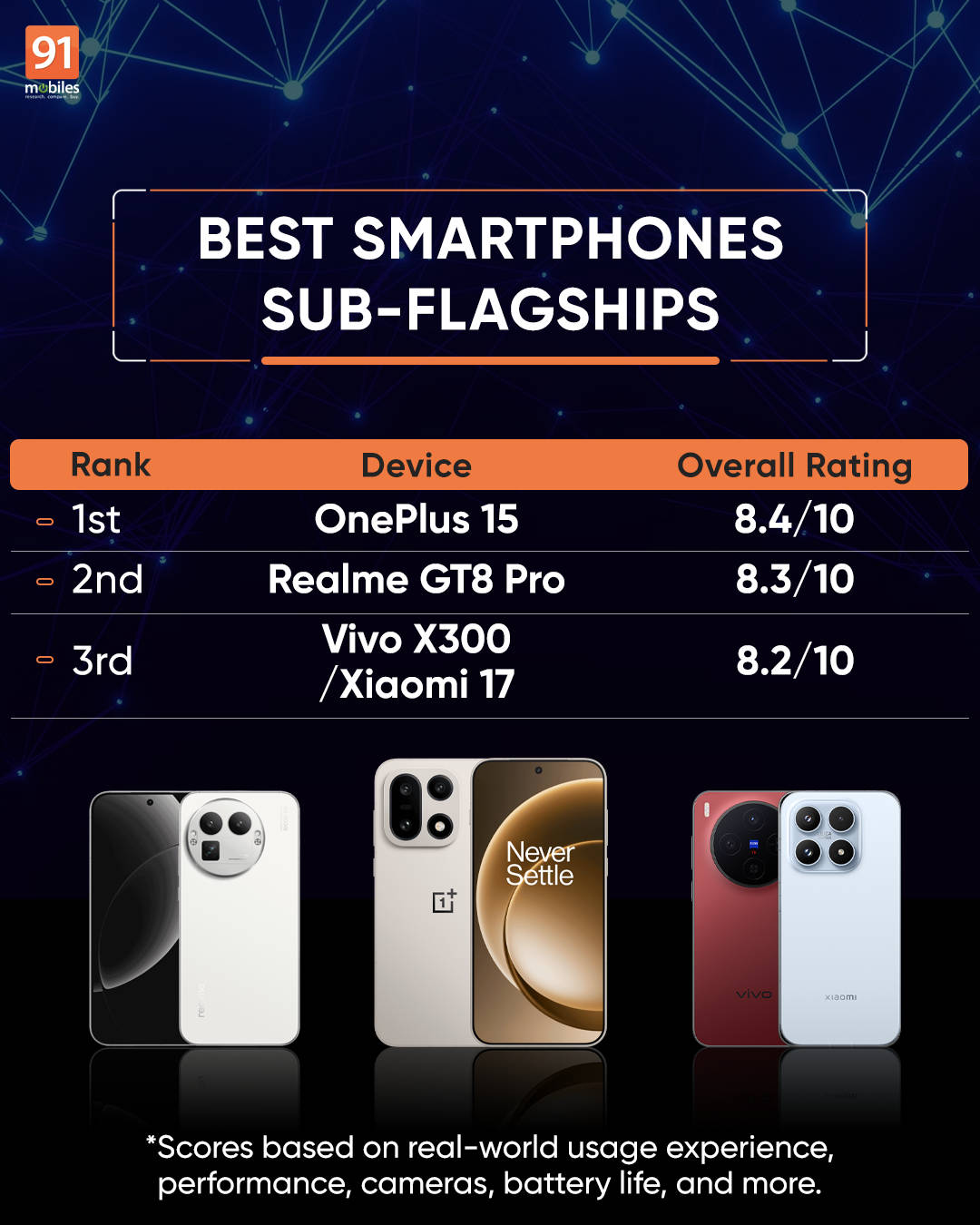
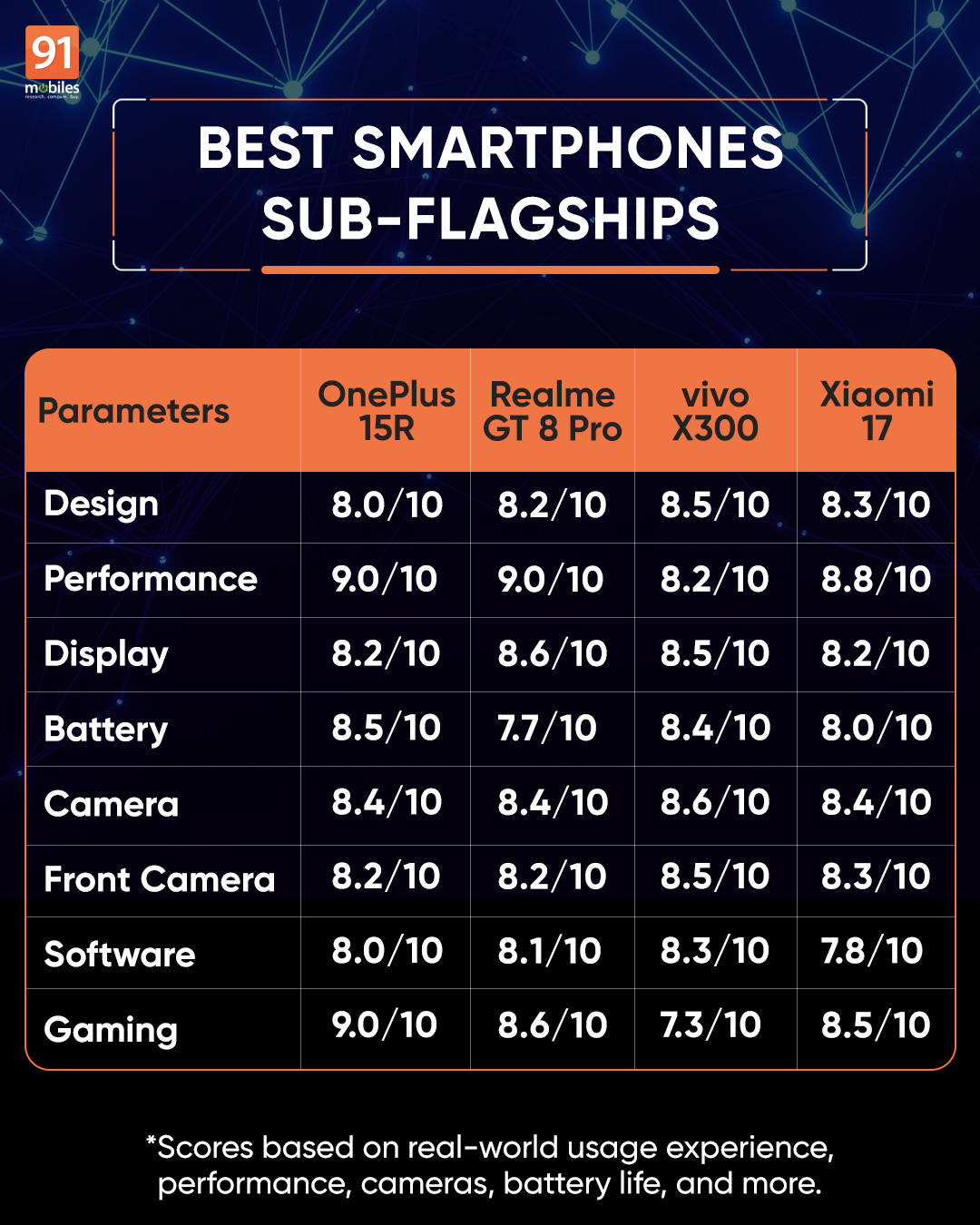
Runners-up: The Realme GT 8 Pro (review) is one of the best picks for users who want a good combination of both cameras and performance. The unique design, an excellent 200MP telephoto lens, and the Ricoh shooting modes add a creative edge to the camera system. It also has a sharp 2K display and a pretty durable build quality. The main drawbacks are its disappointing battery life and an inconsistent primary camera.
Tied at third spot are the Vivo X300 and Xiaomi 17, both of which are excellent compact smartphones. The Vivo X300 (review) is the best camera phone in the entire segment, with great low-light performance, premium design, and dependable battery life. The weak point is its speakers and low-light portrait shots.
The Xiaomi 17 (review) is a well-rounded lifestyle phone with impressive cameras, a great display, and capable performance. The telephoto zoom range is modest compared to rivals, though, and its price is quite high for what it offers.
Best Flagship smartphones
Winner: This particular segment is extremely hard to rank since all these phones are excellent in their own right and have very little to critique. Even so, we believe the Samsung Galaxy S26 Ultra (review) is the most complete flagship you can buy right now. It brings some useful upgrades over its predecessor, with the Privacy Display being the standout addition. New AI features, Horizon Lock, faster charging, capable cameras, smooth performance, good battery life, and the S Pen all come together to make this a well-rounded package.
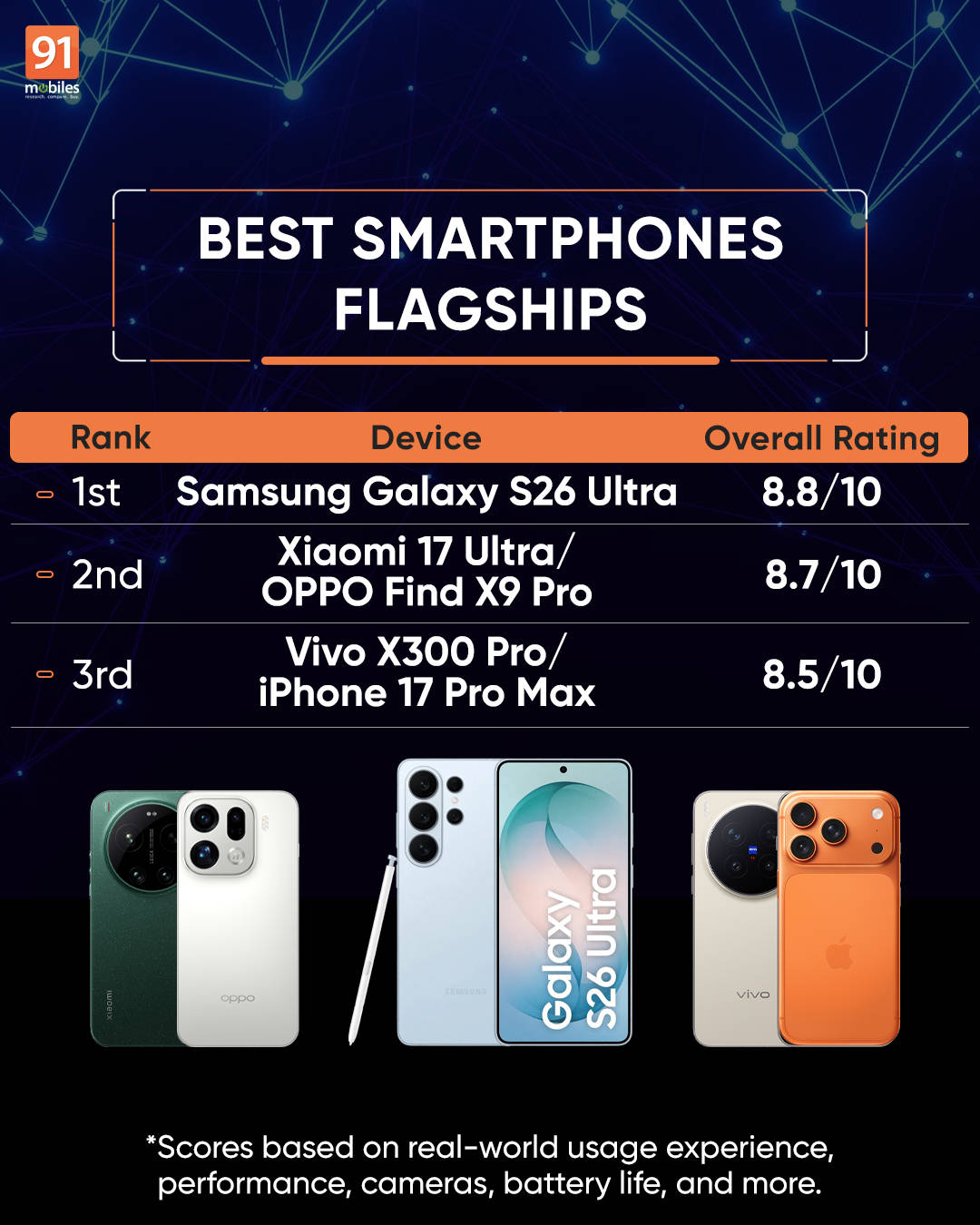
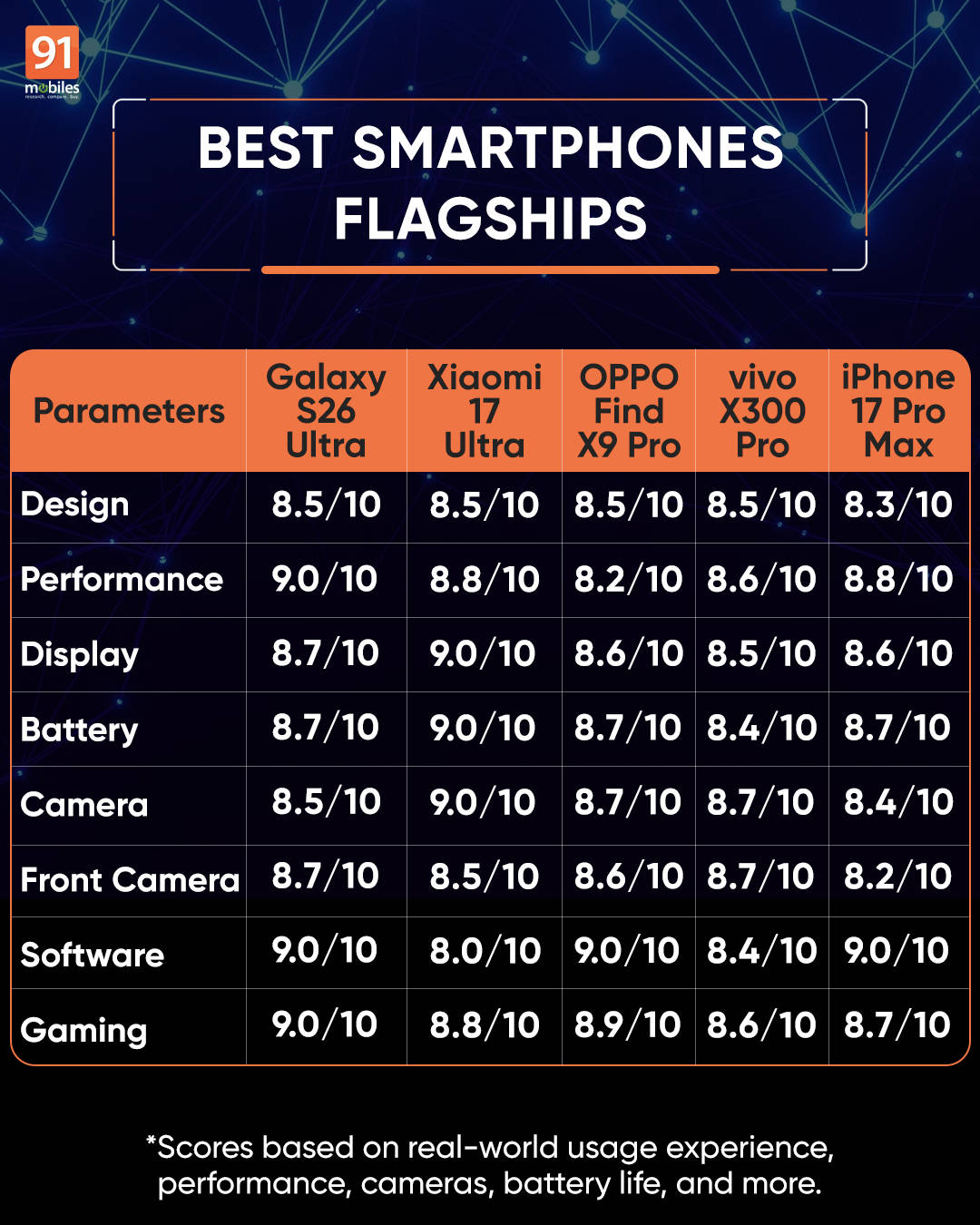
Runners-up: Tied at second are the Xiaomi 17 Ultra and OPPO Find X9 Pro. The Xiaomi 17 Ultra (review) is a camera-first flagship that truly delivers on that promise, thanks to its 1-inch sensor, continuous-zoom telephoto, and LOFIC technology. The rest of the package is pretty impressive as well, with a large AMOLED display, fast Snapdragon 8 Elite Gen 5 performance, and excellent battery life.
The OPPO Find X9 Pro (review) takes a more balanced approach and delivers on all the fundamentals, offering great performance, class-leading battery life, a superb display, and a consistently great camera system. Some drawbacks here include some focusing issues, limited AI features, and a little bloatware.
Tied at third spot are the Vivo X300 Pro and iPhone 17 Pro Max. The Vivo X300 Pro (review) is one of the best camera phones in this segment and feels more like a complete flagship than ever before. It delivers a versatile camera system, strong performance powered by the Dimensity 9500, much-improved software, and excellent battery life with fast charging.
The iPhone 17 Pro Max (review) is Apple’s most capable phone to date and brings good upgrades across almost every area, including a new design, a better telephoto camera, an improved front camera, faster charging, and longer battery life. This makes it a great choice for users upgrading from older Pro series iPhones.