Top 5 phones around Rs 30,000 worth considering in April 2026


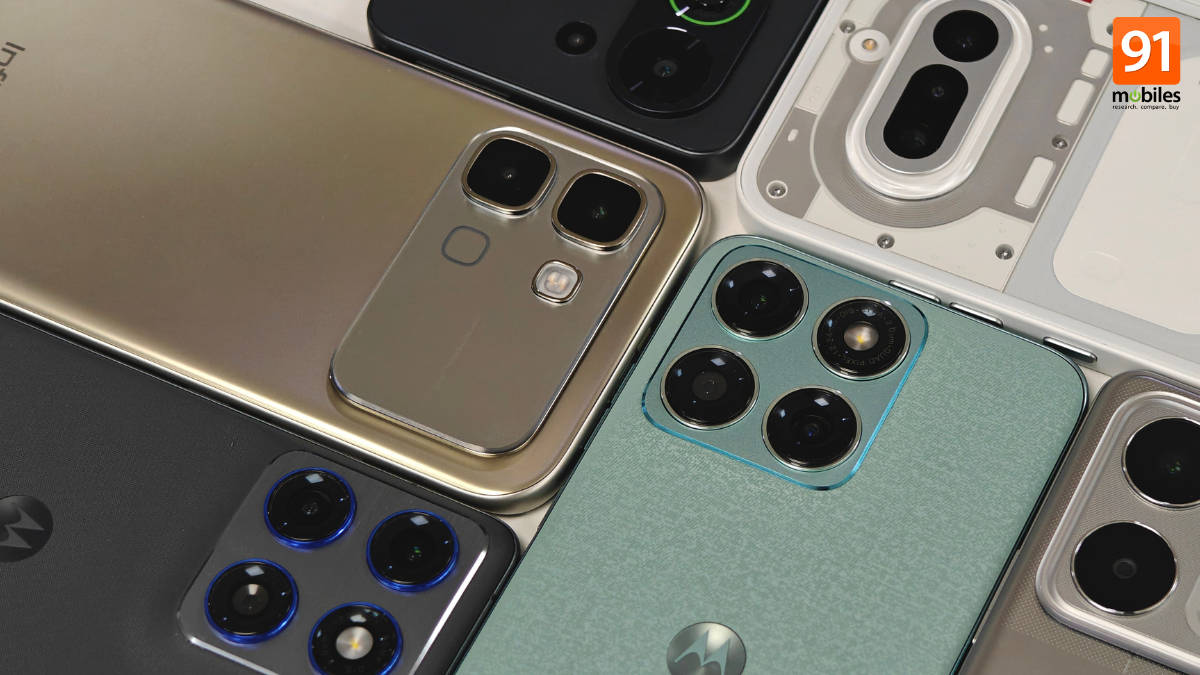
Three months into 2026, and we’ve already seen a handful of new smartphone releases under Rs 30,000. Even though the value proposition of smartphones has seen a radical shift across the industry due to price hikes in memory and chipsets, certain brands have adopted balanced approaches. This resulted in the launch of smartphones such as the Motorola Edge 70 Fusion, Motorola Edge 70, and the Nothing Phone (4a), which excel in certain aspects and are targeted at users with specific needs and priorities.
Furthermore, several smartphones launched under Rs 30,000 last year continue to offer great value, making them worthwhile considerations even in April 2026 and beyond. On that, here are our top smartphone picks under Rs 30,000 you can go for this month.
Note: This list is based on our in-house reviews and benchmark tests conducted under a controlled environment. You can read all about our testing methodology here.
Table of Contents
Best in day-to-day usage – Motorola Edge 70 Fusion
Launch price: Rs 26,999 (8+128GB)
Launched in early March, the Motorola Edge 70 Fusion builds upon the proposition set by the Edge 50 Fusion and Edge 60 Fusion. Among all the phones launched under Rs 30,000 this year, we feel the Moto Edge 70 Fusion is the most balanced offering that is capable of keeping up with most uses, unless a telephoto lens is on your priority list.


Powering up the Edge 70 Fusion is a 7,000mAh battery, packed inside a fairly slim 7.9mm body. The phone offered more than a day’s worth of battery endurance on a single charge during our review period. Even though Hello UI software isn’t as clean as it used to be, the interface feels smooth to operate and is a great pick for those who prefer a straightforward experience.
| Pros | Cons |
| Long-lasting battery life | Warms up quickly during gaming |
| Slim and lightweight design | Macro photography could be improved |
| Reliable cameras | |
| Dependable performance |
Best in gaming – OPPO K13 Turbo
Launch price: Rs 27,999 (8+128GB)
The OPPO K13 Turbo (review) remains a solid option for mobile gamers who don’t want to shell out a large sum for a performance-focused smartphone. Running on the MediaTek Dimensity 8450 chipset, the OPPO K13 Turbo not only rules the benchmarks by scoring above 16 lakh on AnTuTu, but also performs well in games.
AnTuTu score


OPPO K13 Turbo 5G
MediaTek Dimensity 8450
1,649,304

Motorola Edge 70 Fusion
Qualcomm Snapdragon 7s Gen 4
1,149,292

realme P4 Power
MediaTek Dimensity 7400 Ultra
1,047,842
AnTuTu assesses a smartphone's CPU, GPU, memory, and overall user experience (higher is better)
In our BGMI test, the OPPO K13 Turbo delivered 115FPS on average during an hour of gameplay. Furthermore, after playing BGMI and CODM for 1.5 hours straight, the average temperature increase was only 2.5 degrees Celsius, thanks to the built-in active cooling fan, which kept temperatures in check during long gaming sessions.
Here’s how the OPPO K13 Turbo compares to its rivals under Rs 30,000 after running BGMI for 30 minutes straight in ‘HDR + Ultra’ graphical setting:
| Average FPS (higher the better) | Temperature rise (°C) (lower the better) | |
| OPPO K13 Turbo | 39.3 | 2.8 |
| Motorola Edge 70 Fusion | 39.9 | 5.4 |
| Infinix GT 30 Pro | 37.7 | 9.5 |
Despite many smartphones seeing price hikes over the last couple of months, the OPPO K13 Turbo went down to Rs 23,799, making it an excellent choice for performance enthusiasts and even regular users who don’t want the best-in-class camera capabilities. This is simply because although the K13 Turbo can capture decent-looking shots in daylight, it may struggle in low light due to its small primary camera sensor.
| Pros | Cons |
| Top-tier performance | Average cameras |
| Tall, vibrant AMOLED display | Short-term software updates |
| Built-in fan keeps the phone cool | |
| Good battery life |
Best in battery – Realme P4 Power
Launch price: Rs 26,999 (8+128GB)
The Realme P4 Power (review) arguably offers the highest battery endurance, not just in the sub-Rs 30,000 segment but across price ranges. Rocking a giant 10,001mAh battery, the smartphone managed to clock over 21 hours in our in-house PCMark battery-drain test, the highest we’ve achieved so far.
PCMark Battery score (in hours)
realme P4 Power
10001 mAh
21.1
Motorola Edge 70 Fusion
7000 mAh
17.6

OnePlus Nord CE 5 5G
7100 mAh
16.5

Tecno Pova Curve 2
8000 mAh
15.2
PCMark battery test measures phone battery life from 100% to 20% (higher is better)
These numbers also translate to excellent battery backup in real-world use. During my week with the Realme P4 Power, the device comfortably delivered about 15 hours of screen time on a full charge during one battery run. With 80W charging support, it takes just 80 minutes to power up from 20 to 100 percent.


All that said, if a 219g weight, a chunky build, and the lack of a stereo speaker setup are manageable for you, the P4 Power stands tall as a reliable option, not just for its impressive battery endurance but also for a well-rounded experience. While its cameras may not be the best in its class, the 6.7-inch 1.5K AMOLED display offers vibrant colours, the software is snappy, and the Dimensity 7400 Ultra SoC handles daily tasks.
Alternative option: OnePlus Nord CE 5
Last year’s OnePlus Nord CE 5 is also a decent option with a 7,100mAh battery and better performance numbers thanks to the more capable MediaTek Dimensity 8350 Apex chipset. It achieved a runtime of 16 hours and 30 minutes in our PCMark battery drain test, indicating strong endurance. However, just like the Realme P4 Power, it omits stereo speakers.
| Pros | Cons |
| Long battery life | Single bottom speaker |
| Vibrant and immersive display | Slightly bulky |
| Reliable performance | |
| Durable design |
Best in-hand ergonomics – Motorola Edge 70
Launch price: Rs 29,999 (8+256GB)
After Samsung, Apple, and Tecno, Motorola also entered the slim smartphone segment with the Motorola Edge 70 (review). At just 5.99mm thin, the Edge 70 is 0.3mm and 0.1mm thicker than the iPhone Air and Samsung Galaxy S25 Edge, respectively. Furthermore, it weighs just 159g, making it the lightest smartphone to launch under Rs 30,000.
Despite the slim frame, Motorola hasn’t compromised on durability, as the Edge 70 features an aluminium frame and a silicone back with a fabric-like texture that offers good grip and resists smudges and fingerprints. Apart from that, IP68 and IP69 ratings, along with MIL-STD-810 certification, further enhance its durability. If the slim form factor appeals to you, the Edge 70’s in-hand ergonomics won’t let you down, especially if you’re looking for a standout design in a sea of boxy, chunky phones.
| Phones | Weight | Thickness |
| Motorola Edge 70 | 159g | 5.99mm |
| Redmi Note 15 Pro | 210.6g | 7.78mm |
| Nothing Phone (4a) | 210g | 7.95mm |
| Infinix Note Edge | 190g | 7.2mm |
As for the other key aspects, the Edge 70 is currently the most affordable Snapdragon 7 Gen 4-powered smartphone you can get, offering respectable performance for daily use and gaming. However, while it includes a 50MP ultrawide and a 50MP primary camera, the lack of a telephoto may leave photographers wanting more at its Rs 29,999 price.
| Pros | Cons |
| Exceptionally slim and lightweight | Occasionally choppy videos |
| Satisfactory cameras | Poor speakers |
| One day battery life | |
| Decent performance |
Alternative option: Infinix Note Edge
After the Moto Edge 70, the Infinix Note Edge impressed us the most with its sleek and lightweight design. Its 190g weight paired with a 7.2mm side profile ensures a comfortable grip and in-hand feel, especially if you’re into content consumption and use the phone for hours on a stretch.
Best in cameras – Nothing Phone (4a)
Launch price: Rs 31,999 (8+128GB)


Featuring a 50MP 1/2.75-inch JN5 telephoto lens with 3.5x optical zoom (80mm), the Phone (4a) delivers accurate results, with true-to-life colours, good separation of subjects from the background, and a natural-looking bokeh effect, along with a satisfactory level of details for the price. The 50MP primary sensor also delivers natural tones, and images look good at a glance, while the 8MP ultrawide tends to boost contrast and saturation for an appealing look.
Here’s a side-by-side comparison of portraits taken with the telephoto lens on the Nothing Phone (4a) versus the Moto Edge 70:
Nothing Phone (4a)
Motorola Edge 70
Since the Moto Edge 70 completely skips a telephoto lens, it utilises its main camera to capture portrait mode images. As a result, the Phone (4a) outshines it by delivering accurate skin tones, excellent edge detection, and noticeably better detail retention than the Motorola Edge 70. The subject separation looks cleaner and more refined, too, on Nothing Phone (4a).
| Pros | Cons |
| New Glyph Bar is useful & attractive | No NFC support |
| Bright, punchy display | Selfie camera needs improvement |
| Capable telephoto camera | |
| Clean, bloatware-free software |
Alternative options:
Nothing Phone (3a) Pro: Currently selling at Rs 29,999 on Flipkart, the Nothing Phone (3a) Pro remains the closest alternative to the Phone (4a) for its similar versatile camera setup. In fact, thanks to the 50MP 1/2-inch Sony LYT600 square periscope lens, it offers true macro capabilities with a minimum focus distance of 15cm, resulting in sharp close-up images.
Vivo T4 Pro: While the Vivo T4 Pro lacks an ultrawide, the 50MP primary camera and 50MP telephoto with 3x optical zoom combo present the phone as a suitable phone for those who prioritise capturing portrait and landscape images. Furthermore, the 100x AI zoom can output some usable results for everyday photography even though the shots may look slightly artificial, as noted in our dedicated camera review.