Vivo X500 Pro Max safari diary: what a phone, two telephoto extenders and a jeep can capture


Over the past few generations, Vivo’s X series has only gotten better at still photography, to the point where you can pick up the phone, point, shoot and almost certainly come away with a great photo. With the upcoming X500 Pro Max, Vivo hasn’t stopped at improving stills. It has given video equal, if not more, attention. Both benefit from a new Telephoto AF Tracking feature, which is designed to keep fast-moving subjects crisp whether you’re taking a photo or recording a clip.
And what better place to try that than on safari? Vivo took me to Kenya to experience the X500 Pro Max’s cameras firsthand, which meant zebras, rhinos, elephants and plenty of birds that weren’t going to sit still for me. Here’s what I was able to capture with the X500 Pro Max, a couple of telephoto extenders, and a jeep.


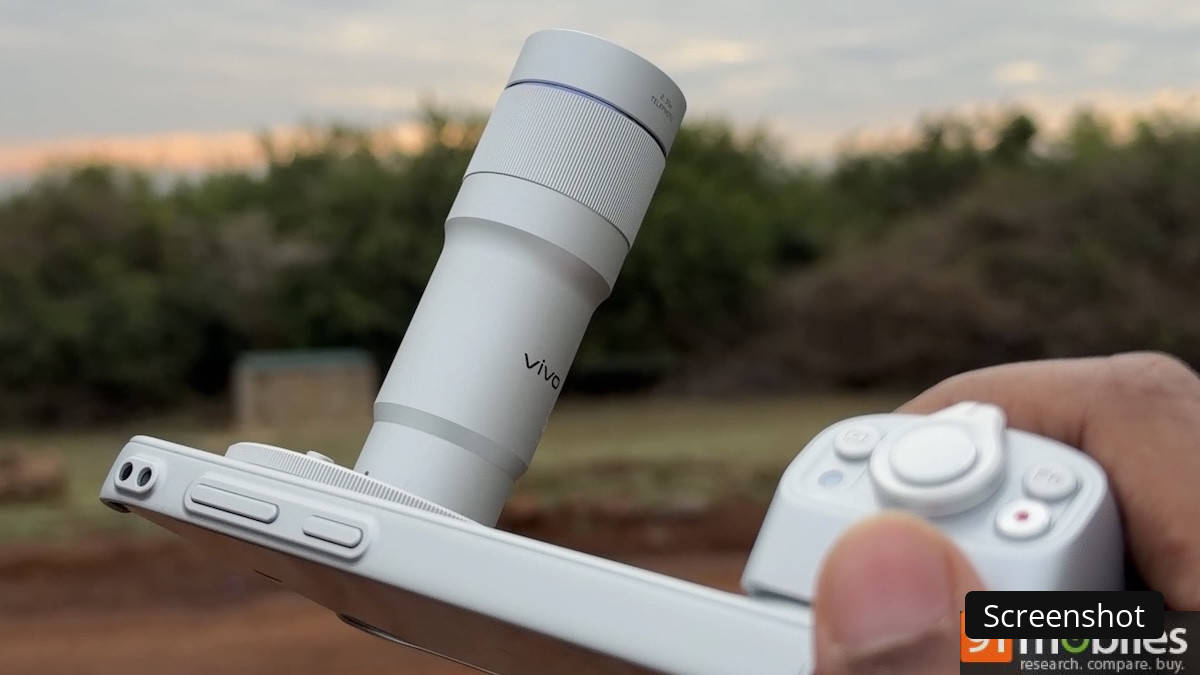
I carried both of Vivo’s telephoto extenders to Kenya, the 200mm and the 400mm. The phone’s telephoto camera has a 200MP sensor with an 85mm equivalent focal length, and the extenders push that reach to 200mm and 400mm, respectively. The 200mm lens is the ZEISS Telephoto Extender Gen 2 and the 400mm is called the Gen 2 Ultra. The 400mm kit is 116mm long and weighs 248g, adding to the phone’s 225g. It’s big and heavy and can cause wrist fatigue, but it’s still way more convenient than carrying a professional tele lens, which I’ve seen some wildlife photographers carry. I’m not comparing the two, but Vivo’s tele lens is handier for casual photographers who want to capture the great outdoors once in a while.
In practice, I ended up using the 400mm far more often than the 200mm lens. The animals we spotted were at a considerable distance most of the time, and when you’re sitting in a jeep, you can’t exactly walk closer for a better angle. Most of the shots in this piece were taken from the jeep with the lens attached.

Table of Contents
Of Rhinos, giraffes, and a lioness, all at a distance
This is where the 400mm lens did most of the work. The animals we spotted were rarely anywhere near the jeep, and that’s exactly why the 400mm extender stayed attached for most of the trip.


Close enough to count the eyelashes
The 400mm lens also changes how you look at an animal. Instead of recording “a zebra”, you start noticing the pattern of stripes around its eye, and the way its eyelashes catch the light.

The same applies to the animals at the sanctuary. A rhino calf, with its wrinkled skin and a handler’s hand resting on its face, filled the frame in a way a wide shot never could. And a baby elephant being bottle-fed, with the milk dripping from its mouth, is the kind of moment that’s over in a second.
Telephoto AF Tracking, for birds that wouldn’t stay in the frame
Birds are usually the hardest subjects to photograph, because they’re small, nervous and constantly on the move. A helmeted guineafowl with its bright blue neck, a pair of Egyptian geese standing in the reeds and an ostrich peering over the bushes were all happy to stay put long enough for a few frames. Many others weren’t, and that’s where the Telephoto AF Tracking feature comes in.


That sounds like a feature built for birds in flight, so that’s what I pointed it at. I locked onto a large bird near the water, a small yellow bird darting across open ground, a zebra grazing close by and a giraffe standing against a cloudy sky. Below is a reel that shows the process and the result:
Zooming out, because the whole scene matters too
A tight shot of an animal only tells part of the story. It doesn’t show you what the place felt like, and I didn’t want my memory of Kenya to be a long series of close-ups. So, whenever I wanted the scene as a whole, I took the extender off and shot with the phone’s own cameras instead.
The first one that comes to mind is a group of zebras making their way along a small waterhole, with a safari jeep sitting far off in the background and a sky full of big, bright clouds. That’s what the scene looked like to my eyes, and it’s a very different picture from the zebra close-ups I took.


Another wide frame was a view over the Rift Valley, with a storm building on the horizon. It’s a landscape shot rather than a wildlife one, but it belongs in this story.

What the trip made clear
Wildlife photography is a good test for a phone camera because it takes away all the easy options. You can’t ask the animals to move closer, wait for better light or pose again. What you can do is change your reach, and that’s what the extenders did for me. The wide shots, taken without them, told me where I was. The close-ups, taken with them, showed me what I’d have missed.
The Vivo X500 Pro Max will officially launch in India on November 26. I’ll have a lot more to say about the phone’s cameras, performance and battery in my full review, where I’ll also see how it stacks up against other flagships. It would be wise to hold off on purchasing a new flasghip phone until we give our verdict on the X500 Pro Max and its camera capabilities.
Disclosure: The writer travelled to Kenya on Vivo India’s invitation

