Review Summary
Expert Rating
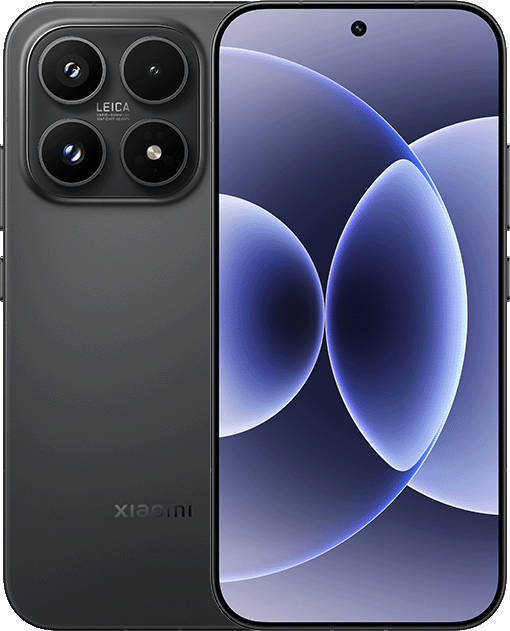
I got to try the Chinese variant of the Xiaomi 17 for a couple of weeks back in December 2025, and the Indian variant is now here. In many ways, it is the same phone, but there are some differences worth addressing. This review picks up where I left off and examines what the Xiaomi 17 offers in the Indian market.
Like most smartphones launched in 2026, the Xiaomi 17 has also seen a price hike of about Rs 25,000 compared to its predecessor, Xiaomi 15 (review). That is a pretty steep increase, and it raises a question about whether the upgrade is worth it and how it compares against key rivals at its new price, starting at Rs 89,999. Here’s my take on it:
Table of Contents
A slim, compact design
Xiaomi’s number series has always had a special place for me, mostly because of the form factor, and the Indian variant of the Xiaomi 17 does not change that. Not much has changed from the Chinese unit I used back in December. It is still 8.06mm slim and weighs 191 grams, though it feels noticeably lighter in the hand.
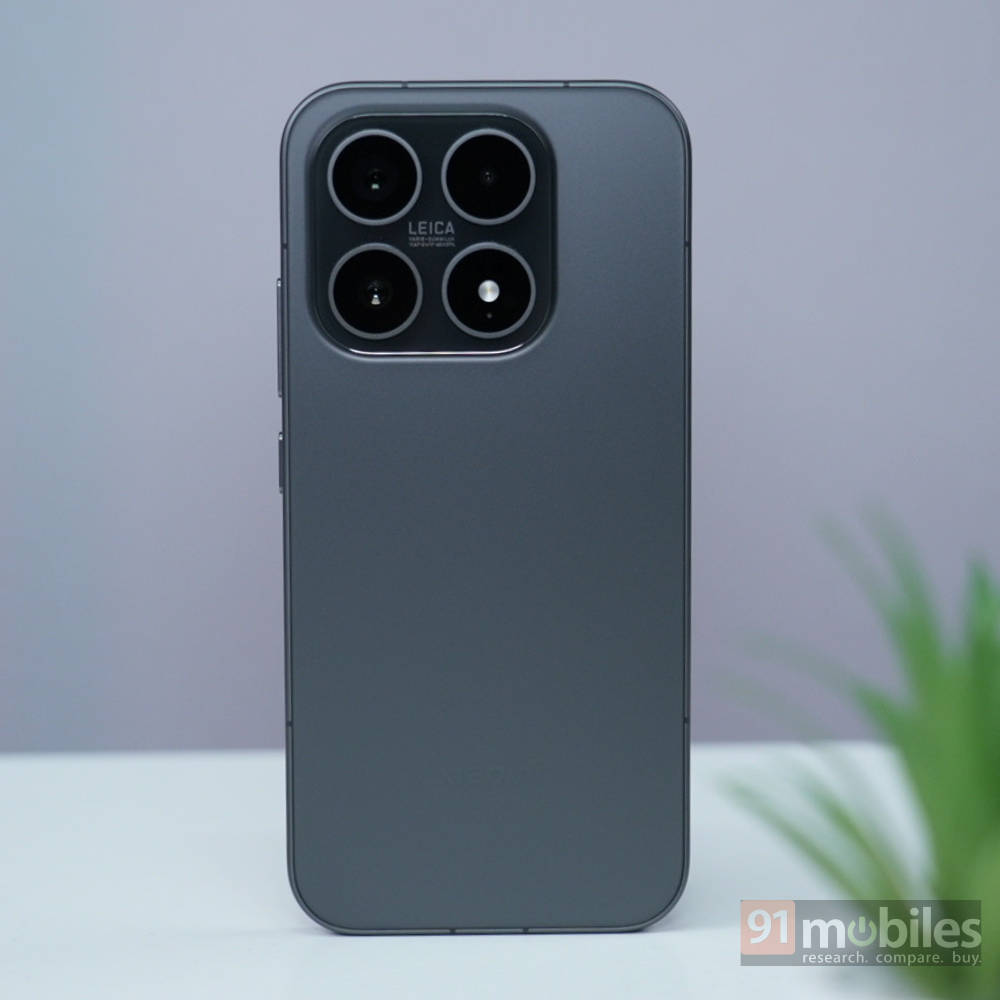
The design remains clean and minimal. There is no camera button or extra side key on the frame, just the volume rocker and power button on the right edge. The matte black back looks classy in a simple way and resists fingerprints and smudges well. The front is protected by Xiaomi’s Dragon Crystal Glass, and you get an IP68 rating for water resistance. Most flagship rivals now offer IP69, so Xiaomi is a step behind there.
| Smartphone | Thickness | Weight | IP Rating |
| Xiaomi 17 | 8.06 mm | 191 grams | IP68 |
| vivo X300 | 7.95 mm | 190 grams | IP68 +IP69 |
| OPPO Find X9 | 8.0 mm | 203 grams | IP68 |
The in-display ultrasonic fingerprint sensor is just as quick as I remember it being on the Chinese unit. It unlocks instantly and works reliably even with wet fingers. I have a soft spot for compact flagships, and the Xiaomi 17 continues to tick all the right boxes for me.
Beautiful panel, beautiful sound
The Xiaomi 17 uses a 6.3-inch LTPO AMOLED panel with a 1.5K resolution, a 1-120Hz adaptive refresh rate, and a peak brightness of 3,500 nits. Xiaomi has carried over the same panel from last year with a slight brightness bump, and honestly, I have no complaints with that.
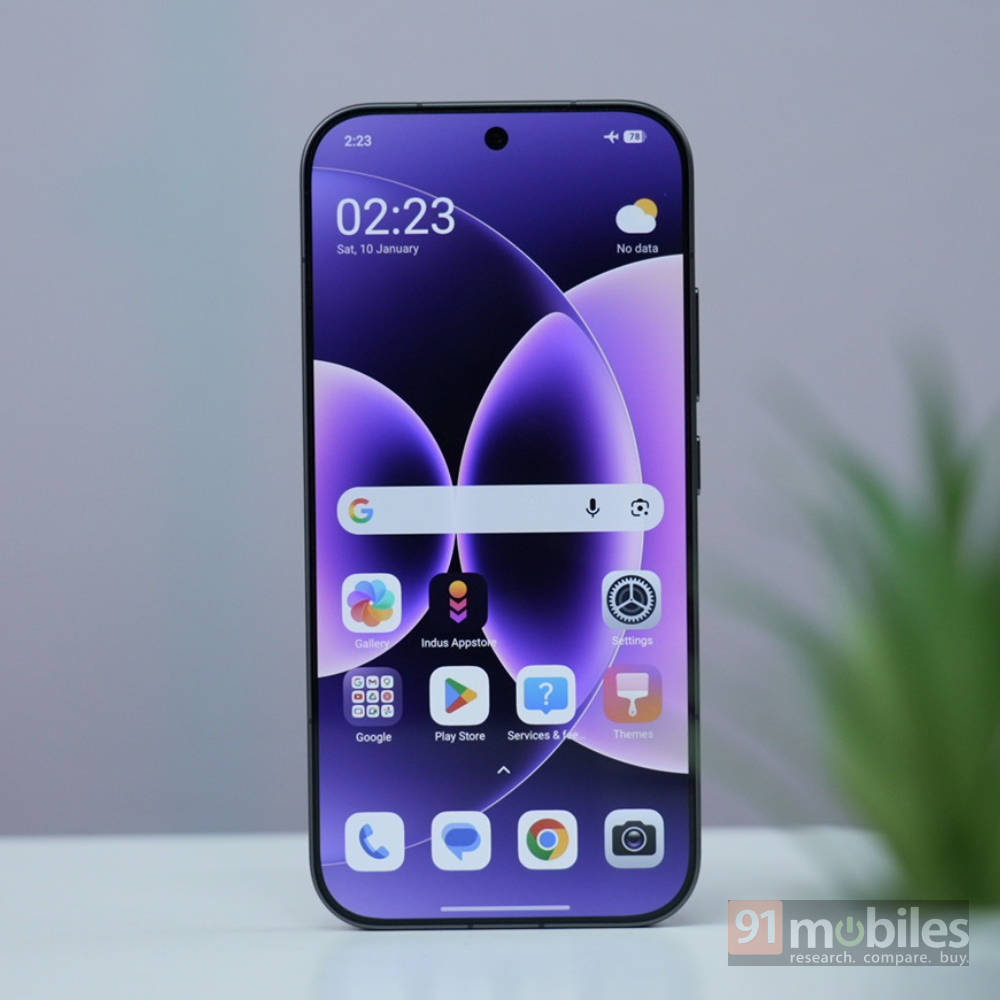
It is a sharp, vibrant display with great contrast, and 12-bit colour depth paired with a full DCI-P3 colour gamut makes colours look rich and accurate. Although in practice, the difference between a 12-bit and 10-bit panel is almost impossible to spot on a screen this size. In addition, you get support for display technologies like HDR10+ and Dolby Vision, which means content looks great whether you are streaming or watching locally.
The display is also covered by Xiaomi’s Shield Glass for protection, and it has multiple TÜV Rheinland certifications for low blue light, flicker-free output, and circadian friendliness, making extended use easy on the eyes.
| Smartphone | Display | Peak Brightness |
| Xiaomi 17 | 6.3 inches - OLED | 3500 nits |
| vivo X300 | 6.31 inches - AMOLED | 4500 nits |
| OPPO Find X9 | 6.59 inches - Flexible AMOLED | 3600 nits |
The stereo speaker setup is something I really love in Xiaomi phones. In terms of pure volume, it falls slightly short of rivals, but the soundstage more than compensates for that. The tones are rich, there is good sound separation, the low end has a satisfying thump, and there is no harshness at max volume. Overall, it is a crisp and full-bodied output that makes multimedia consumption very enjoyable.
A substantial battery with good endurance
The Xiaomi 17 packs a 6,330mAh cell despite its compact size. While it does not match the 7,000mAh battery in its Chinese counterpart, the phone easily lasts an entire day even with heavy use. It also supports 100W wired charging and 50W wireless charging, so topping it up is quick and easy. Going from 20 to 100 percent takes just 38 minutes, which is a solid result at this price point.




In our PCMark battery benchmark, the phone delivered over 16 hours of run-time, which only the OnePlus 15 manages to beat in this price bracket. During my time with the device, I averaged around 6 hours of screen-on time on regular days and close to 8 hours on heavier ones.
| Smartphone | Battery Capacity | Charging Support | Charging time (20% to 100% ) |
| Xiaomi 17 | 6330 mAh | 100W Hyper Charging v3.0 | 38m |
| vivo X300 | 6040 mAh | 90W Flash Charging | 47m |
| OPPO Find X9 | 7025 mAh | 80W Super VOOC Charging | 1h 11m |
| OnePlus 15 | 7300 mAh | 120W Super VOOC Charging | 30m |
The phone will last a full day without any trouble, and with the fast-charging speeds on offer, the battery is simply one less thing to think about on a day-to-day basis.
Impressive everyday performance
The Xiaomi 17 runs on the Snapdragon 8 Elite Gen 5, paired with 12GB of LPDDR5X RAM and up to 512GB of UFS 4.1 storage. On paper, the device has all the makings of a proper flagship performer, and in practice, it performs exactly as you would expect. App launches are smooth, multitasking is quick, and there are no major hiccups in regular social media, browsing, or photography use.
The Chinese variant I reviewed struggled with thermal management during gaming, but the Indian variant seems to have addressed that weakness. In over 1.5 hours of testing on BGMI and Call of Duty: Mobile, the phone’s average temperature increase was under 4 degrees Celsius, which is pretty impressive and puts it close to performance-focused flagships like the OnePlus 13 and iQOO 15.
In terms of frame rates, we consistently got over 110 FPS on CoD: Mobile and around 92 FPS on BGMI. They are not the best numbers on paper, but for a phone that is not positioned as a gaming device, that is a decent result for anyone who likes to game on the side.
I noticed slight heating problems with the Chinese unit, but during my time with this device, I have not encountered any such issues. That is a great improvement, and I’m happy to see it being implemented.
Decent software with some minor quirks
The Xiaomi 17 runs HyperOS 3 based on Android 16, and if you have used a HyperOS device before, you will feel right at home. There are no major design overhauls, just refreshed app icons and some tweaked animations, the kind of changes that are hard to notice at first glance.
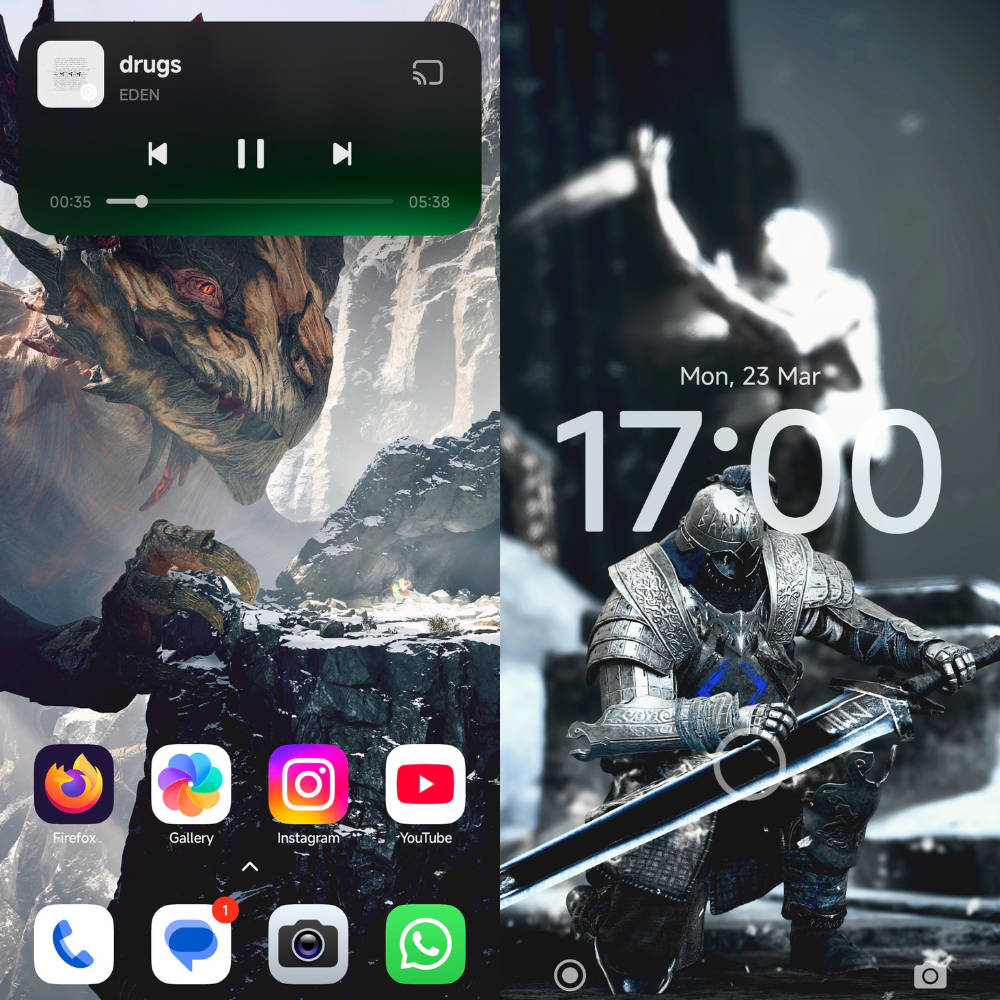
The biggest addition in this iteration is the Super Island, Xiaomi’s take on Apple’s Dynamic Island, which has steadily made its way across most Android skins at this point. I like the implementation here, particularly the gradient colour scheme that shifts around the panel as a song progresses. You also get depth effects in wallpapers now, which add another layer of customisation that I like.
Xiaomi also says they have improved background animations and app loading times, though I never had issues with either before, so it is hard for me to judge the improvement. What I did notice and appreciate was the improved interconnectivity with other Xiaomi devices.
| Smartphone | Pre-Installed Apps | Software Support |
| Xiaomi 17 | 47 | NA |
| OnePlus 15 | 53 | 4 Year OS Updates + 6 Year Security Updates |
| vivo X300 | 51 | 5 Years OS Updates + 7 Years Security Updates |
| OPPO Find X9 | 60 | 5 Year OS Updates + 6 Year Security Updates |
Testing it alongside the Xiaomi Pad 8, image edits carried over from the tablet to the phone with ease, file transfers were quick and convenient, and even taking calls on my phone from the tablet worked without any fuss. I have not tested this in depth yet, but if you own multiple Xiaomi devices, HyperOS 3 looks like it will make things a lot more seamless.
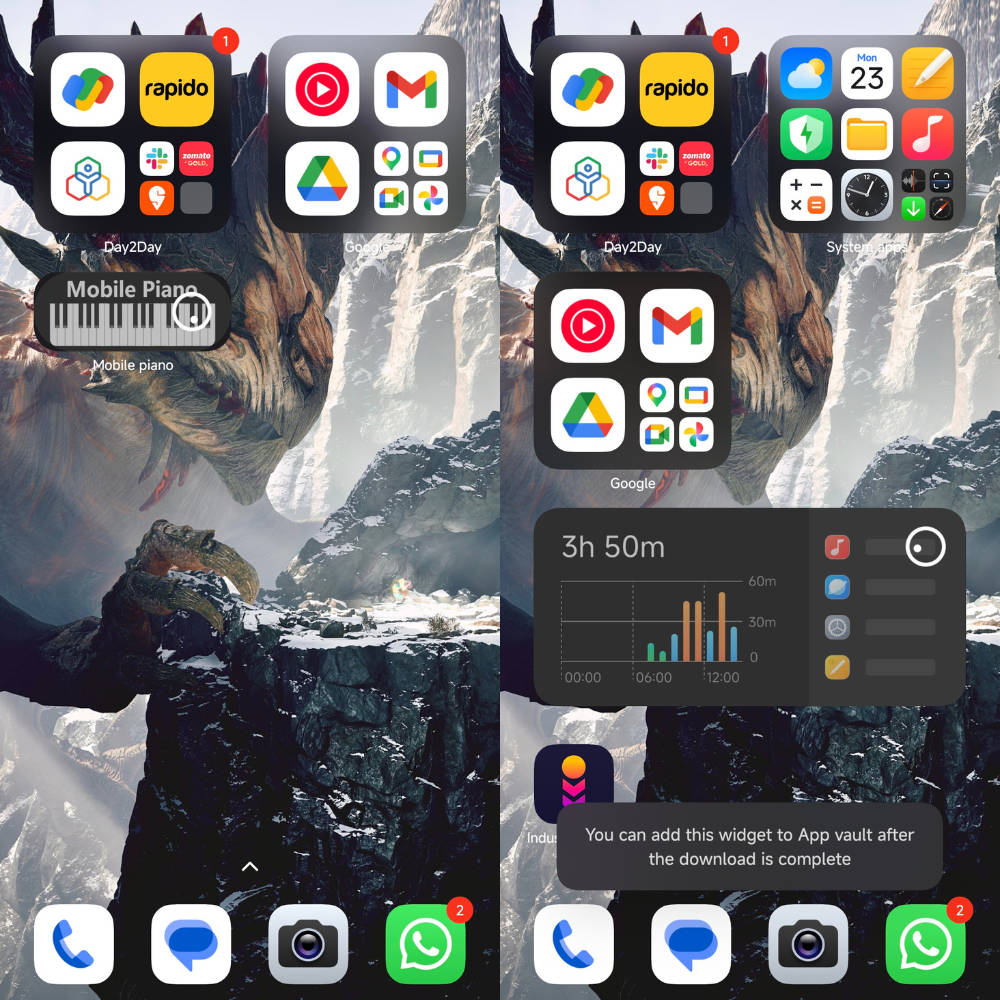
Turning to the negatives, there are a couple of issues I noticed while using the phone. Some native widgets either do not work or function improperly, even though Google and third-party app widgets work just fine.
I also ran into a minor bug where the volume bar stayed on the screen until I pressed the power button to turn the display off and back on. I could not replicate it, so it may well be a one-time thing. These are small software quirks that will most likely get sorted with future OTA updates, but on a flagship device, they do tend to stand out.
Exceptional cameras, particularly in low-light
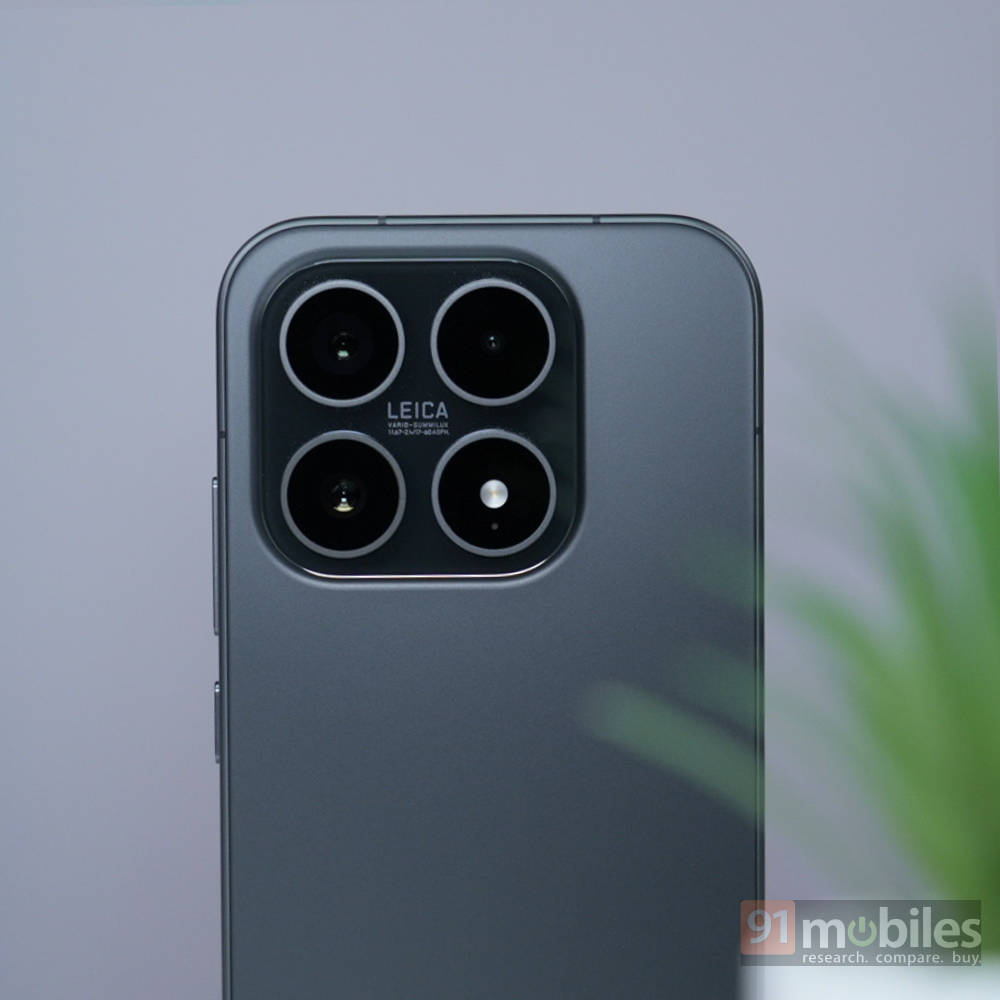
The Xiaomi 17 features a triple 50MP camera system with wide, telephoto, and ultrawide lenses, along with a 50MP selfie lens with autofocus.
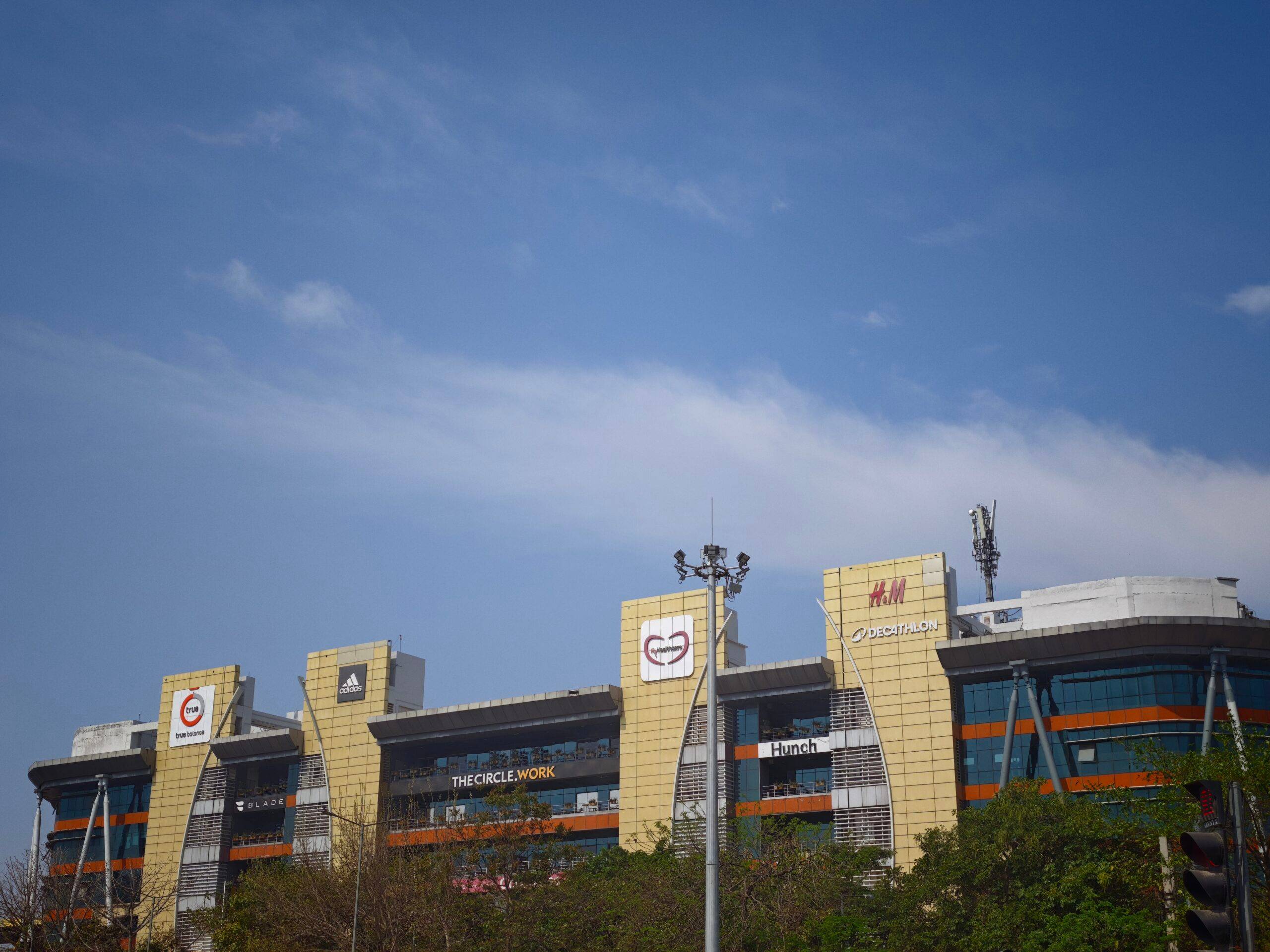
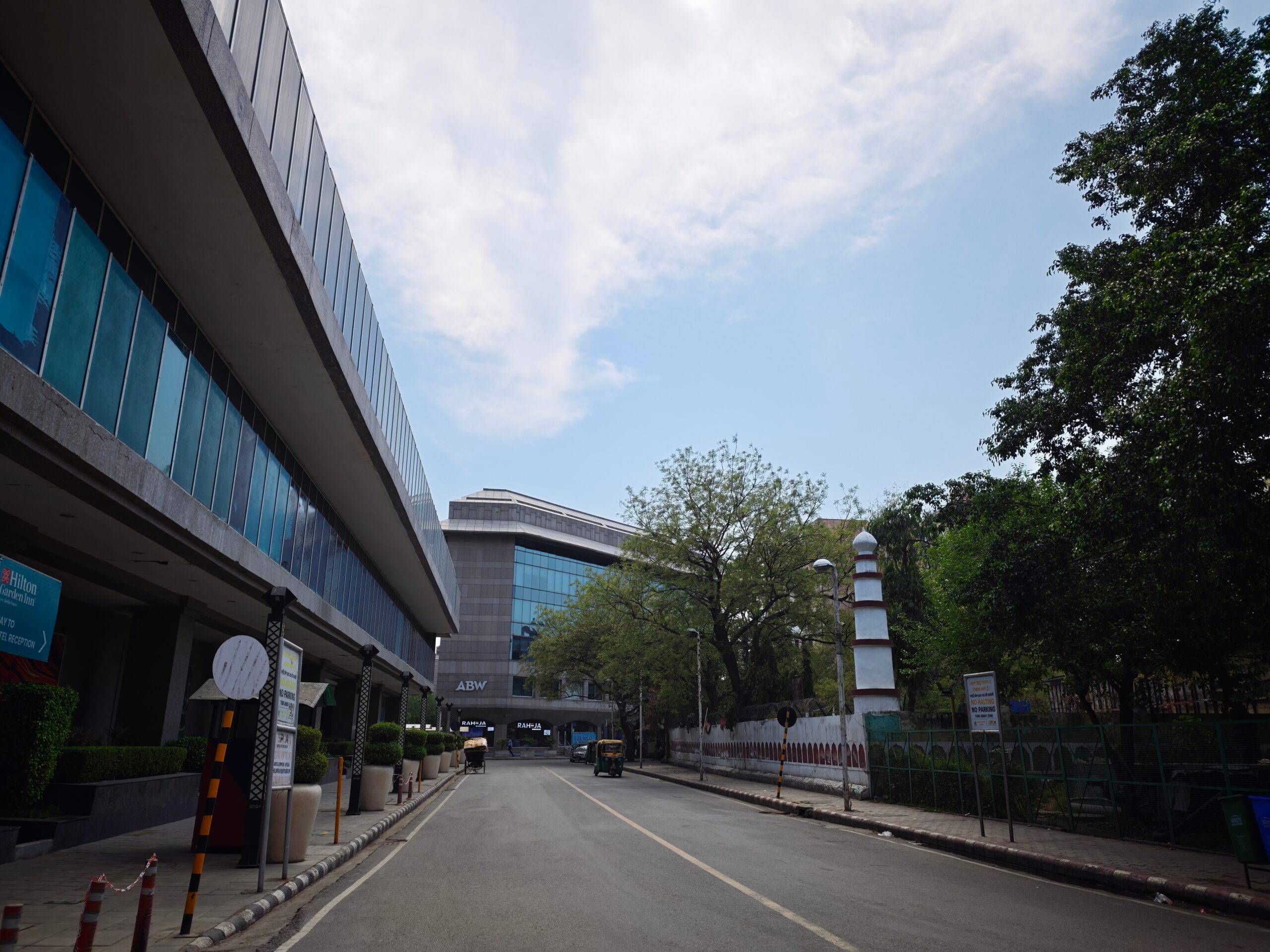
The phone’s daylight performance is excellent across the board, with a wide dynamic range, sharp detail, and colours that look great without feeling overly vibrant. The ultrawide keeps up well with the primary camera in terms of colour consistency, but it is the weakest lens here. The scenes can turn out quite soft when zoomed into the image, and edge detection isn’t always the best. The telephoto lens delivers excellent results, although the 2.6x optical zoom is on the shorter side compared to rivals that go well beyond that.








Low light is where the Leica tuning really shows, with realistic colours and well-preserved shadows, though facial details can turn a little soft in darker conditions. Leica colour science is my favourite when it comes to flagship camera partnerships. A large part of that is down to how Leica-tuned cameras handle low light, particularly in preserving darkness and shadows with a slight skew towards a contrasty output.
I compared the phone’s cameras to the OPPO Find X9 (review), another capable camera phone, and here’s how it went.
Daylight
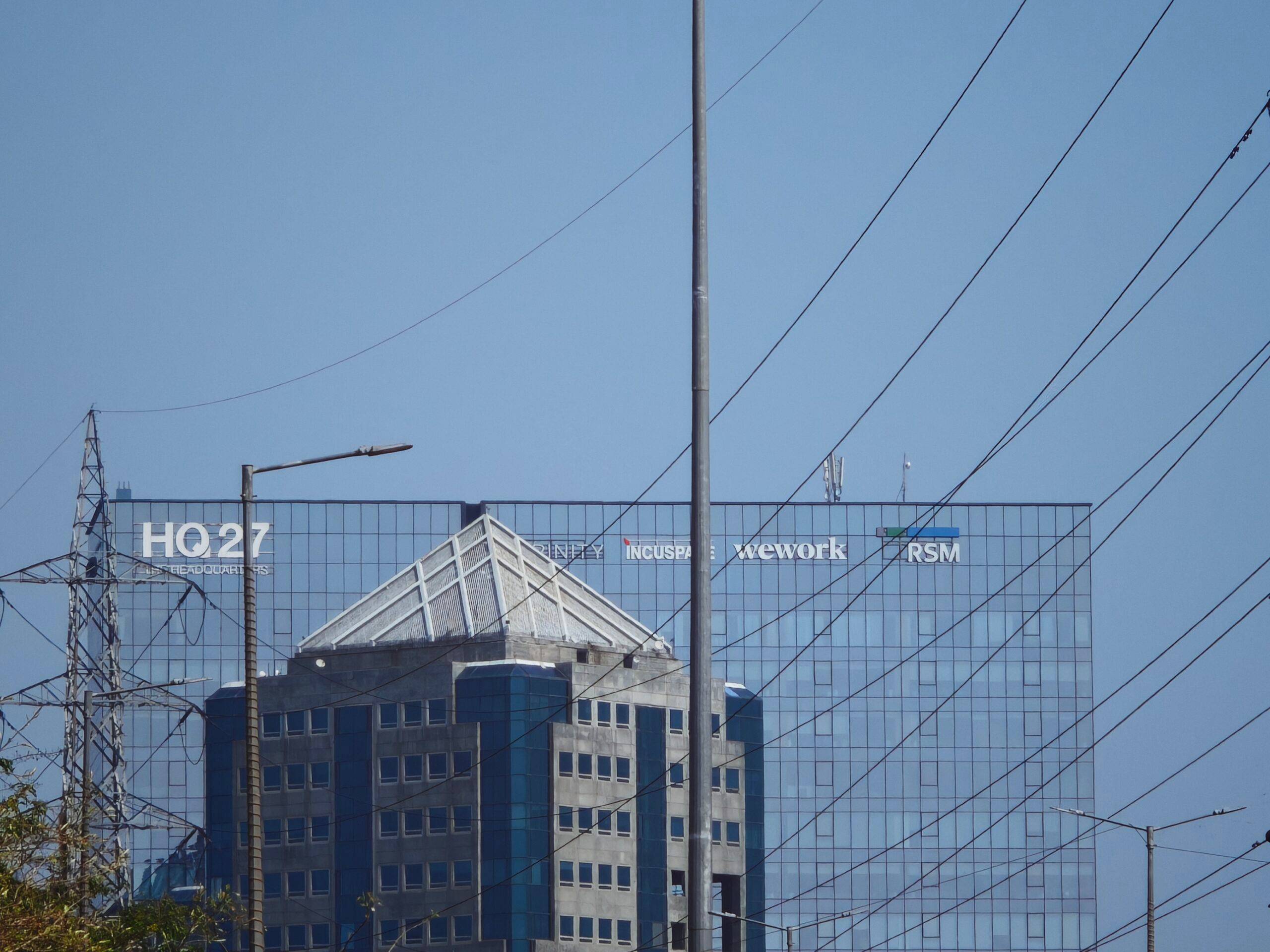
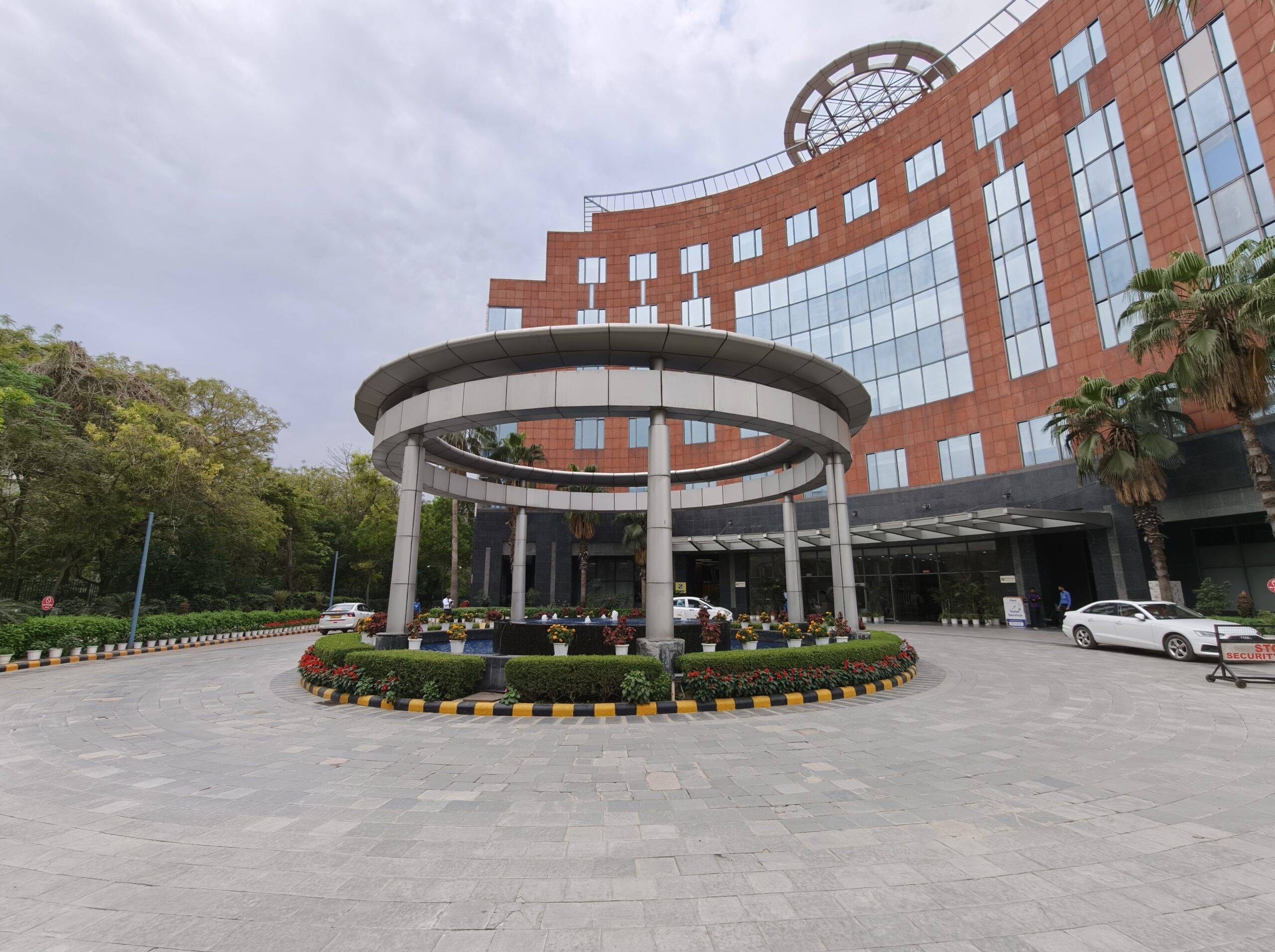
Both phones deliver similar results in terms of detail level and dynamic range. The Find X9’s image is a touch sharper, while the Xiaomi 17 has a slight edge in dynamic range. The key difference comes down to colour science, where the Xiaomi 17 has the upper hand. It retains the building’s hue more accurately and shows better tonal separation in the sky.


Ultrawide
In this scenario, you’ll note that the Xiaomi 17’s image is more in line with the output of its primary camera. The colours are similar, and there’s not a large gap between the primary and ultrawide lenses. The Find X9 fumbles this aspect slightly. However, the Find X9 is decisively better in terms of detail level and sharpness. Due to its well-balanced exposure level, the X9 delivers a more appealing result.

Portrait
This round was perhaps the closest in comparison, since both phones produced some exceptional results. They match each other in edge detection, and even the detail level on both is roughly on par, with the Xiaomi 17 in a slight lead. The difference here comes down to colour science, and the Find X9, for a change, does better with skin tones and colours.


Selfie
The Xiaomi 17’s selfie is much closer to the actual scene than its rival’s. The skin tone is rendered naturally, while the Find X9 adds a slight red tint to the subject’s face. The details are also a step above in the Xiaomi 17’s shot.


Low light (night mode)
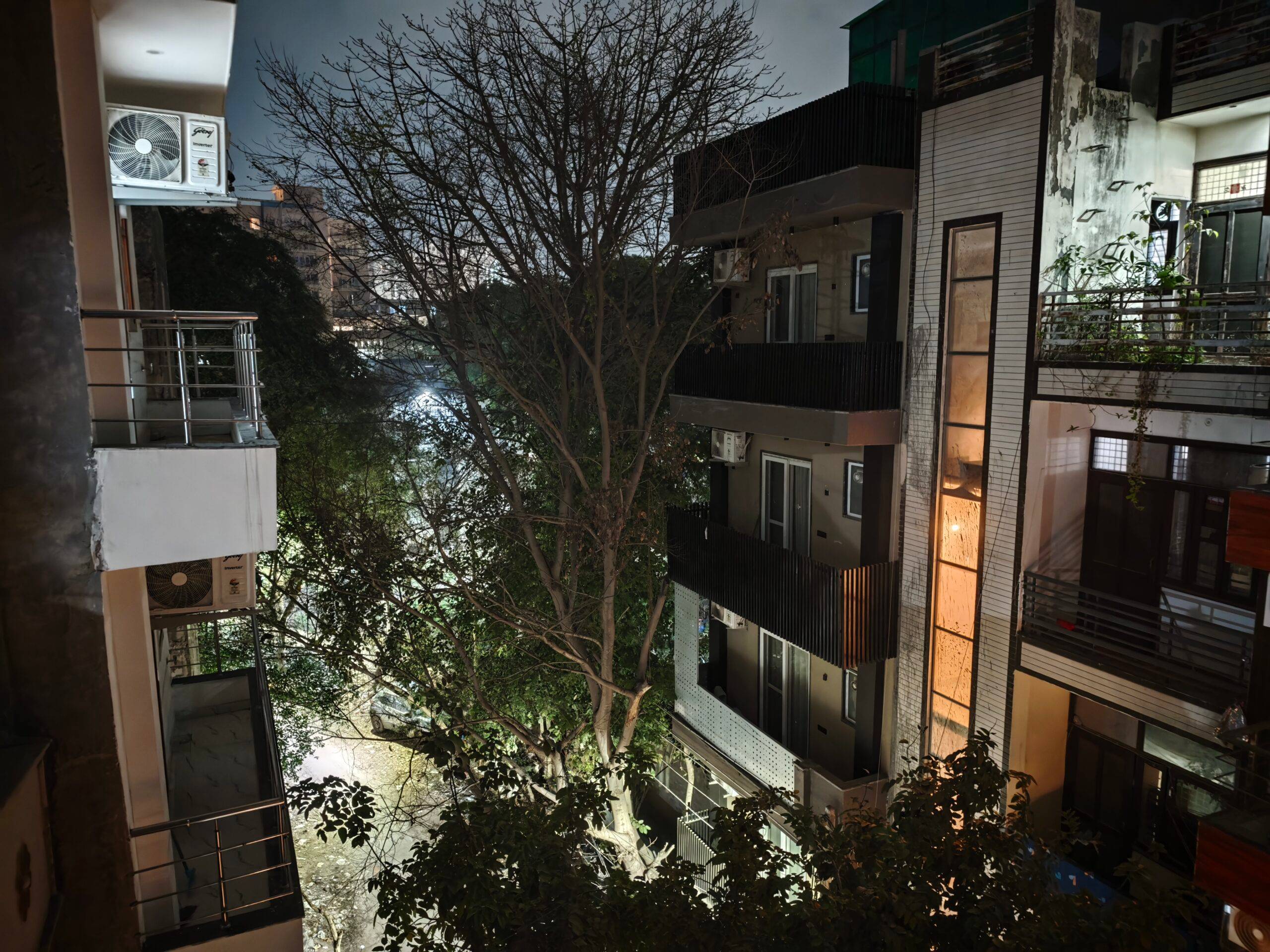
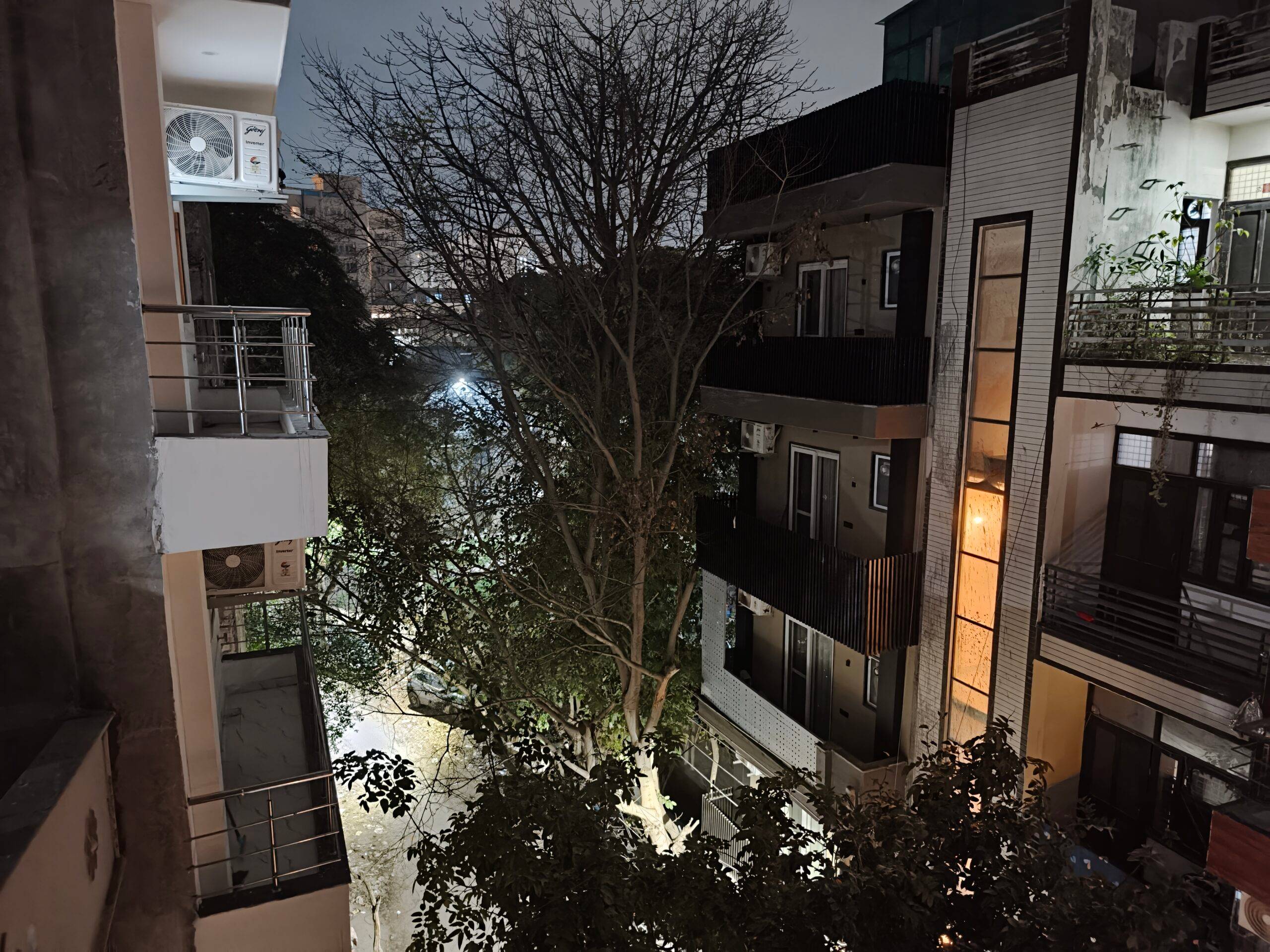
The Xiaomi 17 automatically enables night mode when it detects low ambient light. To match that, I also took the shot on the Find X9 with its night mode enabled to compare. At first glance, images from both phones look pretty similar, but there are a few key differences. The Xiaomi 17 handles lens flares and colours better, though its detail and sharpness aren’t as good as the Find X9.
Verdict
The Xiaomi 17 is a phone that knows what it wants to be. Compact, capable, and camera-forward, it delivers on all three in a way that is hard to fault for the most part. The Leica colour science helps it stand out from its rivals, the battery and performance hold up well in daily use, and the thermal improvements over the Chinese variant are a good step forward, making the Indian unit a better overall package.
Where it falls short is also pretty clear. The ultrawide is the weakest lens in the system, the 2.6x telephoto zoom leaves you wanting more reach, and the software needs a bit more polish before it feels truly flagship-grade. None of these is a dealbreaker on its own, but at Rs 89,999, the phone needs to be held to a higher standard.
Talking about the price, that’s another pain point here. The Xiaomi 17 asks for a premium that rivals like the OPPO Find X9 (review), OnePlus 15 (review), and Vivo X300 (review) do not, and the gap between them in day-to-day use is not wide enough to warrant that. If the Leica camera experience and a compact form factor are specifically what you are after, this is still one of the best options. For many others, however, you can enjoy a similar experience for less, which is worth considering.
Editor’s Rating: 8.2/10
Reasons to buy:
- Compact, slim build that is easy to hold and use one-handed
- Beautiful AMOLED display with rich colours and great stereo speakers
- Leica-tuned cameras deliver excellent results, especially in low light
- Battery easily lasts a full day with fast 100W wired charging to top up quickly
Reasons not to buy:
- 2.6x telephoto zoom is shorter than what most rivals offer at this price
- Software has some minor bugs and native widget issues
- Priced higher than rivals that offer a comparable overall experience