Honor reveals Robot Phone camera hardware ahead of August 12th launch


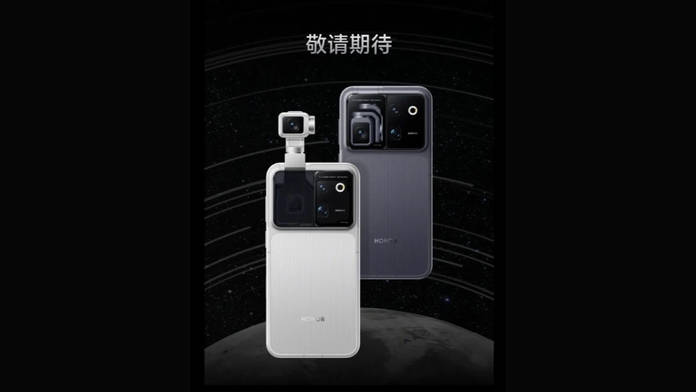
Honor has officially detailed the camera technology behind its upcoming Honor Robot Phone ahead of its launch in China on August 12th, giving a clear look at what could become one of the year’s most unconventional smartphones. Alongside confirming the hardware, the company also announced a partnership with German cinema equipment maker ARRI, signalling a stronger push towards professional-grade mobile videography.
The Robot Phone has attracted attention ever since Spain defender Eric Garcia was seen using it during the FIFA World Cup 2026 celebrations. Now, Honor is hoping the device’s camera system and not just its unusual design becomes its biggest talking point.
Show Full Article
Camera and gimbal system
The main feature is a 200MP primary camera mounted on a motorised three-axis gimbal, accompanied by a 50MP ultrawide and a 200MP periscope telephoto camera. Rather than simply relying on larger sensors or AI processing, Honor is trying a different approach by giving the camera physical movement.
According to the company, sliding open the camera cover deploys a titanium-alloy robotic arm in 0.8 seconds, allowing the camera to rotate and tilt through 360 degrees to keep subjects in frame. Combined with AI-powered tracking, the system is designed to let users record themselves hands-free without constantly repositioning the phone.
The company has also introduced its first in-house imaging chip, the Honor Yuguang H1, which processes tasks such as exposure, white balance, glare reduction and detail enhancement directly on the device. Honor says the accompanying gimbal motor is 65 percent smaller and delivers 35 percent higher torque density than conventional smartphone gimbal motors, while the overall imaging system is backed by more than 100 patents.
Honor’s partnership with ARRI also reinforces its creator-first strategy. The Robot Phone supports Log-C video encoding, LUT colour profiles and manual controls for focus, exposure and white balance – features more commonly associated with professional cinema cameras than smartphones. While these tools will likely appeal to a niche audience, they could help Honor differentiate itself as smartphone cameras become increasingly similar on paper. That makes the Robot Phone stand apart from rivals such as the Xiaomi 17 Ultra, Vivo X300 Ultra and OPPO Find X9 Ultra, which compete primarily on sensor size, optics and computational photography.
Performance and hardware
Honor has not confirmed the remaining specifications, but previous reports suggest the Robot Phone will feature a 6.3-inch to 6.4-inch 1.5K flat display, the Qualcomm Snapdragon 8 Elite Gen 5 chipset, a 6,000mAh battery, and 120W fast charging. The phone is also expected to launch in Moon Shadow Gray and Star Trail Silver, with 12GB + 512GB and 16GB + 1TB configurations.
The Honor Robot Phone is more of a specialised device aimed at content creators. If the robotic gimbal proves genuinely useful for solo filming and tracking moving subjects, it could offer something few rivals currently do.