OPPO K14x launches in India with a 6,500mAh battery, 120Hz display, and Dimensity 6300


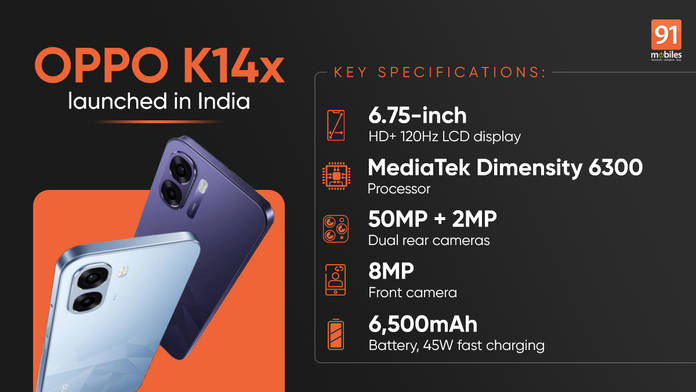
OPPO has launched the first K-series in India this year with the K14x. OPPO’s K-series has smartphones in the budget and mid-range segments, with the K14x being the most affordable in the lineup so far. The K-series has served as OPPO’s value-driven range, sitting below its premium Reno lineup while targeting buyers who want practical hardware without paying a premium. The newly launched OPPO K14x continues that approach, arriving in the sub-Rs 15,000 segment with a strong emphasis on battery life, a premium design, and AI-powered camera features.
Pricing for the OPPO K14x starts at Rs 14,999 for the base model with 4GB RAM and 128GB storage. The 6GB +128GB variant is priced at Rs 16,999. It’s worth mentioning that the K14x has been launched at a much higher price than its predecessor, the K13x, which debuted at Rs 11,999.
Show Full Article
Pre-bookings for the OPPO K14x begin today, along with an instant discount of Rs 1,500 only on the sale day, which is February 16th. There are more bank offers and an additional 3-month no-cost EMI option, bringing the effective price down to Rs 13,499 for the K14x. The smartphone will be available via the OPPO e-store and Flipkart in Icy Blue and Prism Violet colours.
Let’s take a look at what the OPPO K14x has to offer.
The OPPO K14x features a 6.75-inch HD+ LCD display with a 120Hz refresh rate and a claimed peak brightness of 1,125 nits. An HD+ panel might seem limiting, as phones like the Lava Play Ultra offer an FHD+ display with an AMOLED panel. The inclusion of a 120Hz refresh rate should help, though, as it ensures smoother scrolling and animations, which should help the phone feel responsive in everyday use, especially for users upgrading from older 60Hz devices.

One of the headline features is the sizeable 6,500mAh battery paired with 45W fast charging support. Battery capacity has emerged as a key differentiator among all price segments, especially in the budget 5G space. On paper, the K14x’s battery setup should comfortably last heavy users through a full day, and possibly longer with moderate usage, putting it in line with endurance-focused offerings from rivals in this category.
Under the hood, the smartphone is powered by the MediaTek Dimensity 6300 chipset, which is designed to deliver stable day-to-day performance. But don’t expect top performance speeds given the chipset’s past performance. It would still ultimately depend on the phone’s optimisation.
For photography, the OPPO K14x carries a 50MP primary camera accompanied by a 2MP secondary sensor. OPPO is leaning heavily on software-driven features, including AI Portrait Mode, AI Recompose, and AI Eraser 2.0, along with a Dual-View Video mode that allows simultaneous recording from multiple cameras. These features should appeal to younger users and content creators.
The phone ships with ColorOS 15 based on Android 15. With several newer launches already moving to Android 16, this could place the OPPO K14x at a slight disadvantage in terms of long-term software relevance. On the durability front, the device carries an IP64 rating. Interestingly, this is a step down from the IP65 rating seen on the previous-generation OPPO K13x, though IP64 protection remains fairly standard for phones in this price band and should still offer basic resistance against dust and splashes.
OPPO K14x enters a crowded space populated by devices from brands like Xiaomi, Realme, Lava, and Samsung. This segment is becoming increasingly competitive with fewer compromises as brands push specs with aggressive pricing. The OPPO K14x aims to fit in that space with a large battery, AI-backed camera features, balanced performance, and a premium design.
Based on early impressions, the OPPO K14x could make sense for those prioritising long battery life, smooth everyday usage, and camera software tools for social media content. However, users who prefer sharper displays or stronger gaming performance may find competing options in the same price bracket more appealing. At its starting price of Rs 14,999, the OPPO K14x positions itself as a practical, endurance-focused smartphone that aims to balance modern features with affordability, rather than chasing spec-sheet dominance.