Best camera phones under Rs 30,000 in 2026: expert picks for overall value, selfies, low light, and more


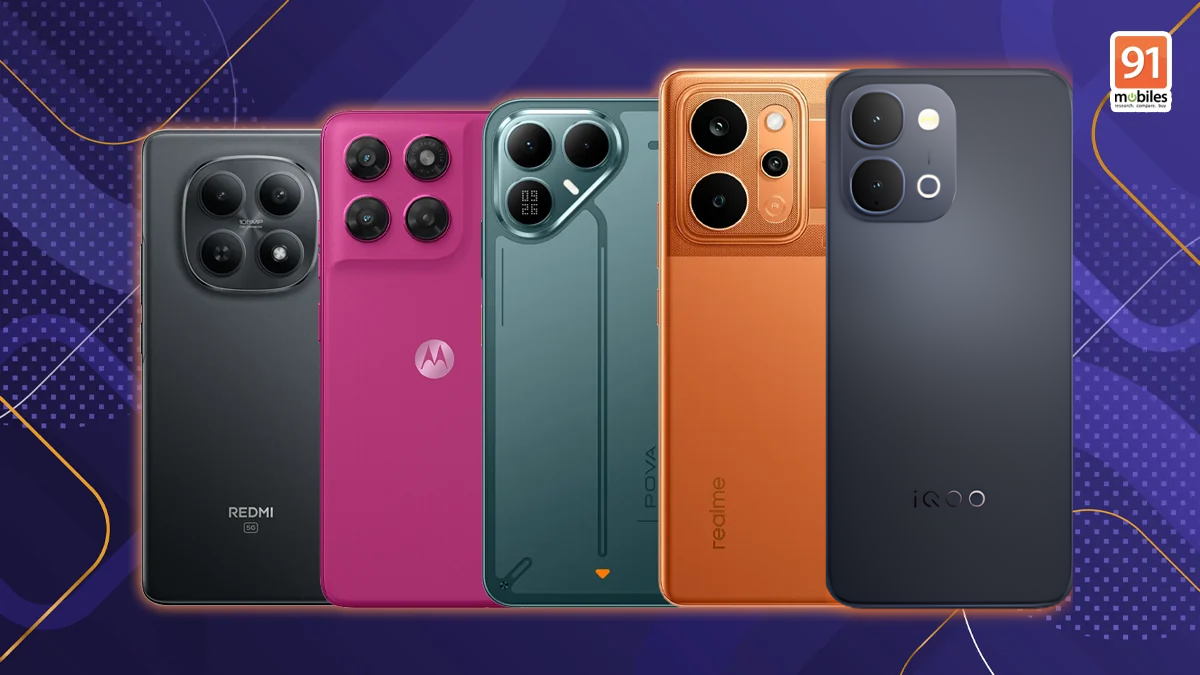
Getting a good camera phone under Rs 30,000 has become quite a challenge today. Smartphone prices have increased across the board, making it harder to find phones that offer a capable and versatile camera setup at this price.
Even so, a few phones still deliver a good camera experience without crossing the Rs 30,000 mark. We’ve picked five options currently available in this price segment, each of them a capable camera phone on its own but also with its own unique strength in photography. In-house experts chose these devices after stringent testing and ratings across various lighting conditions.
| Device | Starting Price | Best For |
| Realme P4 Power | Rs 29,999 | Overall camera performance |
| Redmi Note 15 | Rs 28,999 | Daylight shots |
| Moto G77 Power | Rs 25,999 | Ultrawide shots |
| POVA 8 | Rs 29,999 | Selfie shots |
| iQOO Z11x | Rs 27,999 | Low light shots |
*Prices as of October 31, 2026
If you want a well-rounded camera phone, the Realme P4 Power is our overall pick. The Redmi Note 15 is a good option for daylight photography, while the Motorola G77 Power has an impressive ultrawide camera. The POVA 8 is worth considering if you take a lot of selfies, and the iQOO Z11x is our pick for low-light photography.
Let’s take a closer look at each phone’s camera setup and what it brings to the table.
Table of Contents
Realme P4 Power – Best overall
Price: Rs 29,999 (8GB + 128GB)
Camera specs: 50MP OIS main + 8MP ultrawide, 16MP selfie
Why we chose it
The Realme P4 Power (review) offers a versatile camera setup for its segment, with three usable cameras covering the primary, ultrawide and selfie categories. Its 50MP primary camera with OIS delivers decent results, with post-processing playing a noticeable role in shaping the final images. Photos generally look pleasing and are good enough for social media and everyday use.
The 8MP ultrawide camera and 16MP selfie shooter add to its appeal, giving users more flexibility than phones that rely heavily on their primary camera. While the overall output may not be class-leading, all three cameras perform reasonably well on their own. This makes the Realme P4 Power a well-rounded choice if you want a phone that can handle different types of photography without a major weakness in one particular area.
Realme P4 Power camera summary:
Pros
- Versatile camera setup with primary, ultrawide and selfie cameras
- 50MP primary camera with OIS delivers decent everyday shots
- All three cameras offer reasonably good results
Cons
- Primary camera output relies a lot on post-processing
Redmi Note 15 – Best for daylight photography
Price: Rs 28,999 (8GB + 128GB)
Camera specs: 50MP OIS main + 8MP ultrawide, 20MP selfie
Why we chose it
The Redmi Note 15 (review) stands out for its daylight photography, thanks to a new 50MP Samsung HM9 primary sensor with OIS. It has a relatively large 1/1.67-inch sensor and a wide f/1.7 aperture, which help it capture well-detailed shots in good lighting. The colour output is punchy without looking overly saturated, while the dynamic range is mostly on point and the camera does a good job of retaining details in darker areas.
The 3x in-sensor zoom also comes in handy for close-up shots. I particularly liked using the 1.5x zoom range to photograph flowers and insects, as the phone retained good detail and balanced tones. Its camera performance takes a hit in low light, with softer details, visible noise and inconsistent exposure. However, if you mostly take photos during the day, the Redmi Note 15 is a good option to consider.
Redmi Note 15 camera summary:
Pros
- Large 1/1.67-inch primary sensor captures good detail in daylight
- Punchy colours without excessive saturation
- Good dynamic range and detail retention in darker areas
- 1.5x zoom works well for close-up shots
Cons
- Low-light images lose clarity and show visible noise
- Exposure control can be inconsistent at night
Moto G77 Power – Best for ultrawide photography
Price: Rs 24,999 (8GB + 128GB)
Camera specs: 50MP Sony LYTIA 600 main + 8MP ultrawide, 32MP selfie
Why we chose it
The Motorola G77 Power (review) is one of the few phones at this price with an ultrawide camera. Its primary camera also has a relatively large 1/2-inch Sony LYTIA 600 sensor, although the lack of OIS is worth noting. In daylight, the main camera captures reasonably sharp images with balanced dynamic range and good exposure control, but details and clarity are not quite as good as we expected from this sensor. Colours also have towards warmer tones, while brightness can be a little low even in well-lit conditions.
The ultrawide camera maintains great colour consistency with the primary sensor and does well enough in terms of detail level. While its overall camera performance has some limitations, the ultrawide shooter gives it a useful advantage for users who frequently capture wider scenes.
Moto G77 Power camera summary:
Pros
- 8MP ultrawide camera adds flexibility for wider shots
- Good colour consistency between the primary and ultrawide cameras
- Primary camera offers balanced dynamic range and exposure
Cons
- Primary camera lacks OIS
- Daylight images can have warm tones and lower brightness
POVA 8 – Best for selfies
Price: Rs 29,999 (8GB + 128GB)
Camera specs: 50MP main + auxiliary lens, 13MP selfie
Why we chose it
The POVA 8 (review) may not have the most versatile rear camera setup in this segment, but its selfie camera offers excellent results. The 13MP front shooter captures pleasing colours and good facial details in daylight. More importantly, it does a better job of retaining natural skin tones and facial details without relying too heavily on beauty filters. In our comparison, it outperformed its peers in these areas, making it a good option for users who take a lot of selfies.
While the 50MP rear camera captures natural-looking colours in daylight, the details appear soft, and the quality drops further in low light. The selfie camera also struggles with detail when shooting indoors or in dim conditions, where it tends to smooth out facial features. Still, if selfies are your priority, the POVA 8 has a clear advantage over its peers.
POVA 8 camera summary:
Pros
- Selfie camera captures natural skin tones
- Good facial detail in daylight
- Avoids excessive beauty processing
Cons
- Selfie details take a hit in low light
- No ultrawide camera or OIS
- Rear camera lacks detail in dim conditions
iQOO Z11x – Best for lowlight photography
Price: Rs 27,999 (6GB + 128GB)
Camera specs: 50MP Sony IMX852 main + 2MP bokeh, 32MP selfie
Why we chose it
The iQOO Z11x (review) is a good option for low-light photography, particularly when it comes to controlling exposure around bright light sources. Its 50MP Sony IMX852 primary camera manages to keep highlights in check at night, helping prevent lights from appearing overly bright in the final images. While the detail levels are not particularly sharp, the exposure control is decent for a phone in this price segment.
In daylight, the camera produces images that look close to real life, although its white balance and colour temperature can vary between shots. Detail levels are adequate, but the camera falls behind some rivals in this area. Its default 28mm focal length is also a little narrow, so you may have to step back to fit more into the frame. Still, its ability to handle bright light sources in low-light scenes gives it an edge for night photography.
iQOO Z11x camera summary:
Pros
- Primary camera controls exposure well around light sources at night
- Daylight images have natural-looking colours
- Adequate detail in well-lit conditions
Cons
- Narrow 28mm default focal length
- Low-light images can lack sharpness
- White balance and colour temperature can vary
FAQs
1. Why are ultrawide cameras becoming less common in phones under Rs 30,000?
Rising component costs have pushed manufacturers to make hardware compromises to keep smartphone prices in check. Secondary cameras, particularly ultrawide lenses, are among the features getting cut as brands prioritise the primary camera and other hardware. The Motorola G77 Power is one of the few options in this list that retains an ultrawide camera.
2. Can I get a telephoto camera on a phone under Rs 30,000?
Dedicated telephoto cameras are almost impossible to find for Rs 30,000 in 2026 launches, partly because of their higher hardware costs. Buyers had more options in this segment in 2025, but the current pricing situation has made this feature harder to find. Most phones now rely on digital or in-sensor zoom instead.
3. What should I look for when judging a phone’s camera apart from megapixels?
Sensor size, aperture and OIS are worth considering alongside megapixel count. A larger sensor and wider aperture can help capture more light, while image processing affects colours, exposure and detail. It is also worth checking actual camera samples, as specifications alone do not tell you how good a phone’s photos will look.
4. Is OIS important in a smartphone camera?
OIS helps reduce blur caused by hand movement, particularly in low-light photos, where the camera may need a slower shutter speed. It can also help stabilise video footage. However, it does not guarantee better photos on its own, as sensor size, aperture, and image processing matter too.
5. Why is the POVA 8 best for selfies despite having a 13MP front camera?
Megapixel count does not determine selfie quality on its own. The POVA 8’s 13MP front camera captures natural skin tones and retains facial details without excessive beauty processing. While it struggles in dim lighting, its daylight selfies look more natural than those from its peers in our comparison.