In this guide, we list the wide variety of thin and light laptops, a category that has quietly become the most interesting part of the laptop market. A machine that weighs 1.1kg can now carry 64GB of RAM. A 16-inch laptop can run for over a day on a charge. A 13-inch tablet can play Cyberpunk. The old trade-off, where portability cost you performance, has largely stopped being true, which makes picking one harder rather than easier. What follows is eight ultrabooks we have put through the same tests, each matched to the thing it genuinely does better than the rest, whether that is battery, travel weight, entertainment, or outright speed.
Every number in this guide comes from our own lab. Same benchmark suite, same battery test, same conditions, which is what makes these machines directly comparable to each other rather than to marketing claims.
Here are our winners. The Samsung Galaxy Book6 Ultra takes the best overall. The HP OmniBook X 14 is the one for travel, the Dell XPS 14 (2026) wins on entertainment, and the ASUS Vivobook S16 S3607QA is untouchable on battery. The ASUS ExpertBook Ultra is our premium pick, the Lenovo ThinkPad X1 Carbon Gen 13 is the value choice, the Microsoft Surface Laptop 7th Gen leads on Windows-on-ARM, and the ASUS ROG Flow Z13 is the gaming outlier.
A note on pricing: all prices listed here are what each laptop cost at the time we reviewed it. Laptop prices in India have moved sharply over the past few months, so verify current pricing before you buy. Sale events can swing these numbers by Rs 10,000 or more in either direction.
Table of Contents
How do we test thin and light laptops?
Every laptop here has spent weeks as a daily driver before it earned a place on this list. That means the real workload an ultrabook actually faces: twenty-plus browser tabs, video calls, document and spreadsheet work, photo edits, streaming, and in a few cases sustained creative exports.
The synthetic suite is identical across every machine, which is the point. We run Cinebench 2026, R24 and R23 for CPU performance, Geekbench 6 for cross-platform comparison, PCMark 10 and PCMark 10 Extended for real-world productivity, CrossMark for responsiveness, the full 3DMark stack from Night Raid up to Time Spy Extreme for graphics, PugetBench for DaVinci Resolve where creative work matters, and CrystalDiskMark for storage throughput. Battery life comes from the PCMark 10 video loop test at 80 percent brightness. Because every machine runs the same test, a 26-hour result and an 8-hour result on this page mean exactly what they look like.
Thin chassis make thermals and sustained performance the deciding factor more often than peak numbers, so we also track how each machine behaves after the first ten minutes: whether clocks hold, how hot the keyboard deck gets, and how loud the fans become getting there. Display quality, keyboard feel, port selection, and charging convenience round out the scoring.
Samsung Galaxy Book6 Ultra — Best Thin and Light Laptop Overall
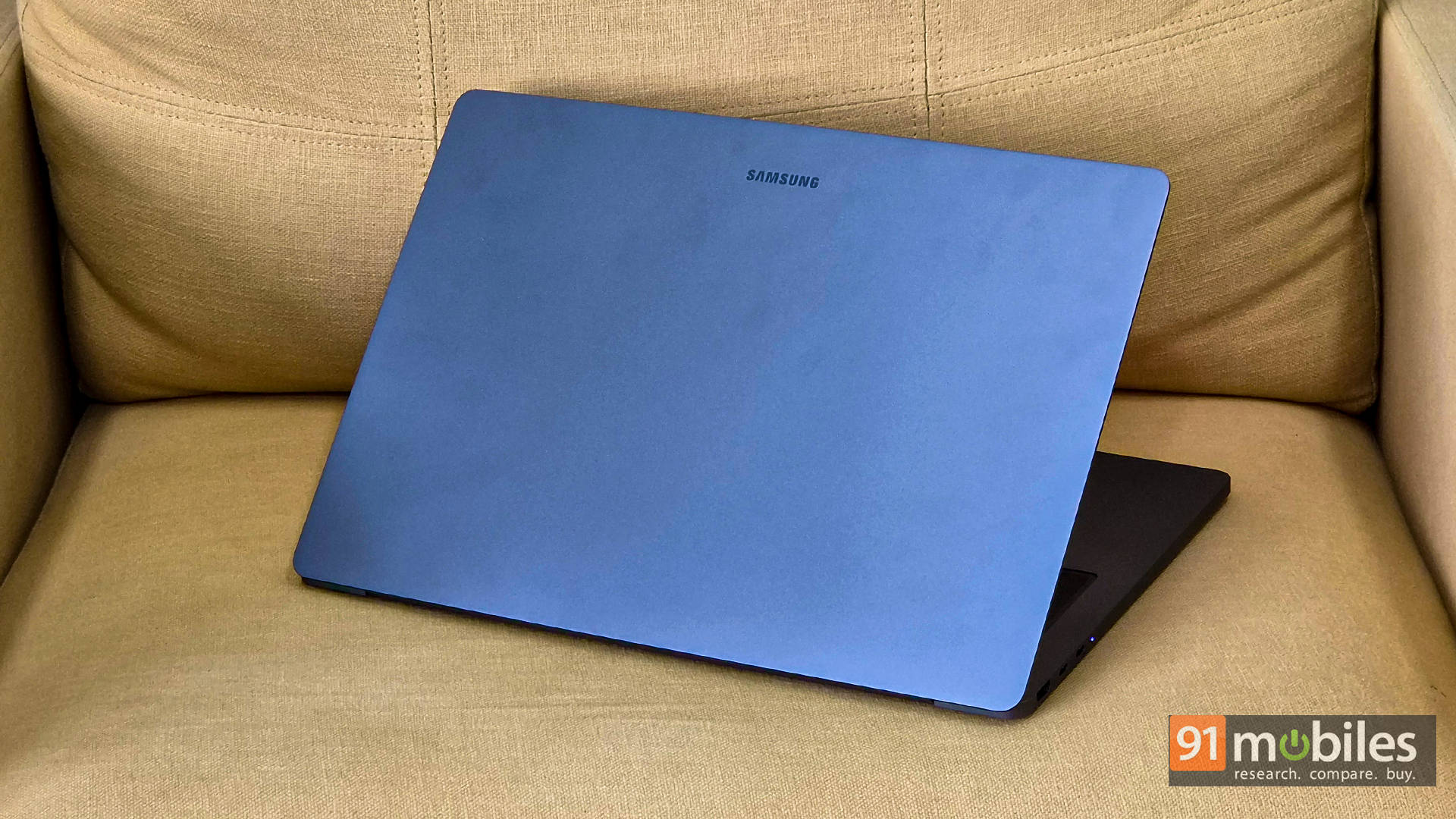
Price at time of review: Rs 3,10,990 (RTX 5070 variant)
Why we picked it
The Samsung Galaxy Book6 Ultra (review) is our best thin and light laptop overall because it delivers genuine workstation performance and RTX 5070 graphics inside a boardroom-ready chassis, and does it more quietly than any machine of comparable power we have tested.
The performance is the headline. The Intel Core Ultra 7 356H paired with 32GB of LPDDR5x and a 2TB Gen 4 SSD posted 19,170 in Cinebench R23 multi-core, 9,579 in PCMark 10, and 16,549 in Geekbench 6 multi-core in our testing, numbers that put it comfortably ahead of every conventional ultrabook here. The RTX 5070 runs at 90W rather than the 115W of chunkier rivals, yet the gap is far smaller than that suggests: Cyberpunk 2077 managed 79fps at FHD native and 177fps with DLSS, ray tracing and frame generation, while Time Spy came in at 11,194 and Fire Strike at 24,015. A PugetBench DaVinci Resolve score of 7,130 is the highest of any non-gaming machine on this list.
What makes it the overall winner rather than just the fastest is restraint. Thanks to the vapour chamber design there is essentially no throttling, and the fans never get obnoxiously loud even in Turbo mode. This is the quietest we have ever gamed on a laptop carrying this much silicon. Around it sit a 16-inch 120Hz AMOLED touchscreen, a six-speaker array using four force-cancelling woofers and two tweeters, a trackpad that rivals the best in the business, and an 80.2Whr battery that ran 12 hours 57 minutes in our PCMark 10 video loop test.
Two things to weigh. The keyboard uses very shallow key travel, which looks superb and divides opinion in use. And the GPU is deliberately not fully unleashed. If hardcore gaming is not the point, the Core Ultra X7 358H variant at Rs 2,42,990 carries the same premium DNA for considerably less. Our review rated it 9/10.
| Pros | Cons |
| Stunning AMOLED touchscreen | Shallow keyboard feel |
| Powerful yet slim design | GPU not fully unleashed |
| Excellent thermal management | |
| Top-tier six-speaker audio system |
Key specs:
- Processor: Intel Core Ultra 7 356H (25W TDP)
- GPU: NVIDIA GeForce RTX 5070 Laptop, 8GB, 90W TGP
- Display: 16-inch AMOLED touchscreen, 120Hz
- RAM/Storage: 32GB LPDDR5x / 2TB Gen 4 SSD
- Battery: 80.2Whr, 12 hours 57 minutes (PCMark 10 video loop), 140W USB-C charging
- Audio: Six speakers (4 woofers + 2 tweeters)
- Rating: 9/10
HP OmniBook X 14 — Best Thin and Light Laptop for Travel
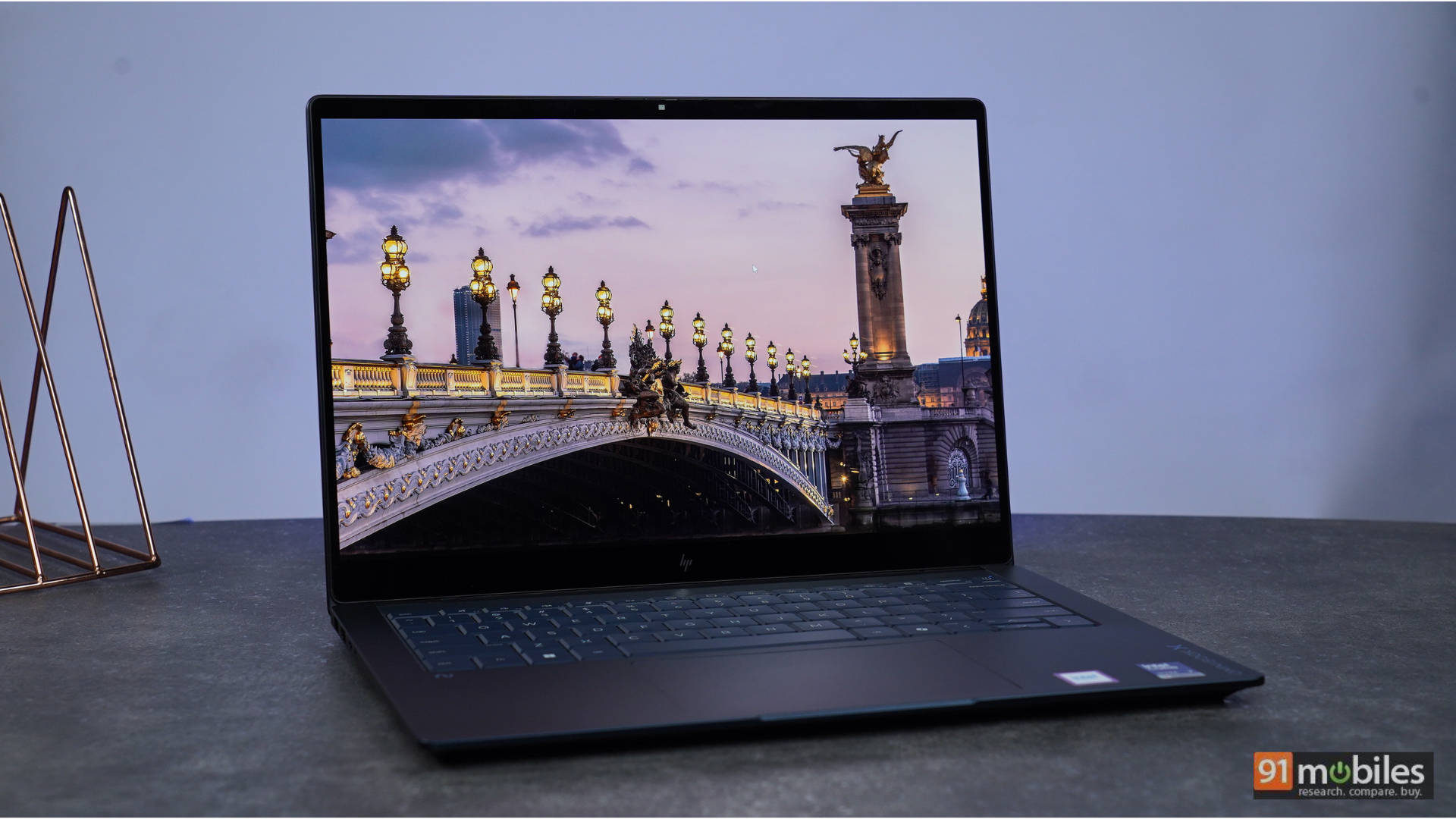
Price at time of review: Rs 1,69,999
Why we picked it
The HP OmniBook X 14 (review) is our best thin and light laptop for travel because it packs a genuinely flagship 3K OLED panel and a 16-core Panther Lake processor into a 1.3kg body that measures just 1.26cm thick, which is roughly the thickness of a stack of pencils.
Travel machines live or die on what you give up to carry them, and here the answer is remarkably little. The Intel Core Ultra 7 356H runs up to 4.7GHz across 16 cores, and in our testing it returned 16,328 in Cinebench R23 multi-core and 814 in Cinebench R24 multi-core, ahead of the slimmer OmniBook Ultra 14 running the same chip, which suggests this chassis sustains boost clocks better over longer workloads. Paired with 16GB of LPDDR5x-6800 memory and a 1TB Gen 4 SSD, it handles the full travelling-professional workload without complaint.
The display is what elevates it. The 14-inch 3K panel runs 2880 x 1800 with a 120Hz variable refresh rate, 500 nits in SDR and 1,100 nits in HDR, and full 100 percent DCI-P3 coverage, which means it stays usable on a plane tray table, in a bright hotel lobby or on a café terrace.
The build supports the travel case too. The hinge has almost no wobble and opens with one finger, the Atmospheric Blue finish is understated enough for client meetings, and two rubber feet keep it elevated for airflow on a desk. The clearest weakness is audio: the speakers are a noticeable step behind the Dell XPS 14 below, so pack headphones. We gave it a 8.8 in our review.
| Pros | Cons |
| Stunning 14-inch 3K OLED 120Hz VRR display | Audio performance lacks bass and depth |
| Exceptional keyboard | No built-in SD card reader |
| Fantastic build quality with plenty of ports | |
| Compact, pocket-sized 100W GaN charger included |
Key specs:
- Processor: Intel Core Ultra 7 356H
- Display: 14-inch 3K (2880 x 1800) OLED multitouch, 120Hz VRR, 500 nits SDR / 1,100 nits HDR, 100% DCI-P3
- RAM/Storage: 16GB LPDDR5x-6800 / 1TB PCIe Gen 4 NVMe SSD
- Build: 1.3kg, 1.26cm thin, Atmospheric Blue
- Extras: Corning Gorilla Glass 3, HP Eye Ease
- Rating: 8.8/10
Dell XPS 14 (2026) — Best Thin and Light Laptop for Entertainment
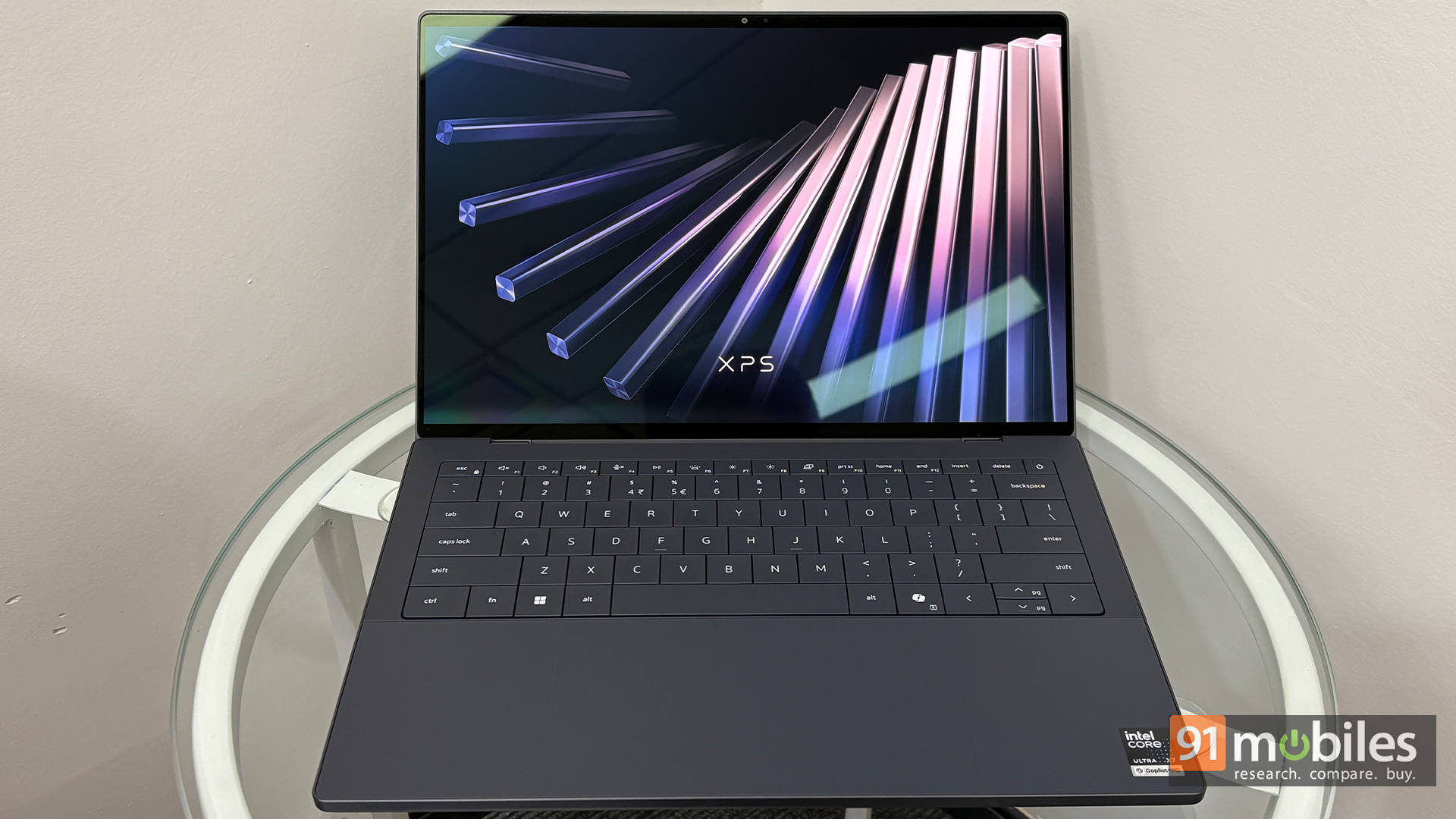
Price at time of review: Rs 2,57,890
Why we picked it
The Dell XPS 14 (2026) (review) is our best thin and light laptop for entertainment because it pairs a brilliant 120Hz OLED touchscreen with the best speaker system in this group, backed by battery life that outlasts a long-haul flight.
Dell killed the XPS line in 2025 and brought it back a year later, and the time off did it good. The 14-inch OLED panel handles films and shows with the deep blacks and colour saturation you only get from OLED, and unlike most machines in this class the audio actually matches the screen.
The performance underneath is properly quick for a thin-and-light. The Intel Core Ultra X7 358H with Arc B390 graphics scored 12,500 in Cinebench R23 multi-core, 10,365 in PCMark 10, and 16,438 in Geekbench 6 multi-core in our testing, with a CrossMark overall of 2,204 that leads every conventional ultrabook here. Time Spy came in at 5,821 and Night Raid at 36,031, enough for casual gaming and GPU-accelerated media work alongside the streaming.
Battery is the other half of the entertainment case. The 70Wh cell ran 11 hours 8 minutes in our PCMark 10 video loop test, and in real-world mixed use, we saw roughly 14 hours of active screen-on time. At 1.36kg with a robust aluminium build and a comfortable keyboard, it is the machine we kept reaching for. The catches are predictable for a glossy OLED: reflections become obvious with a light source behind you, and there is no physical webcam shutter. The laptop was rated 9.2 in our review.
| Pros | Cons |
| Brilliant 120Hz OLED touchscreen display | Display gets reflective in a bright environment |
| Outstanding battery life | No physical privacy shutter for the webcam |
| Premium, robust build with a comfortable keyboard | |
| Great overall CPU and iGPU performance |
Key specs:
- Processor: Intel Core Ultra X7 358H (25W TDP)
- GPU: Intel Arc B390
- Display: 14-inch OLED touchscreen, 120Hz
- RAM/Storage: 32GB LPDDR5x / 1TB Gen 4 SSD
- Battery: 70Wh, 11 hours 8 minutes (PCMark 10 video loop)
- Weight: 1.36kg
- Rating: 9.2/10
ASUS Vivobook S16 S3607QA — Best Battery Life
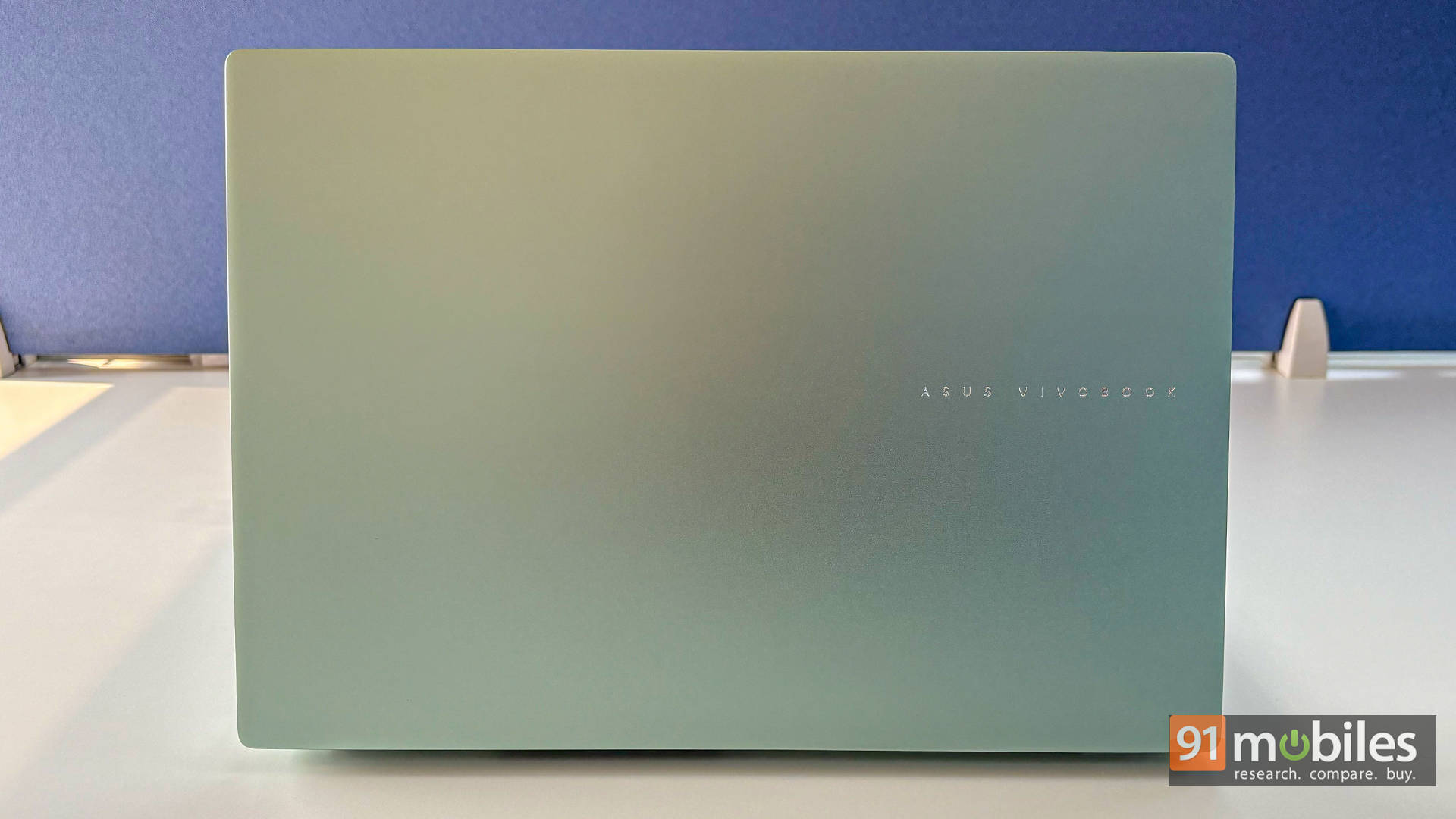
Price at time of review: Rs 72,990
Why we picked it
The ASUS Vivobook S16 S3607QA (review) is our best thin and light laptop for battery life because it ran 26 hours 18 minutes in our PCMark 10 video loop test, which is the highest figure we have ever recorded at 91mobiles, and it is not remotely close.
That number deserves a moment. The second-longest-lasting machine on this page manages 19 hours, and the Vivobook S16 beats it comfortably. ASUS claims up to 32 hours from the Snapdragon X paired with a 70Wh battery, and unusually for a marketing claim, real use gets close: hopping between browser tabs, drafting documents, sitting in video calls, and streaming in the evening, this laptop comfortably covers a full workday and often a second one. For a 16-inch machine, that endurance is close to unheard of.
Performance is respectable rather than remarkable, and the review is honest about that. The Snapdragon X X1-26-100 scored 707 in Cinebench R24 multi-core and 10,120 in Geekbench 6 multi-core, which puts it slightly behind Intel and AMD rivals on paper while feeling essentially identical in everyday use. Where it does not compete is heavy creative work: a PugetBench DaVinci Resolve score of 1,121 and Time Spy at 1,067 confirm this is a productivity machine, not a workstation.
The rest of the package is unusually good for the money. The 16-inch OLED panel delivers deep blacks and vivid colour, the 16:10 aspect ratio helps productivity, and at 15.9mm and 1.74kg it stays genuinely portable for its size. The trade-offs are: ARM software quirks, and a 1200p resolution that is not especially crisp across 16 inches. It scored 8/10, with battery rated 9.5.
| Pros | Cons |
| Exceptional battery life | ARM architecture quirks |
| Lightweight 16-inch form factor | 1200p resolution isn't that crisp |
| Vibrant OLED display | |
| Stylish Salvia Green design |
Key specs:
- Processor: Qualcomm Snapdragon X X1-26-100
- Display: 16-inch OLED (1920 x 1200), 60Hz, 16:10
- RAM/Storage: 16GB LPDDR5x / 512GB Gen 4 SSD
- Battery: 70Wh, 26 hours 18 minutes (PCMark 10 video loop), USB-C fast charging
- Connectivity: Wi-Fi 6E, Bluetooth 5.3, 2x USB-A, 2x USB-C 4.0, HDMI 2.1
- Build: 1.74kg, 15.9mm thin
- Rating: 8/10
ASUS ExpertBook Ultra — Best Premium Thin and Light Laptop
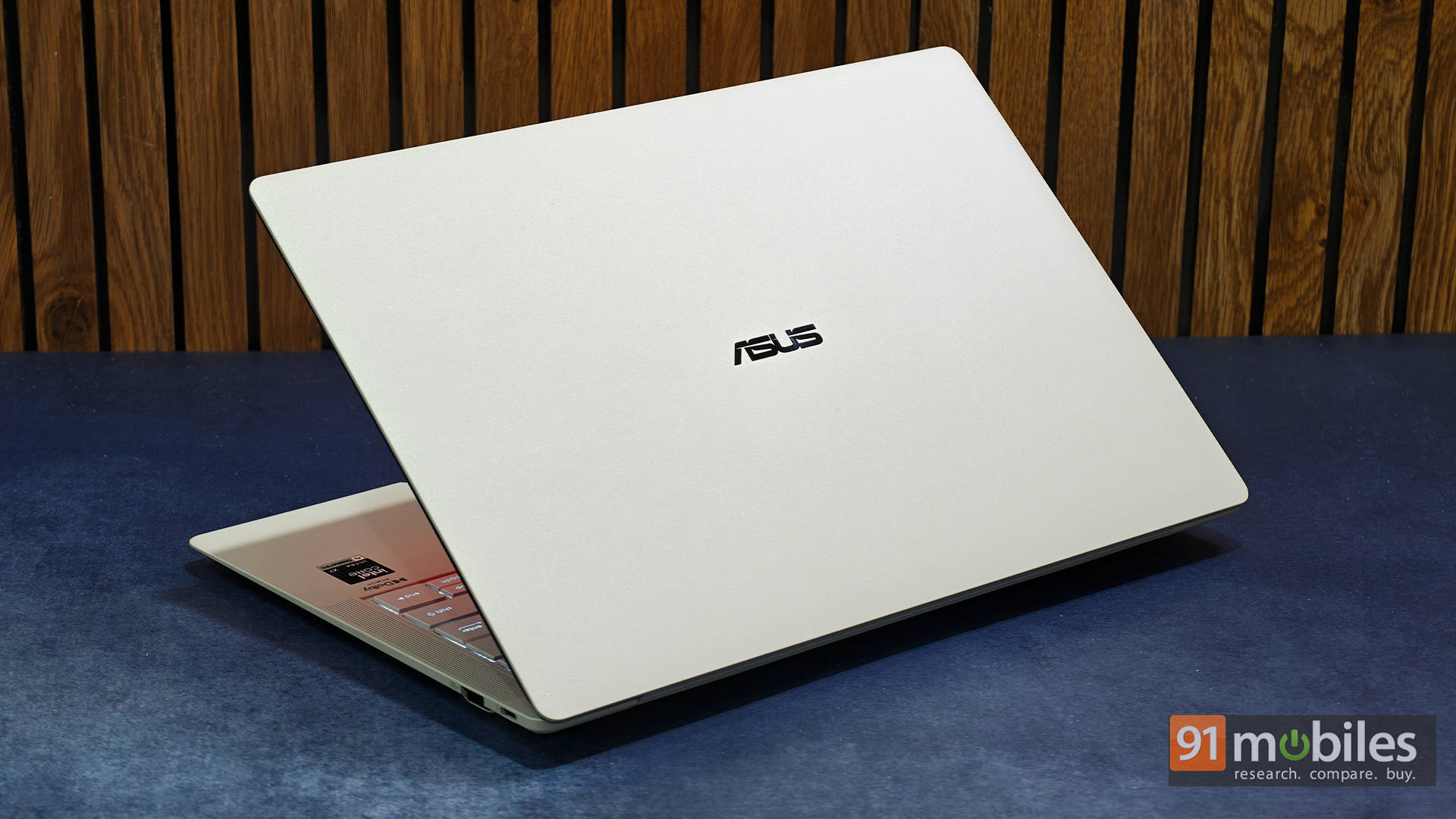
Price at time of review: Rs 2,39,990 onwards (reviewed variant Rs 3,49,990)
Why we picked it
The ASUS ExpertBook Ultra (review) is our best premium thin and light laptop because it combines workstation-class specifications, the fastest storage we have tested and a genuinely game-changing matte OLED display in a machine that weighs roughly 1.1kg.
The configuration reads like a workstation that got shrunk. Intel's Core Ultra X7 358H sits alongside 64GB of LPDDR5x and a 2TB Gen 5 SSD, and that storage is extraordinary: 11,378MB/s sequential reads and 9,548MB/s writes in CrystalDiskMark, second only to the ThinkPad below and far ahead of everything else. In our benchmarks it returned 17,199 in Cinebench R23 multi-core, 10,105 in PCMark 10, 4,246 in Cinebench 2026 multi-core and 3,876 in PugetBench for DaVinci Resolve, consistently pulling ahead of the Dell XPS 14 running the same processor thanks to its higher memory capacity and faster drive.
The display is the machine's signature. ASUS pairs a flagship Tandem OLED panel with Corning Gorilla Matte coating, which sounds like a compromise and works like a revelation. The Ceraluminum chassis resists fingerprints and feels over-engineered in the best way, the haptic glass touchpad comes close to and sometimes surpasses the MacBook's, and the 70Wh battery ran 13 hours 47 minutes in our PCMark 10 video loop test, with the 90W charger hitting 50 percent in about 30 minutes.
The honest caveats: the matte layer softens OLED's inky blacks toward very dark grey, so cinematic viewing takes a small hit, and everything is soldered with no upgrade path. At 9.3 it is the highest-rated laptop on this page.
| Pros | Cons |
| Stunning matte OLED panel | Matte finish reduces OLED's cinematic feel |
| Premium lightweight yet durable build | Brand perception is still catching up |
| Excellent keyboard and haptic touchpad | |
| Exceptional performance for an ultralight laptop |
Key specs:
- Processor: Intel Core Ultra X7 358H (25W TDP)
- GPU: Intel Arc B390
- Display: 14-inch Tandem OLED, 120Hz, Gorilla Matte with Gorilla Glass Victus
- RAM/Storage: 64GB LPDDR5x / 2TB Gen 5 SSD
- Battery: 70Wh, 13 hours 47 minutes (PCMark 10 video loop), 90W USB-C PD
- Build: Around 1.1kg, Ceraluminum finish
- Rating: 9.3/10
Lenovo ThinkPad X1 Carbon Gen 13 — Best Value Thin and Light Laptop
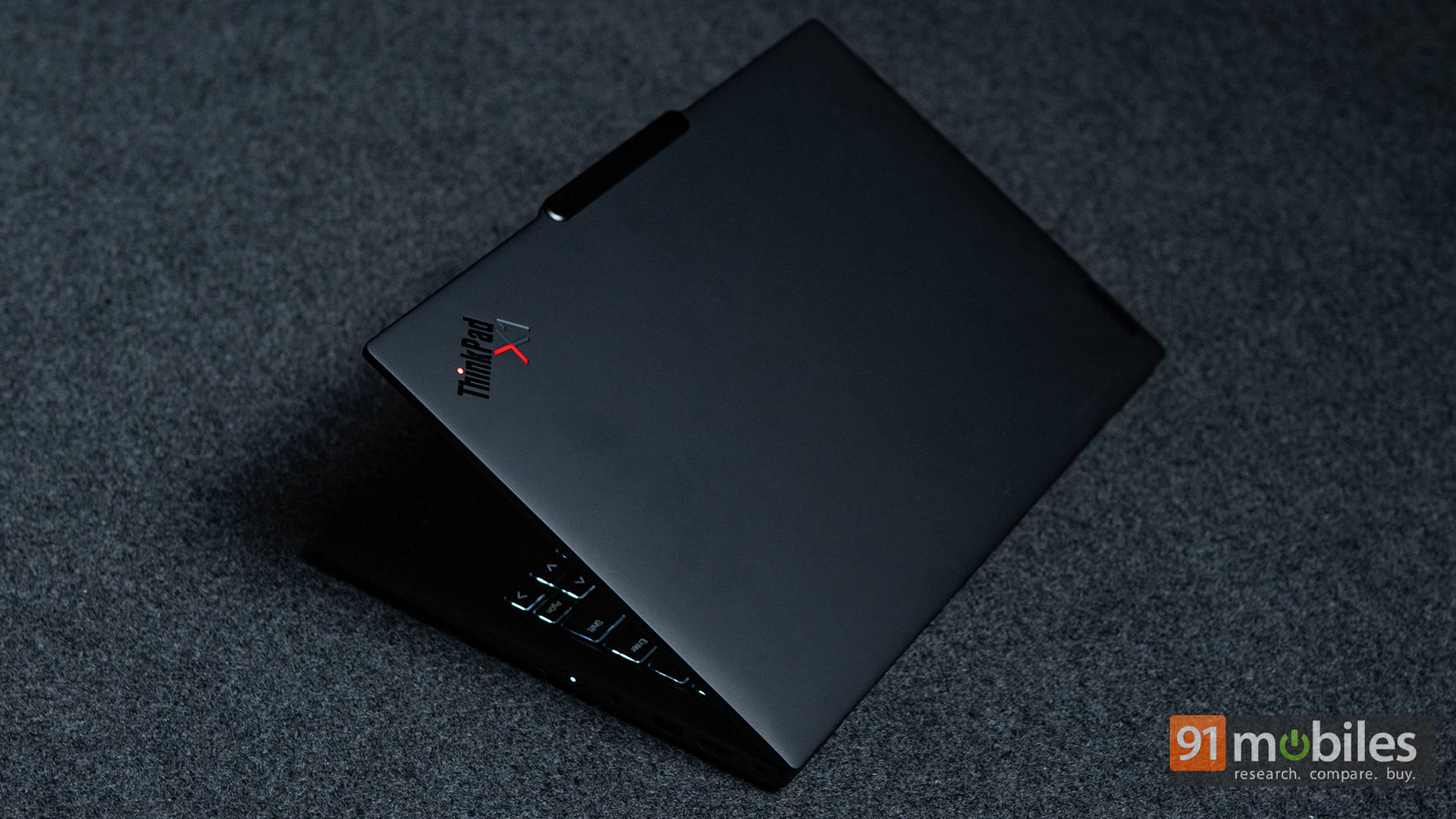
Price at time of review: Rs 2,96,639 (as configured)
Why we picked it
The Lenovo ThinkPad X1 Carbon Gen 13 (review) earns its place because of what it delivers over years rather than months: a 1.1kg MIL-STD-810H chassis, the best keyboard in the business, the fastest storage we have tested, and built-in 5G, which together make it the machine that keeps working when everything else needs a desk.
Start with the storage, because it is genuinely class-leading. The 2TB Gen 5 SSD hit 13,697MB/s sequential reads and 9,868MB/s writes in CrystalDiskMark, roughly double what rival business ultrabooks manage. The Core Ultra 7 268V vPro chip is efficiency-focused Lunar Lake silicon, returning 9,670 in Cinebench R23 multi-core, 7,233 in PCMark 10, and 10,233 in Geekbench 6 multi-core, and it breezed through 20-plus Chrome tabs, Slack, Photoshop edits, and 4K streams in our testing.
The durability and comfort case is what separates it from rivals. At 1.1kg, it is astonishingly light for a MIL-STD-810H certified chassis with zero deck flex. The keyboard remains the industry benchmark, with generous travel and quiet, rhythmic feedback. Thermals are handled intelligently: even under sustained load the fans stay whisper-quiet, and the keyboard deck barely passes 38 degrees Celsius. The 57Wh battery ran 11 hours 3 minutes in our PCMark 10 video loop test.
Be clear about the trade: this is the most expensive way to buy this performance tier. Rivals with the same processor post better benchmark numbers for less money, and the 1200p IPS panel, while accurate at 400 nits and 100 percent sRGB with anti-glare coating, cannot match the OLED screens elsewhere on this page. It scored 8/10.
| Pros | Cons |
| Premium, ultra-light chassis | Significantly more expensive than close rivals |
| Industry-leading keyboard and solid port selection | IPS panel lacks the vibrancy of OLED alternatives |
| Good battery life with rapid charging support |
Key specs:
- Processor: Intel Core Ultra 7 268V vPro (17W TDP)
- GPU: Intel Arc 140V
- Display: 14-inch 1200p IPS, 400 nits, 100% sRGB, anti-glare
- RAM/Storage: 32GB LPDDR5 / 2TB Gen 5 SSD
- Battery: 57Wh, 11 hours 3 minutes (PCMark 10 video loop), 65W Rapid Charge
- Build: 1.1kg, MIL-STD-810H certified
- Rating: 8/10
Microsoft Surface Laptop 7th Gen — Best Windows-on-ARM Laptop
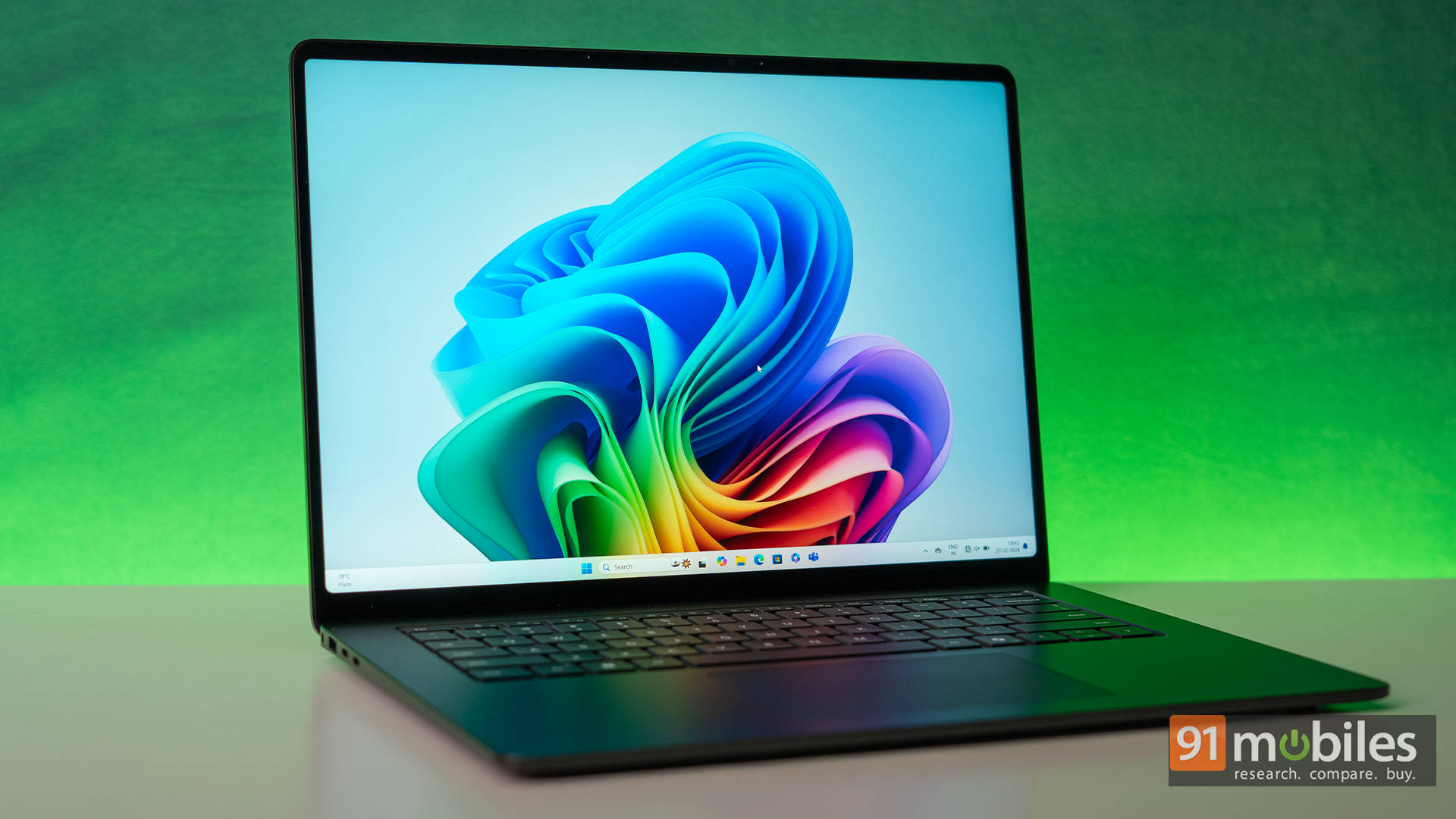
Price at time of review: Rs 1,63,999
Why we picked it
The Microsoft Surface Laptop 7th Gen (review) is our best Windows-on-ARM machine because it extracts more from Snapdragon silicon than any rival we have tested, combining the strongest ARM CPU numbers on this page with 16 hours of battery life and a 120Hz display.
ARM laptops usually ask you to trade performance for endurance. This one narrows that trade considerably. The Snapdragon X Elite X1E-80-100 posted 886 in Cinebench R24 multi-core and 13,332 in Geekbench 6 multi-core in our testing, well ahead of the Snapdragon X chips in cheaper ARM machines, and its 2,736 Geekbench 6 single-core score sits close to Intel's Lunar Lake ultrabooks. Cinebench R23 multi-core came in at 9,291, which is competitive with the x86 business laptops here despite running at a 23W TDP. Graphics land where you would expect from Adreno, with 5,959 in Fire Strike and 26,525 in Night Raid, so light creative work is fine, and gaming is not the point.
The endurance is the reason to buy it. The 66Wh battery ran 16 hours 2 minutes in our PCMark 10 video loop test, second only to the Vivobook S16 and comfortably beyond every x86 machine on this list. Combine that with a 15-inch 120Hz display, a 512GB Gen 4 SSD, and Microsoft's own build quality, and you have the closest thing Windows currently offers to the fanless, all-day experience Apple has been selling for years.
The ARM caveat applies here as it does to every machine on this platform. If your work depends on legacy applications, buy x86. If it lives in a browser and modern apps, this is the most polished ARM laptop in India. We gave it an 8 on our review.
| Pros | Cons |
| Stunning Design and Beautiful Display | Limited Ports |
| Excellent ARM performance | App Compatibility is still WIP |
| Comfortable Keyboard and Touchpad | |
| Long Battery life |
Key specs:
- Processor: Qualcomm Snapdragon X Elite X1E-80-100 (23W TDP)
- GPU: Qualcomm Adreno
- Display: 15-inch IPS, 120Hz
- RAM/Storage: 16GB LPDDR5x / 512GB Gen 4 SSD
- Battery: 66Wh, 16 hours 2 minutes (PCMark 10 video loop)
- Rating: 8/10
ASUS ROG Flow Z13 — Best Thin and Light Gaming Laptop
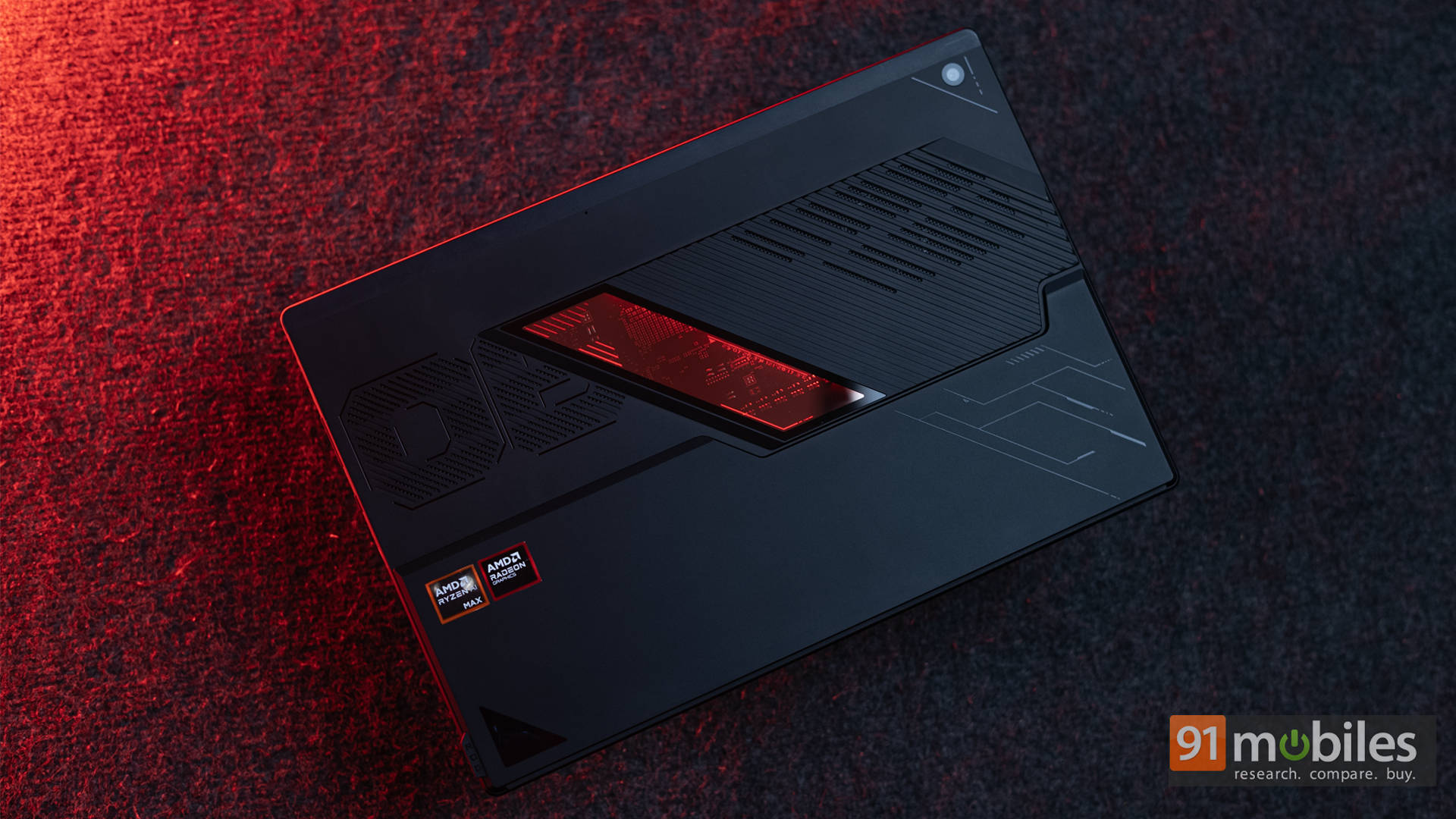
Price at time of review: Rs 1,99,990
Why we picked it
The ASUS ROG Flow Z13 (2025) (review) is our best thin and light gaming machine because it delivers desktop-class CPU performance and genuine AAA gaming from a detachable 13-inch tablet, with no discrete graphics card anywhere inside it.
The chip is the whole story. AMD's Ryzen AI Max 390 is a 12-core, 24-thread part that can rival many desktop CPUs, paired with Radeon 8050S integrated graphics carrying 32 GPU cores. In our testing, it scored 21,621 in Cinebench R23 multi-core and 17,157 in Geekbench 6 multi-core, the highest CPU numbers on this entire page, from a device you can hold in one hand. On the graphics side, it managed 9,539 in 3DMark Time Spy, 21,756 in Fire Strike, and 50,120 in Night Raid, figures that belong to proper gaming laptops rather than tablets. A PugetBench DaVinci Resolve score of 5,984 makes it a serious creative tool alongside the gaming.
Real-world gaming lands roughly where those numbers suggest. Valorant averaged 263fps and both GTA V and Forza Horizon 5 sat at 67fps in our testing, so competitive titles and mid-weight AAA games run comfortably on the 13.4-inch 180Hz panel. Cyberpunk 2077 at 35fps is the honest ceiling: this is integrated graphics, and the most demanding titles need settings dialled back or upscaling switched on. The versatility is the real selling point. Keyboard attached, it is a work machine; keyboard off with the kickstand out, it is a Windows tablet, and HDMI to a TV with a controller turns it into a console.
The trade-offs are the ones you would expect. The 70Wh battery ran 8 hours 38 minutes in our PCMark 10 video loop test, the shortest on this list, and it drops sharply under gaming load. At Rs 1,99,990, it also costs considerably more than a conventional gaming laptop of similar power, which is the premium you pay for the form factor.
| Pros | Cons |
| AMD Ryzen AI Max 390 redefines an APU | Weak speakers |
| Desktop-grade performance in a portable chassis | Average webcam |
| QHD+ 180Hz touchscreen display with 100% DCI-P3 | Not the best value for pure performance |
| Excellent thermals and quiet operation |
Key specs:
- Processor: AMD Ryzen AI Max 390 (12 cores, 24 threads, 55W TDP)
- GPU: AMD Radeon 8050S (integrated, 32 GPU cores)
- Display: 13.4-inch IPS touchscreen, 180Hz, detachable keyboard
- RAM/Storage: 32GB LPDDR5x / 1TB Gen 4 SSD
- Battery: 70Wh, 8 hours 38 minutes (PCMark 10 video loop)
Winners at a glance
Prices below are as of the time each laptop was reviewed and are subject to change.
| Laptop | Category win | Processor | Display | RAM/Storage | Battery (video loop) | Price at review |
| Samsung Galaxy Book6 Ultra | Best overall | Core Ultra 7 356H + RTX 5070 | 16-inch AMOLED, 120Hz | 32GB / 2TB | 12:57 | Rs 3,10,990 |
| HP OmniBook X 14 | Best for travel | Core Ultra 7 356H | 14-inch 3K OLED, 120Hz VRR | 16GB / 1TB | 19:59 | Rs 1,69,999 |
| Dell XPS 14 (2026) | Best for entertainment | Core Ultra X7 358H | 14-inch OLED, 120Hz | 32GB / 1TB | 11:08 | Rs 2,57,890 |
| ASUS Vivobook S16 S3607QA | Best battery | Snapdragon X X1-26-100 | 16-inch OLED, 60Hz | 16GB / 512GB | 26:18 | Rs 76,990 |
| ASUS ExpertBook Ultra | Best premium | Core Ultra X7 358H | 14-inch Tandem OLED, 120Hz | 64GB / 2TB Gen 5 | 13:47 | Rs 2,39,990 onwards |
| Lenovo ThinkPad X1 Carbon Gen 13 | Best value | Core Ultra 7 268V vPro | 14-inch 1200p IPS | 32GB / 2TB Gen 5 | 11:03 | Rs 2,96,639 |
| Microsoft Surface Laptop 7th Gen | Best Windows-on-ARM | Snapdragon X Elite X1E-80-100 | 15-inch IPS, 120Hz | 16GB / 512GB | 16:02 | Rs 1,63,999 |
| ASUS ROG Flow Z13 | Best gaming | Ryzen AI Max 390 | 13.4-inch IPS, 180Hz | 32GB / 1TB | 8:38 | Rs 1,99,990 |
FAQs
Which is the best thin and light laptop in India?
The Samsung Galaxy Book6 Ultra is the best thin and light laptop in India overall. It pairs a Core Ultra 7 356H with RTX 5070 graphics and a 16-inch AMOLED display, scoring 19,170 in Cinebench R23 multi-core while staying quieter under load than any comparable machine we have tested.
Which thin and light laptop has the best battery life?
The ASUS Vivobook S16 S3607QA, by an enormous margin. It ran 26 hours 18 minutes in our PCMark 10 video loop test, the highest figure we have ever recorded, with the Microsoft Surface Laptop 7th Gen a distant second at 16 hours 2 minutes.
Which is the best ultrabook for travel?
The HP OmniBook X 14 is the best travel ultrabook, weighing 1.3kg at just 1.26cm thick while carrying a 3K 120Hz OLED display that hits 1,100 nits in HDR, so it stays readable in bright environments.
Which thin and light laptop is best for movies and entertainment?
The Dell XPS 14 (2026) wins for entertainment, combining a 120Hz OLED touchscreen with the best speaker system in this group and 11 hours 8 minutes of tested battery life.
Is a Snapdragon (ARM) laptop worth buying in India?
For most people, yes. The Microsoft Surface Laptop 7th Gen and ASUS Vivobook S16 both deliver battery life no x86 machine here matches. The catch is software: older Win32 applications, niche professional tools and some drivers still run through emulation or not at all, so anyone dependent on legacy software should choose an Intel or AMD machine.
Which ultrabook has the fastest storage?
The Lenovo ThinkPad X1 Carbon Gen 13, with sequential reads of 13,697MB/s and writes of 9,868MB/s in CrystalDiskMark. The ASUS ExpertBook Ultra is close behind at 11,378MB/s reads.
Can a thin and light laptop handle gaming?
Yes, at the top end. The ASUS ROG Flow Z13 scored 9,539 in 3DMark Time Spy and averaged 263fps in Valorant from a detachable 13-inch tablet with no discrete GPU, while the Galaxy Book6 Ultra's RTX 5070 pushes 177fps in Cyberpunk 2077 with DLSS and frame generation enabled.
Which thin and light laptop is best for business professionals?
The Lenovo ThinkPad X1 Carbon Gen 13 for its MIL-STD-810H durability, industry-leading keyboard and built-in 5G connectivity, or the ASUS ExpertBook Ultra if you want more raw performance, 64GB of memory and a matte OLED display that eliminates glare.