Best selfie phones in India (2026): top picks for every need, from skin tones to value


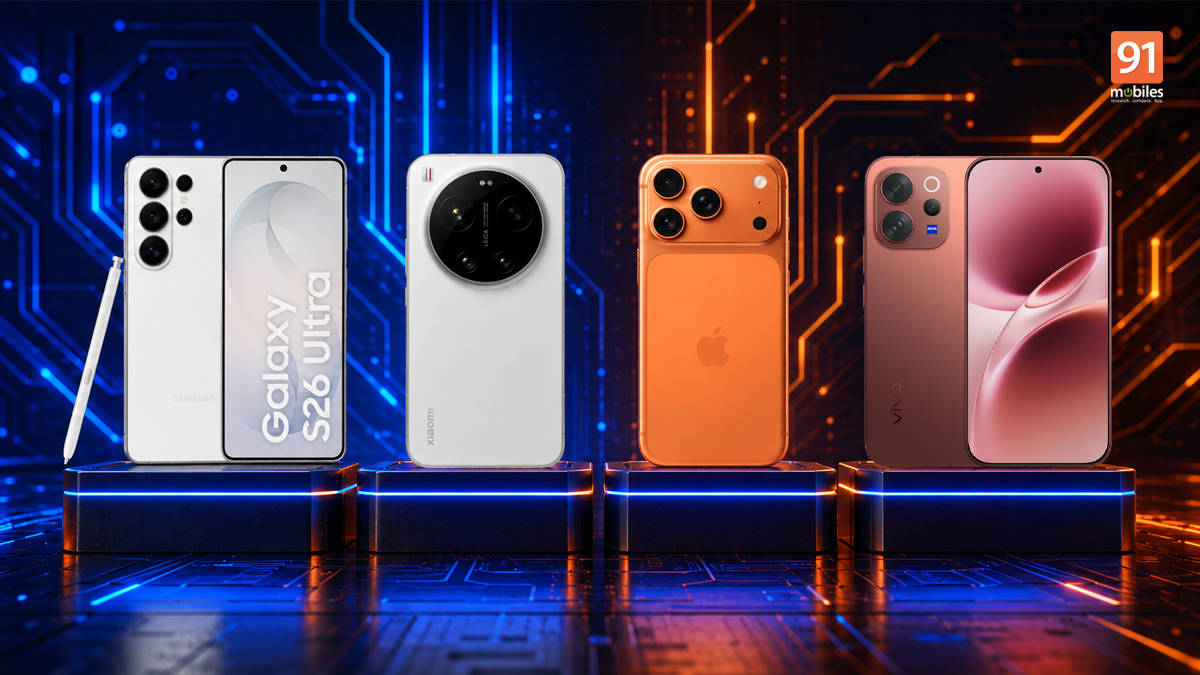
No matter how advanced rear camera systems become, with their versatile lenses, larger sensors, and ever-growing list of features, the front camera remains just as important for many smartphone users. However, the best selfie phones in 2026 are no longer defined solely by megapixel counts. What makes a good selfie camera ultimately depends on individual preferences and usage patterns. Some users prioritise accurate skin tones and natural-looking images, while others prefer sharper selfies with punchier colours that are ready to share on social media.
There is a specific smartphone for all such use cases. To help you find the right device, we have compiled a list of the best selfie smartphones that you can buy right now.
Table of Contents
How we tested the selfie camera
Before diving into the list, it’s worth noting that we tested each smartphone across a range of real-world scenarios, including daylight selfies, indoor shots, group photos, and front-camera video recording. We then evaluated the results on colour-accurate monitors, comparing them against competing devices to determine which smartphone excels in:
- Skin tone accuracy
- Facial detail and texture retention
- Dynamic range performance
- Portrait mode quality
- Front-camera video recording
- Social media readiness
Winners at a glance
| Category | Smartphone |
| Best overall | Samsung Galaxy S26 Ultra |
| Best for skin tones | Xiaomi 17 Ultra |
| Best for video and vlogging | iPhone 17 Pro Max |
| Best value | Vivo V70 Elite |
Samsung Galaxy S26 Ultra – Best overall selfie phone
Starting price: Rs 1,39,999
Why we chose it
The Samsung Galaxy S26 Ultra (review) ships with a 12MP front-facing camera with f/2.2, dual-pixel PDAF, and up to 4k@60fps video recording. The combination ensures one of the most complete selfie experiences available on a smartphone today. There might be competitors offering better performance in individual scenarios, but the Galaxy S26 Ultra stands out for its consistency.


Whether shooting outdoors under harsh sunlight, indoors under artificial lighting, or recording a quick video for social media, the handset rarely disappoints. The selfies turn out detailed with excellent dynamic range and exposure. This could also be attributed to the phone’s HDR processing, which helps preserve details in bright backgrounds without overprocessing the subjects. Furthermore, the Samsung Galaxy S26 Ultra tones down its tendency to over-sharpen facial features, resulting in a natural-looking shot.
Video recording is another strong point. The front camera delivers stable footage with reliable autofocus and consistent colours, making it suitable for everything from video calls to content creation.


| Pros | Cons |
| Excellent all-round selfie performance | Leans towards cool tones |
| Reliable HDR processing | |
| Consistent results across scenarios | |
| Strong front-facing video recording |
If you’re looking for a selfie phone that excels in nearly every scenario without major compromises, the Samsung Galaxy S26 Ultra is currently the safest recommendation.
Key specs:
- Processor: Snapdragon 8 Elite Gen 5
- Display: 6.9-inch Dynamic AMOLED 2X, 120Hz, anti-reflective
- Battery: 5,000mAh
- Charging: 60W wired, 25W wireless
- Camera: 200MP main + 50MP ultrawide + 50MP periscope + 10MP telephoto
- RAM/Storage: 12GB / 256GB, 512GB, 1TB
Xiaomi 17 Ultra – Best for skin tones
Starting price: 1,39,999
Why we chose it

Many smartphones prioritise punchy colours and aggressive beauty processing, often at the expense of realism. The Xiaomi 17 Ultra (review) takes a different approach by focusing on natural-looking results and accurate skin tone reproduction. The handset features a powerful 50MP selfie camera, backed by a f/2.2 aperture lens, auto focus, and 4K video recording support at 60 fps.


During testing, the phone consistently delivered flattering selfies without making subjects appear overly smoothed or artificially brightened. Facial textures remain intact, helping images retain a more authentic look. This becomes particularly noticeable when photographing people with different skin complexions, where colour consistency remains one of Xiaomi’s strongest traits.
The phone also performs well in difficult lighting situations, maintaining realistic colours while preserving details in both shadows and highlights. That said, its video quality looks relatively underwhelming, with less stable shots while walking or in challenging lighting conditions. Additionally, some users may find the images less vibrant or social-media-ready compared to phones that apply more aggressive sharpening, skin smoothing, and colour enhancement by default.
| Pros | Cons |
| Excellent skin tone reproduction | Video performance trails behind |
| Natural facial texture | Processing may appear conservative |
| Strong dynamic range |
If natural-looking selfies matter more than social-media-ready processing, the Xiaomi 17 Ultra is the phone to beat.
Key specs
- Processor: Snapdragon 8 Elite Gen 5
- Display: 6.9-inch FHD+ AMOLED, 120Hz
- Battery: 6,000mAh
- Charging: 90W wired, 50W wireless
- Camera: 200MP main + 50MP ultrawide + 50MP periscope + 10MP telephoto
- RAM/Storage: 16GB/ 1TB
iPhone 17 Pro Max: Best for video and vlogging
Starting price: Rs 1,49,900
Why we chose it

While many smartphones can capture excellent selfies, few can match the iPhone 17 Pro Max (review) when it comes to front-camera video recording with its 18MP front-facing camera. The camera has a relatively larger f/1.9 aperture lens. Similar to the Xiaomi 17 Ultra and Samsung Galaxy S26 Ultra, the iPhone also offers autofocus and 4k video recording at 60 fps.


The handset manages to outperform its rivals when it comes to capturing videos. The 17 Pro Max leads with dependable autofocus, excellent exposure control, and industry-leading stabilisation. Whether you’re filming a vlog while walking, recording reels, or attending virtual meetings, the front camera consistently delivers sharp footage with natural colours and balanced exposure. Moreover, instead of standard HDR, the smartphone supports Dolby Vision, resulting in rich colours, bright highlights, and deep shadows for a more “lifelike” look.
Another major advantage is colour consistency between the front and rear cameras. This makes it easier for creators to switch between lenses without noticeable shifts in colour or white balance. While the iPhone 17 Pro Max’s front camera captures admirable selfies, they aren’t class-leading, with facial details occasionally appearing softer than on some rivals.
| Pros | Cons |
| Best front-camera video quality | Stills need improvements |
| Reliable auto focus | |
| Consistent colour reproduction | |
| Strong stabilisation |
Content creators, vloggers, and users who frequently record themselves will find the iPhone 17 Pro Max difficult to beat.
Key specs
- Processor: A19 Pro
- Display: 6.9-inch FHD+ Super Retina XDR, 120Hz
- Battery: 4,832
- Charging: 40W wired, 30W wireless
- Camera: 48MP main + 48MP ultrawide + 48MP periscope + 18MP telephoto
- RAM/Storage: 12GB, 256GB/ 512GB/ 1TB/ 2TB
Vivo V70 Elite: Best value selfie phone
Starting price: Rs 66,999
Why we chose it

The Vivo V70 Elite (review) can be your pick if you want a good selfie smartphone without the premium tag. The handset sports a 50MP f/2.2 front-facing camera with auto focus and 4K video recording support.


The sensor is capable of capturing detailed selfies with pleasant colour reproduction and reliable portrait mode performance across lighting scenarios. On top of that, Vivo’s image processing is tuned to produce attractive social-media-ready images without becoming overly aggressive. The wide field of view also makes the phone suitable for group selfies and travel photography.
While it may not match flagship devices in challenging conditions and video quality, the gap is smaller than many users might expect.
| Pros | Cons |
| Good facial detail | Video quality behind premium rivals |
| Reliable portrait mode | Inconsistent dynamic range |
| Suitable for social media users | |
| Strong value for money |
For buyers seeking the best balance between price and selfie performance, the Vivo V70 Elite is an easy recommendation.
Key specs
- Processor: Snapdragon 8s Gen 3
- Display: 6.59-inch FHD+ AMOLED, 120Hz
- Battery: 6,500mAh
- Charging: 90W wired
- Camera: 50MP main + 8MP ultrawide + 50 periscope + 50MP telephoto
- RAM/Storage: 8GB/ 12GB, 256GB/ 512GB
FAQs
What to look for in a selfie phone in 2026?
Before buying a selfie-focused smartphone, pay attention to more than just megapixel counts. Features such as HDR processing, sensor size, video capabilities, and colour science often have a greater impact on image quality than resolution alone.
Moreover, if you are a content creator, prioritise a smartphone that delivers excellent video quality and stabilisation from the front camera. Selfie lovers, meanwhile, should look for a smartphone that delivers natural skin tones and realistic facial details.
Which phone has the best selfie camera in India?
Currently, that title goes to the Samsung Galaxy S26 Ultra, which strikes an excellent balance between still photography and video performance. However, if you prioritise natural skin tones over all-around performance, the Xiaomi 17 Ultra is worth considering, while the iPhone 17 Pro Max remains the top choice for creators and vloggers.
Which phone is best for Instagram creators?
While Android phones are catching up, the iPhone 17 Pro Max remains the safest bet for Instagram creators. Besides its excellent stabilisation, reliable autofocus, and true-to-life colours, the handset benefits from strong app optimisation, resulting in consistently dependable video quality across Stories, Reels, and feed posts.
Which phone has the most natural skin tones?
The Xiaomi 17 Ultra tops this list with near-accurate selfies without making subjects appear overly smoothed or artificially brightened. It is followed by iPhone 17 Pro Max and Samsung Galaxy S26 Ultra.
Is autofocus important for selfies?
Absolutely. Autofocus helps keep the subject sharp without requiring you to manually tap on the screen. A good selfie smartphone should be able to lock onto the subject automatically and maintain focus, even when the frame is in motion.
Which budget phone takes the best selfies?
If you are looking for a good selfie camera phone in the budget segment, the iQOO Z11x and Moto G96 are worth exploring in the under Rs 25,000 segment. Both phones ship with a 32MP front-facing camera and can capture decent selfies in good lighting conditions.