Phones launched in 2025 that are still worth buying today


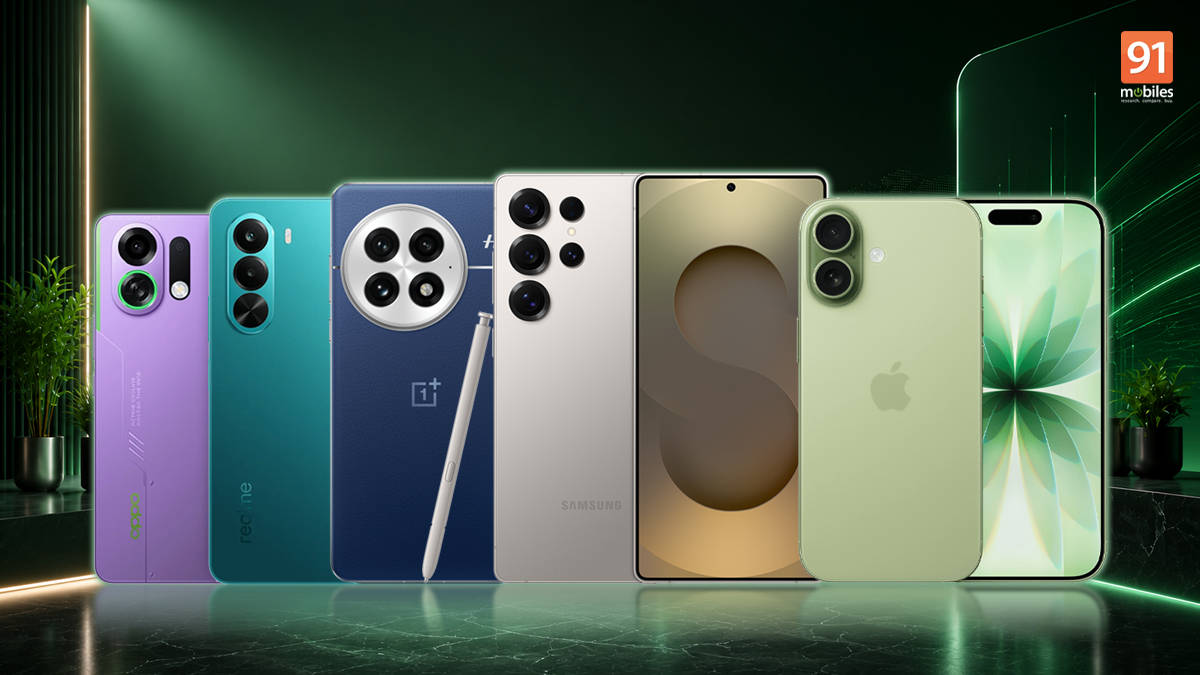
Just last year, smartphone brands went all out, releasing phones with over 1 million AnTuTu scores, ultrawide lenses, curved 1080p AMOLED displays, and a promise of three OS upgrades all under Rs 20,000. Fast forward to mid-2026, phones launching in this segment are riddled with 720p panels, with AnTuTu scores barely crossing 7 lakh and single cameras with small sensor sizes, all due to brands taking measures to keep prices in check amid rising memory costs. Similarly, newly released phones in higher-priced segments have met the same fate.
Therefore, if you want the best value for your money, there are several smartphones from 2025 that continue to make sense in 2026, especially for users with particular needs and demands. In this article, we’ve handpicked the top smartphones under every pricing segment from last year that are still relevant today.
Note: Smartphone prices listed below are current as of the publishing date, with the chance of prices seeing an increase in the future, or the phones going out of stock.
Table of Contents
Phones around Rs 20,000
Realme P4x
Current price – Rs 19,499 (Flipkart)
Best for – Affordable mobile gaming, snappy UI operations
Remaining software support – 2 OS upgrades with security patches till 2029
The Realme P4x (review) remains one of the safest options in the Rs 20,000 range for those seeking a reliable midrange smartphone. Boasting a large 7,000mAh battery, the MediaTek Dimensity 7400 Ultra enables the phone to offer a reliable level of performance and strong battery endurance even with intense use. Even though the LCD panel may not deliver as vibrant tones as its AMOLED counterparts, the display is crisp and sufficiently saturated for watching content. With stereo speakers present, the P4x won’t disappoint casual movie/show viewers.


Apart from that, Realme UI is one of the most functional Android skins in the Rs 20,000 segment, offering snappy animations that make switching between apps feel quick and fluid. With the Android 16-based Realme UI 7 update rolling out, P4x will further receive two more OS upgrades, making it a solid midrange pick for buyers seeking new features and software advancements in the coming years.
Moto G57 Power
Current price – Rs 20,999 (Flipkart)
Best for – Reliable primary camera, strong battery life
Remaining software support – 1 OS upgrade (Android 17) with security patches till 2028
The Moto G57 Power (review) features a capable 50MP Sony LYT-600 primary sensor with a large 1/2-inch size, paired with an 8MP ultrawide lens and an 8MP selfie camera. Thanks to its bigger sensor, it promises better detail retention and stronger low-light performance compared to newer rivals like the OPPO K14 and POCO M8, which use smaller 1/2.88-inch sensors and lack an ultrawide camera altogether.

Phones under Rs 25,000
Infinix GT 30 5G
Current price – Rs 21,999 (Flipkart)
Best for – Gaming with precise button control, flashy design
Remaining software support – 1 OS upgrade (Android 17) with security patches till 2028
In a time when other Dimensity 7400-powered phones like the OnePlus Nord CE 6 Lite, iQOO Z11x, and Vivo T5x feature LCD panels, that too above Rs 23,000, last year’s Infinix GT 30 (review) stands tall with a 6.78-inch 1.5K AMOLED display and 144Hz refresh rate, which can be mapped to almost any in-game action. BGMI can be played at 90fps in Smooth frame rate settings, while Genshin Impact runs at 30-40fps on High settings. Paired with a large vapour chamber, one can expect efficient gaming performance.

The rear sports LED light strips, along with gamery aesthetics, make the GT 30 stand out, while the slim display bezels offer the device a premium look. On the software front, the device has recently received the XOS 16 update, which features smoother animations, a new quick settings panel design, and glowing lighting effects sprinkled throughout the UI.
iQOO Z10R – Rs 22,999
Current price – Rs 22,999 (Amazon)
Best for – Display experience, slim ergonomics
Remaining software support – 1 OS upgrade (Android 17) with security patches till 2028
Up next is the iQOO Z10R (review), one of the very few phones from last year still available in stock under Rs 25,000 that offers an AMOLED display with quad-curved edges. Measuring 6.77 inches, the display offers a peak brightness of 4,500 nits, while the high brightness levels max out at 1,300 nits. The panel delivers punchy tones, accompanied by a stereo speaker setup for an immersive audio experience.

The phone weighs just 184g and is fairly slim at 7.4mm, resulting in lightweight and portable ergonomics. On the performance front, just like the Realme P4x, it runs on the Dimensity 7400, which is sufficient for delivering snappy performance. As for the downsides, it features a relatively smaller battery at 5,7000mAh compared to newer phones.
Phones under Rs 30,000
Realme P3 Ultra
Current price – Rs 26,999 (Flipkart)
Best for – High-end performance, good all-rounder
Remaining software support – 2 OS upgrades with security patches till 2029
Currently selling at its launch price, the Realme P3 Ultra (review) excels in most aspects. It gets a 1.5K quad-curved AMOLED display, the powerful Dimensity 8350 Ultra chipset, a 50MP 1/1.56-inch primary camera, an IP69 rating, and a decently sized 6,000mAh battery with 80W fast charging. Given the pricing situation of smartphones these days, the Realme P3 Ultra offers extreme value, making it a much better pick than the Realme 16T, Vivo T5 Pro, and OnePlus Nord CE 6.

With the Android 16-based Realme UI 7 update now available for the Realme P3 Ultra, the phone is set to receive two more OS upgrades and three years of security patch updates, making it a suitable all-rounder with decent software longevity.
OPPO K13 Turbo
Current price – Rs 27,999 (Flipkart)
Best for – High intensity gaming, smooth software
Remaining software support – 1 OS upgrade (Android 17) with security patches till 2028
Six months into 2026, the OPPO K13 Turbo (review) remains one of the strongest gaming phones under Rs 30,000. Unlike many rivals facing price hikes, it is still available at its launch price of Rs 27,999 on Flipkart. Powered by the MediaTek Dimensity 8450 and an active cooling fan, in our in-house tests, it delivered an impressive 115 FPS average in BGMI and showed just 2.5 degrees Celsius temperature rise even after 1.5 hours of heavy BGMI and CODM gaming.

It also offers a smooth software experience with ColorOS 16, making it an excellent choice for those who value fluid interactions. The phone is set to receive ColorOS 17 based on Android 17 in a few months, which should bring even better animations and fluidity. The only notable downside of the K13 Turbo is its average camera performance, particularly in low-light conditions.
Moto Edge 60 Pro – Rs 29,999
Current price – Rs 29,999 (Flipkart)
Best suitable for – Telephoto lens capabilities, flagship-like features
Remaining software support – 2 OS upgrades with security patches till 2029
At Rs 29,999, the Moto Edge 60 Pro (review) continues to be one of the smartest buys in mid-2026. While most new launches in this price range are making heavy compromises due to rising component costs, the Edge 60 Pro delivers a balanced package. The handset features a 6.7-inch 1.5K curved pOLED display, a capable MediaTek Dimensity 8350 Extreme chipset, a decently sized 6000mAh battery with 90W charging, IP68/IP69 rating, and a versatile triple camera setup with a 50MP telephoto lens with 3x optical zoom.

While the telephoto lens may struggle in low light due to its small sensor size, it can surely come in handy for capturing portraits with precise edge detection. Then come the high-end features that are rarely seen at this price, which include 15W wireless charging, UFS 4.0 storage, and up to 4K video recording using front and rear cameras. The phone has already received the Android 16 update and is set to get two more major OS upgrades, on par with the OnePlus Nord CE 6.
Phones under Rs 40,000
OPPO K13 Turbo Pro
Current price – Rs 31,999 (Flipkart)
Best for – High intensity gaming, smooth software
Remaining software support – 1 OS upgrade (Android 17) with security patches till 2028
Much like the OPPO K13 Turbo (review), the K13 Turbo Pro excels at offering flagship-grade gaming performance. With the iQOO Neo 10 and OnePlus Nord 6 selling above Rs 39,999, the OPPO K13 Turbo is the most affordable Qualcomm Snapdragon 8s Gen 4 smartphone you can grab in the market, making it a no-brainer deal for performance and mobile gaming enthusiasts.

Then comes the built-in cooling fan and a large vapour chamber, a combo completely unheard of in the Rs 40,000 price bracket, which also holds for the K13 Turbo. During our gaming tests, the K13 Turbo Pro delivered 107 FPS, which is closer to the claimed 120 FPS in BGMI, indicating smooth gaming performance. Running ColorOS 16, the software makes great use of the large X-axis haptic motor to deliver a satisfying haptic feedback experience. That said, since it’ll receive just one more major Android upgrade, the phone makes sense more for those who value high-end performance over software longevity.
OnePlus Nord 5 – Rs 33,999
Current price – Rs 33,999 (Amazon)
Best for – Top-notch day-to-day experience
Remaining software support – 3 OS upgrades with security patches till 2031
After being out of stock for a while since the release of the OnePlus Nord 6, the Nord 5 (review) is back on Amazon, albeit with a price hike of Rs 2,000 over its launch price. Despite running on an older-generation Snapdragon 8s Gen 3 processor, the Nord 5 should deliver efficient battery life with its 6,800mAh cell. As for the design, the rear panel is not only soothing to touch but also looks gorgeous in the Marble Sands shade.

The Nord 5 is one of the only few phones to run CODM natively at 144 FPS, making it an excellent choice for CODM lovers. As noted in our dedicated gaming review, the handset delivered stable frame rates with best-in-class efficiency when compared to the iQOO Neo 10 and POCO F7. For daily use, OxygenOS 16 (review) offers fluid operations, seamless animations, vast customisability, and an enormous feature set.
Vivo T4 Ultra – Rs 37,999
Current price – Rs 37,999 (Flipkart)
Best for – Photography, portrait shots, macro capabilities
Remaining software support – 1 OS upgrade (Android 17) with security patches till 2028
Even though the Vivo T4 Ultra (review) may not offer as capable hardware as others on this list priced around Rs 40,000, the handset could turn out to be an impressive pick for those who’re into heavy photography. Speaking of which, the T4 Ultra is equipped with a 50MP 1/1.56-inch primary camera, a 50MP 1/2-inch square periscope with 3x optical zoom, and an 8MP 120-degree FoV ultrawide lens. Up front, there’s a 32MP selfie camera.

As noted in our review, for portraits and macro shots, the periscope lens delivers sharp, detailed images of distant subjects, while its colour science is well-matched with the primary sensor, ensuring visual consistency across shots. If you prefer capturing macro images of flowers, insects, and other small subjects, the square periscope can come in extremely handy thanks to its minimum focus distance of just 15cm, the only phone able to do so in its price class.
On to the downsides, the 5,500mAh battery may not hold up well in the long-term compared to its rivals featuring over 7,000mAh batteries, while the Dimensity 9300+ may not deliver as efficient performance as the Snapdragon 8s Gen 4 in games.
Phones under Rs 60,000
Nothing Phone (3)
Current price – Rs 59,999 for 16+512GB (Flipkart)
Best for – Flagship features, standout design
Remaining software support – 4 OS upgrades with security patches till 2032
The Nothing Phone (3) (review) may not have been well-received at its exorbitant launch price of Rs 79,999 last year, but with frequent price cuts and heavy discounts over the last few months, it’s one of the best flagship choices out there. During Flipkart sales, the phone often comes under Rs 45,000, making it a great alternative to the Nord 6, powered by the same Snapdragon 8s Gen 4 chipset.

OnePlus 13s
Current price – Rs 54,999 (Amazon)
Best for – Compact form factor, flagship performance
Remaining software support – 3 OS upgrades with security patches till 2031
With the Vivo X200 FE currently out of stock on Flipkart and Vivo’s online store, the OnePlus 13s (review) is your best bet for a compact flagship experience. Currently selling at its original price of Rs 54,999, the OnePlus 13s often comes below Rs 50,000 during sales. With no OnePlus 15s in sight, the 13s remains one of the most powerful compact Android smartphones out there, courtesy of the Snapdragon 8 Elite.

The 6.3-inch 1.5K AMOLED display of the OnePlus 13s produces lively colours, the latest OxygenOS 16 software update has brought in tons of new features like Live Space, and the 5,850mAh battery typically lasts a day. On the other hand, if camera flexibility is your priority, the OnePlus 13s falls behind since it lacks an ultrawide lens, while the telephoto lens is restricted to just 2x optical zoom, which limits the digital zoom range.
OnePlus 13
Current price – Rs 57,999 (Amazon)
Best for – Premium flagship features
Remaining software support – 3 OS upgrades with security patches till 2031
In mid-2026, the OnePlus 13 (review) remains one of the strongest value propositions in the premium segment. It offers a 2K LTPO AMOLED display, a powerful Snapdragon 8 Elite chipset, 50MP triple Hasselblad-tuned rear cameras, 100W fast charging, and one of the smoothest software experiences with OxygenOS 16.

Samsung Galaxy S25 Edge
Current price – Rs 59,999 (Flipkart)
Best for – Slim ergonomics, mature and feature-packed software
Remaining software support – 6 OS upgrades with security patches till 2032
Launched at Rs 1,09,999 last year, the Samsung Galaxy S25 Edge (review) is currently up for grabs for Rs 59,999 on Flipkart, almost half its original price. Measuring just 5.8mm in thickness and weighing only 163g, the Galaxy S25 Edge is one of the most ergonomic, lightweight, and comfortable Android phones to hold. Despite its relatively small 3,900mAh battery, the phone has been optimised to deliver a decent level of battery endurance, since it scored over 10 hours in our PCMark Battery drain test.

With the Snapdragon 8 Elite processor on board, the phone should be able to handle every game out there at high graphics settings, while exhibiting certain heat during continuous gaming sessions due to its slim form factor. Apart from that, if a telephoto lens is something you’d like to use to click images, the Galaxy S25 Edge doesn’t provide that.
Phones under Rs 1,00,000
iPhone 17
Current price – Rs 82,900 (Flipkart)
Best for – Anyone seeking a value for money iPhone
Remaining software support – 7 OS upgrades with security patches till 2032 (unconfirmed)
The Apple iPhone 17 (review) remains one of the most value-for-money base iPhones Apple has released in years. With the addition of 120Hz ProMotion, the display is as smooth and premium as its Pro siblings, while the dual 48MP (primary + ultrawide) cameras deliver consistent results across lighting conditions. Up front, the 18MP square selfie camera with centre stage effortlessly fits more people in the frame, while video quality is top-notch from both front and back cameras.

On the other hand, if you’re used to capturing long-range zoom shots using a telephoto lens, the iPhone 17 misses out on it. In that case, opting for Android alternatives, such as iQOO 15 or OPPO Find X9s, could be a better choice. That being said, with the powerful A19 chip on board that delivers strong performance numbers, the iPhone 17 is the most well-rounded iPhone for everyday users. With the seven-year-old iPhone 11 confirmed to get iOS 27, rest assured, the iPhone 17 will be supported software-wise for more than half a decade.
OnePlus 15
Current price – Rs 85,999 (Amazon)
Best for – High-end gaming, smooth software
Remaining software support – 4 OS upgrades with security patches till 2031
Despite seeing a massive price hike of Rs 13,000 from its launch price, the OnePlus 15 (review) remains a strong contender as a flagship smartphone that delivers a top-notch gaming experience. With the Qualcomm Snapdragon 8 Elite Gen 5 on offer, paired with a 165Hz refresh rate in supported games, the OnePlus 15 continues to impress with excellent thermal management, sustained frame rates, and smooth overall performance.

Running on OxygenOS 16, the OnePlus 15 offers the smoothest software we’ve experienced so far, thanks to incredibly tuned animations and transitions across the UI. On to the cameras, while the handset sees a downgrade camera setup from the OnePlus 13, the DetailMax Engine photography pipeline assists in delivering crisp and contrasty images. However, phones like the OPPO Find X9 and Vivo X300 may offer better camera performance, thanks to superior hardware and tuning.
Samsung Galaxy S25 Ultra
Current price – Rs 99,999 (Amazon)
Best suitable for – Premium flagship experience, flexible cameras
Remaining software support – 6 OS upgrades with security patches till 2032
The most expensive smartphone on the list, the Samsung Galaxy S25 Ultra (review), coming under Rs 1 lakh, makes it one of the best choices for anyone seeking to experience Samsung’s top-of-the-line hardware and software. On one hand, you have the Snapdragon 8 Elite for Galaxy, powering the device for handling even the most intensive tasks, such as efficiently rendering 4K videos, while on the other hand, One UI 8.5 packs a multitude of productivity and Galaxy AI features.

Given that the Samsung Galaxy S26 Ultra doesn’t see a significant upgrade in cameras and battery, the Galaxy S25 Ultra makes more sense for most buyers who’re on the hunt for a premium-level flagship. This is further supported by the fact that the Galaxy S25 Ultra will receive six more OS upgrades in the future.